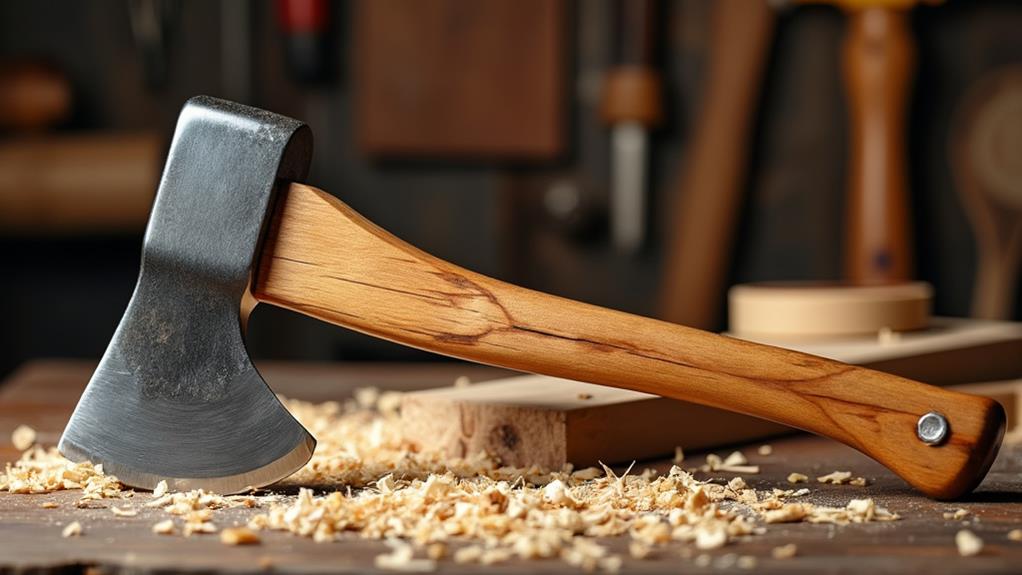
The Importance of a Well-Balanced Axe for Efficient Work
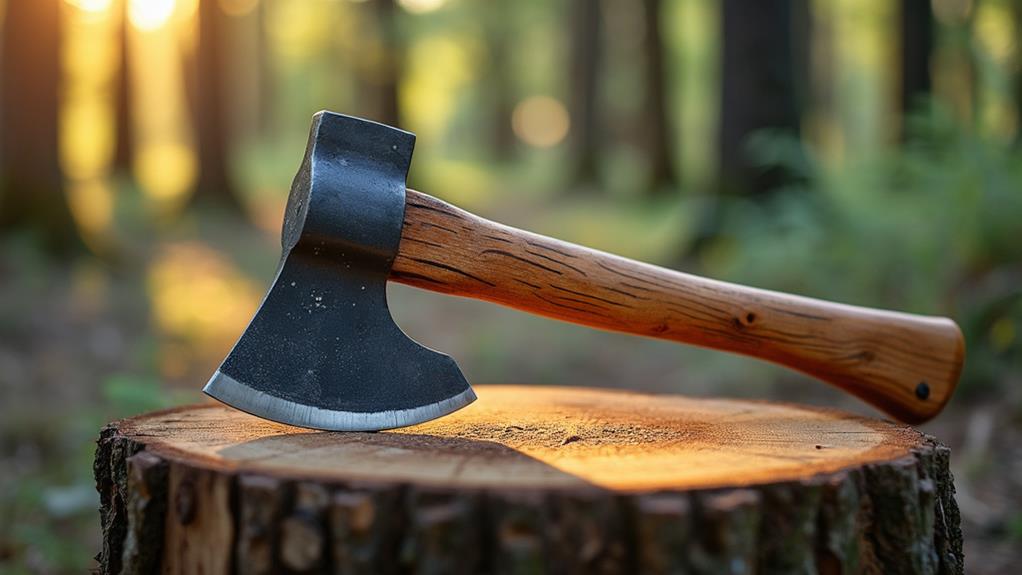
Understanding the importance of a well-balanced axe is crucial for efficient work. When an axe is properly balanced, it enhances accuracy and control while reducing fatigue. This balance allows for precise cuts without quickly exhausting the user. Optimal weight distribution ensures stability and effective energy transfer with each swing, making tasks like felling trees or splitting wood more manageable. To determine if an axe is well-balanced for you, consider key design factors and personal comfort.
Importance of Balance
When using an axe, balance is crucial. A well-balanced axe enhances your accuracy and swing control, reducing head wobble and ensuring each strike is efficient. You'll find that a balanced axe minimizes fatigue, enabling you to work longer without strain. The balance point should align with the center of the handle, ensuring effective energy transfer during swings. This alignment significantly improves cutting performance, simplifying your tasks.
However, individual comfort varies. What feels balanced to you mightn't be the same for someone else. The subjective nature of balance perception means you should try different axes to find the one that suits you best.
Handle length and weight distribution are critical factors in determining an axe's balance. A design that works well for one task mightn't be suitable for another, so consider the specific tasks you'll be performing. Poorly balanced axes can hinder performance and increase bodily strain. Therefore, selecting an axe with proper weight distribution for your intended use is essential.
Determining Balance
How do you determine if an axe is well-balanced? Start by placing the axe on the edge of a table near the head. If it tips downward, it's a sign of poor balance. The balance point is essential for efficient energy transfer, ideally aligning with the center of the handle. This alignment ensures powerful and effective swings without wasting energy.
Here are a few tips to test and adjust the balance:
- Weight Distribution: Ensure the axe feels evenly weighted in your hand. Uneven weight can reduce control.
- Handle Length: Adjusting the handle length can help achieve the ideal balance point, enhancing control and reducing fatigue.
- Axe Type: Double-bit axes, with their symmetrical design, generally offer better balance, making them a good choice if balance is a priority.
Design Factors
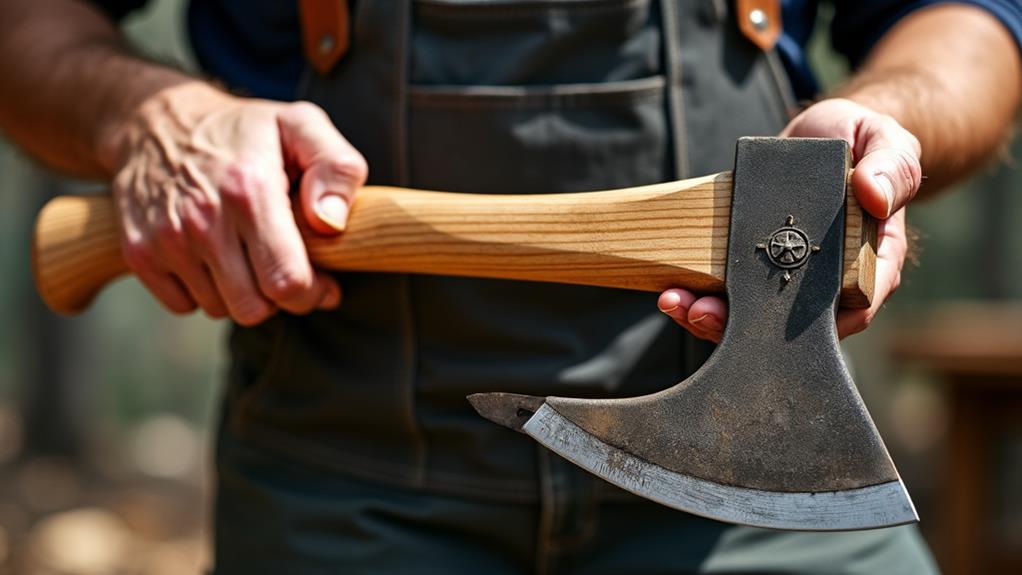
When selecting an axe, consider the advantages of a double-bit design, which often provides superior balance due to its symmetrical weight distribution. Additionally, handle length significantly affects the axe's performance and your control, influencing the efficiency of your swings. Understanding these design factors will help you choose an axe that minimizes fatigue and maximizes productivity.
Double-Bit Axe Advantages
Double-bit axes, with their thoughtfully engineered design, offer several distinct advantages that make them a top choice for efficient woodcutting tasks. These axes typically exhibit better balance than single-bit axes, facilitating greater control and accuracy during use, which results in cleaner and more precise cuts.
The symmetrical design of double-bit axes ensures equal weight distribution, improving energy transfer during swings and boosting cutting efficiency. This makes tasks less labor-intensive. Additionally, having two cutting edges reduces the need for frequent sharpening. When one edge becomes dull, you can simply switch to the other, maintaining productivity without constant interruptions.
Key benefits of double-bit axes include:
- Better Balance: Enhanced control and accuracy due to superior weight distribution.
- Two Cutting Edges: Reduced downtime for sharpening as you can alternate between bits.
- Versatility: Suitable for different tasks, allowing you to choose the edge that best fits your cutting needs.
Handle Length Impact
While the advantages of double-bit axes are clear, another critical design factor is the length of the handle, which significantly impacts the tool's overall performance. The handle length affects swing dynamics: longer handles offer greater leverage but can increase the risk of wobble during use.
For felling axes, a handle length between 50 to 65 cm strikes a balance between control and power, making it effective for cutting larger trees. Shorter handles, typically found in hand axes (45 to 65 cm), provide easier maneuverability and are designed for one-handed operation, making them ideal for smaller cutting tasks.
The relationship between handle length and weight distribution is crucial; an imbalance can cause fatigue and reduce cutting efficiency. A well-balanced axe ensures that the axe head and handle work harmoniously, minimizing user strain.
Moreover, longer handles improve centrifugal force, enhancing stability during swings. When designed properly, this reduces the chances of the axe head wobbling. Whether you're felling a tree or splitting logs, choosing the correct handle length can make your work more efficient and less tiring. Understanding these nuances helps you select the perfect tool for the job.
Subjectivity in Balance
Balance in relation to axes is a highly personal concept, influenced by individual experience and technique. What feels balanced and effective for one person may differ for another. Some users might prefer a head-heavy axe for increased power, while others might favor a lighter design for greater control.
Familiarity with a particular axe is crucial. Over time, you develop a subjective sense of balance specific to that tool, which may not align with its actual physical characteristics. This personalized connection can enhance your performance and comfort.
Key factors influencing your perception of balance include:
- Personal experience and technique: Your background and how you handle the axe affect your sense of balance.
- Preference for balance points: Different tasks may require a head-heavy or lighter axe, based on what feels right for you.
- Familiarity with specific tools: Regular use of the same axe helps you build a unique understanding of its balance.
Similar to riding a bike, the balance of an axe feels different for each individual. Factors such as strength, technique, and familiarity all contribute. Experienced users often develop an instinctive grasp of balance, which may differ from conventional standards.
Practical Applications
Understanding the subjective nature of balance is only the beginning; practical applications reveal the importance of a well-balanced axe for efficient work.
When you wield an axe with perfect balance, energy transfer during swings improves significantly, allowing for more efficient cutting with less fatigue. The balance point should align with the handle's center, enhancing control and maneuverability.
A well-balanced axe improves accuracy when felling trees or splitting wood. A perfectly balanced axe makes hitting your target easier, saving time and effort. Experienced users often develop an instinctive feel for their axe's balance, enabling them to adapt their technique seamlessly to different tasks.
Weight distribution plays a pivotal role in an axe's performance. A poorly balanced axe can lead to instability, reducing cutting effectiveness.
Conversely, a well-balanced axe ensures each swing is precise and powerful. Focusing on perfect balance allows you to tackle various wood-cutting tasks more effectively, making the work easier and more enjoyable.
Wobble and Stability
When it comes to wielding an axe effectively, wobble and stability are fundamental factors that can make or break your experience.
"Speed wobbles" refer to the erratic up-and-down motion that can disrupt your control during swings. The greater the distance from the eye to the edge of the axe, the more sensitive it becomes to handle twists, making true balance imperative for stability.
Understanding the principles of rotational inertia and torque can greatly improve your handling of the axe and reduce wobble. While centrifugal force can help stabilize the axe during flight, it won't counteract wobble caused by the length from eye to edge. Thus, a well-balanced design is crucial.
Here are some key points to keep in mind:
- Increased acceleration can improve stability and accuracy during swings.
- Oscillation or wobble often occurs when you apply acceleration to the back end of a heavy object.
- Measuring true balance is essential for avoiding handle twists and achieving stability.
Improving Handling
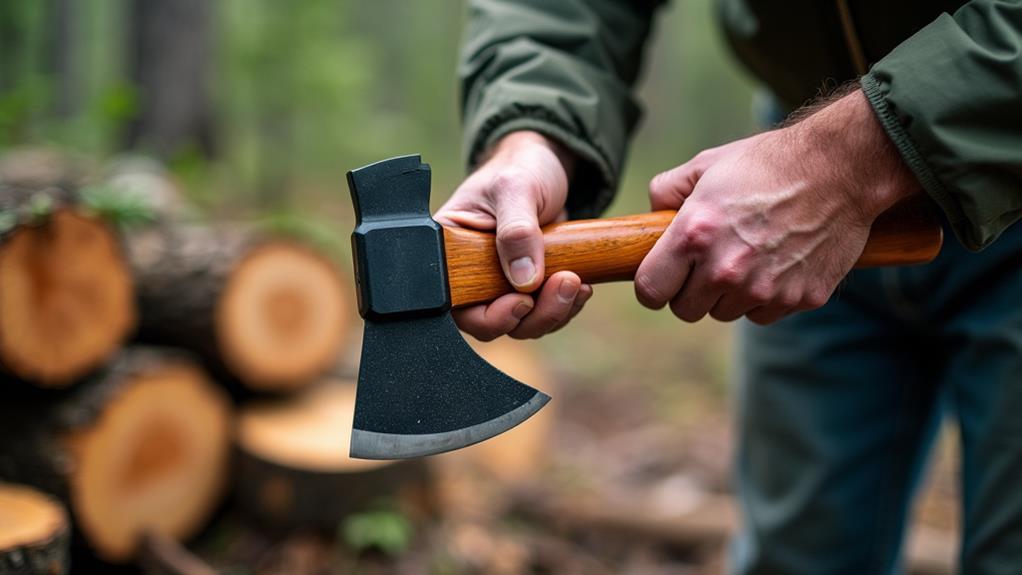
To enhance your axe handling skills, start by practicing slow swings to identify and correct any rotational issues. Choose an axe that matches your strength, as the right size and weight are crucial for comfort and efficiency. Understanding how centrifugal and centripetal forces influence your swing will also improve your control and precision.
Practice Techniques Regularly
Practicing slow swings with your axe is an intelligent way to identify and correct rotational issues, enhancing overall control. By focusing on deliberate movements, you can pinpoint and adjust imbalances, ensuring smoother, more efficient work. Regular practice also helps develop muscle memory, making each swing more intuitive and less error-prone over time.
To further improve your handling, consider the following tips:
- Regularly sharpen the axe edge: A sharp blade reduces deflection risks and guarantees cleaner cuts, directly contributing to better handling.
- Understand force dynamics: Grasping concepts like centrifugal and centripetal forces helps maintain control during dynamic movements, making your swings more effective.
- Consistent practice: This allows you to adapt to any unbalanced axes, enabling you to compensate naturally and improve your technique.
Choose Proper Axe Size
Selecting the right axe size is crucial for improving your efficiency and control, directly impacting your axe-handling skills. Aligning the tool's weight distribution with your strength and intended use enhances performance and safety.
For felling trees, an axe weighing between 1.5 to 2.5 kg is ideal, balancing energy transfer without causing fatigue. Splitting axes, which can weigh up to 3.5 kg, provide the necessary heft for effective splitting while remaining manageable. For smaller tasks like camping or hiking, a hand axe weighing between 600 grams and 1.5 kg allows for controlled, one-handed operation.
The relationship between handle length and head weight is vital for balance and handling, affecting swing dynamics and stability. An axe that feels comfortable in your hands improves technique and reduces accident risks.
Understand Force Dynamics
Mastering the force dynamics involved in axe handling can significantly enhance your efficiency and safety. Understanding how force affects your axes ensures even weight distribution, enabling better energy transfer during swings. This efficiency reduces fatigue and improves control, making each chop more effective.
Key aspects to focus on include:
- Centrifugal Force: This stabilizes the axe in flight, ensuring straight and true swings. However, it can't counteract wobble caused by an uneven eye-to-edge distance.
- Handle Length: Adjusting the handle length based on your strength and technique optimizes balance, leading to better handling and reduced fatigue.
- Slow Swings: Practicing slow swings helps identify and correct any rotational issues. This practice is essential for refining your technique and ensuring consistent performance.
The distance from your eye to the axe edge significantly influences your sensitivity to handle twists. A well-balanced axe helps maintain stable swings, minimizing the risk of accidents.
Misconceptions About Balance
Many axe users mistakenly focus on the general weight of the tool, believing it to be the most crucial factor for performance. However, the balance and weight distribution are far more significant. A well-balanced axe improves handling and cutting efficiency.
You might be surprised to learn that an axe appearing poorly balanced, like racing axes, can still excel due to design tailored for specific tasks. This highlights the significance of evaluating balance relative to its intended use. It's easy to confuse balance with comfort. An axe that feels familiar might seem better even if it doesn't have the ideal balance point. This underscores the subjective nature of balance perception.
A well-designed axe should also prevent head detachment during use. Even a blade-heavy axe can perform well if the distance from the eye to the blade is short. This shows that multiple aspects of balance need consideration.
Regular feedback from experienced users and practical testing can reveal that perceived balance may not always align with actual performance. Continuous learning and hands-on experience are crucial for mastering axe handling and understanding the true significance of balance.
Conclusion
Understanding the importance of a well-balanced axe is crucial for efficient work. Proper weight distribution and design are key factors in achieving precise swings with less fatigue. It's essential to remember that balance is subjective, so personal testing is necessary to find what works best for you. A well-balanced axe enhances handling and reduces strain, making tasks like felling trees or splitting wood much easier. Ensure your toolkit includes a balanced axe to optimize your performance.