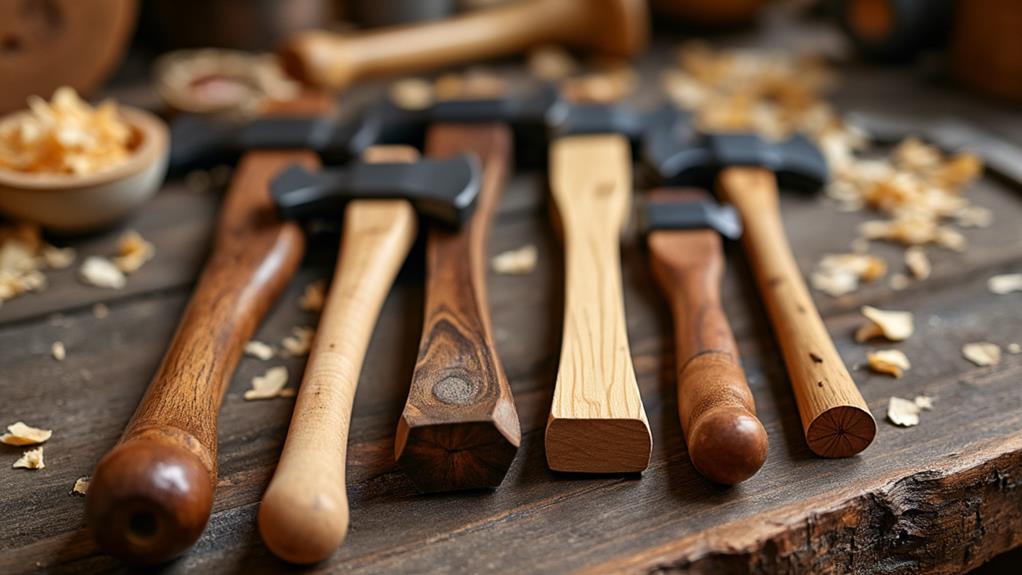
How to Protect Your Axe Handle From Environmental Damage
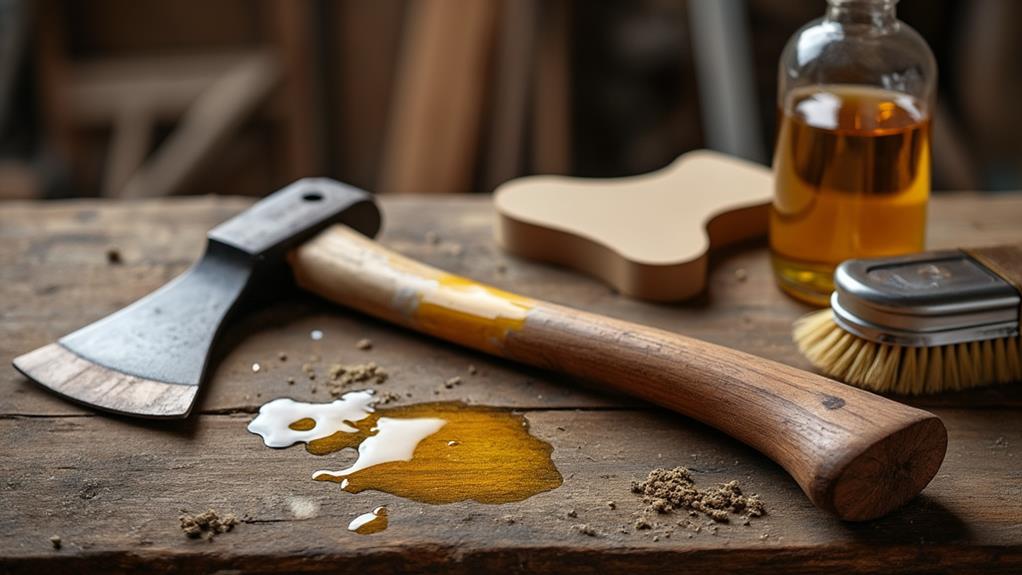
To protect your axe handle from environmental damage, start by choosing the right oils, such as boiled linseed oil (BLO), which creates a reliable moisture barrier and improves grip. Apply it daily for the first week and then move to a weekly routine. Removing any factory varnish is essential for better oil absorption.
Proper storage in a dry, climate-controlled space is also crucial to prevent issues like warping and splitting. Curious about the next steps for ensuring your axe handle's longevity and handling seasonal challenges effectively? Let's explore the specifics.
Choosing the Right Oils
Selecting the appropriate oil for your axe handle is essential for its protection and longevity. Boiled linseed oil (BLO) is a highly recommended choice due to its food-safe properties and deep penetration into the wood. This thorough absorption ensures that your axe handle remains well-moisturized, reducing the risk of cracks and warping over time.
While BLO is excellent, it's not the only option. Danish oil penetrates even deeper into the wood fibers, making it a strong alternative for long-lasting preservation. Its deep absorption provides robust protection against environmental wear and tear.
Camellia oil is another viable option, particularly for frequent axe users. Its thicker consistency effectively coats the wood, leaving minimal residue. This oil is ideal for those seeking a durable and clean finish on their axe handle.
Applying Oil to Axe Handles
Maintaining your axe handle with oil is essential for its longevity and performance. Boiled linseed oil (BLO) is highly recommended for treating wooden handles due to its deep penetration and moisture-balancing properties.
Follow these steps for effective application:
- Preparation: Mix BLO with paint thinner to enhance absorption. Use a rag to evenly apply the mixture over the entire handle surface.
- Application Schedule: Apply the oil daily for the first week, then weekly for the next month. This layering process creates a durable protective finish.
- Maintenance: Regularly check the handle for signs of wear or damage. Reapply oil as necessary, particularly in humid conditions to prevent warping or cracking.
After oiling, buff the handle with a soft cloth to eliminate tackiness and improve grip. Additionally, apply oil to the axe head to protect it from rust and environmental damage. Adhering to these steps ensures your axe handle remains strong and ready for use.
Removing Factory Varnish
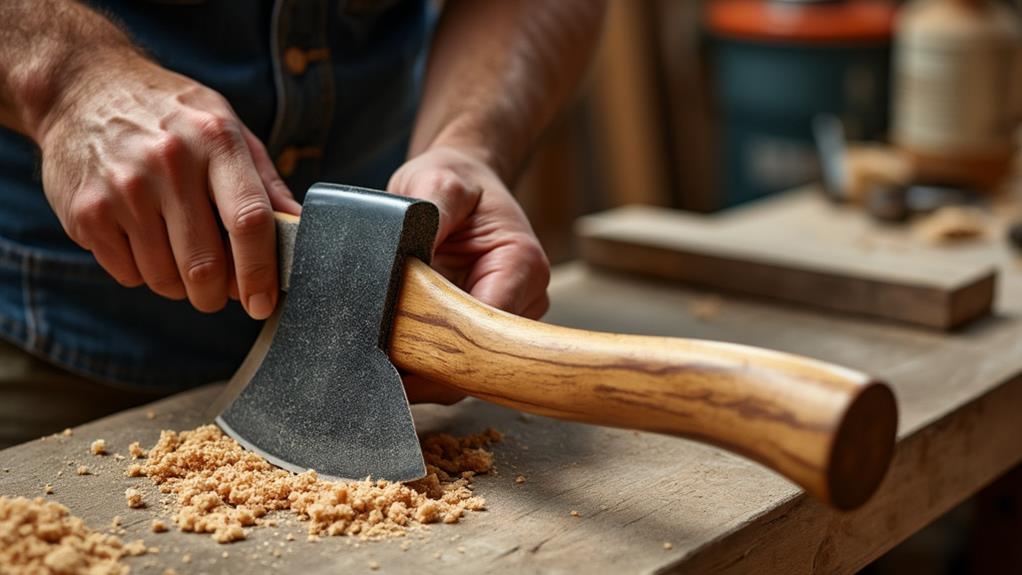
Stripping the factory varnish from your axe handle is essential to ensure that protective oils can deeply penetrate the wood. Start by gently sanding the handle with fine-grit sandpaper, ranging from 120 to 220 grit, following the grain to avoid damaging the wood. Alternatively, you can use a chemical varnish remover. If you opt for this method, adhere strictly to the manufacturer's instructions and work in a well-ventilated area due to potentially harmful fumes.
Comparison of Methods:
| Method | Tools Needed | Safety Precautions |
|---|---|---|
| Sandpaper | Fine-grit sandpaper | Minimal (dust mask recommended) |
| Chemical Varnish Remover | Chemical remover, brush | Ventilation, gloves, and mask |
After removing the varnish, wipe the handle with a clean, damp cloth to eliminate any dust or residue. This prepares the surface for the application of boiled linseed oil. Properly removing the varnish before applying oil improves the treatment's effectiveness and prolongs the handle's lifespan.
Benefits of Regular Oiling
Applying boiled linseed oil to your axe handle regularly enhances moisture resistance, preventing warping and shrinkage. This practice extends the handle's lifespan by forming a durable barrier against dirt and moisture. Additionally, it improves grip strength and maintains the handle's appearance, ensuring your axe remains reliable and easy to use.
Enhanced Moisture Resistance
Creating a moisture-resistant barrier on your axe handle is vital for preventing water absorption that can lead to warping and cracking. Regularly oiling your handle with boiled linseed oil (BLO) not only enhances moisture resistance but also adds a layer of protection against environmental damage.
Here's a precise method to enhance your axe handle's durability:
- Initial Applications: During the first week, apply a coat of BLO daily. This builds a solid base layer that deeply penetrates the wood fibers, significantly improving moisture resistance.
- Thinning and Heating: Mix two-thirds BLO with one-third turpentine and warm the mixture before application. This thinned and heated oil penetrates the wood more effectively, ensuring a robust moisture barrier.
- Regular Inspections: In humid environments, inspect your axe handle frequently and reapply oil as needed, ideally weekly. Continuous maintenance is crucial for keeping the handle in optimal condition.
Increased Handle Longevity
Applying boiled linseed oil (BLO) to your axe handle is crucial for both moisture resistance and significantly extending the tool's lifespan. Regular application of BLO prevents the handle from warping or splitting due to humidity and temperature fluctuations. Multiple coats, especially during the first month, create a protective barrier that markedly prolongs the handle's life by minimizing exposure to moisture and dirt.
For deeper protection, thinning BLO with paint thinner before application enhances oil penetration into the wood. This thorough absorption fortifies the handle against environmental damage, reducing the likelihood of breakage over time.
Consistent maintenance, including weekly oiling after the initial phase, keeps the handle flexible and strong, mitigating the risk of unexpected breakage. Seasonal inspections and reapplication of oil are crucial. Weather changes can impact the wood's condition, so regular reapplication ensures ongoing protection and optimal performance of your axe handle.
Prioritizing this straightforward maintenance routine is an investment in the longevity and reliability of your tool.
Improved Grip Strength
Oiling your axe handle with boiled linseed oil (BLO) enhances grip strength by forming a protective layer that keeps moisture out and preserves the wood's integrity. Regular application of BLO prevents the wood from drying out and cracking, which can compromise your grip and lead to dangerous slippage. This not only enhances safety but also increases efficiency when using the axe.
Key Benefits of Regular Oiling:
- Enhanced Grip: Multiple coats of BLO, initially applied daily for a week and then weekly, penetrate deeply into the wood, improving its surface texture and providing a more secure hold.
- Reduced Friction: Oiling reduces friction between your hand and the handle, enhancing comfort and control during prolonged use.
- Environmental Protection: The oil forms a protective barrier that shields the handle from moisture and extreme temperatures, ensuring the tool's longevity and reliability.
Additionally, incorporating beeswax after the oil application can improve grip further by adding a textured surface, particularly beneficial in wet conditions. Regularly oiling your axe handle with boiled linseed oil is a simple yet effective way to maintain and enhance grip strength, ensuring your handle remains in optimal condition for years to come.
Storing Axes Properly
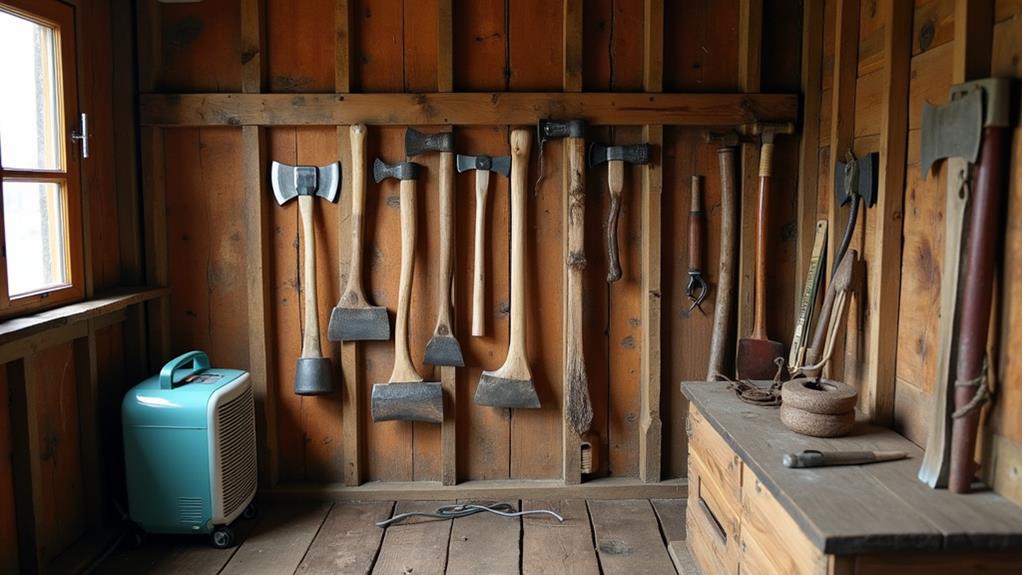
Store your axe in a dry, climate-controlled environment to prevent moisture damage. Avoid leaning it against walls or placing heavy objects on it to prevent bending or breakage. Elevate your axe off the ground and use a protective sheath to shield it from dust and environmental elements.
Climate-Controlled Storage
Storing your axes in a climate-controlled environment is essential for preserving the integrity of their wooden handles. By regulating humidity and temperature, you can prevent issues such as warping and shrinkage.
Follow these guidelines to ensure proper storage:
- Ideal Humidity Levels: Maintain relative humidity between 30% to 50%. This range is optimal for wooden handles, preventing mold growth and material degradation. Utilize a dehumidifier or humidifier to achieve this balance.
- Stable Temperatures: Avoid storing axes in areas like garages or attics where temperature fluctuations are prevalent. These extremes can accelerate wood deterioration, compromising handle strength and durability.
- Protective Covers: Always use a protective cover or sheath when storing your axes. This shields the handles from dust and moisture, providing an additional layer of protection against environmental factors.
Regularly inspect your stored axes for signs of damage or wear. Promptly addressing any issues ensures that environmental factors are effectively managed, keeping your axes in optimal condition for the long term.
Avoid Moisture Exposure
Proper storage of your axe is essential to prevent moisture exposure, which can severely damage the wooden handle. Always store your axe in a dry, climate-controlled environment to avoid moisture accumulation that can lead to wood warping or cracking, compromising the integrity of the handle. Never leave your axe outside or in damp areas where rain and humidity can cause significant harm.
Using a protective cover, such as a leather sheath or a cloth, is an excellent way to shield your axe from moisture when it's not in use. This added layer of protection can greatly extend the life of your axe handle. Additionally, regularly inspect the storage area for any signs of dampness or mold to ensure a safe environment for your tool. Make sure your axe is not in direct contact with wet surfaces.
Raising your axe off the ground during storage is another important step. This simple measure prevents moisture from seeping in from the soil or flooring. Here's a quick reference table for storing your axe properly:
| Storage Tip | Benefit | Action Required |
|---|---|---|
| Dry Environment | Prevents wood warping | Use a climate-controlled area |
| Protective Cover | Shields from moisture | Use a leather sheath or cloth |
| Regular Inspection | Detects early issues | Check for dampness or mold |
| Raise Off Ground | Avoids soil moisture | Store on a rack or shelf |
| Avoid Damp Areas | Reduces humidity impact | Keep away from rain and humidity |
Follow these guidelines to keep your axe handle in top shape.
Preventing Handle Breakage
To prevent handle breakage, regularly inspect your axe handle for signs of wear or damage. Pay close attention to grain alignment and check for cracks or splits.
Here are key steps to keep your axe handle in top condition:
- Apply Boiled Linseed Oil (BLO): Treating the handle with boiled linseed oil maintains its moisture balance and flexibility. Apply multiple coats for enhanced protection against environmental stressors.
- Store Properly: Keep your axe in a climate-controlled environment to prevent humidity and temperature fluctuations that can weaken the wood, causing warping or cracking.
- Use Proper Techniques: Avoid cutting into hard surfaces or subjecting the handle to excessive impact. Improper use can stress the handle and increase the risk of breakage.
Consider seasonal changes as well. During periods of extreme humidity or temperature, adjust your maintenance routine by applying boiled linseed oil more frequently to prevent handle fatigue. A well-maintained axe handle not only lasts longer but also ensures safe and effective use. Following these steps will help you prevent handle breakage and extend the life of your axe.
Treating and Repairing Damage
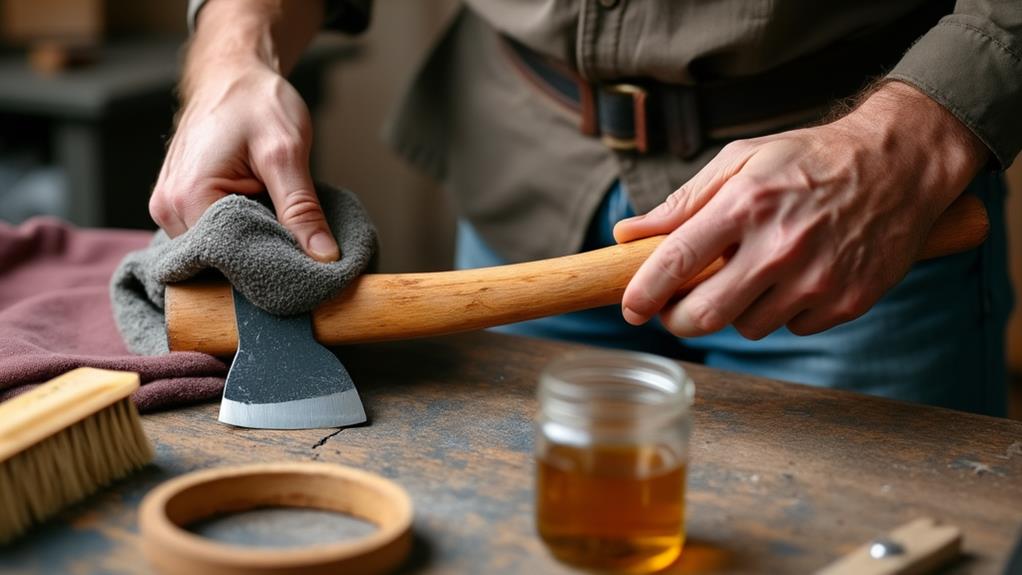
Your axe's handle may inevitably suffer damage over time, but with the right techniques, you can effectively treat and repair it, ensuring its longevity. Start by addressing minor damage: use fine-grit sandpaper to smooth out any rough spots and restore the wood's integrity. Once sanded, apply a protective finish like boiled linseed oil (BLO) to seal and protect the wood.
If you notice cracks, use wood glue to bond the pieces together. After applying the glue, wrap the handle tightly with strong duct tape to hold everything in place until the glue cures fully. This will reinforce the repair and ensure stability.
For significant moisture damage, soak the handle in a mixture of 2/3 BLO and 1/3 turpentine. Let the handle absorb this mixture for 24-72 hours. This deep treatment enhances moisture resistance and bolsters durability.
Regularly inspect your axe handle for signs of wear, such as splintering or warping, and address any issues promptly. If the handle becomes slippery due to oil buildup, buff it with a cloth to remove excess oil while maintaining its protective coating. This approach keeps your axe handle in top shape, ready for any task.
Seasonal Maintenance Tips
Maintaining your axe handle in optimal condition throughout the year requires specific seasonal care. Regularly applying boiled linseed oil (BLO) to the handle every few outings is essential. This practice helps maintain the wood's moisture balance, preventing cracking and warping due to seasonal humidity variations.
Seasonal Axe Maintenance Checklist:
- Apply Boiled Linseed Oil: Frequently treat your axe handle with BLO. In humid environments, mix 2/3 BLO with 1/3 turpentine for deeper penetration and enhanced water resistance.
- Inspect Handles: At the start of each season, thoroughly inspect the handle for any signs of wear or damage. Addressing climate-related issues promptly is crucial for maintaining the wood's integrity.
- Proper Storage: Store your axe in a climate-controlled environment to prevent deterioration. Excessive humidity can damage the handle, while dry indoor heating during winter may cause brittleness and cracking.
Ensure the handle is well-oiled before winter storage to mitigate these risks.
User Experiences and Insights
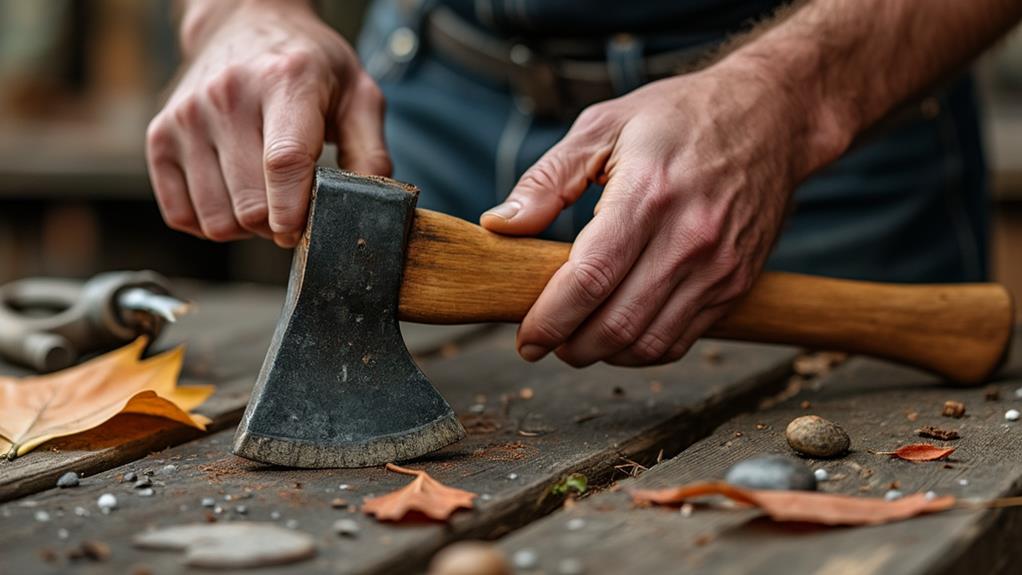
A diverse group of axe users has shared their insights on effective methods for maintaining axe handles. A common practice involves regularly applying boiled linseed oil (BLO). Users report that this not only improves grip but also significantly reduces moisture absorption, preventing warping and cracking. Many enthusiasts recommend a mixture of 2/3 boiled linseed oil and 1/3 turpentine, as it penetrates deeper, providing better moisture protection.
Treating the handle with beeswax after oiling offers an additional layer of defense and enhances the feel without leaving a sticky residue. Some users have also found that soaking the wood in kerosene for several days increases its flexibility and resistance to environmental stressors.
Regular checks for signs of wear and moisture damage are essential. Here's a handy comparison of different user-recommended methods:
| Method | Benefits | Key Ingredients |
|---|---|---|
| Boiled Linseed Oil | Improves grip, reduces moisture | Boiled Linseed Oil |
| BLO and Turpentine | Deeper penetration, better protection | Boiled Linseed Oil, Turpentine |
| Beeswax Treatment | Extra moisture protection, better feel | Boiled Linseed Oil, Beeswax |
| Kerosene Soak | Increases flexibility, environmental resistance | Kerosene |
Regular maintenance and vigilant checks can significantly extend the life of your axe handle.
Conclusion
Protecting your axe handle from environmental damage is crucial for both its longevity and performance. Start by removing any factory varnish to allow proper oil penetration. Choose high-quality oils and apply them regularly to nourish the wood. Store your axe in a dry place to prevent warping and splitting, and conduct regular inspections to catch any signs of damage early. Promptly treat and repair any issues to maintain the handle's integrity. By following these steps, you'll ensure your axe handle remains in optimal condition, ready for any task.