The Importance of Proper Footing When Using an Axe
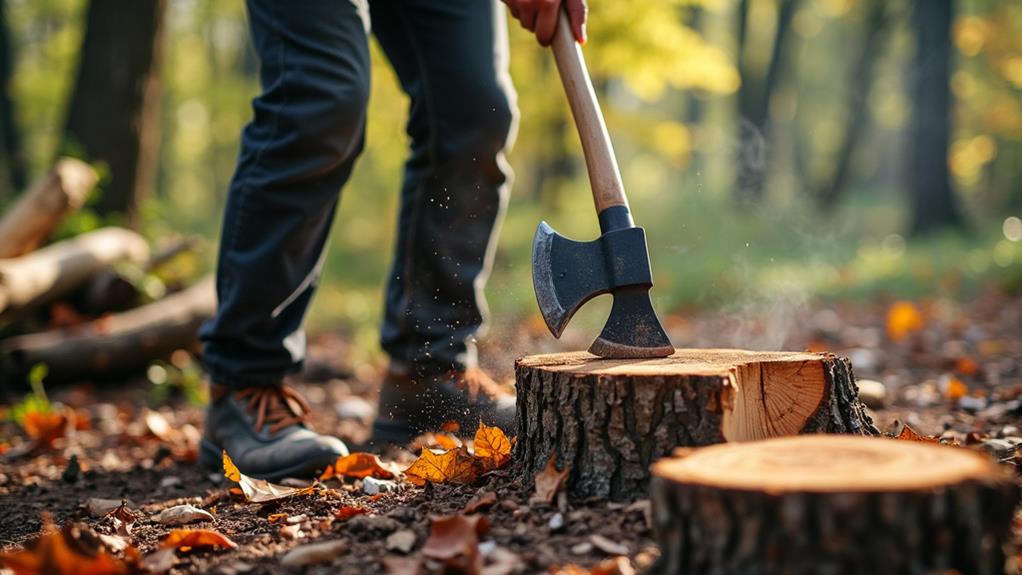
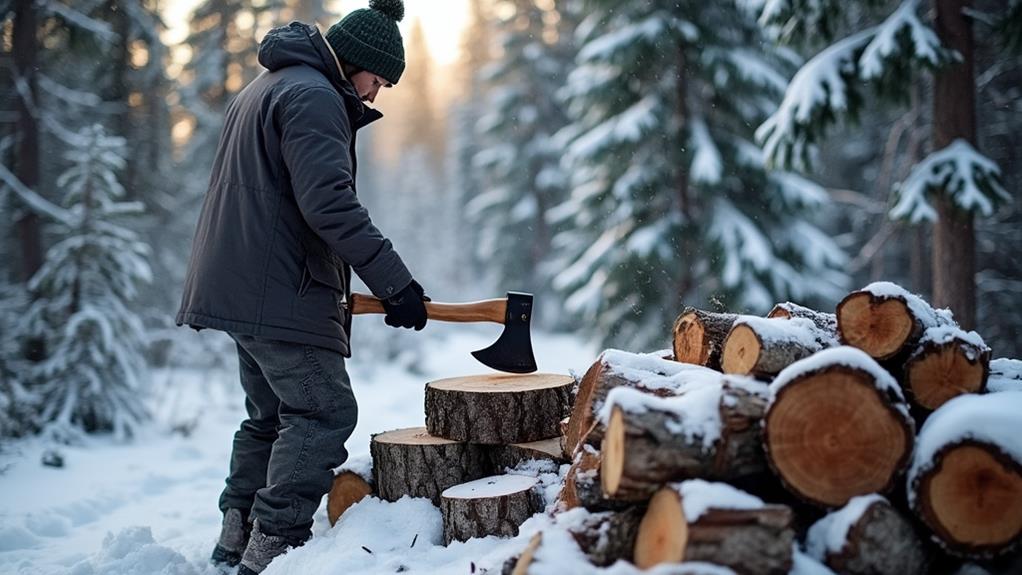
Proper footing when using an axe is essential for maintaining balance and control. By standing with your feet shoulder-width apart and one foot slightly ahead, you evenly distribute your weight, reducing the risk of slips and falls.
This stable stance not only enhances your swing accuracy but also increases the power behind each strike. Proper footing can significantly improve both your efficiency and safety, helping you avoid common pitfalls.
Interested in refining your technique to ensure each chop is effective?
Selecting the Ideal Axe
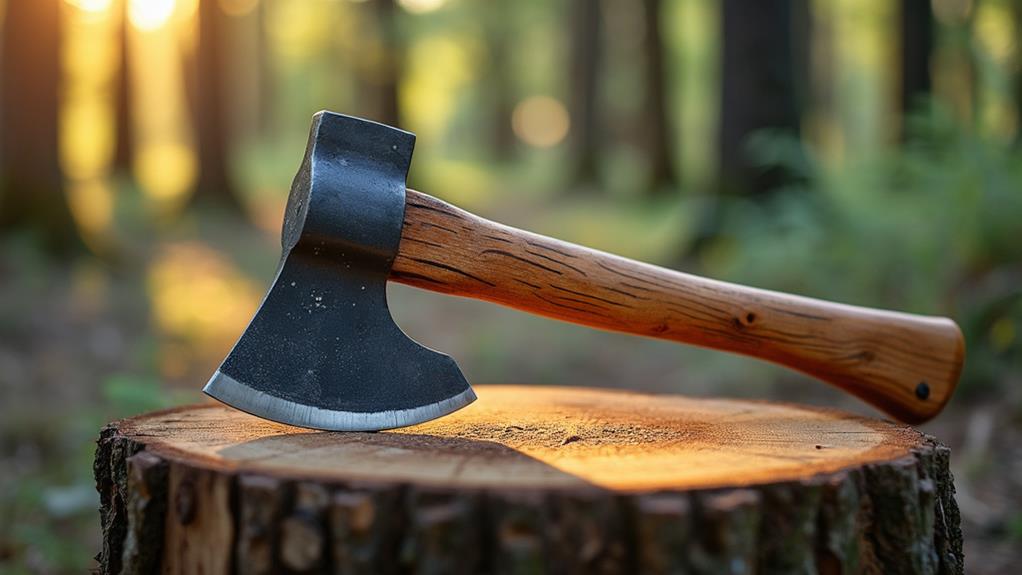
Selecting the right axe is crucial for both safety and effectiveness. The ideal axe should feel like an extension of your arm, aligning with your strength and skill level. Key factors to consider include weight, handle length, and blade sharpness.
A heavier axe delivers more power and is suitable for tasks like chopping thick logs, but it demands greater control to prevent accidents. Conversely, a lighter axe offers agility and precision, ideal for splitting kindling or detailed work. For enhanced safety and control, a 3/4 length axe can reduce fatigue and improve maneuverability.
The handle length is also significant. An overly long handle can be cumbersome, while a short handle mightn't provide sufficient leverage. Achieving the right balance ensures better control and minimizes injury risk.
Expert advice from facilities like Axe Lair can help you select the perfect axe based on your specific needs and experience level. By carefully choosing the right axe, you'll increase both your efficiency and safety.
Establishing a Stable Stance
When using an axe, establishing a stable stance is crucial for both safety and effectiveness. Start by positioning your feet shoulder-width apart to optimize balance and control. This basic footing is essential for maintaining proper safety measures while wielding the axe.
Next, position one foot slightly ahead of the other. This adjustment enhances stability, providing a more solid foundation for executing your throw. Maintaining a natural stance aids in weight distribution, ensuring you can deliver a powerful and controlled throw. A stable stance not only makes you safer but also contributes to a more effective throwing motion.
Consistency is key. Practicing the same foot placement each time leads to more predictable and accurate throws. Over time, this consistency will become second nature, improving your performance steadily.
If you're serious about refining your technique, personalized coaching can be incredibly beneficial. A coach can help you perfect your stance, ensuring it complements your throwing style for optimal results. By focusing on these elements, you'll be well on your way to mastering the art of axe throwing.
Enhancing Balance and Control

How can you elevate your axe-throwing skills? It begins with proper footing. By maintaining a stable stance with your feet shoulder-width apart, you enhance your balance, which is crucial for controlled axe swings. This positioning allows you to distribute your weight effectively, making it easier to execute powerful and accurate throws.
Positioning one foot slightly forward further stabilizes your stance. This subtle adjustment helps distribute your weight more evenly, enhancing your balance. Improved stability directly translates to better control over each swing, reducing the risk of mishaps.
Proper footing isn't only about stability but also about alignment with your target. A natural and comfortable stance promotes consistency in your technique, distinguishing skilled axe throwers from average ones. Regular practice and stance adjustments based on feedback will refine your control and precision when throwing an axe.
Preventing Slips and Falls
Preventing slips and falls when using an axe is essential for safety. Start by ensuring stable footing: position your feet shoulder-width apart to create a solid base, which significantly reduces the risk of losing balance during swings.
Clear the chopping area of any debris or obstacles like twigs or stones, as they can cause you to trip and compromise your balance. Regularly inspect your surroundings to maintain a safe, unobstructed workspace.
Wear sturdy footwear with non-slip soles for good traction and support, which helps keep you grounded on slippery or uneven surfaces. Practice controlled swings rather than aggressive ones to maintain better balance and reduce the risk of losing your footing.
Lastly, assess the ground surface for stability and levelness before you start chopping, choosing a flat, stable area to work in. By following these steps, you can greatly reduce the risk of slips and falls.
Maximizing Swing Efficiency
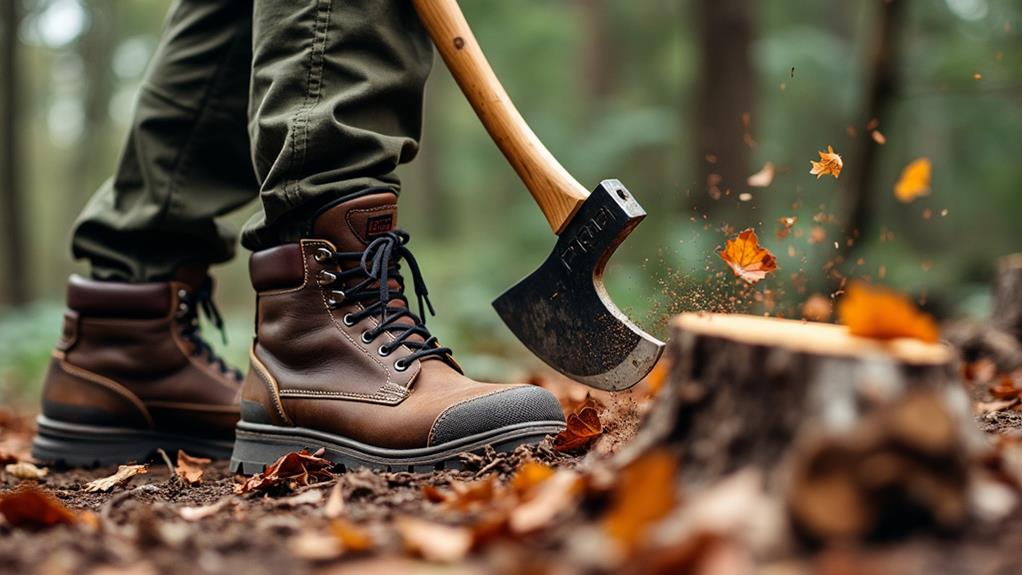
To optimize swing efficiency, start with your feet shoulder-width apart for a stable base. Position one foot slightly ahead to enhance balance and control during weight transfer. This stance not only improves accuracy but also reduces fatigue, making your swings more effective.
Stance Enhances Control
A stable stance with feet shoulder-width apart provides a solid base and boosts balance during the swing, crucial for maximizing control and efficiency.
Proper foot placement creates a foundation that allows precise management of movements, leading to a more controlled and powerful swing.
Positioning one foot slightly ahead of the other further enhances stability. This adjustment not only improves balance but also aids in effective weight transfer throughout the swing.
Here are three key benefits of maintaining a proper stance:
- Improved Balance: A solid stance helps maintain equilibrium, reducing the likelihood of losing footing during the swing.
- Increased Control: Enhanced balance allows for precise control of the axe's motion, leading to more efficient swings.
- Enhanced Efficiency: A proper stance leverages natural body movements, maximizing the power and efficiency of each strike.
Consistent practice of this stance develops muscle memory for effective axe use. Personalized coaching can further refine technique, ensuring optimal performance with every swing.
Balance Improves Accuracy
Standing firm like a rooted tree, your balance directly influences the accuracy of your axe swings. A shoulder-width stance provides a stable base essential for both balance and control. Proper foot positioning creates a solid foundation that supports your body throughout the entire swing, allowing for effective engagement of core muscles. This maximizes swing efficiency, translating into greater power and precision.
Positioning one foot slightly ahead of the other enhances stability and evenly distributes your weight, reducing the risk of losing balance during the downswing. This ensures your axe remains aligned with the target. A balanced stance minimizes lateral movements that can misalign your aim, thereby improving your accuracy with each throw.
Consistent practice of these balance techniques leads to muscle memory. Over time, your body will naturally adopt the correct stance, even under varying conditions, allowing for consistently accurate swings.
Proper Foot Placement
Proper foot placement is crucial for maximizing swing efficiency when using an axe. Start by positioning your feet shoulder-width apart to create a stable base. This foundation enhances your balance during the swing, ensuring you maintain control.
For optimal weight distribution, place one foot slightly ahead of the other. This stance allows for increased control and power, making your swing more effective. Keeping your feet firmly planted minimizes unnecessary movement, which can lead to inaccuracies and reduced swing efficiency.
Key Steps to Proper Foot Placement:
- Stable Base: Position your feet shoulder-width apart to enhance balance.
- Weight Distribution: Place one foot slightly ahead of the other for better control and power.
- Body Alignment: Align your feet with the target to maintain proper body alignment.
Maintaining body alignment is essential. By aligning your feet with your target, you ensure that your body follows through accurately, leading to a more effective and precise axe throw.
Engaging your legs and core through proper foot placement helps transfer your body weight into the swing, maximizing the force applied to the axe.
Improving Wood Splitting Techniques
To improve your wood splitting techniques, ensure your feet are shoulder-width apart for balance and control. Place the wood on a solid surface to prevent bounce-back, and use your body weight during the swing to add power. Maintain a firm grip on the axe and take a slight step forward during the downswing to drive the axe deeper and increase efficiency.
Optimal Stance Positioning
A shoulder-width stance is crucial for enhancing balance and stability, enabling more controlled swings when splitting wood. This stance creates a solid foundation that prevents you from toppling and helps maintain better control over the axe.
Positioning one foot slightly forward further strengthens your base and aids in effective weight transfer during each swing. Maintaining a slight bend in your knees is also essential. This adjustment lowers your center of gravity, improving stability and reducing the risk of losing balance while swinging.
Keeping your feet firmly planted and minimizing lateral movement ensures greater accuracy and power with each strike.
In summary, here are the key points for optimal stance positioning:
- Shoulder-width stance: Enhances balance and stability for controlled swinging.
- Foot positioning: One foot slightly forward for a stronger base and effective weight transfer.
- Knee bend: Lowers center of gravity, boosting stability and reducing balance loss.
Consistently practicing this stance won't only improve your wood splitting techniques but also develop muscle memory, making your axe use more efficient and effective over time.
Controlled Swing Techniques
Controlled swings are essential for efficient and safe wood splitting. To achieve this, maintaining stable footing is critical. Position your feet shoulder-width apart with one foot slightly ahead to create a proper stance. This positioning stabilizes your body and enhances the power and accuracy of your axe strikes.
Engage your core while swinging to provide a solid foundation, enabling you to execute controlled swing techniques effectively. Keep your weight centered and practice maintaining a balanced stance. This will improve your accuracy and efficiency, making each swing count.
Regularly assess your footing, especially on uneven or slippery surfaces. Adjust your stance as needed to maintain stability. This practice will refine your wood splitting technique and reduce the risk of injury.
Conclusion
Proper footing is crucial when using an axe. Selecting the right axe and maintaining a stable stance with feet shoulder-width apart enhances balance and control, reducing the risk of slips and falls. This stability allows for optimized swing efficiency, improving both safety and wood-splitting techniques. Always remember, a strong foundation is paramount for effective and safe axe use.