The Evolution of Axe Design Over the Centuries
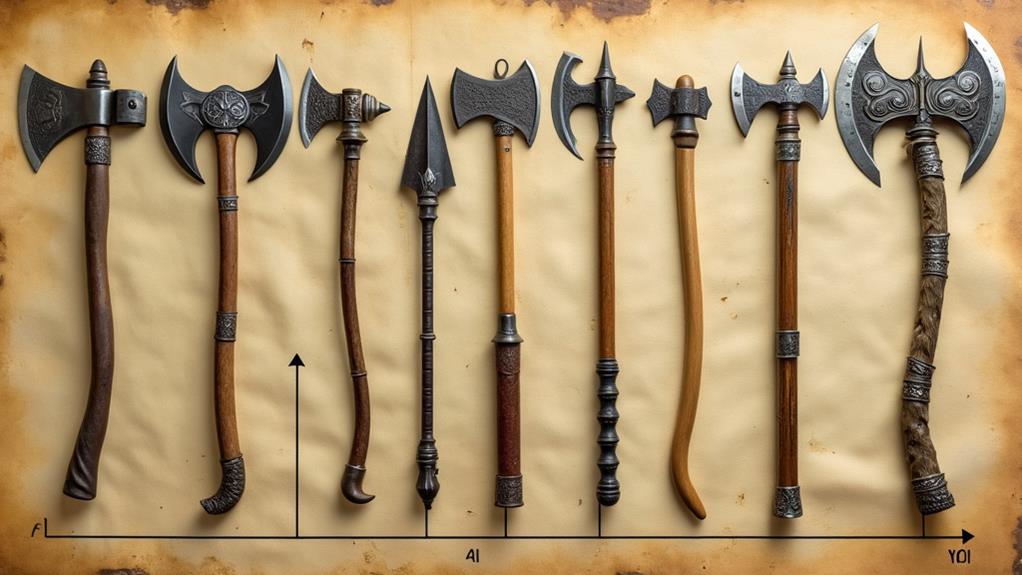
Imagine holding a crude stone axe from the Stone Age and then comparing it to a finely crafted Viking battle axe or a sleek, modern camping tool. Each design tells a story of technological progress and cultural shifts.
Different periods prioritized diverse materials and functionalities, reflecting the needs and craftsmanship of their time. From the early non-shaft-hole axes used by human hunters to the ornate, weaponized axes of warrior societies, the evolution of axe design is a fascinating journey.
What drove these changes, and how did they shape the tools we use today?
Origins in the Stone Age
The origins of axe design date back to the Stone Age, around 1.5 million years ago, when early humans crafted simple chipped stone tools for hunting and woodcutting. These earliest axes, fashioned from stones chipped into sharp edges, were essential for survival.
By approximately 6,000 BC, Mesolithic humans made significant advancements by hafting stone wedges to wooden handles using rawhide. This innovation improved the tool's efficiency by providing a better grip and greater leverage, marking a crucial moment in axe development.
Around 4,000 BC, grinding techniques emerged, allowing people to produce sharper and more durable stone axes. These improvements increased cutting efficiency, making tasks like woodcutting and hunting easier and more effective.
The introduction of shaft holes in axe heads represented another leap forward. This design allowed for a more secure attachment to the handle, offering better control and safety during use.
As societies transitioned into the Bronze Age (approximately 3300 BC – 1200 BC), metal axe heads began to replace stone ones. Metal heads were more durable and could be mass-produced, revolutionizing toolmaking and usage.
Non-Shaft-Hole Axes
As we explore the origins of axe design, non-shaft-hole axes emerge as intriguing early tools. These stone implements, crafted from materials like flint, greenstone, or slate, marked significant advancements in prehistoric technology.
Primarily used for butchering animals and digging, non-shaft-hole axes exemplify versatility. Core axes, made from unpolished flint, played crucial roles in butchering and skin preparation. Flake axes, another type, were specifically employed for preparing animal skins.
Notably, the Lihult axe, carved from polished greenstone and dating back to 3700-3200 BC, represents a leap in both design and functionality. Thin-butted axes from the same period were designed for forest clearing, reflecting evolving needs and sophistication in tool-making techniques.
Their simpler design, lacking a shaft hole, marks a significant stage in the evolution of axe technology, preceding the more complex shaft-hole axes.
These non-shaft-hole axes not only highlight early human ingenuity but also provide insights into the daily life and survival practices of our ancestors. They represent a crucial moment in the history of tool-making, bridging the gap between rudimentary stone tools and more advanced designs.
Shaft-Hole Axes
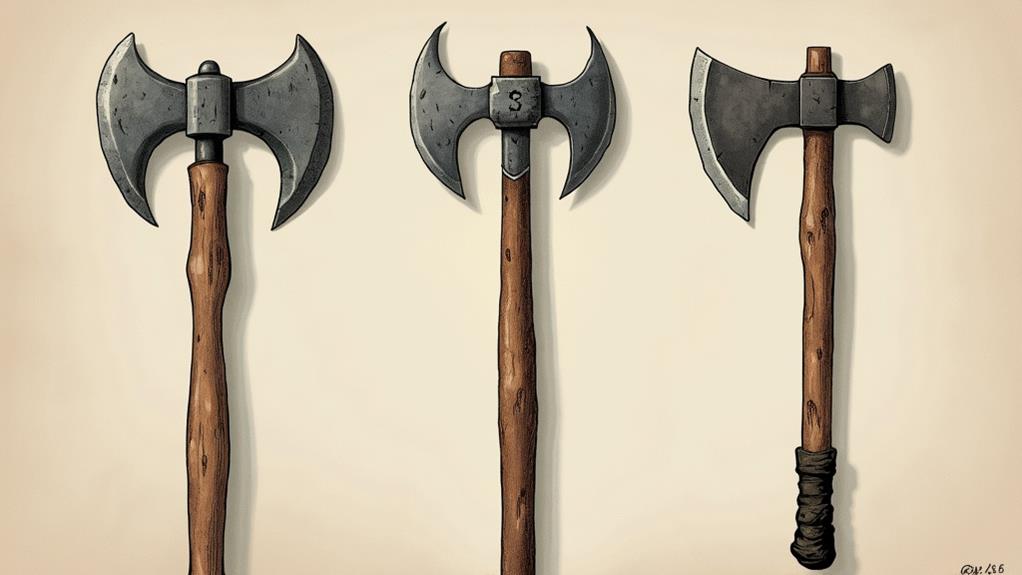
Shaft-hole axes represent a significant advancement in tool-making, enhancing efficiency and control. Characterized by a hole for a handle, these axes became prominent during the Late Stone Age. This design offered superior leverage and control compared to earlier solid axes. Around 3000-3400 BC, polygonal axes exemplified their cultural and functional importance.
The advent of shaft-hole axes led to specialized forms, such as the double-headed battle axe (3400-2900 BC), reflecting their dual roles in practical and ceremonial contexts. These axes often served as status symbols, intricately adorned to denote social hierarchy. For instance, the boat axe from the Battle Axe culture underscored the link between tool design and social standing.
Production methods for shaft-hole axes evolved over time. Initially crafted from stone, these tools shifted to more sophisticated metal designs during the Bronze Age, facilitating mass production and increasing accessibility.
Overview:
| Period | Notable Example | Significance |
|---|---|---|
| Late Stone Age | Polygonal Axe (3000-3400 BC) | Cultural and functional roles |
| Late Stone Age | Double-headed Battle Axe | Practical and ceremonial use |
| Bronze Age | Metal Shaft-hole Axes | Enhanced production techniques |
Understanding shaft-hole axes sheds light on the evolution of tool design and social dynamics.
Bronze Age Advancements
Advancements in axe design during the Bronze Age revolutionized tool-making by transitioning from stone to metals like copper and bronze. This shift significantly enhanced the durability and cutting efficiency of axes. Bronze axe heads were commonly cast in molds, allowing for mass production and standardization, making these tools more widely available.
A key innovation was the introduction of socketed axes. These axe heads featured a hollow design that facilitated easier and more secure attachment to handles, improving both usability and stability.
Despite being smaller, these socketed axes retained effective cutting power with thinner blades and pronounced edges, ensuring the cutting edge remained sharp and efficient.
Key points about Bronze Age advancements:
- Material Shift: Transition from stone to copper and bronze improved durability and cutting efficiency.
- Casting in Molds: Enabled mass production and standardization of bronze axe heads.
- Socketed Axes: Simplified attachment to handles, enhancing usability and stability.
- Refined Design: Thinner blades and sharper edges distinguished bronze axes from stone tools.
Axes in Warfare

Axes have a long history of use in warfare, evolving from simple tools during the Stone Age to specialized weapons by 4000-3000 BC. During the Viking Era, longer-handled battle axes enhanced combat effectiveness, while throwing axes like the Francisca were crucial in close combat for Teutonic tribes and Franks. In the Middle Ages, innovative designs such as the double-headed axe emerged, symbolizing power and authority in various cultures.
Early Combat Axes
Throughout history, early combat axes have played a significant role in warfare, evolving from basic hand tools into specialized weapons during the Stone and Bronze Ages. Initially, axes were utilitarian tools, but as conflicts arose, they were repurposed into combat axes, designed specifically for close combat. Societies quickly recognized their effectiveness, leading to the development of distinct battle axes.
Here's how early combat axes evolved:
- Stone Age Axes: The earliest combat axes were simple stone hand axes, effective for smashing and cutting in close quarters.
- Bronze Age Innovation: With the advent of metallurgy, bronze battle axes emerged with sharper, more durable blades, enhancing their lethality.
- Throwing Axes: Teutonic tribes developed specialized throwing axes, adding a ranged attack option to their arsenal.
- Viking Improvements: Vikings introduced longer-handled battle axes, offering greater reach and power in combat.
The design of these weapons continued to evolve, with broader blades and specialized shapes tailored for different combat styles. This evolution made them indispensable on the battlefield, laying the groundwork for more advanced designs in subsequent ages.
Medieval Battle Innovations
The medieval period witnessed significant advancements in the design and use of battle axes, building on earlier innovations. During the Viking Era, axes evolved into longer-handled battle axes, providing greater leverage and striking power. These design improvements made medieval axes formidable on the battlefield.
One notable innovation was the resurgence of the double-headed battle axe, which, although dating back to the Bronze Age, gained renewed prominence during medieval times. This weapon not only provided immense striking power but also symbolized rank and authority in warfare. Additionally, the Teutonic tribes introduced the Franziska, a versatile throwing axe. It could be used in melee combat or thrown at enemies, making it a dual-purpose weapon.
Specialized battle axes designed for foot combat also emerged, featuring reinforced edges to more effectively pierce armor. This evolution from tool to weapon, evident since the Stone and Bronze Ages, reached new heights in medieval design. These innovations transformed the axe into a crucial component of medieval warfare, enhancing its effectiveness and symbolic significance on the battlefield.
Cultural Significance
Axes have played a significant role in the historical and cultural narratives of various ancient civilizations, serving as both practical tools and potent symbols. In ancient Rome, the fasces—a bundle of rods with an axe—represented the power and authority of magistrates, highlighting their importance in governance.
During the Viking era, battle axes weren't merely weapons; they denoted power and social rank, reflecting the status of their owners. Similarly, in Minoan culture, the double-headed axe was integral to religious rituals, demonstrating the fusion of utility and spirituality.
In the Battle Axe culture (3200-1800 BC) of Southern Sweden-Norway, distinct battle axes and ceramic pots symbolized a shared cultural identity.
Key examples include:
- Roman Fasces: Represented authority and the power to punish.
- Viking Battle Axes: Signified societal status and power.
- Minoan Double-Headed Axe: Central to religious rituals.
- St. Olaf's Axe: Evolved into a holy symbol associated with historical figures.
These instances underscore the deep cultural significance of axes in shaping the identities of these ancient civilizations.
Industrialization of Axe Making
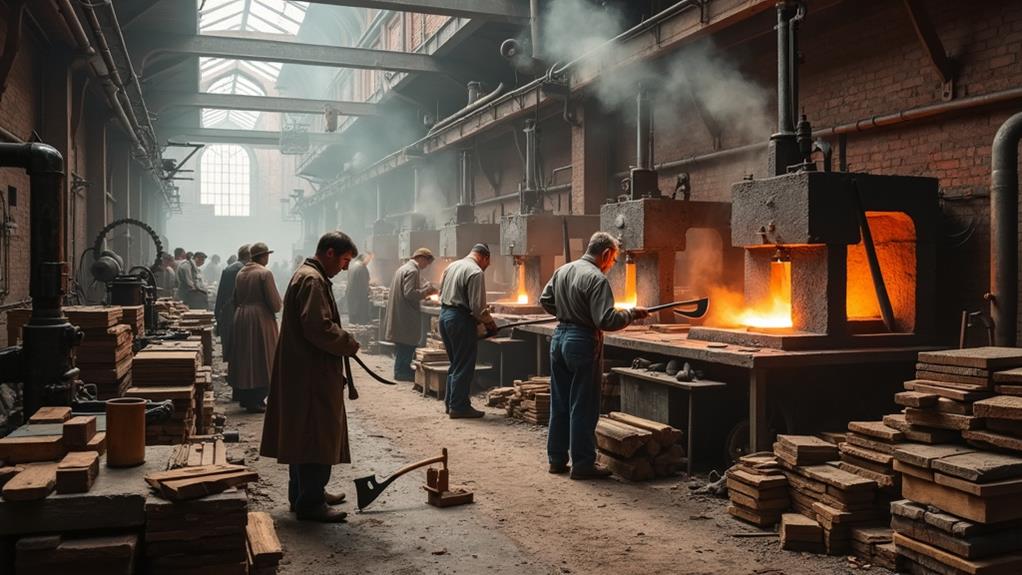
In the 19th century, the axe-making industry underwent a significant transformation due to industrialization. The production process evolved from small, specialized forges to large-scale factories that emphasized standardization and mass production. The introduction of machinery allowed axe makers to produce tools with consistent quality and design, using stronger materials like carbon steel, which improved the cutting ability of axes and met the growing consumer demand.
| Period | Number of Manufacturers (USA) | Number of Manufacturers (Sweden) |
|---|---|---|
| Pre-Industrialization | Over 600 | Over 20 |
| Post-Industrialization | Few | Three by 2013 |
| Modern Times | Few | Three by 2013 |
Despite the decline in the number of manufacturers—from over 600 in the USA to just a few, and from over 20 in Sweden to three by 2013—the initial phase of industrialization led to an improvement in the quality of axes. However, as consumer demand shifted from professional lumberjacks to casual suburban users, the market saw a rise in cheaper, inferior axes. This shift away from traditional craftsmanship resulted in a general decline in quality.
Interestingly, some modern manufacturers, such as Gränsfors Bruk, are now reviving traditional craftsmanship values. They focus on quality over quantity, catering to a niche market that values superior craftsmanship and durability.
Modern Uses and Manufacturers
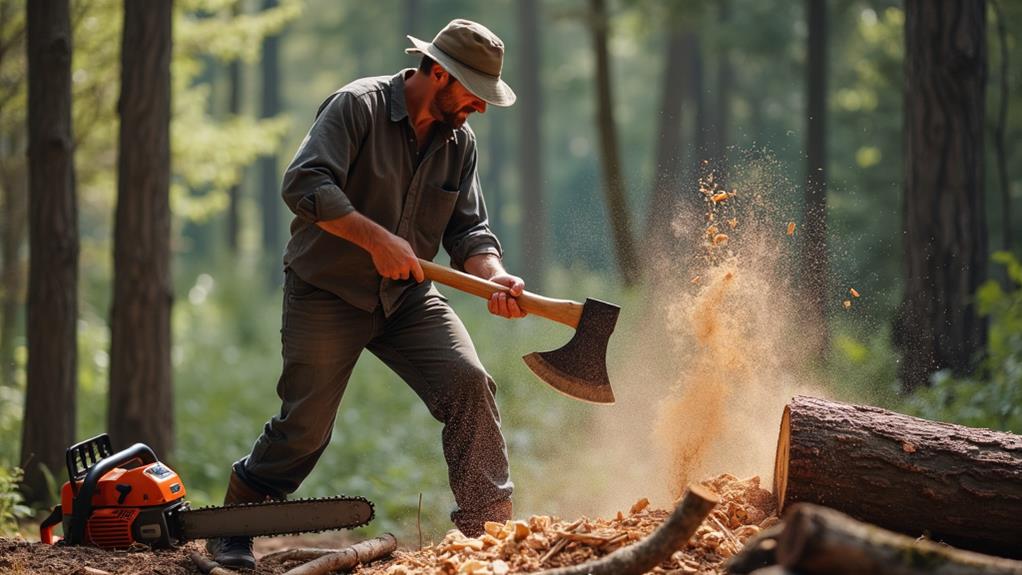
Modern axes are often used for small-scale farming, outdoor activities, and craftsmanship rather than large-scale forestry, largely due to the widespread adoption of chainsaws. Notable brands like Gränsfors Bruk continue to thrive by focusing on quality and traditional techniques. Recently, there's been a growing interest in premium axes, leading boutique makers to produce high-quality tools that combine functionality with aesthetics.
Contemporary Axe Applications
Modern axe applications blend tradition and innovation, catering to today's diverse needs. Contemporary axes are indispensable for tasks in farming, outdoor activities, craftsmanship, and home maintenance.
These tools offer the precision and control needed for activities like limbing trees and preparing firewood. While the number of axe manufacturers in the USA has decreased, the industry has shifted towards mass production and standardization without compromising quality.
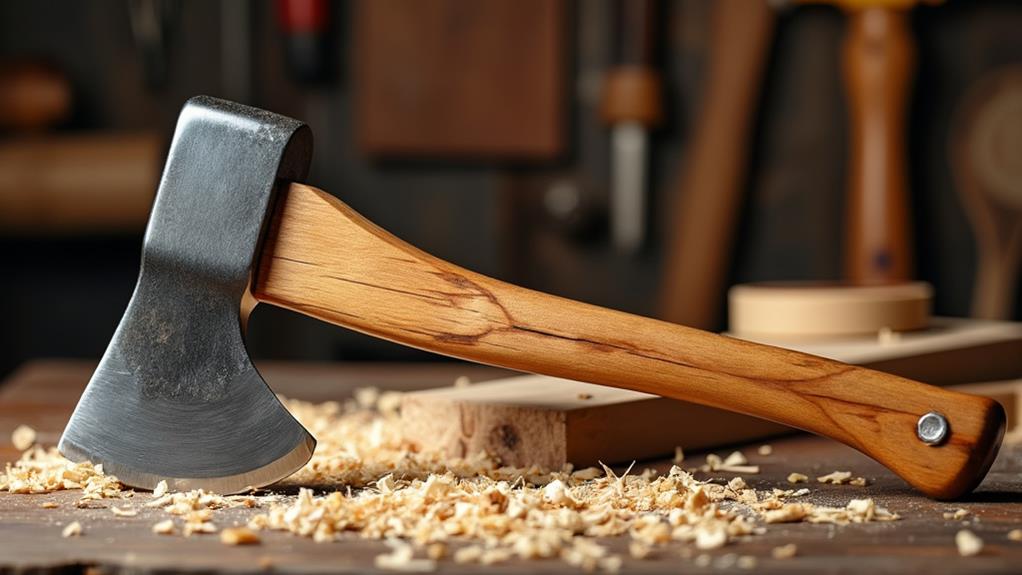
Today's manufacturers use strong carbon steel for axe heads and durable wood or synthetic handles, ensuring both performance and longevity. Traditional craftsmanship persists through boutique axe makers who produce premium axes, merging time-honored techniques with modern design for users who demand high-quality tools.
Here's how modern axes are utilized:
- Farming: Ideal for small jobs such as clearing brush or chopping firewood.
- Outdoor Activities: Essential for camping, hiking, and survival tasks.
- Craftsmanship: Employed by woodworkers and artisans to create works of art.
- Home Maintenance: Useful for gardening and small-scale landscaping.
An example of this balance is Gränsfors Bruk, a company that prioritizes quality over quantity, maintaining a tradition of excellence in hand-forged axes for various applications.
Leading Axe Brands
The influence of both tradition and innovation is evident in leading axe brands today. Gränsfors Bruk and Ochsenkopf are two brands that exemplify a commitment to quality craftsmanship and durable materials.
Gränsfors Bruk, based in Sweden, employs traditional hand-forging techniques, ensuring each tool is made with high-quality carbon steel. This dedication to craftsmanship makes their premium axes highly sought after by both professionals and enthusiasts.
Ochsenkopf, founded in 1781 in Germany, also emphasizes quality and longevity. The brand focuses on ergonomic designs, making their axes comfortable for extended use. They utilize superior steel, catering to both professional woodworkers and hobbyists who appreciate well-balanced and efficient tools.
Interestingly, the axe manufacturing market has contracted, with only a few active makers in the USA and none in Canada. However, there's a growing interest in premium axes, leading to the emergence of boutique makers.
These modern craftsmen blend utility with aesthetic appeal, ensuring each handcrafted axe is both functional and beautiful. Their work underscores the enduring value of quality craftsmanship in today's world.
Traditional Craftsmanship Revival
The resurgence of traditional craftsmanship has revitalized axe manufacturing, captivating modern users with tools that blend historical techniques and contemporary needs. Companies like Gränsfors Bruk and Ochsenkopf, boasting over 200 years of expertise, lead this movement by creating durable and ergonomic axes that reflect a deep commitment to craftsmanship and historical design principles.
Modern manufacturers emphasize hand-forged axe heads made from high-quality carbon steel and handles crafted from resilient hickory wood. This ensures that the axes aren't only functional but also built to last.
The revival of these traditional methods underscores a preference for quality over mass production, appealing to those who value heritage and durability.
The increasing trend toward sustainable forestry and outdoor activities has further boosted the demand for these traditional axes. Enthusiasts seek tools that combine utility with historical significance, making these axes ideal for collectors and outdoor adventurers alike.
Reasons to consider a hand-forged, traditional axe:
- Quality Materials: High-carbon steel and hickory wood ensure longevity.
- Durable Design: Constructed to withstand rigorous use.
- Sustainable Practices: Supports eco-friendly forestry.
- Artisan Craftsmanship: Merges historical techniques with modern needs.
Transition to Metal Axes
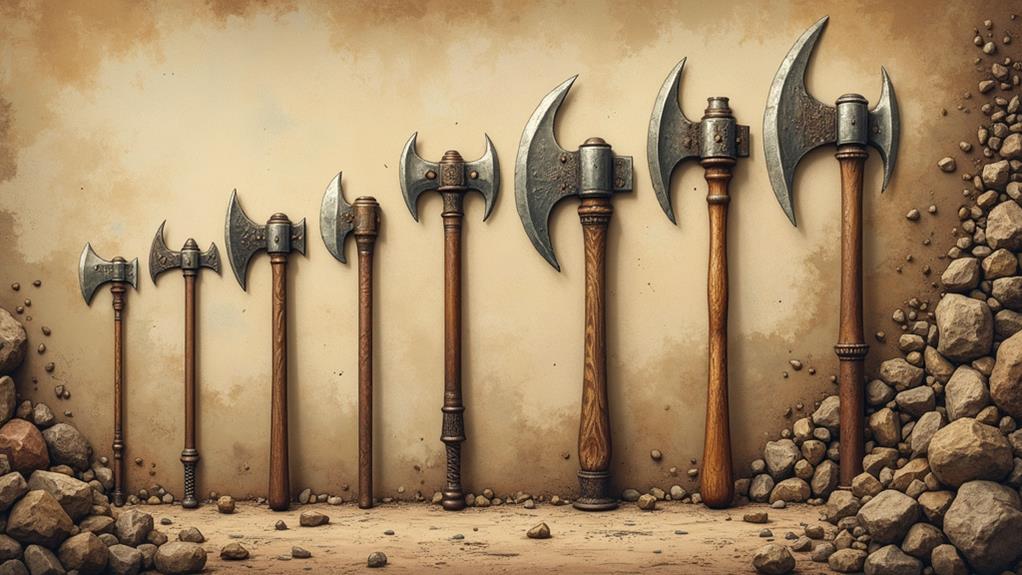
The transition to metal axes, beginning in the Bronze Age (2000 BC – 500 AD), dramatically advanced tool-making and usage. This shift from stone to metal axes resulted in significant improvements in durability and cutting efficiency. During the Bronze Age, axe heads were primarily crafted from copper and bronze. These metals allowed for casting in molds, enabling mass production and uniform designs. The introduction of socketed axe heads provided better attachment to handles, enhancing overall functionality.
| Period | Material | Key Features |
|---|---|---|
| Bronze Age | Bronze | Cast in molds, uniform designs, socketed heads |
| Iron Age | Iron | Stronger, larger blades, adapted designs |
| Post Iron Age | Iron | Shaft holes, increased effectiveness |
| Future | Advanced | Innovations in materials and design |
With the Iron Age beginning around 500 BC, metal axes saw further advancements. Iron's strength allowed for the creation of larger, wider blades, improving their functionality. Older designs were adapted to this new material, including specialized axes for combat and labor. By the end of the Iron Age, the integration of shaft holes made handling easier, setting the stage for future innovations in materials and design.
This period marked a significant leap in the efficiency and versatility of axes, paving the way for ongoing advancements in tool technology.
Conclusion
The evolution of axe design spans from the Stone Age's rudimentary chipped stones to today's intricate craftsmanship that revives traditional methods. Each era introduced advancements in materials and functionality, mirroring the cultural and practical needs of the times. Modern manufacturers now blend quality with durability, paying homage to centuries of innovation. Understanding this rich history allows for a deeper appreciation of the axe's significant role throughout history and its continued relevance today.