The Benefits of Using a Traditional Axe Over a Chainsaw
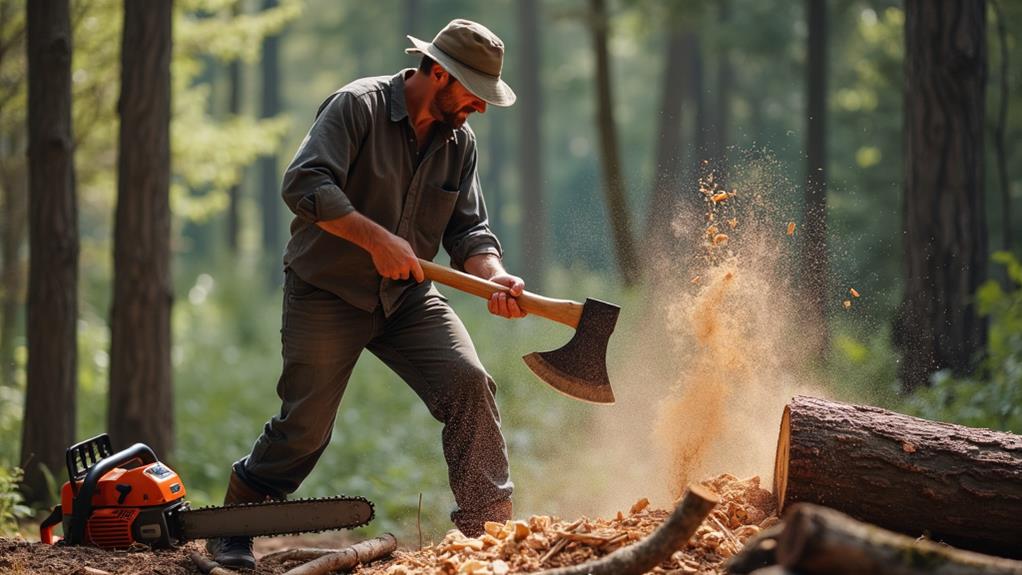
When choosing the right tool for your outdoor tasks, a traditional axe offers several advantages over a chainsaw. Beyond the initial cost savings, often under $50, an axe requires less maintenance and has a lower environmental impact. With no emissions and minimal noise, it is both eco-friendly and more tranquil.
Additionally, using an axe can be an excellent form of exercise, burning 400-500 calories per hour. Moreover, an axe can enhance your overall outdoor experience by fostering a deeper connection with nature.
Tool Comparison
When comparing tools for cutting wood, traditional axes stand out for several reasons. Firstly, axes are generally more affordable, with prices ranging from $20 to $200. In contrast, modern machinery like chainsaws can cost between $100 and $1,500, making axes a more budget-friendly option.
Axes also require simpler maintenance; regular sharpening is typically sufficient. In comparison, chainsaws need more upkeep, including oiling, chain sharpening, and thorough cleaning. Additionally, as hand tools, axes produce no emissions, making them environmentally friendly, whereas gas-powered chainsaws contribute to air pollution.
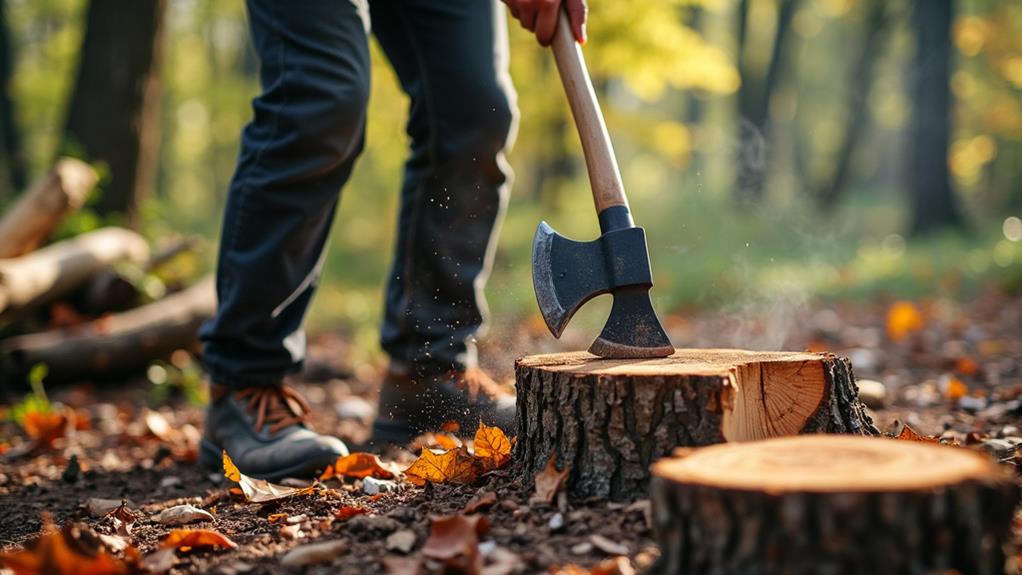
Using an ax also offers physical benefits. Swinging an ax can burn between 400 to 500 calories per hour and improve muscle strength, providing a workout that chainsaws cannot. Furthermore, axes are highly portable and ready for use without any setup time. Unlike chainsaws, they don't require fuel, oil, or extensive cleaning. All these factors make axes a compelling choice over modern machinery.
Performance and Efficiency
In terms of performance and efficiency, traditional axes excel in several key areas. They allow you to chop through thinner branches with a single swing, often making them faster for small-scale tasks compared to the setup time required for a chainsaw.
While chainsaws are excellent for quickly cutting large trees, an axe provides precision in shaping and sculpting wood, allowing for more controlled and delicate cuts. This precision is especially useful for creating specific shapes or detailed work.
Moreover, the manual operation of an axe offers immediate response and adaptability, making it effective in confined spaces where a chainsaw might struggle to maneuver.
- Efficient for chopping thinner branches with a single swing
- Offers precision in shaping and sculpting wood
- Allows immediate response and adaptability in confined spaces
- Provides a physical workout, burning 400-500 calories per hour
- Quieter and causes no vibrations, ideal for noise-sensitive environments
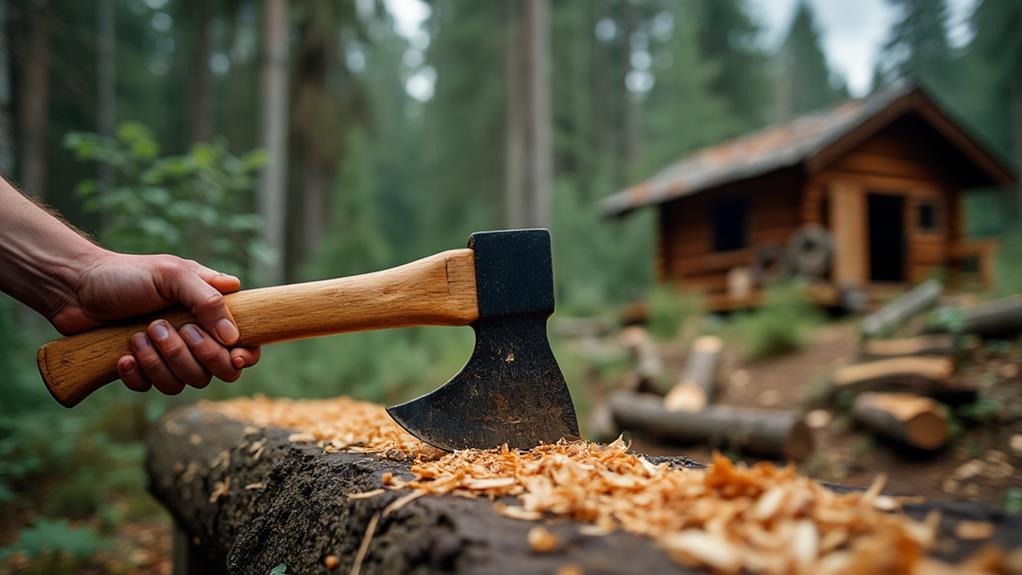
Using an axe with a wooden handle also serves as a physical workout, burning approximately 400-500 calories per hour, thus contributing to overall fitness while performing outdoor tasks. Additionally, axes are quieter and cause no vibrations, making them ideal for working without disturbing wildlife or neighbors.
Versatility and Use Cases
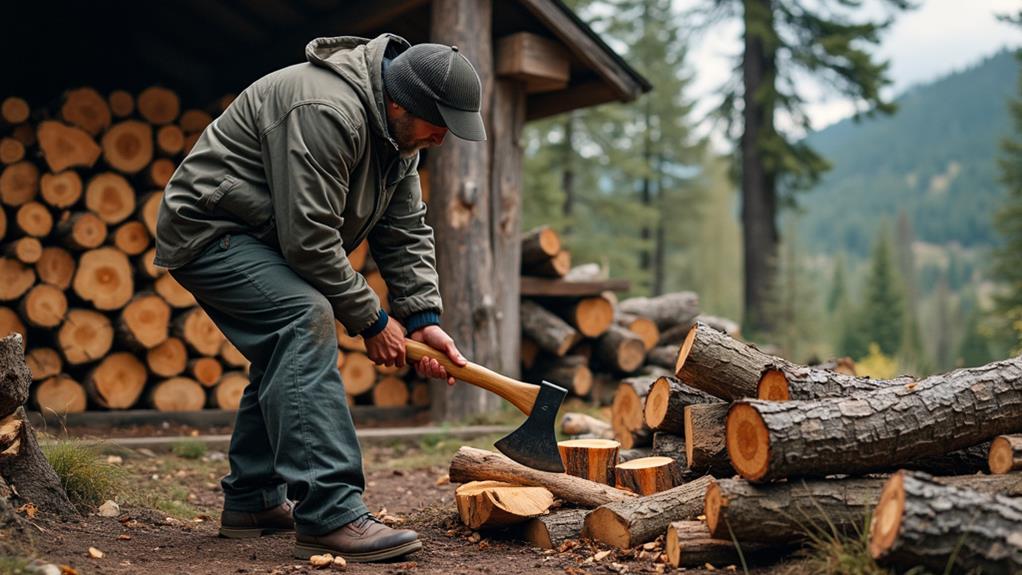
Traditional axes offer remarkable versatility, making them invaluable for a range of tasks. An ax is perfect for chopping firewood, clearing branches, and even felling small trees. Unlike chainsaws, which excel at heavy-duty jobs, axes provide precise control for delicate tasks like shaping wood or carving.
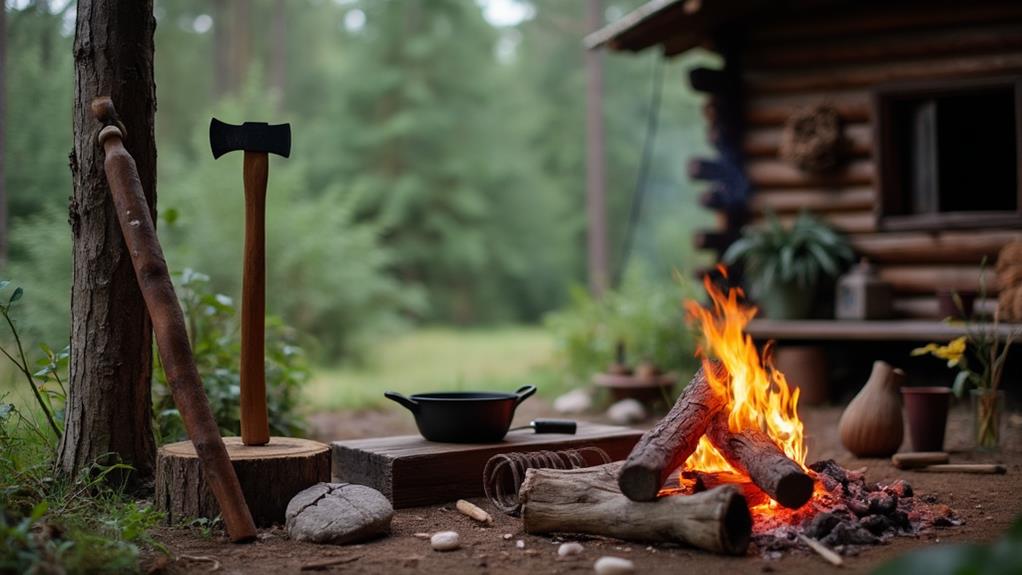
The portability of axes makes them ideal for outdoor activities such as hiking and camping. They're easy to carry and require no fuel or electricity. With no setup time, you can start working immediately, making an ax a go-to tool for instant utility.
In noise-sensitive environments like residential areas or during nighttime, an ax is a silent alternative to the loud operation of a chainsaw, minimizing disturbances. Whether in a survival situation or on a camping trip, an ax's versatility ensures you're prepared for various tasks, from tree felling to intricate woodwork.
Safety and Ergonomics
When selecting a tool for woodcutting tasks, safety and ergonomics are crucial considerations. Traditional axes excel in these areas, offering several advantages over chainsaws. Axes typically pose a lower risk of severe injury, as their manual operation provides greater control, minimizing hazards such as kickback and mechanical failures.
By employing the correct stance and technique, you can further enhance safety and reduce fatigue. Many axes are designed to facilitate a natural swinging motion, thereby reducing strain on the body. This is in contrast to the vibrations and weight associated with chainsaws, which can lead to increased fatigue during prolonged use.
Additionally, maintaining an axe is straightforward and quick, primarily involving regular sharpening. Chainsaw maintenance, on the other hand, is more complex, requiring tasks like checking fuel and lubricant levels, which can complicate safe operation.
Consider these benefits of using an axe:
- Lower risk of severe injury: Manual operation allows for greater control.
- Ergonomic design: Encourages a natural swinging motion, reducing strain.
- Less fatigue: Proper stance and technique minimize tiredness.
- Simple maintenance: Quick sharpening compared to chainsaw upkeep.
- Silent operation: Reduces noise pollution and increases awareness of surroundings.
These benefits make axes a reliable and user-friendly choice for woodcutting tasks.
Cost and Environmental Impact
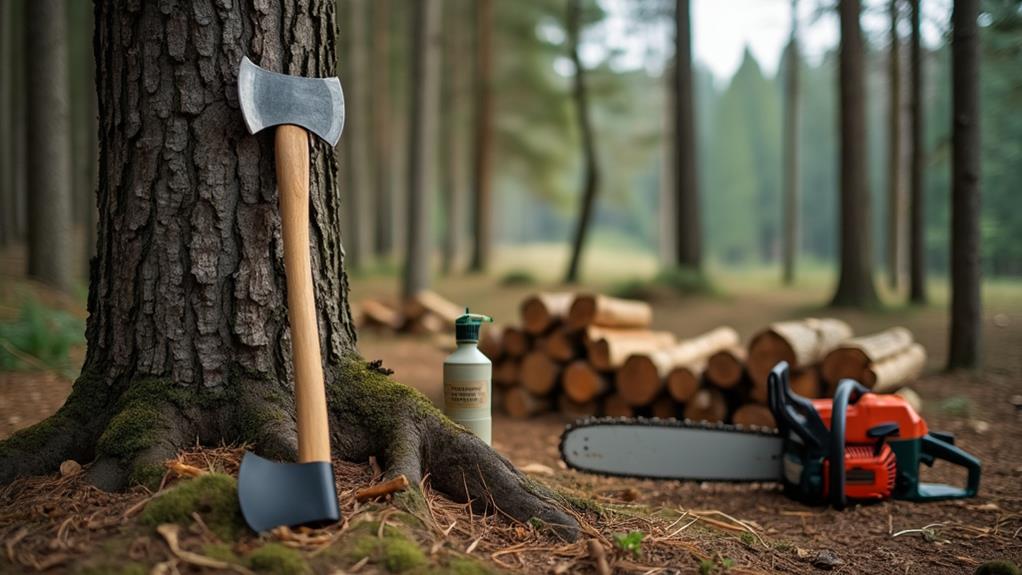
When considering both cost and environmental impact, traditional axes are a practical choice for woodcutting tasks. Most axes are priced under $50, making them a budget-friendly alternative to chainsaws, which can range from $100 to $1,500 depending on the model and brand. Used axes can be found at even lower prices, making them accessible for anyone needing to perform outdoor tasks without significant financial investment.
From an environmental standpoint, axes have a clear advantage over power tools. Axes operate solely on human power, resulting in zero emissions, while gas-powered chainsaws contribute to air pollution and require non-renewable resources.
Even electric chainsaws, though more eco-friendly, still depend on electricity that may not always come from renewable sources. In contrast, axes have a minimal ecological footprint. Using an axe promotes sustainability by conserving energy resources, as it doesn't involve fuel or electricity. This makes it a more eco-conscious choice for small-scale tasks.
If you care about both cost and environmental impact, a traditional axe is a sustainable and economical option for your woodcutting needs.
Conclusion
Choosing a traditional axe over a chainsaw offers a cost-effective, eco-friendly, and low-maintenance solution that excels in quiet, noise-sensitive areas. An axe provides an excellent workout, burning 400-500 calories per hour, while allowing for greater control and precision. Its versatility and simplicity make it ideal for various outdoor tasks. Embrace the benefits of a traditional axe for a more sustainable and rewarding experience.