Survival Skills: Using an Axe in the Wilderness
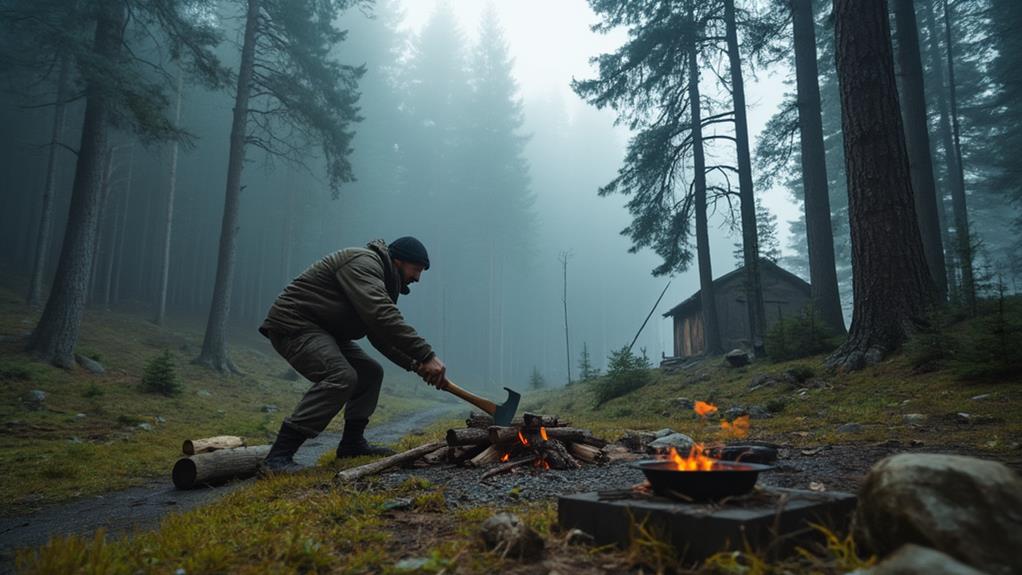
When you're out in the wilderness, an axe isn't just a tool—it's a lifeline. Selecting the right axe is crucial; it should fit comfortably in your hand and be sharp enough for various tasks. Safety is paramount; maintaining a good grip and constant awareness can prevent serious injuries. Mastering this tool can mean the difference between a makeshift shelter and a sturdy refuge, or having enough firewood to stay warm through the night. Before you swing that blade, consider several key factors to enhance both effectiveness and safety.
Importance of an Axe
An axe is essential in survival situations, serving as a multipurpose tool that significantly enhances your chances of enduring harsh conditions. You can use an axe to construct shelters, providing vital protection from the elements. When you need warmth or a means to cook food, an axe allows you to efficiently gather and process firewood, making chopping wood or even felling trees safer and more effective.
In survival scenarios, versatility is paramount, and an axe excels in this aspect. It enables you to clear paths through dense environments and craft tools or utensils from wood, boosting your independence and resourcefulness. Mastering axe skills is crucial, as they empower you to gather resources and create necessary tools, which are vital for long-term survival.
Additionally, the historical significance of axes connects you to traditional craftsmanship, underscoring their reliability and importance. In the wilderness, possessing an axe goes beyond having just a tool; it embodies the skill and self-reliance indispensable for survival. An axe truly represents the essence of survival.
Choosing the Right Axe
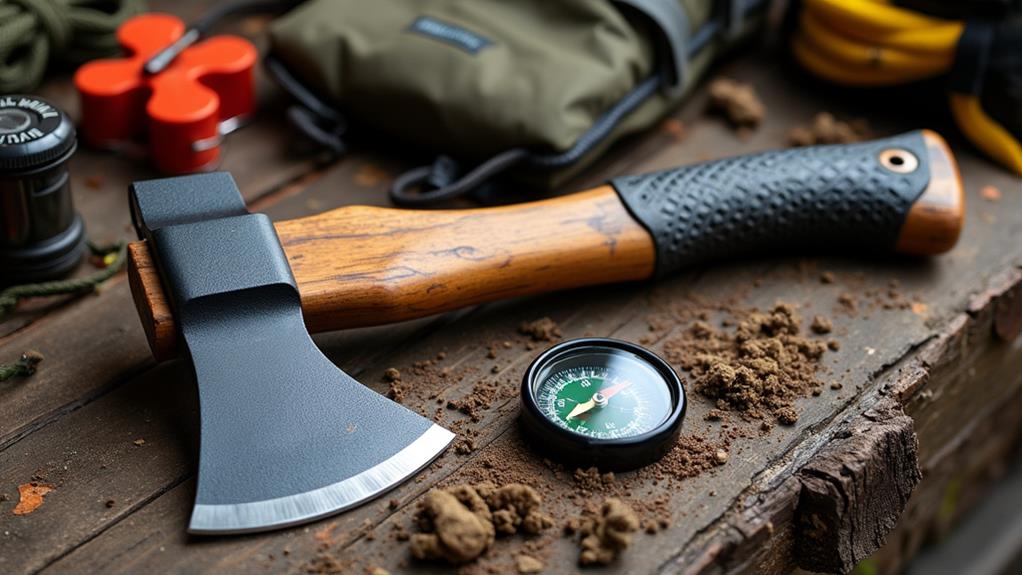
Before you can fully utilize an axe in survival scenarios, selecting the right one is crucial. Opt for adaptable and durable models like hatchets or small forest axes, which are manageable in both size and weight, making them ideal for portability. For example, a Schrade hatchet weighs around 1.37 lbs, offering a lightweight option for hikers and campers.
When selecting an axe, prioritize comfort and control. A comfortable grip and sharp blade will enhance your efficiency and safety. Consider the specific tasks you'll be performing. Forestry and felling axes are ideal for cutting down trees, while a survival axe should balance weight and functionality for diverse outdoor tasks.
Additionally, prioritize axes with replaceable wooden handles. These can be repaired in the field, ensuring long-term usability in survival situations. A durable, well-maintained axe can be a lifesaver, so weigh all these factors carefully. The right axe not only boosts your efficiency but also ensures your safety and success in the wilderness.
Fundamental Axe Safety
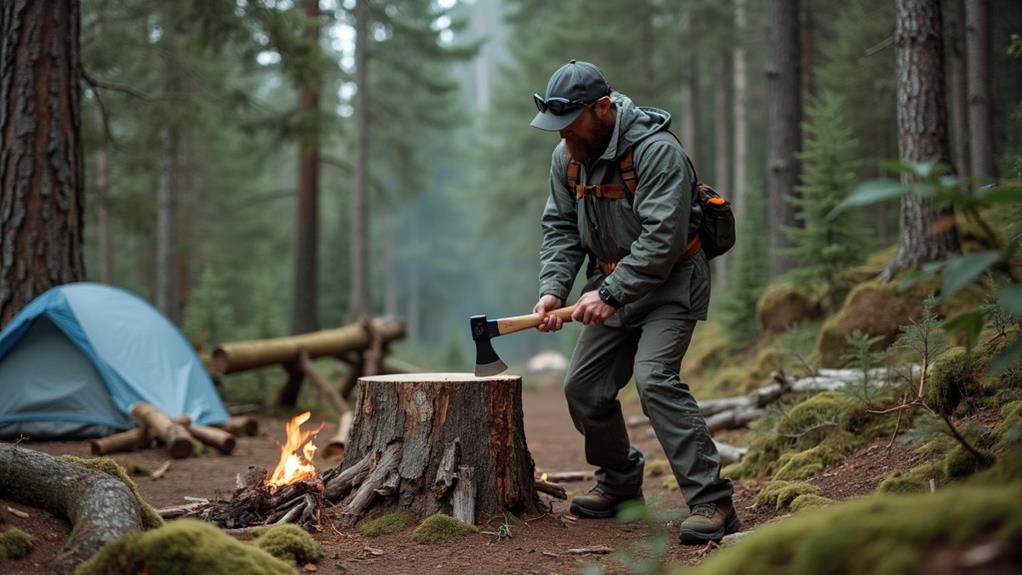
When using an axe, prioritizing safety is crucial. Follow these essential guidelines to ensure proper handling:
- Check Your Surroundings: Always verify there's sufficient space before swinging to prevent accidents involving nearby people or objects. This simple step helps avoid unintended injuries and property damage.
- Maintain a Stable Stance: Stand with your feet shoulder-width apart to ensure control and balance. This position helps you stay grounded, reducing the risk of losing balance during a swing.
- Grip the Axe Handle Firmly: Hold the axe handle firmly yet comfortably. A solid grip ensures precision and keeps your hands away from the blade, minimizing the risk of cuts.
- Use a Sharp Axe: A sharp blade requires less force, reducing the likelihood of accidents. Regularly sharpen your axe to maintain its effectiveness and safety.
- Store the Axe Properly: Always use a sheath or place the axe in a designated safe spot when not in use to avoid accidental injuries.
Building a Shelter
Building a shelter with an axe is a crucial survival skill that can significantly impact your well-being in the wilderness. To start, use the axe to fell small trees or clear branches for a sturdy frame. Ensure the structure is well-supported and stable to withstand various weather conditions.
Next, cut logs to the desired lengths for the shelter's walls. Use the axe to split larger logs into smaller, manageable pieces. For the roof, layer smaller branches and foliage, trimming and shaping materials with the axe to create an effective waterproof covering.
For added stability, sharpen one end of strong branches to create stakes using the axe. Drive these stakes into the ground to securely anchor the shelter. Additionally, carve notches into logs with the axe to form interlocking joints, enhancing the shelter's strength and durability.
Efficient use of an axe in building a shelter not only ensures a reliable refuge but also optimizes the use of available resources. A well-constructed shelter provides essential protection and comfort in the wilderness.
Processing Firewood
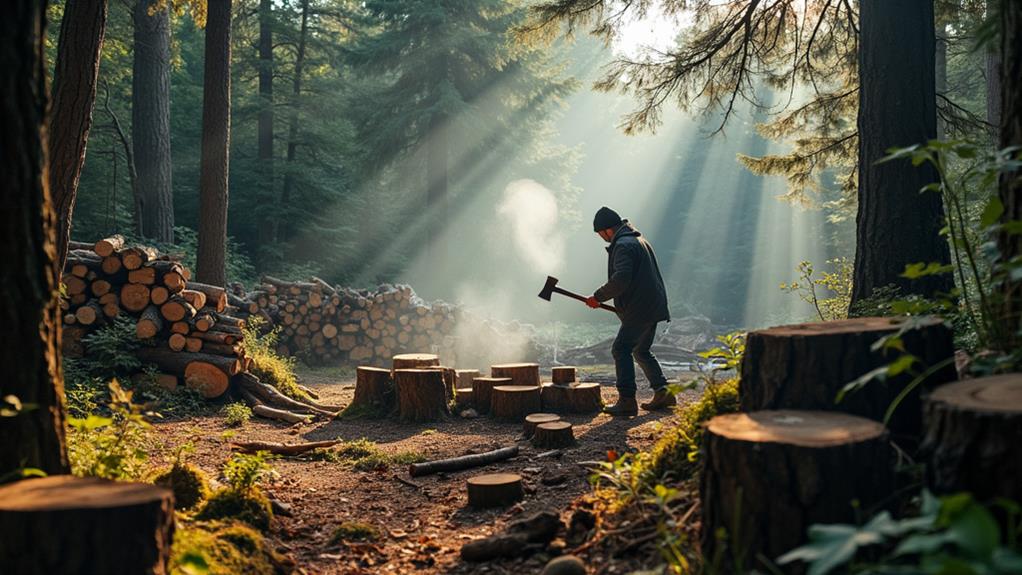
Processing firewood effectively with an axe is crucial for maintaining a reliable fuel source in the wilderness. Follow these steps to ensure safety, efficiency, and effectiveness:
- Prioritize Dead Wood: Seek out dead trees or fallen branches. These provide the best fuel and eliminate the frustration of using green wood, which burns poorly.
- Split Logs Properly: Place logs upright on a stable surface before splitting. Aim for the center of the log with your axe to create clean splits, enhancing both safety and efficiency.
- Create Kindling: Shave off smaller pieces from the larger logs to facilitate easier fire ignition. This step ensures you don't waste time or energy when starting a fire.
- Maintain Your Axe: A sharp axe is essential. Regularly sharpen your axe to improve cutting efficiency and reduce the physical effort required.
Key Steps for Effective Firewood Processing:
- Choose Dead Wood: Always opt for dead trees or fallen branches to ensure optimal burning.
- Properly Split Logs: Make sure logs are upright and stable before splitting for maximum safety and efficiency.
- Produce Kindling: Shave smaller pieces from larger logs to make fire ignition easier.
Creating Tools
Using your axe, you can craft essential tools such as cooking utensils and hunting spears. First, carve dry, knot-free hardwood into spoons or spatulas for meal preparation. Then, whittle branches into spears, useful for setting traps or catching food.
Crafting Cooking Utensils
Crafting cooking utensils in the wilderness is both a rewarding and essential skill for survival enthusiasts. Armed with a trusty axe, you can turn a piece of wood into useful tools like spoons, spatulas, or bowls. Here's a guide to help you create these utensils effectively.
Selecting the Wood:
Choose a suitable piece of dry wood, as it's easier to carve compared to green wood. Ensure the wood is free of knots for smoother shaping and carving.
Carving Techniques:
Using your axe, start with broad cuts to outline the basic shape of the utensil. Then, switch to finer cuts for details.
For a spatula, begin by shaping the handle. Once the handle is formed, work on the flat end, adjusting its width and thickness for optimal functionality.
Tool Maintenance:
Keep your axe sharp for cleaner cuts and to reduce the risk of injury. A sharp blade enhances both safety and efficiency.
Quick Checklist:
- Select the right wood: Dry and knot-free wood is easier to carve.
- Use proper techniques: Start with broad cuts, then refine the details.
- Maintain your axe: Ensure it's sharp for safety and efficiency.
Making Hunting Spears
Creating a hunting spear is an essential skill for wilderness survival. Begin by selecting a sharp and sturdy axe. Next, find a straight branch about 6 to 8 feet long, preferably from a hardwood species for strength and durability.
Use your axe to sharpen one end of the branch to a fine point, ensuring it is sharp enough to penetrate prey effectively. Carve notches about a foot from the pointed end to secure a flint or stone tip, enhancing the spear's lethality. Wrap the lower section of the spear with natural cordage or leather strips to improve grip and handling. This added functionality can be crucial in high-pressure situations.
Lastly, practice your throwing techniques to enhance accuracy and distance. Focus on maintaining a steady stance and proper follow-through for best results.
Here's a quick reference guide:
| Step | Action |
|---|---|
| 1. Choose an axe | Select a sharp, sturdy axe for shaping the spear. |
| 2. Select a branch | Find a straight, hardwood branch 6-8 feet long. |
| 3. Sharpen the end | Use your axe to carve a fine point on one end of the branch. |
| 4. Carve notches | Create notches a foot from the tip to secure additional materials. |
| 5. Enhance grip | Wrap the lower section with cordage or leather for better handling. |
Path Clearing
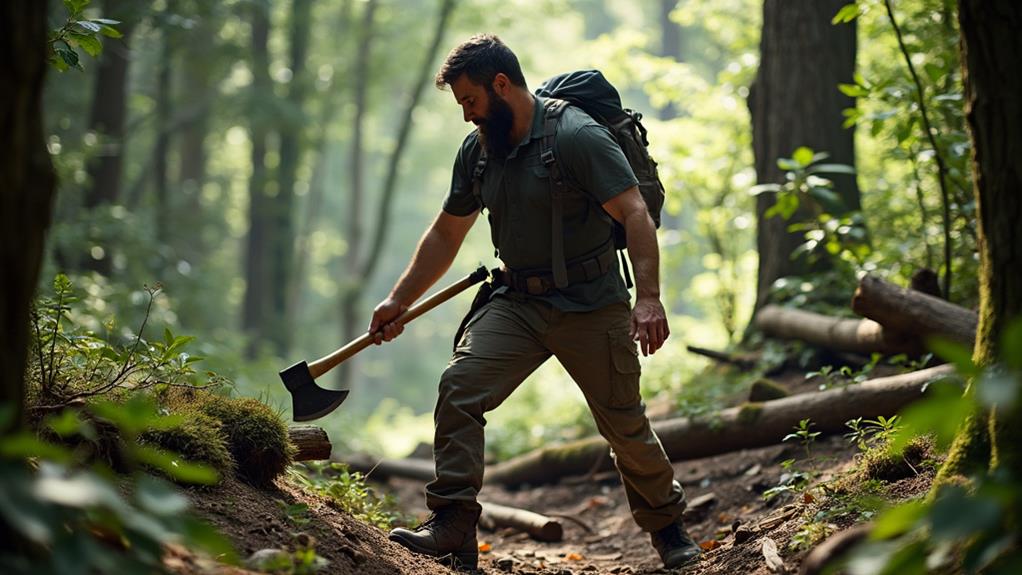
Clearing a path in the wilderness is crucial for safe and efficient travel. When you encounter small trees and shrubs blocking your route, use an axe to clear the way. Start by focusing on dead or weak vegetation, as it's easier and safer to remove. Swing the axe with controlled motions, maintaining a stable stance, and always be aware of your surroundings to prevent accidents.
Position the axe head at a downward angle when chopping wood to effectively cut through branches and small trunks. Aim for the center for the most efficient cuts. After chopping, clear away any fallen branches and debris from the path. Use the axe to split or remove larger obstacles if necessary, ensuring a safe walking area and preventing tripping hazards.
Regularly check the path you've cleared to prevent overgrowth, especially in densely wooded areas.
Here's a quick guide:
- Prioritize: Focus on dead or weak vegetation initially.
- Technique: Swing with control and position the axe head downward.
- Maintenance: Regularly reassess the path to keep it navigable.
Axe Maintenance
To maintain your axe, focus on cleaning, rust prevention, and sharpening. After each use, remove any dirt and sap, then apply a thin layer of oil to the blade to prevent rust. Regularly sharpen the blade with a whetstone or file to ensure it cuts efficiently and safely.
Cleaning and Rust Prevention
Proper maintenance of your axe is crucial for its performance and durability. Follow these essential steps to keep your axe in top condition:
- Clean the Blade After Each Use: Remove sap, dirt, and moisture by wiping the blade with a cloth. This simple routine is critical for preventing rust, which can quickly compromise the axe's effectiveness and lifespan.
- Apply a Light Coat of Oil: After cleaning, spread a thin layer of mineral oil or vegetable oil evenly over the blade. This creates a protective barrier against moisture, helping to prevent rust.
- Store in a Dry Place: Always store your axe in a dry environment, away from damp or humid conditions that can accelerate rust formation. Using a sheath for the axe head when not in use provides additional protection from moisture and physical damage.
Sharpening Techniques
Regular sharpening of your axe is crucial for both cutting efficiency and safety. A sharp axe requires less force to chop, reducing the risk of injury. Start sharpening with a sharpening stone or file, maintaining a consistent angle of approximately 25 degrees to ensure the blade retains its shape and effectiveness.
| Tool | Purpose | Notes |
|---|---|---|
| Sharpening Stone | Establishes sharp edge | Maintain 25-degree angle |
| File | Shapes and sharpens blade | Consistent strokes needed |
| Leather Strop | Removes burrs, smooth finish | Use after sharpening stone |
After establishing the edge, use a finer grit stone or a leather strop to hone the blade, which is essential for removing burrs and achieving a smooth, sharp finish. Post-sharpening, apply a light coat of oil to the axe head to prevent rust and corrosion, especially if it will be stored for some time.
Inspect the axe handle for any damage or wear, as a sharp blade with a compromised handle can be hazardous. Regular maintenance not only extends the life of your axe but also ensures your safety in the wilderness.
Conclusion
In the wilderness, an axe is an invaluable tool. Selecting the right one, practicing safety, and mastering essential techniques will significantly boost your survival odds. Whether you're constructing a shelter, cutting firewood, or crafting tools, your axe is indispensable. Regular maintenance is crucial to keep it sharp and reliable. Equipped with these skills and a dependable axe, you'll be prepared to handle any challenges nature presents.