How to Properly Swing an Axe to Avoid Injury
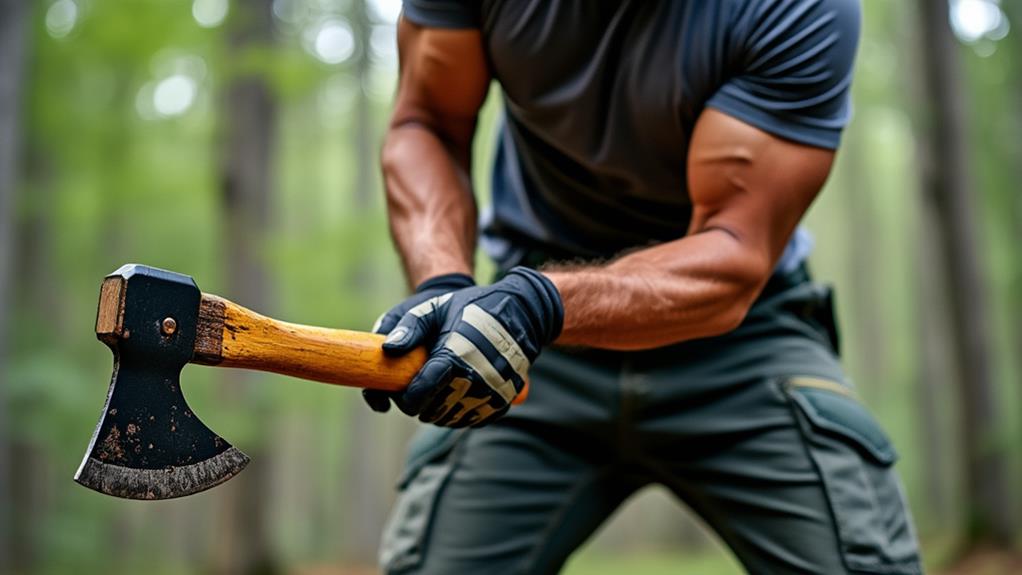
When preparing to swing an axe, focus on both your stance and grip to minimize the risk of injury. Ensure your feet are shoulder-width apart and your hands are spaced properly on the handle for better control. Engage your legs and core, not just your arms, to ensure a powerful yet controlled swing.
However, before even considering your technique, it's crucial to maintain a clear area and choose the right wood. Let's explore these fundamental steps to keep you safe and effective.
Safety Precautions
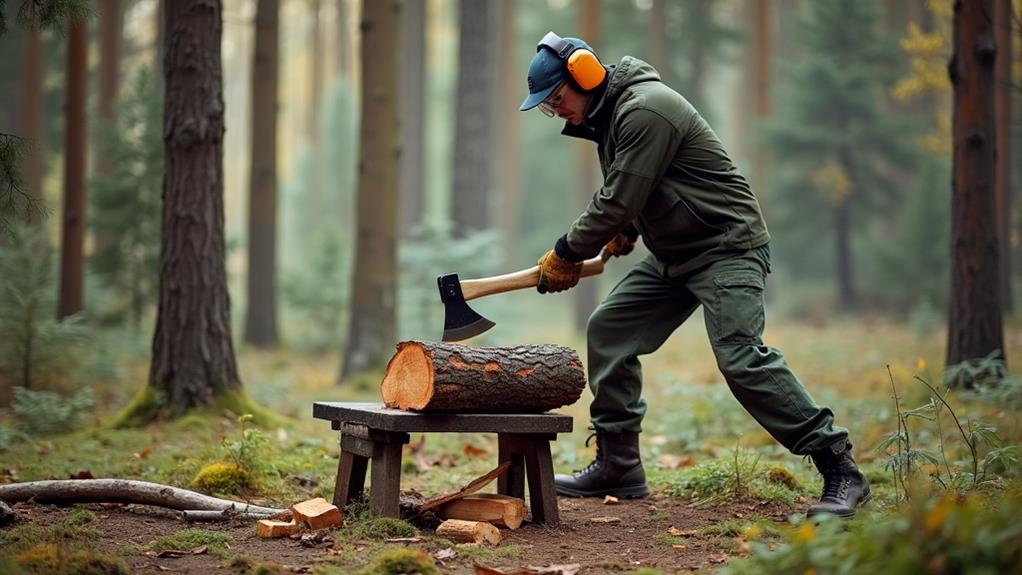
When swinging an axe, adhering to safety precautions is crucial to prevent injuries. Always wear appropriate personal protective equipment (PPE) such as gloves, safety glasses, and sturdy footwear to minimize the risk of harm. Ensure your work area is free of obstacles and bystanders, maintaining a safe distance of at least two axe lengths from others to prevent accidents.
Before swinging, inspect your axe for any damage, including cracks or loose heads, as these can cause tool failure and serious injuries. Verifying the condition of your axe before each use is essential. Staying focused on the task at hand is another key safety measure. Distractions can lead to accidents, so keep your attention on your swing and be mindful of your surroundings.
Proper Stance and Grip
Proper stance and grip are crucial for effectively swinging an axe, complementing essential safety precautions. Start by standing with your feet shoulder-width apart, distributing your weight evenly for optimal balance and stability. Position yourself at an arm's length from the target to maintain a safe distance while allowing for a full range of motion.
Grip the axe with your dominant hand near the knob and your non-dominant hand further up the handle. This positioning enhances control during the swing. Maintain a firm yet relaxed grip to absorb shocks upon impact, reducing hand fatigue and the risk of injury.
Keep a slight bend in your knees and engage your core muscles. This stance supports your upper body, improving both power and control throughout the swing. Here's a quick reference table to help you remember these key points:
| Aspect | Action | Benefit |
|---|---|---|
| Feet Position | Shoulder-width apart | Balance and stability |
| Hand Placement | Dominant hand near knob, non-dominant hand up | Enhanced control |
| Body Distance | Arm's length from target | Safe distance |
| Knee Bend | Slight bend | Improved power and control |
| Grip | Firm but relaxed | Better shock absorption |
Swinging Techniques

Mastering the proper stance and grip is crucial, but effective swinging techniques elevate your axe skills. Begin by engaging your legs and core for a full-body motion, generating power without relying solely on arm strength.
Maintain a firm grip with both hands spaced apart on the axe handle to enhance control and stability. This positioning allows for more efficient wood splitting. Swing the axe in a downward arc, aiming for the log's center, to increase force and maintain momentum through the follow-through.
Position your feet shoulder-width apart to ensure balance and stand at a safe distance from the target to avoid injury. Focus on accuracy rather than sheer power, visualizing the swing path and executing a controlled motion. Precision helps prevent accidents and improves cutting efficiency.
Summary:
- Engage your legs and core to generate power.
- Maintain a firm grip with hands apart for control.
- Swing in a downward arc, aiming for the log's center.
- Focus on accuracy for a controlled, precise motion.
Axe Maintenance
To maintain your axe and ensure its safe usage, regularly sharpen the blade using honing pucks and paddles. This keeps the blade efficient and reduces the risk of injury. After each use, clean the axe head and apply oil to prevent rust and corrosion. Inspect the handle for any damage and store the axe in a dry, safe place.
Edge Sharpening Techniques
Maintaining a sharp axe edge is essential for both efficiency and safety. A sharp edge enhances cutting performance and reduces the risk of glancing blows that can cause injuries. Before each use, inspect the edge for nicks or damage; a compromised edge can lead to unpredictable swings, increasing accident risk.
To keep your axe in optimal condition, follow these techniques:
- Regular Sharpening: Use honing pucks and paddles to sharpen the blade after every few uses. This ensures the edge remains effective.
- Angle Maintenance: Sharpen the blade at a 20-30 degree angle. This angle allows the axe to slice through wood fibers cleanly rather than tearing them.
- Post-Use Cleaning: Clean the axe head after each use to prevent rust, which can deteriorate the blade and make it harder to keep sharp.
- Proper Storage: Store your axe with the blade protected and away from moisture to prevent dulling and corrosion, ensuring safety during use.
Handle Inspection Routine
A well-maintained axe handle is essential for safe and effective use. Before each session, inspect the handle for any cracks, splinters, or other damage, as these imperfections can compromise your grip and safety.
- Ensure the axe head is securely attached; a loose axe head can detach mid-swing, posing a serious injury risk.
- Check for unusual wear or deformation on the handle, which may indicate underlying issues requiring repair or replacement.
- Regularly apply protective oil to the handle to prevent moisture absorption and splintering, thereby extending its lifespan and maintaining its integrity.
- Store your axe in a dry location to prevent moisture damage, which can weaken the handle and increase the risk of breakage.
By following these steps, you ensure your axe remains in peak condition, reducing the likelihood of accidents and injuries. Regular inspections and proper maintenance are your best defenses against the dangers of a poorly maintained axe handle.
Rust Prevention Methods
Proper maintenance of your axe head is essential to prevent rust and ensure its longevity. After each use, clean the axe head meticulously to remove moisture and sap, both of which can lead to rust formation.
Follow these steps to maintain your axe:
- Clean the Axe Head: After every use, wipe down the blade to eliminate moisture and sap. Preventing rust starts with a clean blade.
- Apply Protective Oil: Coat the blade with a thin layer of protective oil, such as mineral oil or linseed oil. This barrier helps keep moisture at bay.
- Store Properly: Store your axe in a dry, well-ventilated area. Avoid humidity and moisture to prevent rust.
- Inspect Regularly: Regularly check your axe for signs of rust or damage. If rust is detected, use a rust eraser or fine steel wool to remove it and reapply protective oil.
Maintaining these practices will help ensure your axe remains in excellent condition for years to come.
Wood Selection
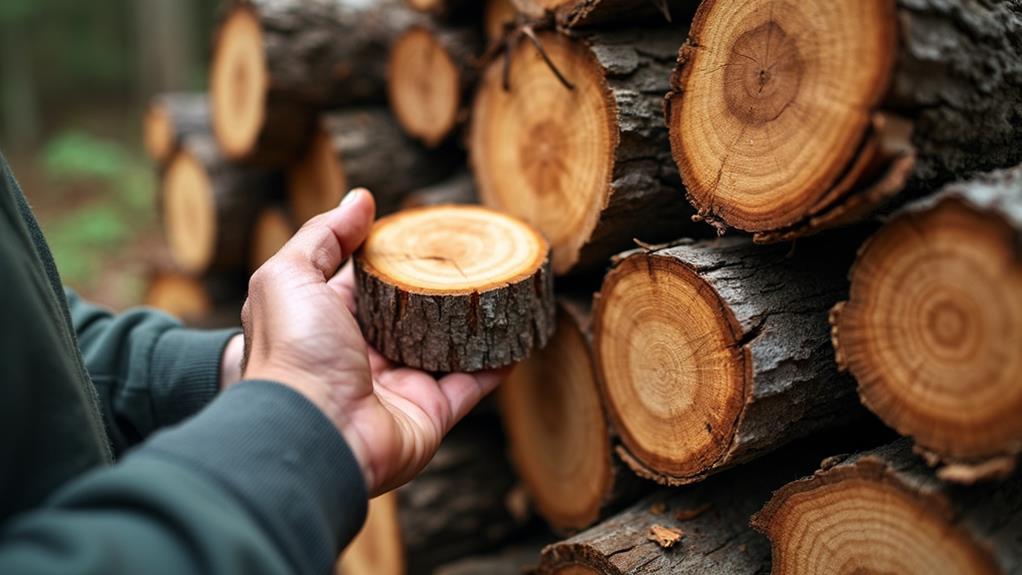
Selecting the right type of wood is crucial for swinging an axe safely. Understanding the wood's characteristics is essential. Hard, dry wood requires more energy to cut and can be physically demanding. Instead, opt for soft, green wood that's easier to split. For added safety, choose smaller logs. They're easier to manage and require less force to split, reducing the risk of injury.
Knowing the properties of the wood you're working with is vital. Wood with a straight grain and minimal knots or cracks splits more easily and predictably. Knots and cracks can cause unexpected splits, leading to accidents. Always position the wood with the grain facing upward; this allows for more efficient cutting and less resistance, helping you maintain control of the axe.
Handling the Axe Safely
When handling an axe, grip it firmly but not too tightly to maintain control. Stand with your feet shoulder-width apart to ensure balance while swinging. Always swing with caution, keeping the axe head pointed away from your body to prevent accidents.
Proper Grip Technique
To handle an axe safely, ensure you have a firm yet relaxed grip on the handle. This balance is crucial for maintaining control while swinging and minimizing the risk of the axe slipping from your hands.
Position your dominant hand near the end of the handle and your non-dominant hand closer to the axe head. This positioning maximizes leverage and control. When you swing, use both hands together to enhance stability and power.
During the follow-through, be prepared to slide your dominant hand down the handle for better control. Keep your hands dry and free from substances that could cause slipping. Regularly inspect the axe handle for cracks or damage that might compromise your grip's safety.
Always grip the axe with both hands before swinging, being mindful of your surroundings to avoid accidental contact with bystanders or obstacles.
Here's a quick checklist to keep in mind:
- Firm but relaxed grip: Balance control and relaxation for optimal handling.
- Hand positioning: Dominant hand near the end, non-dominant hand closer to the head.
- Swing with both hands: Ensure stability and power.
- Inspect handle regularly: Check for cracks or damage to maintain grip safety.
Safe Swing Practices
After mastering the proper grip technique, it's essential to focus on safe swing practices for efficient axe handling. Always maintain a firm yet relaxed grip to prevent slipping and ensure control. Before swinging the axe, inspect it for any damage or wear to avoid accidents.
Position yourself at arm's length from the wood, standing with your feet shoulder-width apart to maintain balance and prevent falls. When ready to swing, use a downward arc and aim for the center of the log to enhance force and accuracy. Ensure the chopping area is free of obstacles and bystanders to maintain a safe environment.
Here's a quick reference table to help you remember these points:
| Step | Description |
|---|---|
| Maintain a firm grip | Ensure a secure yet relaxed hold to prevent slipping. |
| Position yourself properly | Stand at arm's length, feet shoulder-width apart for balance. |
| Clear the chopping area | Remove obstacles and bystanders to ensure a safe environment. |
Conclusion
By following these guidelines, you'll swing an axe safely and effectively. Maintain a firm yet relaxed grip, stand with your feet shoulder-width apart, and eliminate distractions. Focus on accuracy and engage your legs and core for a controlled swing. Regularly maintain your axe and choose the appropriate type of wood for your task. These tips will help you confidently tackle any chopping job while minimizing the risk of injury.