How to Properly Store Your Axe

To properly store your axe, start by ensuring it is clean and free of dirt and moisture. Inspect the axe for any signs of rust or damage. Apply a protective oil to the axe head and condition the wooden handle with boiled linseed oil.
For storage, choose a dry location to prevent moisture exposure. Store the axe in a way that secures the blade, such as in a sheath or a dedicated tool rack. This will help maintain both the axe's longevity and safety.
Pre-Storage Cleaning
Before storing your axe, it's essential to perform a thorough pre-storage cleaning to maintain its longevity and effectiveness. Begin by wiping down the axe head with a dry cloth to eliminate any dirt, moisture, or debris that could cause rust or corrosion. Be meticulous in cleaning every crevice to ensure no contaminants remain.
Next, address the wooden handle. Gently clean it with a dry cloth to remove any accumulated debris, ensuring the surface is free of particles that could cause damage over time. Inspect the axe for signs of rust, damage, or wear. Examine both the axe head and the handle closely.
If you find any rust, use steel wool to scrub it off. After removing the rust, wipe away any excess oil to preserve the axe's integrity and performance.
Oiling and Conditioning
Maintaining your axe involves crucial steps like oiling and conditioning, which should never be overlooked. To protect the axe head from rust and corrosion, thoroughly rub a generous amount of general-purpose or metal-specific oil into the metal surface. This creates a protective barrier, ensuring your axe remains in optimal condition.
For the wooden handle, boiled linseed oil is the preferred choice due to its faster drying time and superior moisture balance compared to regular linseed oil. Apply it regularly to build layers of protection, enhancing the handle's durability and longevity. A well-conditioned handle not only improves performance but also reduces the risk of splintering and cracking.
Additionally, if you use leather sheaths for blade protection, regularly inspect and condition them to maintain waterproofing and extend their lifespan. Proper care of the leather sheath ensures that your axe head stays sharp and protected when not in use.
Lastly, exercise caution with oil-soaked rags, as they can spontaneously combust if not disposed of correctly. Always follow safety guidelines to prevent fire hazards. Regular oiling and conditioning will keep your axe in excellent shape for years to come.
Rust Prevention
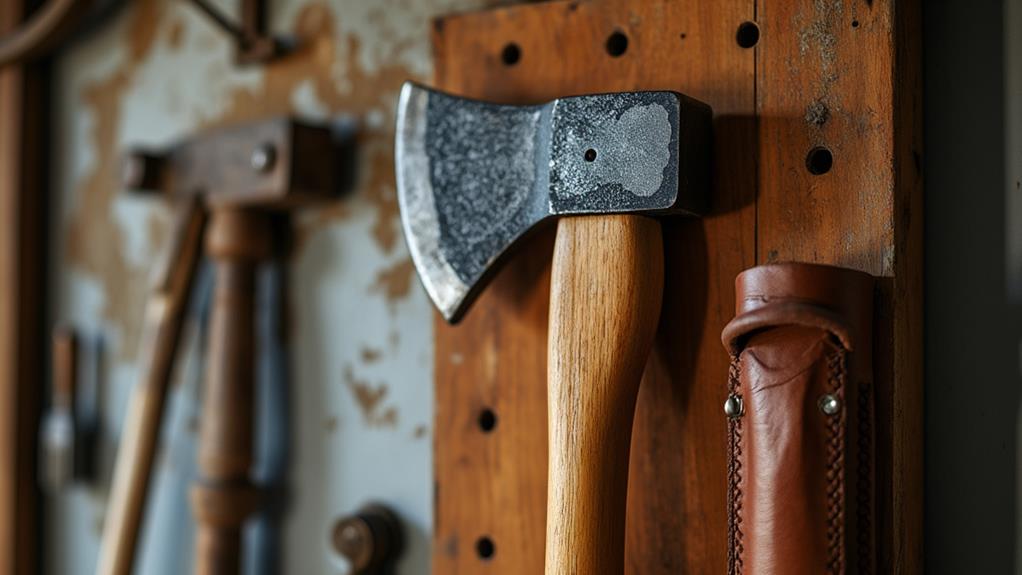
To prevent rust on your axe, regularly apply a light oil, such as boiled linseed oil, to the axe head. Store your axe in a dry environment to minimize moisture exposure. Proper oiling combined with dry storage will significantly extend the life of your axe.
Regular Oiling Routine
A regular oiling routine is essential for keeping your axe rust-free and in optimal condition. Applying a light oil, such as boiled linseed oil or 3-in-1 oil, to the axe head creates a protective barrier against moisture. This step is crucial for proper storage and maintaining the axe's efficiency. After each use, apply a thin layer of oil to the entire surface of the axe head to prevent micro corrosion.
For wooden handles, boiled linseed oil is highly effective in keeping the wood hydrated, which helps prevent warping and cracking over time. Use a clean, dry rag to apply the oil to both the axe head and handle, and let it sit for a few hours. Afterward, wipe off any excess oil to avoid a sticky residue.
Remember, oil-soaked rags can be a fire hazard. Dispose of them properly to prevent any risk of spontaneous combustion.
Benefits of a Regular Oiling Routine:
- Protect Your Investment: Keep your axe in excellent condition for years.
- Maintain Cutting Efficiency: Ensure your axe remains sharp and effective.
- Prevent Dangerous Warping: Preserve the integrity of the wooden handle.
- Ensure Longevity: Extend the lifespan of your axe with proper care.
Dry Storage Environment
Keeping your axe in a dry storage environment is essential to prevent rust and extend its lifespan. Always store the axe in a dry, ideally cool place to minimize moisture exposure. Even slight dampness can lead to rust on the blade. Avoid placing your axe on damp surfaces like concrete, as this can accelerate corrosion. Instead, use wooden or styrofoam bases for a protective barrier.
Regularly check your storage conditions and control humidity levels. High humidity promotes rust, so using a dehumidifier can be beneficial. For extended storage, consider using a leather mask or sheath to provide an extra layer of protection against moisture.
Before long-term storage, lightly spray the axe with a rust-preventive oil like WD-40. This creates a protective barrier against moisture and helps maintain the blade's integrity.
Safe Storage Locations
Storing your axe safely is essential for maintaining its longevity and ensuring safety. Choosing the right storage spot can protect your axe from damage and potential hazards. Common safe storage locations include garages, sheds, and dedicated storage racks or sheaths. These options provide a controlled environment, protecting against high humidity and temperature fluctuations that can damage wooden handles and cause rust.
When selecting a storage spot, consider these key points:
- Avoid placing axes directly on concrete floors: Use wooden or styrofoam bases to prevent moisture transfer.
- Store axes inside the house: This keeps them out of reach of children and pets, improving safety and accessibility.
- Regularly check storage areas: Inspect for signs of pests, moisture, or damage to ensure your axe remains in good condition.
- Use dedicated storage racks or sheaths: These offer additional protection from environmental factors and help keep your axe organized.
Environmental Considerations

When storing your axe, consider temperature and moisture's impact on its longevity. High temperatures can warp or crack wooden handles, while dry climates might cause them to split. To prevent rust and damage, keep your axe away from heat sources and manage humidity levels effectively in your storage space.
Temperature Control Tips
To ensure your axe remains in peak condition, store it in a climate-controlled environment. Temperature control is critical for preventing damage to axe handles and ensuring the tool's longevity. Maintain the storage area temperature between 40–70°F (4–21°C). Extreme heat or cold can weaken wooden handles and cause warping, compromising the axe's integrity.
Avoid storing your axe in garages or sheds with significant temperature fluctuations, as these conditions can lead to premature material deterioration, resulting in costly replacements and potential safety hazards. To further protect your axe, keep it away from direct heat sources like wood stoves or heaters, as direct heat can dry out the wood, leading to cracks and weakening over time.
Consider the following tips to maintain ideal conditions for your axe:
- Store in a climate-controlled room to ensure consistent temperature.
- Avoid placing near direct heat sources such as wood stoves or heaters.
- Monitor storage temperature to keep it within the 40–70°F range.
- Prevent exposure to extreme temperatures by avoiding garages or sheds with significant fluctuations.
Moisture Management Techniques
Proper moisture management is crucial for preserving the quality and longevity of your axe. High humidity can lead to rust on the axe head, so store your axe in a dry, well-ventilated environment. Avoid damp basements or outdoor sheds that can accumulate moisture.
Wooden handles are vulnerable to damage in dry climates, which can cause cracking or warping. To maintain balanced moisture levels, avoid overly dry storage spaces and periodically apply a light coat of linseed oil to the handle. This helps seal the wood and maintain its integrity.
Avoid storing your axe in areas with significant temperature fluctuations. Extreme heat can damage the wooden handle, increasing the risk of splintering. Choose a stable environment for storage. Using desiccants in your storage area can effectively control humidity levels, protecting both the wooden handle and metal components.
Regularly inspect your storage setup to ensure it remains organized and pest-free. This proactive approach will safeguard your axe against moisture and other environmental damage, keeping it in top condition.
Seasonal Care Strategies
Ensuring your axe receives seasonal care is crucial for maintaining its excellent condition and prolonging its lifespan. Begin with pre-storage care by thoroughly cleaning and drying your axe at the end of each season. This essential step prevents rust and damage during long-term storage.
Additionally, utilize desiccants in your storage area to control humidity levels, especially in damp environments, to mitigate moisture-related issues that could compromise your axe's integrity.
Establish a consistent maintenance schedule. Regularly inspect your axe for signs of rust, damage, or wear before storing it. Oiling the axe head and treating the wooden handle with boiled linseed oil should be part of this routine, as these actions provide fundamental protection during seasonal storage.
Here's a checklist to ensure your axe stays in top shape:
- Inspect for rust and damage: Identify problems early.
- Thorough cleaning and drying: Prevent rust.
- Oil and treat wooden handles: Enhance protection.
- Use desiccants: Control humidity levels.
Document any repairs or maintenance performed on your axe to monitor its condition over time. This record helps identify patterns that may need attention in future seasonal care, ensuring your axe remains reliable year after year.
Safety Precautions

As you complete your seasonal care routine, it's essential to prioritize safety precautions to protect yourself and others. Storing sharp tools like axes requires careful measures to prevent accidents.
First, always store axes out of reach of children and pets to prevent accidental injuries and ensure a safer environment. Cover the axe blades with protective sheaths or guards to avoid accidental cuts and preserve the sharpness during storage. Regularly inspect your stored axes for signs of damage or rust, and address any issues immediately to maintain both safety and functionality.
Keep your storage area organized and free from clutter or debris to reduce the risk of accidents when accessing your axe. Dispose of oil-soaked materials properly to prevent fire hazards.
Here's a quick reference table to help you remember these safety precautions:
| Safety Measure | Purpose |
|---|---|
| Store out of reach | Prevents access by children and pets |
| Use protective sheaths or guards | Avoids accidental cuts and preserves sharpness |
| Inspect regularly | Maintains safety and functionality |
Conclusion
You've invested time and effort into cleaning, oiling, and conditioning your axe, so it's crucial to store it properly to ensure its longevity. Keep your axe in a dry, secure location, away from moisture, and out of reach of children and pets. Regularly inspect it for rust and damage, particularly during seasonal changes. By following these steps, you can ensure your axe remains a reliable tool for years to come. Happy chopping and stay safe!