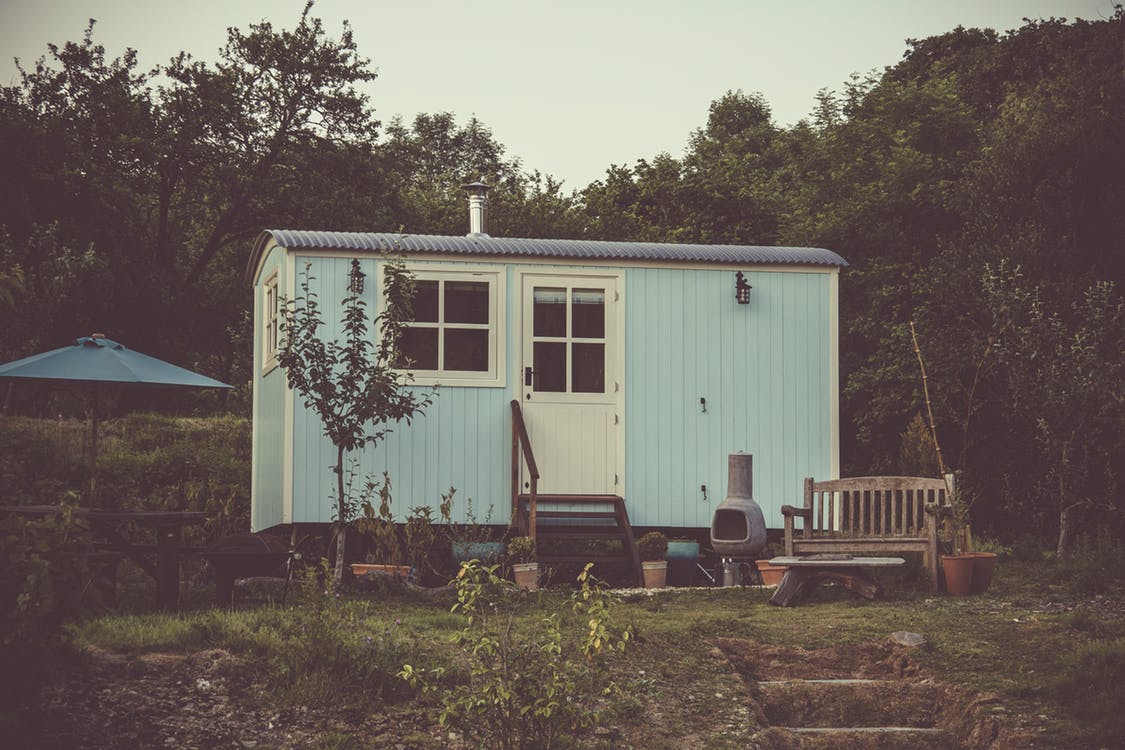
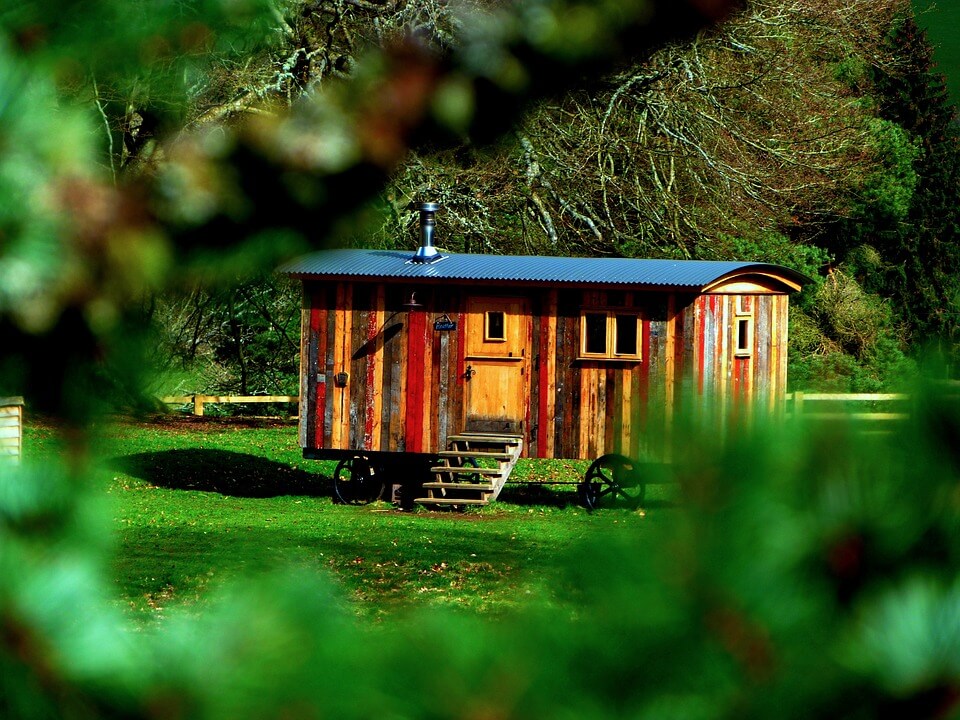
How to Create a Tiny Home Workshop or Studio
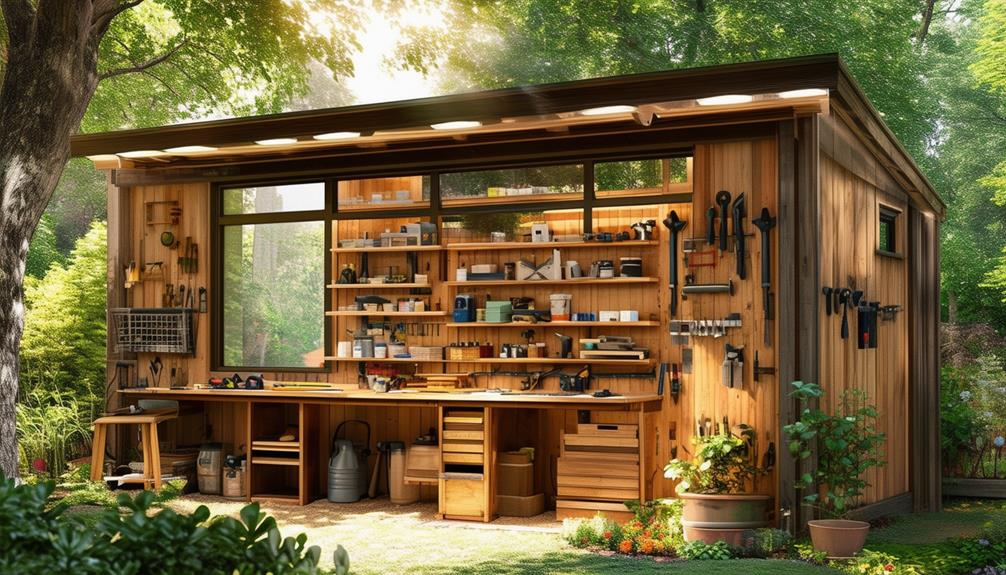
When setting up a small home workshop or studio, start by meticulously planning the layout to meet your project's specific needs. Key considerations include natural lighting, ventilation, and insulation to ensure a comfortable workspace. Don't forget practical features like workbenches, utility sinks, and ample storage. Choosing the right location is also crucial—consider proximity to suppliers and ensure the availability of adequate lighting, power outlets, and water sources. Want to maximize your space with vertical storage and multi-purpose furniture? Let's explore the next steps.
Planning Your Tiny Home Workshop
Planning your small home workshop requires careful consideration of your available space and specific equipment needs. Begin by evaluating the size and layout of your workshop. Your compact design should accommodate all necessary tools and materials without feeling cramped. Make a list of essential equipment and ensure each item has a designated spot.
Next, prioritize natural lighting, ventilation, and insulation. Adequate lighting is crucial for detailed tasks, so maximize natural light and supplement it with task lighting as needed. Proper ventilation will keep your workspace comfortable and prevent the buildup of fumes. Insulation will help maintain a stable temperature, making your workshop usable throughout the year.
Effective storage solutions are key to maximizing space efficiency in your small home workshop. Consider vertical storage options like wall-mounted shelves or pegboards for tools and materials. Drawer units under workbenches can provide additional storage without occupying extra space.
Incorporate functional elements such as workbenches, power outlets, and utility sinks. These features will enhance the convenience and efficiency of your projects. Personalize your workshop with decor, organization systems, and inspirational elements to create a space that fosters creativity and productivity. Thoughtful planning will help you build a small home workshop that meets all your needs.
Selecting the Right Location
After arranging the layout for your small home workshop, the next step is to select an appropriate location for your creative space. Consider the proximity to essential resources like materials suppliers and hardware stores, as this will save you time and effort when replenishing supplies or purchasing new tools.
Ensure the chosen spot has ample space for both design and building activities. Even in a small house, you need enough room to move around comfortably and safely. Proper lighting and ventilation are crucial. Natural light is ideal, but if that's not feasible, invest in quality artificial lighting. Good ventilation is essential, especially when working with paints, solvents, or sawdust, to maintain a healthy environment.
Access to power outlets and water sources is another key factor. Electricity is necessary for tools and lighting, while water access might be required for various tasks. Lastly, consider transportation logistics. A location with easy access for moving materials and finished projects will significantly streamline your workflow. By carefully selecting the right location, you'll create an efficient and enjoyable small home workshop.
Essential Building Materials
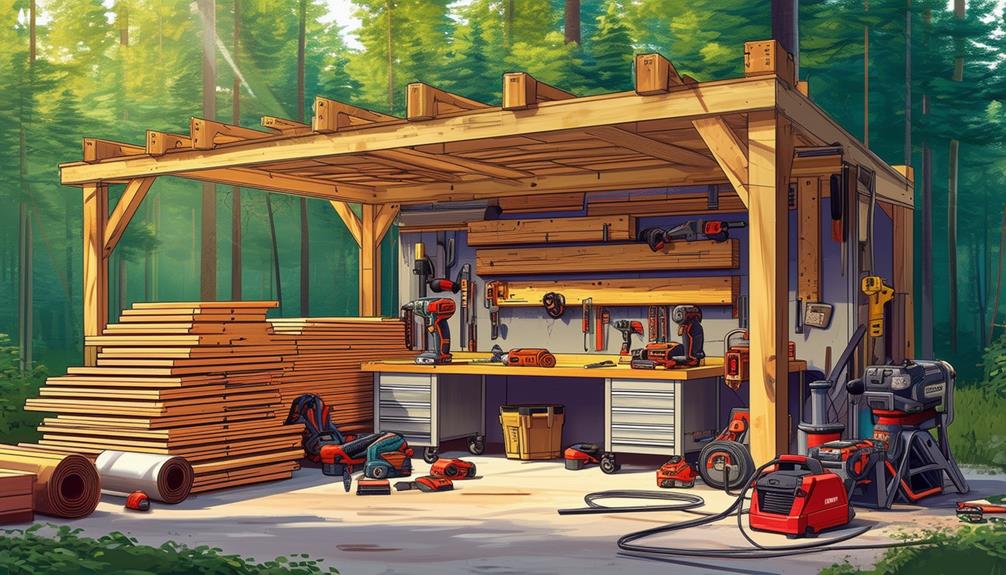
Gather key construction materials like Tyvek house wrap, repurposed windows, and quarter-inch Maple plywood to kickstart your tiny home workshop. Start by wrapping the trailer base with Tyvek to keep moisture at bay, ensuring a durable foundation for your tiny house. Repurposed windows and doors are not only budget-friendly but also add a unique touch to your design. Look for old windows at Habitat for Humanity ReStores or other second-hand sources; they can often be found for a fraction of the cost.
For the walls, quarter-inch Maple plywood is an excellent choice. It's lightweight, easy to work with, and provides a clean, polished look. To give your exterior a modern finish, consider using aluminum strips, which will add a sleek, contemporary vibe to your tiny home studio. Don't overlook the value of reclaimed materials; they can substantially reduce your costs and add character.
Here's a quick reference table for necessary materials:
| Material | Purpose | Source |
|---|---|---|
| Tyvek House Wrap | Moisture barrier for trailer base | Hardware Store |
| Repurposed Windows & Doors | Natural light and access | Habitat for Humanity ReStores, Free Finds |
| Quarter-Inch Maple Plywood | Wall paneling | Lumber Yard, Hardware Store |
Utilizing these materials effectively will establish a strong foundation for your tiny home workshop or studio.
Framing and Insulation Techniques
Now that you have your crucial building materials, it's time to focus on framing and insulation techniques to ensure your tiny home workshop is both strong and energy-efficient. Start with advanced framing techniques, such as 2x6 studs spaced 24 inches apart. This not only reduces the amount of lumber needed but also allows for increased insulation, which is essential for a tiny house.
For the walls, consider using rigid foam insulation boards, which provide excellent thermal resistance and can be easily cut to fit. To seal small gaps and crevices, spray foam is an effective choice, ensuring there are no drafts or leaks. For superior thermal performance, consider double-stud wall construction or insulated concrete forms. Both methods offer improved insulation, keeping your tiny workshop comfortable year-round.
Insulated sheathing, such as foil-faced polyisocyanurate, can serve dual purposes by adding both structural integrity and insulation. Additionally, don't overlook the significance of air sealing. Use tapes, gaskets, and sealants to close any potential air leaks, further enhancing energy efficiency and overall comfort. By implementing these insulation techniques, you'll create a tiny house workshop that's both robust and cozy.
Maximizing Storage Space
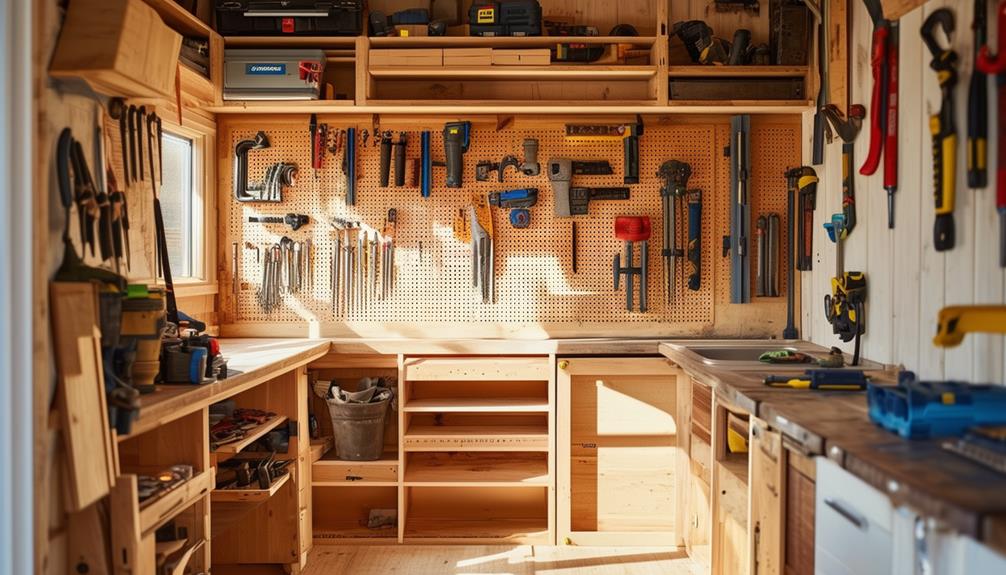
To maximize storage space in your tiny home workshop or studio, start by utilizing vertical space with efficient shelving and wall-mounted racks. Incorporate hidden compartments and multi-functional furniture to keep your area organized and clutter-free. Make use of every inch, including under-the-bed storage and overhead cabinets, to maintain a tidy and efficient workspace.
Efficient Shelving Solutions
Maximize your small workshop or studio's storage efficiency with vertical shelving and wall-mounted solutions. In a tiny house, effective shelving is crucial for maintaining an organized and functional space. Start by installing wall-mounted shelves to utilize vertical space, keeping your floor clear and providing ample storage for tools and materials.
Adjustable shelving units are essential, allowing you to customize the height and spacing to fit various items, ensuring every inch of your space is used effectively. For smaller tools and frequently used items, pegboards and hooks are invaluable. They offer quick access and keep your work surfaces free of clutter.
Transparent storage bins or clearly labeled containers are key for organizing supplies, enabling you to quickly find items without rummaging. This saves time and keeps your workflow uninterrupted. Lastly, consider mobile carts or cabinets with wheels for versatile storage solutions that can be easily moved around, adapting to different projects. By implementing these strategies, you'll optimize your small space's potential and create a highly functional workspace.
Hidden Storage Compartments
In a tiny home workshop or studio, hidden storage compartments can significantly maximize your space by cleverly utilizing underfloor areas, fold-out furniture, and concealed cabinets. These compartments are crucial in a tiny house as they help maintain an organized and clutter-free workspace.
Integrate hidden storage into your furniture, such as a sofa or bed with built-in storage, to conceal tools, supplies, and other items when not in use. Fold-out furniture like a table or desk that can be tucked away after use serves dual purposes, providing both a workspace and storage.
Staircases with built-in drawers or hidden wall panels are other effective ways to optimize storage. These innovative solutions allow you to store items like crafting materials, spare parts, or even small machinery without occupying additional floor space. Sliding panels can hide shelves or storage bins, keeping your tiny house tidy and organized.
Vertical Space Utilization
Maximizing storage in a small home workshop is best achieved by effectively utilizing vertical space. In a Tiny House, every inch matters, and freeing up floor space can significantly improve your workspace. Install shelves, cabinets, and wall-mounted storage units to maintain a clear and organized floor. This vertical approach allows for the hanging of tools, supplies, and equipment, making them easily accessible and easy to locate.
For items used infrequently, consider loft storage or overhead racks. These options keep the items out of the way but still within reach when needed. Pegboards are extremely useful for vertical storage, as they allow you to efficiently display and organize your tools and materials. Add hooks and magnetic strips to securely store various items.
Incorporate fold-down workbenches or tables that can be stowed away when not in use to optimize your workspace without sacrificing functionality. By focusing on vertical space utilization, you'll make your tiny home workshop more functional and efficient, creating a clutter-free environment conducive to productivity and creativity. Remember, a well-organized Tiny House is essential for maintaining both productivity and creativity.
Incorporating Natural Light
Enhance the natural light in your small home workshop or studio by installing large windows and skylights. This not only increases energy efficiency but also creates a bright and inviting workspace. Position your work area near these natural light sources to fully capitalize on their benefits. Natural light can boost productivity, elevate your mood, and improve overall well-being.
To maximize natural light, consider these strategies:
- Light shelves or reflective surfaces: These can bounce sunlight deeper into your space, ensuring even illumination throughout the day.
- Curtains or blinds: Control the amount of light entering your workshop to suit your needs, whether you require more or less light at different times.
- Strategic workstation placement: Arrange your workstations to take full advantage of natural light, reducing the need for artificial lighting.
- Light-colored interiors: Light colors reflect natural light better, making your space feel larger and brighter.
Incorporating these elements will help create a functional and pleasant environment in your tiny home workshop or studio. With careful planning and the right design choices, you can enjoy a well-lit, energy-efficient space that supports both creativity and comfort.
Multi-functional Furniture Ideas
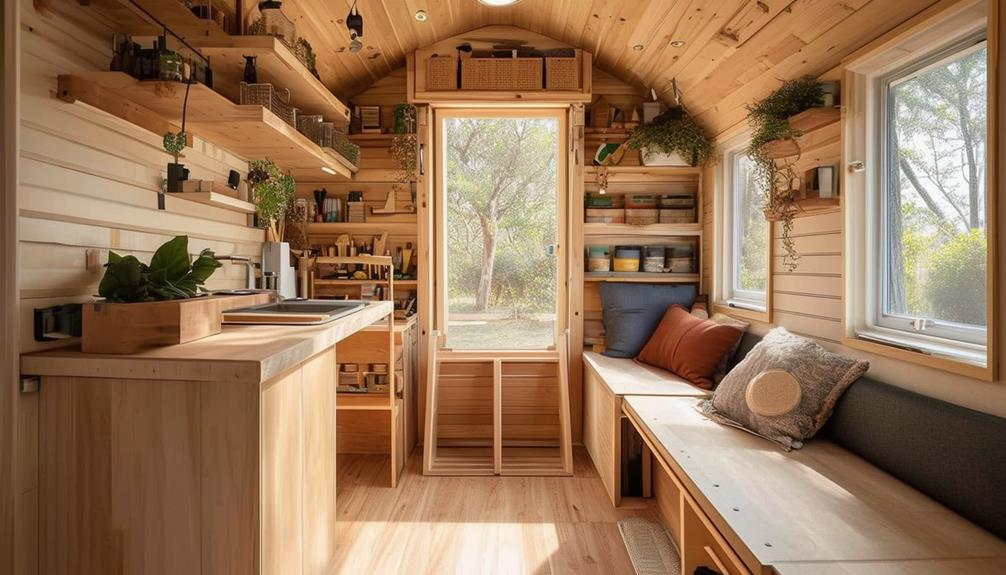
Transforming your small home workshop or studio into a versatile and efficient space is straightforward with multi-functional furniture. In a compact home, every inch matters, so incorporating furniture that serves multiple purposes is essential. Consider investing in a Murphy bed, which can be folded up to create more floor space during the day. Convertible tables are another excellent option, allowing you to switch seamlessly between a work surface and a dining area.
Storage ottomans that double as seating and hidden storage compartments are also highly practical. These pieces not only provide extra seating but also help keep your space clutter-free. Fold-down desks can be mounted on the wall and tucked away when not in use, making them ideal for a compact workshop or studio.
Utilizing loft spaces for sleeping areas frees up floor space for other activities. Built-in seating with hidden storage, such as benches or window seats, offers both comfort and practicality. Wall-mounted shelving optimizes vertical space, keeping your tools and materials organized and within easy reach. Ultimately, smart furniture designs can transform your small living area into a functional and comfortable space, making your home workshop or studio both efficient and inviting.
Adding Personal Touches
Now it's time to make your tiny home workshop truly yours by incorporating personal touches. Consider unique design elements, customized storage solutions, and personalized decor choices that reflect your style and needs. These modifications will not only enhance functionality but also create an inspiring environment tailored specifically to you.
Unique Design Elements
Infusing your small home workshop with personalized design elements can make the space uniquely yours and highly functional. When building a small house, it's crucial to incorporate touches that reflect your personality and creative needs.
Consider these design elements to add character and functionality to your space:
- Custom-made furniture: Tailor furniture like desks and shelves to fit your specific requirements and the dimensions of your small house, ensuring every inch is utilized effectively.
- Artistic finishes: Use reclaimed wood accents, colorful tiles, or creative wall murals to enhance the visual appeal and charm of your workshop.
- Intelligent technology: Integrate space-saving foldable desks, adjustable lighting systems, and built-in speakers to create a modern, adaptable workspace.
- Nature-inspired elements: Incorporate indoor plants, optimize natural light sources, or install panoramic windows to promote a calming and inspiring environment.
Customized Storage Solutions
Maximize the potential of your tiny home workshop by incorporating customized storage solutions tailored to your specific needs and preferences. Built-in shelves and cabinets can optimize vertical space, keeping your belongings organized and easily accessible. Utilize under-stair storage, wall-mounted racks, and hidden compartments to make the most of every available nook and cranny.
For a workspace that truly meets your requirements, consider adding sliding drawers, pull-out bins, and modular units. These options provide flexibility and ease of access, ensuring each tool and material has a designated spot. Tailor your storage solutions to specific activities, whether it's a dedicated area for hobbies, crafts, or outdoor gear.
Adding personal touches can enhance both functionality and aesthetic appeal. Decorative hooks, magnetic boards, and unique storage containers can infuse your space with personality while serving practical purposes.
Here's a quick table to illustrate some key ideas:
| Storage Solution | Feature | Benefit |
|---|---|---|
| Built-in Shelves | Optimal vertical space | Keeps belongings organized |
| Under-stair Storage | Utilizes hidden areas | Efficient space usage |
| Sliding Drawers | Easy access | Flexible workspace |
| Decorative Hooks | Adds personality | Practical and aesthetic |
Personalized Decor Choices
Injecting personal design choices into your compact home workshop can transform it into a space that truly reflects your style and preferences. Adding personal touches like artwork, photos, or plants can create a cozy and welcoming atmosphere. These elements not only make your small home more visually appealing but also imbue it with your individuality.
Choosing furniture pieces that serve a dual purpose can optimize limited space and enhance functionality. Consider a desk that also functions as a storage unit or a chair that can be easily stored when not in use. This approach ensures that every inch of your small workshop is utilized effectively.
Incorporating storage solutions that are both practical and visually pleasing can keep your studio orderly and free of clutter. Look for items that seamlessly blend with your design while providing the storage you need.
To create an environment that sparks creativity and productivity, selecting the right color palette is essential. Consider colors that evoke the atmosphere you wish to cultivate in your workspace.
- Artwork: Display pieces that inspire you.
- Photos: Personal snapshots can add a homely touch.
- Plants: Introduce greenery for a refreshing look.
- Multifunctional Furniture: Opt for pieces that save space.