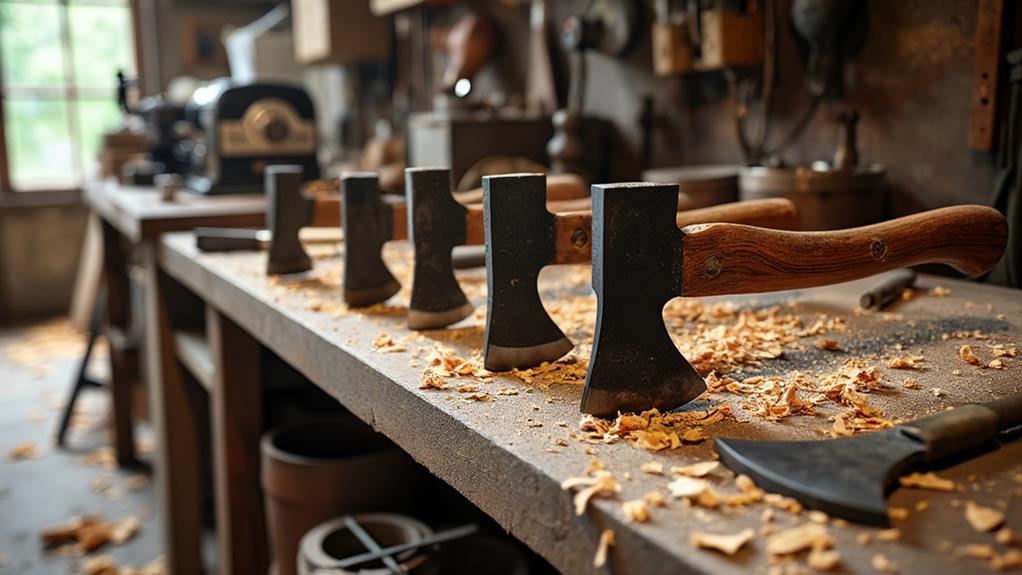
How to Choose the Right Axe Length for Your Needs
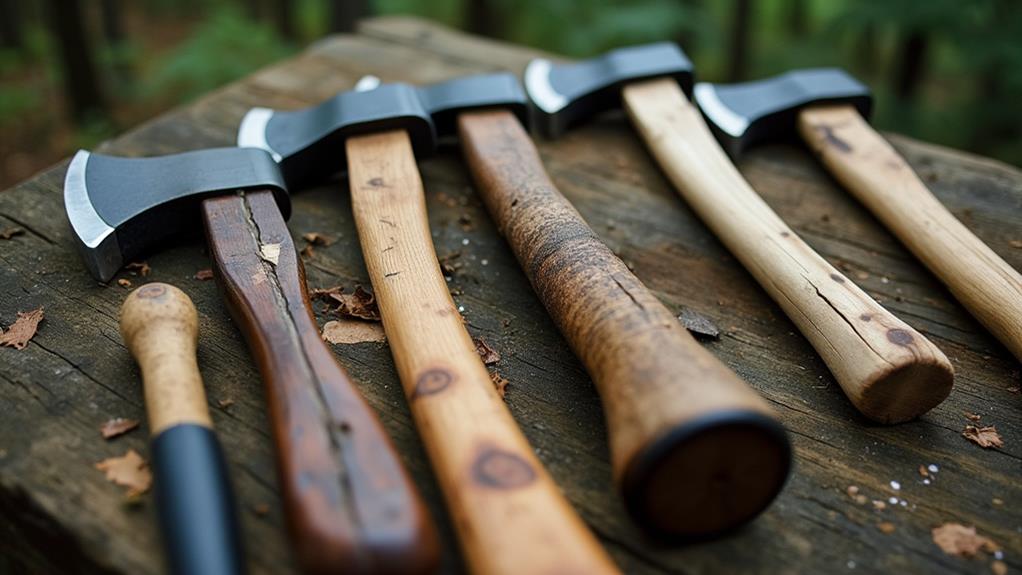
To choose the right axe length, consider your height and the tasks you'll be performing. For individuals around six feet tall, a handle length of 31 inches is often ideal. Shorter individuals might find a handle length of 25-28 inches easier to control.
The handle should ideally reach the second joint of your middle finger for the best fit. Additionally, consider factors like handle material, shape, and the weight of the axe head, as these also significantly impact performance.
Importance of Ax Selection
Selecting the right axe is crucial for effective and safe use, with handle length being a key factor. The handle length affects your control, balance, and accuracy. A standard felling axe typically has a 36-inch handle, but this can be too long for many users. For a six-foot individual, a 31-inch handle is usually more comfortable and efficient, while shorter users might prefer handles between 25 to 28 inches.
Your physical condition and arm length are important in determining the optimal handle length. An axe that feels too heavy or cumbersome can compromise control and increase the risk of accidents. Lighter axe heads, weighing 2 to 3 pounds, are generally recommended for ease of handling, particularly for beginners. Experienced users might opt for heavier heads for greater striking force, provided they can handle the extra weight confidently.
Choosing the right axe handle isn't just about comfort; it significantly impacts safety and performance. A well-fitted axe reduces the risk of accidents and enhances cutting efficiency. Therefore, always select a handle length that aligns with your comfort and the specific tasks you plan to undertake.
Understanding Ax Types
Understanding the diverse types of axes is essential for choosing the right tool for your specific needs. Different tasks require specific axes designed to enhance efficiency and safety. For cutting down trees, you'll want a felling ax. These axes generally weigh between 1.5 to 2.5 kg and are 50 to 65 cm long, making them perfect for transferring force effectively during tree cutting.
When it comes to splitting wood, a splitting ax is your best bet. These axes feature a wedge-shaped head and typically weigh between 1.5 to 3.5 kg, with lengths ranging from 40 to 90 cm. This design maximizes the effectiveness of splitting wood along the grain.
For smaller cutting jobs, consider a hand ax. These compact tools usually weigh between 600 grams and 1.5 kg and measure 45 to 65 cm in length. They're ideal for kindling and other minor tasks, thanks to their easy one-handed operation.
Lastly, for recreational activities like ax throwing, throwing axes, often called tomahawks, are the best choice. They generally weigh around 1 kg and measure between 30 and 40 cm. Their design caters specifically to balance and aerodynamics for competition.
Ax Head Weight Considerations
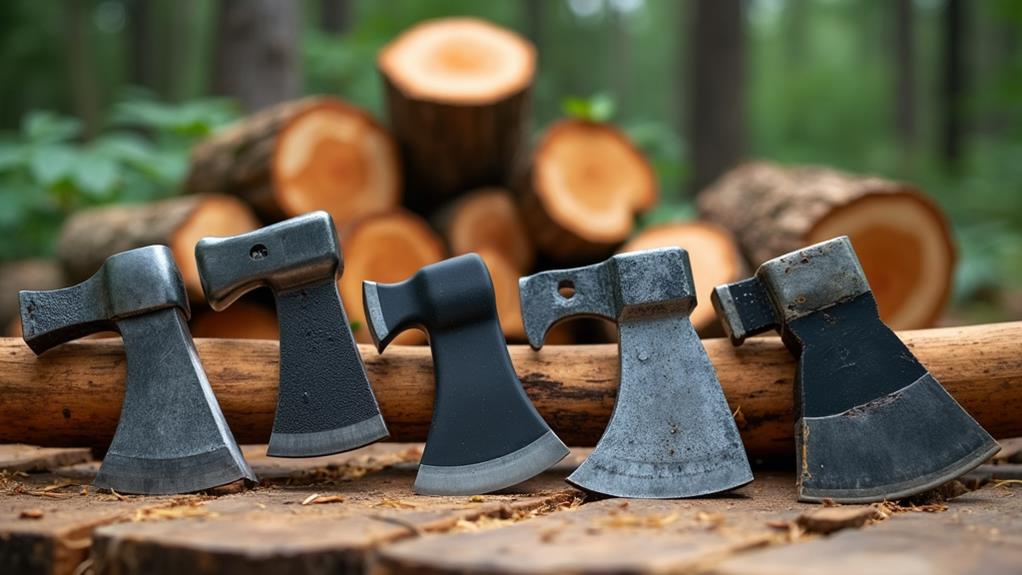
Choosing the right ax head weight is crucial for balancing power and control, directly affecting chopping efficiency and accuracy. Heavier ax heads, typically between 5 to 7 pounds, generate substantial force but can compromise precision. These are best suited for experienced users or cutting competitions where power is paramount.
For general use, it's advisable to stick to ax heads weighing no more than 5 pounds. This weight strikes a balance between delivering enough force and maintaining accuracy, making it ideal for most tasks. Beginners should consider lighter ax heads to improve control and minimize fatigue. Full-size axes with 3-pound heads or boys' axes with 2-pound heads are excellent starting points.
Consider these guidelines when selecting an ax head:
- Heavier Ax Heads (5-7 pounds): Best for experienced users or competitive chopping.
- General Use Ax Heads (up to 5 pounds): Suitable for balancing force and accuracy.
- Beginner Ax Heads (2-3 pounds): Perfect for learning control and reducing fatigue.
- Effective Chopping/Splitting (2.25-3.5 pounds): Provides a good balance of power and maneuverability.
As you gain strength and experience, you can gradually move to heavier ax heads, but always prioritize control for safety and efficiency.
Determining Handle Length
When selecting the appropriate axe handle length, consider how it suits your grip and body type. A handle that reaches the second joint of your middle finger when the axe head is positioned under your armpit ensures a comfortable grip and effective swing. Taller individuals can manage longer handles, while shorter individuals benefit from shorter handles for improved control and maneuverability.
Handle Length Factors
Determining the right handle length for your axe is crucial for both performance and safety. An appropriately sized handle significantly impacts your control and comfort during use. When considering handle length, especially if you're comparing modern tools to old axes, several key factors should be kept in mind.
- User Height and Arm Length: The handle length should fit comfortably in your grip, allowing the axe head to rest easily in your hand when the handle is tucked into your armpit. For an average six-foot male, a 31-inch handle is often ideal, while boys' axes with 28-inch handles are better suited for younger users or smaller tasks.
- Task Specificity: Handle length varies based on the task. Standard felling axes typically have 36-inch handles, but a 31-inch handle often provides better control and accuracy for suburban tasks.
- Shock Absorption: Properly sized handles improve shock absorption, reducing the transfer of impact to your arms and enhancing overall comfort and effectiveness.
- Grip Comfort: Ensure the handle fits well in your hand. A comfortable grip allows for better control and efficiency, especially during prolonged use.
Proper Axe Sizing
Proper axe sizing is crucial for maximizing the tool's effectiveness. To determine the ideal handle length, consider factors such as your height, strength, and intended tasks. Generally, an axe handle length between 25 to 32 inches suits most people, with 28 inches often providing an optimal balance of control and power.
For individuals around six feet tall, a 31-inch handle may offer enhanced comfort and efficiency. Your specific needs will dictate the best choice. For tasks requiring precision, a shorter handle offers greater control. Conversely, longer handles generate more force but may reduce maneuverability.
A practical way to assess fit is to hold the axe and check if the pommel reaches the second joint of your middle finger. This often indicates a suitable grip for most users.
Handle Material and Shape
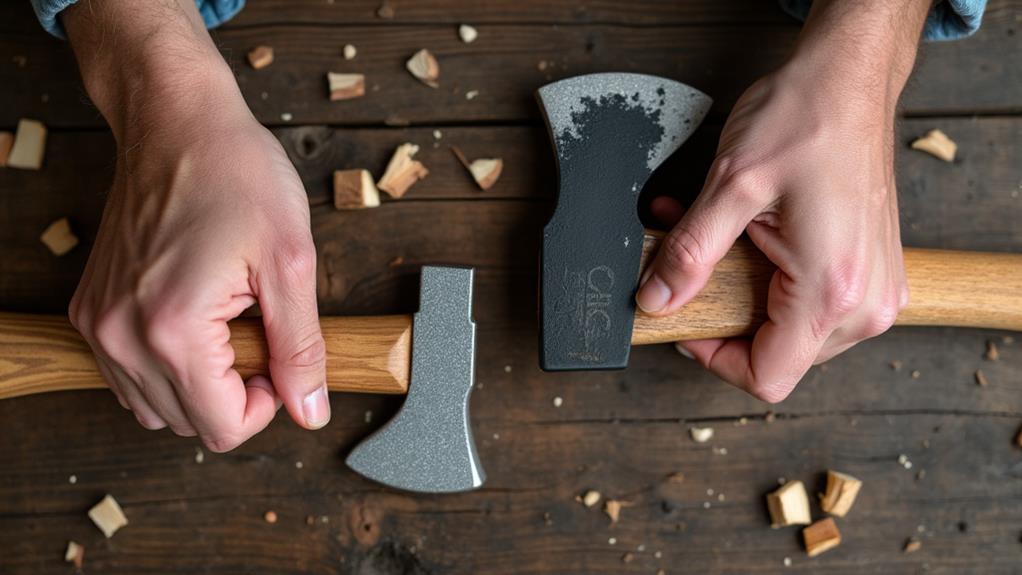
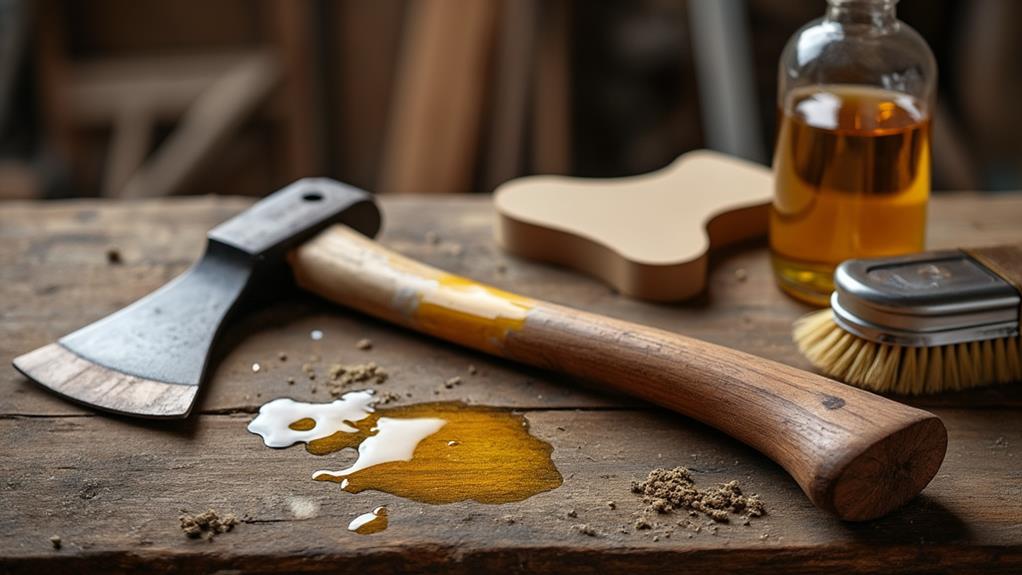
When selecting an axe handle, hickory and ash are often top choices, with hickory noted for its durability and shock resistance. Handle shapes vary, with curved handles providing more comfort for single-bitted axes, while straight handles are better suited for double-bitted axes. Be aware that varnished handles can be slippery; sanding them may improve grip and comfort during use.
Preferred Handle Materials
Selecting the right handle material and shape for your axe is crucial for optimal performance and safety. Wood, specifically hickory and ash, are the preferred materials. Hickory is renowned for its durability and shock resistance, making it ideal for heavy-duty tasks. Ash is also a solid choice, praised for its flexibility and strength.
To ensure your axe handle is strong and reliable, consider the direction of the wood grain. The grain should ideally run parallel to the axe bit, providing increased strength during use. Additionally, handles crafted from wood with tight, numerous growth rings are more robust than those with widely spaced rings.
Here are four key factors to consider when selecting an axe handle:
- Material: Hickory and ash are preferred for their proven durability and shock resistance.
- Grain Direction: Ensure the grain runs parallel to the bit for maximum strength.
- Growth Rings: Opt for wood with tight, numerous growth rings to enhance handle performance.
- Varnish: Avoid varnished handles, as they can be slippery; unvarnished handles offer better grip, especially in wet conditions.
Handle Shape Varieties
The shape of an axe handle significantly affects its functionality and user comfort. When considering handle shape varieties, each option offers distinct benefits. Typically, handles are made from hickory or ash, with hickory being preferred for its durability and shock resistance. Your choice between curved and straight handles should be based on your specific tasks. Curved handles, often found in single-bitted felling axes, provide a natural swing, while straight handles are common in double-bitted axes for balanced functionality.
Here's a quick comparison to help you decide:
| Handle Shape | Best For |
|---|---|
| Curved | Single-bitted felling axes |
| Straight | Double-bitted axes |
| Short | Close-up work, precise control |
| Long | Heavy-duty tasks, increased power |
The length of the handle is another crucial factor. Shorter handles offer precise control, making them suitable for close-up work. Longer handles provide greater leverage and power, ideal for heavy-duty tasks.
Additionally, consider the grain direction and growth rings of the handle. A parallel grain to the bit and tight growth rings indicate a stronger handle. Sanding off any varnish can help avoid a slippery grip, especially in wet conditions.
This information should help you make an informed decision when selecting an axe handle that best suits your needs.
Grip and Comfort
Selecting the right handle material and shape is crucial for ensuring both grip and comfort during use. Handle length typically ranges from 25 to 32 inches, and your personal comfort and height are key factors in finding the best fit.
Hickory and ash are popular choices for handle materials due to their durability and shock-absorbing properties, with hickory being particularly favored among axe users.
You have two main handle shape options: curved and straight. Curved handles are common in single-bitted axes, offering a more natural swing, while straight handles are standard for double-bitted axes. The handle design should fit comfortably in your hand to improve swing efficiency and reduce fatigue during prolonged use.
To enhance grip and comfort, consider the following tips:
- Materials: Choose hickory or ash for their strength and shock-absorbing capabilities.
- Shape: Opt for a curved handle for single-bitted axes or a straight handle for double-bitted axes.
- Varnish: Sand off varnished handles to prevent slipperiness, especially in wet conditions.
- Personal Fit: Ensure the handle length and shape match your height and comfort preferences.
Personal Measurements and Preferences
Selecting the right axe length is crucial and depends heavily on your personal measurements and preferences. A key consideration is the handle length, typically ranging from 25 to 32 inches, with 28 inches often providing an optimal balance of control and power. Your arm length is equally important in this decision.
The axe should fit comfortably in your grip, and the head should rest at a height that allows for effective and safe swings. If you have shorter arms, a shorter handle might be more manageable. Conversely, longer arms may benefit from a longer handle. However, always prioritize what feels comfortable and controllable for you.
The weight of the axe head is another important factor. A weight between 2 to 3 pounds is generally ideal, especially for those with less experience or upper body strength. As you gain skill and strength, you might prefer a longer handle to generate more force, but always ensure that comfort and control are maintained to avoid accidents and ensure efficient use.
Market Trends and Quality
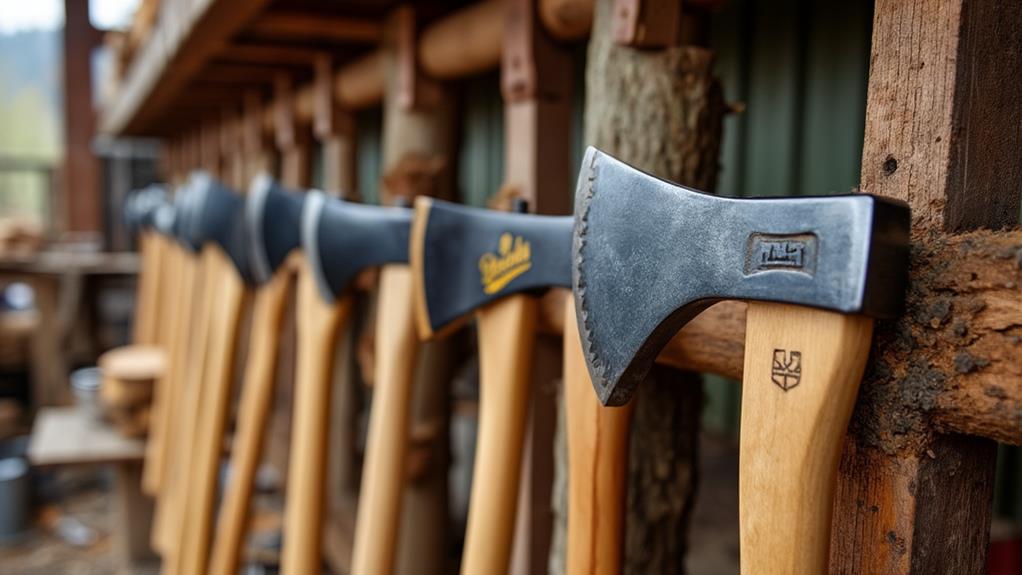
In recent years, market trends have leaned toward sturdier axe handles, often resulting in oversized designs that may compromise balance and cutting efficiency. While thicker handles are perceived as stronger, they can reduce the sensitivity needed for precise tasks, particularly in splitting axes. Knowing that the average recommended handle length is between 25-32 inches can help you make a more informed decision.
Traditional designs are becoming rare, but many consumers still seek classic styles for their superior ergonomics and performance. It's essential to consider both handle length and material quality when selecting an axe.
Here are some key points to consider:
- Handle Length: Aim for a handle length between 25-32 inches for effective use and comfort.
- Material Quality: Choose high-quality wood or composite materials that adhere to historical standards of efficiency and comfort.
- Design Balance: Ensure the axe is well-balanced to prevent compromised cutting ability due to an oversized handle.
- Ergonomics: Select designs that prioritize ergonomics for easier and more comfortable use over extended periods.
Conclusion
When choosing the right axe length, prioritize your comfort and preferences. Ensure the handle reaches the second joint of your middle finger when held. Beginners may benefit from a lighter axe head for better control. While handle materials and market trends can play a role, the personal fit remains crucial. The right axe enhances control and safety, making tasks more efficient and enjoyable. Trust your instincts and prioritize what feels best in your hands.