Axe Throwing Competitions: Rules and Techniques
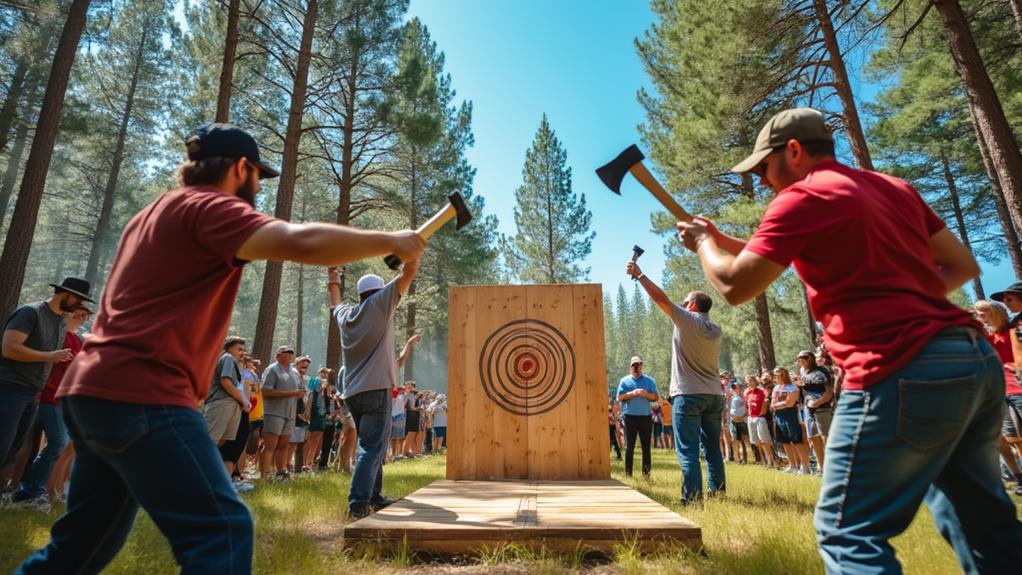
Entering the world of axe throwing competitions reveals that the sport is not solely reliant on brute strength. Mastery requires strict adherence to rules and a focus on technique. Competitors must stand behind a designated line and aim for specific target zones, prioritizing precision for high scores.
To ensure fairness and accuracy, judges are always present. What does it take to excel in axe throwing, and how do scoring details shape your strategy? There's much more to uncover.
Equipment Needed
When preparing for an axe throwing competition, having the appropriate equipment is essential for both safety and performance.
Firstly, ensure that the target area is set up according to World Axe Throwing League (WATL) specifications. Official targets must have their centers positioned 60 inches from the ground and be constructed from multiple layers for durability. The throwing space should be clear, with a minimum distance of 20 feet from the throwing line to the target, free of obstacles to ensure the safety of both throwers and spectators.
Axes used in competitions must adhere to specific guidelines: they should weigh no more than 3 pounds and be no longer than 19 inches from the top of the eye. This ensures consistency and fairness in the competition.
Additionally, all participants must wear proper safety gear, including closed-toed shoes to protect their feet and protective eyewear to guard against potential hazards. The designated throwing area must be well-maintained and free of obstacles to minimize risks. This setup ensures a safe and enjoyable experience for everyone involved.
Game Formats
When exploring game formats, you'll encounter popular styles like elimination and round-robin, each suited for different group sizes. Team play variations, such as double trouble and standard team play, add layers of excitement and cooperation. Other formats include head-to-head matches and the bullseye game, where precision in scoring is crucial.
Popular Match Styles
Axe throwing competitions come alive with diverse match styles that cater to different group sizes and skill levels. The Elimination Format is ideal for larger groups, making each match crucial as players compete until only one remains.
Conversely, the Round-Robin Format suits smaller groups, ensuring everyone has equal playtime by having all participants compete against each other. One popular game is the Bullseye Game, where participants earn points based on their axe's proximity to the target, with higher points awarded for hitting the bullseye.
In a Head-to-Head Competition, two participants face off, and the winner is determined by who scores the most points within a set number of throws. Scoring areas are essential in all these formats, and throwers must be assessed to ensure they adhere to the rules of play, such as maintaining a safe distance.
Whether you're involved in a league or a tournament, these formats add excitement and structure to the event. Variations like "Double Trouble" can further spice up the competition and engage more participants, making each game unique and thrilling.
Team Play Variations
Team play variations add a dynamic layer to axe throwing competitions, enhancing both strategy and excitement. Popular formats like "Double Trouble" involve two teams competing simultaneously, with each thrower alternating throws to ensure equal participation. This format demands careful planning and coordination, as each thrower's performance impacts the team's overall score.
In head-to-head matches, teams compete directly against each other, and the winner is determined by the total points scored. This format fosters intense competition and encourages strategic thinking, as throwers must adapt to their opponents' performance.
For larger groups, an elimination format is often used, where teams compete in successive rounds until only one remains, creating a thrilling, high-stakes atmosphere.
Round-robin formats ensure that each team plays against every other team, providing a comprehensive assessment of skills across multiple games. This format allows for fair and balanced competition, giving every team an equal chance to showcase their abilities.
Whether using elimination or round-robin formats, team play variations offer an engaging and competitive way to enjoy axe throwing.
Rules and Regulations
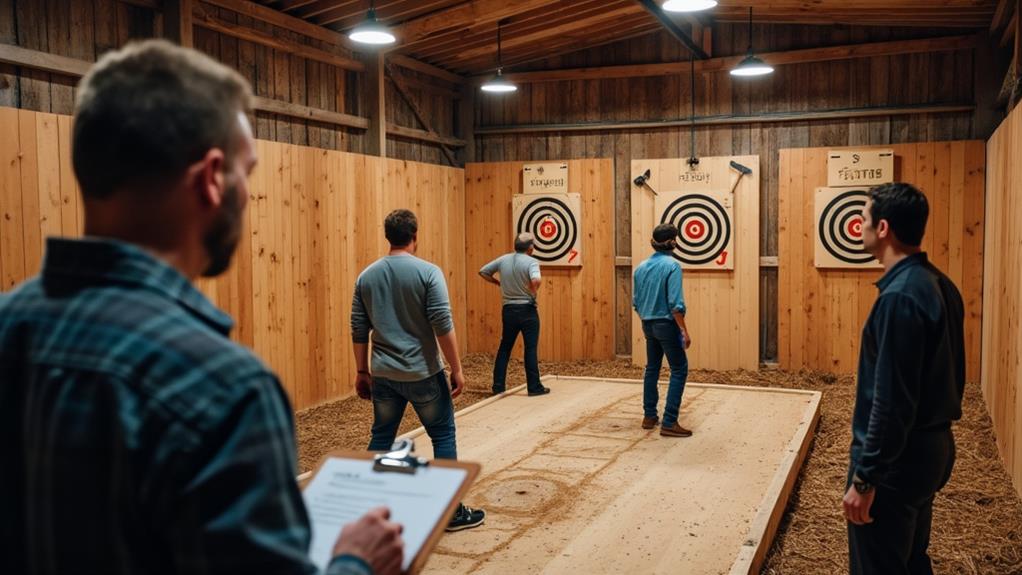
Understanding and adhering to the rules and regulations of any axe throwing competition is crucial to ensure fairness and safety.
As a participant, it's essential to keep your foot behind the designated throwing line during your throw to avoid faults. Points are awarded based on the scoring ring where more than 50% of the axe lies. The axe must remain lodged in the target for your throw to be valid; if it falls out, you'll score zero points for that attempt.
Each competition may have specific rules that vary depending on the game format, so it's important to consult the detailed rule lists for any clarifications. Before participating, ensure you follow all established safety protocols, including signing any necessary waivers.
Safety Tips
In the realm of axe throwing competitions, prioritizing safety is imperative. Establish clear safety rules and protocols, and ensure all participants are well-versed in proper axe throwing techniques before the competition begins. This ensures everyone knows how to throw safely and accurately.
| Safety Aspect | Details |
|---|---|
| Safety Gear | Require closed-toe shoes and protective eyewear |
| Throwing Area | Free of obstacles and distractions |
| Spectators | Keep at least 10 feet away from the throwing area |
| Waivers | Signed by all participants |
Maintain a safe distance for spectators by keeping them at least 10 feet away from the throwing area. This precaution helps prevent injuries from errant throws. Participants must wear appropriate safety gear, including closed-toe shoes and protective eyewear, to minimize the risk of accidents.
Ensure the throwing area is free of obstacles and distractions. Remove any furniture and decorations to create a safe environment for throwing. Additionally, have all participants sign waivers acknowledging the inherent risks of axe throwing and confirming their understanding of safety protocols.
Event Planning

Planning an axe-throwing competition requires meticulous preparation to ensure a seamless and enjoyable experience. Start by securing a suitable venue with ample space free of obstacles, ensuring it can safely accommodate all participants. Implement comprehensive safety measures, such as requiring all participants to sign waivers and maintaining a safe distance for spectators.
Incorporate diverse game formats like elimination or round-robin to keep engagement high. This variety not only enhances the excitement but also ensures that everyone has a chance to fully enjoy the event. Employ a qualified referee to oversee the competition, ensuring fair play and adherence to established rules and regulations.
Ensure access to necessary equipment, including enough axes, targets, and score sheets to keep the event running smoothly. Attention to these details will enhance participant satisfaction and contribute to the overall success of the event. By focusing on these key aspects, you'll create a safe and enjoyable environment for everyone involved.
Judging and Timing
The success of an axe-throwing competition depends on effective judging and timing. Judges play a crucial role in ensuring fair play and accurate scoring. At sanctioned events, at least one certified judge is required for every 16 throwers to maintain rule adherence and oversight.
Lane judges are essential for monitoring timing faults. Throws must be completed within 10 seconds of one another; otherwise, a fault is recorded. Judges also oversee warm-up throws, making necessary adjustments to ensure safety and fairness.
Key responsibilities for judges include:
- Warm-up throws: Adjusting duration to ensure safety.
- Timing faults: Ensuring throws occur within the required 10-second window.
- Pause in play: Managing delays due to injuries or equipment changes.
- Coin flips: Determining the initial thrower in a tie.
- Scoring oversight: Ensuring accurate and fair scoring.
Certified judges ensure the competition runs smoothly and fairly. They've the discretion to manage any pauses in play, prioritizing the safety of all participants.
Scoring System
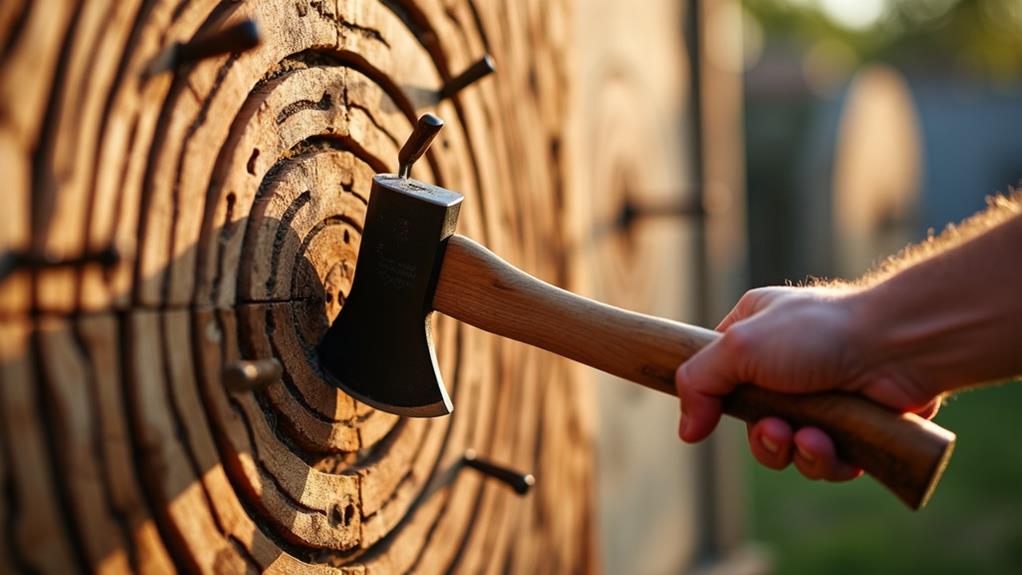
The scoring system in axe throwing is meticulously designed to ensure fairness and accuracy. Points are awarded based on the area where your axe lands, with more than 50% of the axe head needing to be embedded in a specific scoring zone. The outermost scoring ring is worth 1 point, with values increasing up to 6 points for hitting the bullseye. A called Killshot, marked by two small blue dots on the target, is worth 8 points.
To confirm valid scoring, your axe must remain stationary in the target; if it falls out, you receive a score of zero. The scoring areas are defined by five black rings and a red bullseye, each with specific measurements to ensure consistency across competitions. Precision is crucial, and as a thrower, you must verify that your axe stays embedded in the target for the score to count.
Mastering the scoring system requires practice and attention to detail. Knowing where to aim and how to control your throw can significantly impact your points and overall success in competitions.
Conclusion
To excel in axe throwing competitions, focus on mastering the rules, techniques, and safety protocols. Equip yourself with the appropriate gear, understand the various game formats, and familiarize yourself with the scoring system. Always prioritize safety and adhere to the judges' guidance to ensure fairness. With consistent practice and mental focus, you can enhance your skills and enjoy a more rewarding experience in the sport of axe throwing.