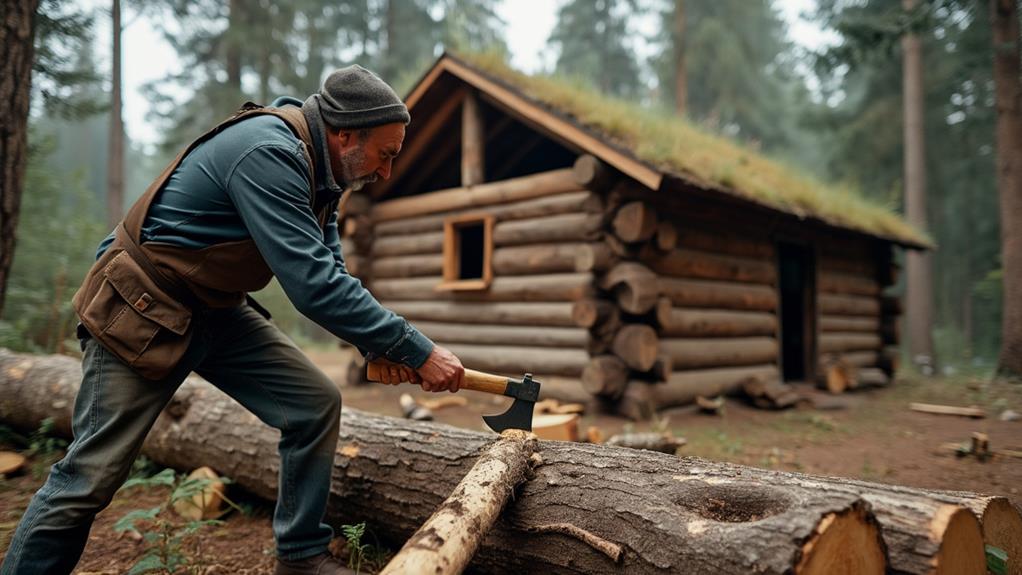
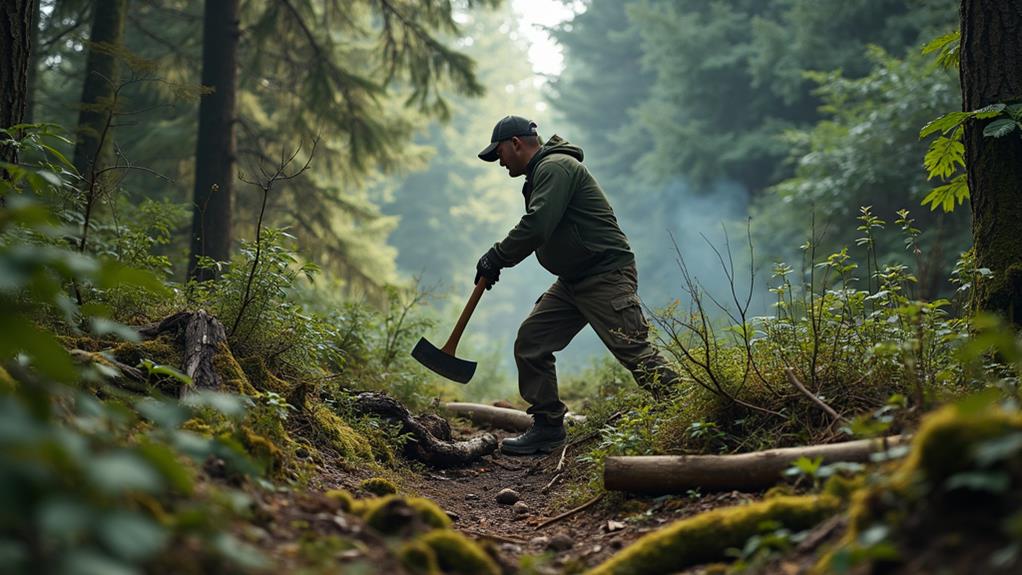
Axe Techniques for Preparing Kindling
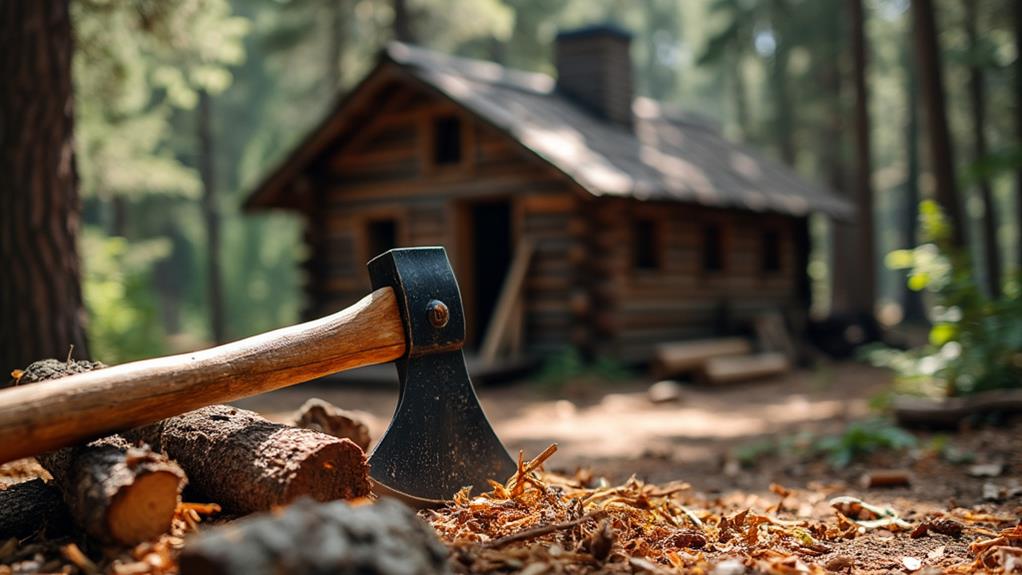
When preparing kindling, your choice of axe and wood significantly impacts efficiency and safety. Select seasoned hardwoods with straight grains; they split more easily and burn efficiently. Use a hatchet for smaller tasks or a Fiskars splitting axe for larger logs.
Ensure your chopping block is stable and use controlled, powerful swings at the wood's center. Common mistakes even experienced woodsmen make include using wet or unseasoned wood, which splits poorly and burns inefficiently.
Additionally, improper axe maintenance, such as a dull blade, can reduce efficiency and increase the risk of accidents. To avoid these issues, always use dry, seasoned wood and maintain a sharp blade.
This will enhance your kindling preparation process and ensure safety.
Sources for Seasoned Wood
Looking for the best seasoned wood for kindling? Look no further than the Kansas City woodyard. Renowned for its dependable supply of seasoned oak firewood, this woodyard serves both local barbecue establishments and homeowners preparing for winter. The seasoned wood offered is perfect for splitting into kindling, ensuring you have top-quality fire-starting material.
Every fall, the Kansas City woodyard delivers seasoned wood directly to your doorstep, making it convenient to stock up before the cold months arrive. The firewood is of superior quality, burning efficiently and providing consistent heat.
Additionally, you may receive complimentary kindling with your order, adding extra value and convenience. For those seeking variety, an old maple tree also supplies extra kindling materials, offering more options for starting fires.
This combination of seasoned oak and maple wood ensures a steady supply of high-quality kindling for any fire-starting needs. Stock up and enjoy the warmth and reliability of well-seasoned wood.
Choosing the Right Axe
When choosing an axe for preparing kindling, consider whether a hatchet or a splitting axe better suits your needs. A small Swedish hatchet is effective for kindling but may lack the power for larger splits.
In contrast, the Fiskars splitting axe offers the sharpness and heft necessary for efficient splitting. Using the right tool enhances both efficiency and safety.
Fiskars Axe Advantages
Selecting the right axe can significantly improve your wood-splitting efficiency, and the Fiskars splitting axe excels in this regard. Combining power, precision, and comfort, the Fiskars axe is designed to enhance your wood-splitting tasks.
Firstly, the Fiskars axe features a longer handle, providing increased control and power. This allows you to split wood with fewer swings, making the preparation of kindling faster and less tiring. The exceedingly sharp blade ensures cleaner cuts, reducing the effort required. As a result, wood splitting becomes a smoother, more enjoyable task.
The Fiskars axe's satisfying heft minimizes user fatigue, enabling prolonged use without excessive tiredness. Its ergonomic design enhances safety and comfort, ensuring that each swing is both powerful and controlled. Additionally, the design minimizes the likelihood of the blade getting stuck in the wood, further boosting chopping efficiency.
- Longer handle for increased control and power
- Exceedingly sharp blade for cleaner cuts
- Satisfying heft reduces fatigue
- Ergonomic design for safer, more comfortable use
Hatchet Vs. Splitting Axe
Selecting between a hatchet and a splitting axe significantly affects your wood-splitting efficiency and ease. If you're creating kindling for a wood fire, understanding the strengths of each tool can save you time and effort.
A small Swedish hatchet, with its compact size, is perfect for making kindling. It's ideal for lighter, quick tasks and excels at splitting thinner pieces of wood. Its portability and ease of use are notable advantages.
Conversely, a Fiskars splitting axe is engineered for power and leverage. Its longer handle provides more force, making it suitable for larger logs. The exceptionally sharp blade of the Fiskars splitting axe allows you to split wood quickly and with less effort than a traditional hatchet. Its heft is particularly effective for splitting thicker logs.
In a dedicated kindling yard, using the right tool enhances safety and efficiency. Opt for a hatchet for small, precise tasks and a splitting axe for larger rounds. Your choice should be based on the size of the wood you need to split.
Preparing to Chop Kindling
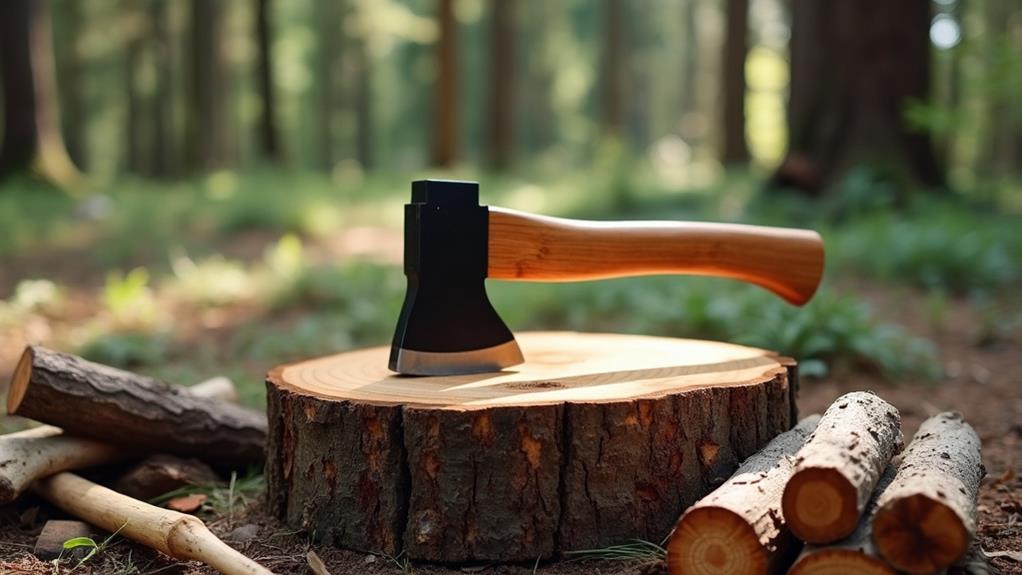
Before you begin chopping kindling, ensure your workspace is prepared for efficiency and safety. Start by positioning a sizable log securely on end to serve as your chopping block. This stable base prevents the axe from striking the ground, which can dull its blade. Elevating the log helps maintain the sharpness of your axe and improves your chopping posture.
Next, clear the chopping area of any obstructions to create a safe environment. A clutter-free workspace allows you to focus on splitting kindling without distractions or hazards. Ideally, set up in a dedicated kindling yard where everything you need is within reach and organized.
Here's a quick checklist to keep you on track:
- Position a secure chopping block: Ensure the log is stable and won't tip over.
- Elevate your chopping block: Protect the axe blade and enhance your posture.
- Clear the area: Remove any debris or obstacles to prevent accidents.
- Use a dedicated kindling yard: Keep your tools and materials organized and accessible.
Techniques for Cutting Kindling
When cutting kindling, start by selecting a piece of firewood that's free of knots, as knots can make splitting difficult. Position the wood vertically on a sturdy log or stump to prevent the axe from hitting the ground and dulling its blade. Medium-sized firewood is ideal because it typically yields several thin pieces of kindling when split properly.
Aim your axe at the center of the wood and use a controlled, powerful swing. If the axe gets stuck in the wood, lift both the axe and the attached wood, then drive them down onto the stump to free the blade. This technique helps you continue without unnecessary interruptions.
For effective kindling, aim for consistency in thickness. Thinner pieces ignite more easily, which is crucial for starting a fire. Continue chopping until you've achieved the desired thinness. Maintain a steady rhythm and control with each swing to ensure each piece of kindling is suitable for your fire-starting needs.
Alternative Kindling Materials
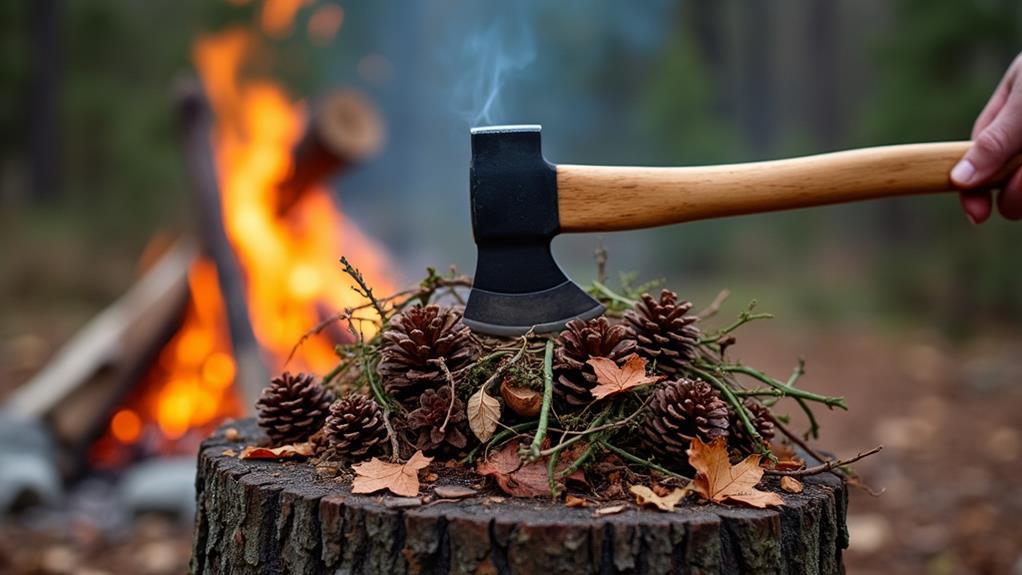
When you're seeking alternative kindling materials, twigs and small branches can be just as effective as traditional split wood. Cutting them into 12- or 18-inch lengths ensures they catch fire quickly and sustain it long enough to ignite larger logs.
However, don't limit yourself to just twigs and branches; several other kinds of kindling materials can enhance your fire-starting success.
- Lumber scraps: These are easy to split and provide a reliable source of kindling due to their dry wood nature.
- Large pieces of bark: Bark can help ignite firewood and improve the overall fire-starting process.
- Dead hedge trimmings: These can be excellent for starting a fire, especially when thoroughly dried out.
- Dried grass: This serves as a quick-igniting material, helping to catch the flames early on.
Experimenting with these alternative kindling materials can significantly increase your chances of successfully starting a fire.
By varying your kindling options beyond split wood, you make your fire-starting process more reliable and efficient.
Wood Selection Tips
Choosing the right wood for kindling is crucial for a successful fire. Start by selecting fully seasoned wood that has been dried for at least a year. This ensures efficient burning and minimizes the risk of smoke and creosote buildup. Prioritize hardwoods like oak, ash, and birch, as they offer higher heat output and burn more efficiently than softwoods.
Make sure your logs are straight-grained and free of knots. Straight-grained wood splits more easily, making your job simpler and safer. The ideal log length for kindling should range between 5 to 8 inches (12-20 cm), with a diameter of around 9 inches (23 cm) or less. This size is manageable and ensures the kindling will be easy to handle.
Avoid using coniferous or resinous woods such as pine or fir, as these can lead to dangerous creosote buildup in your chimney, increasing the risk of fires.
Safe Splitting Techniques
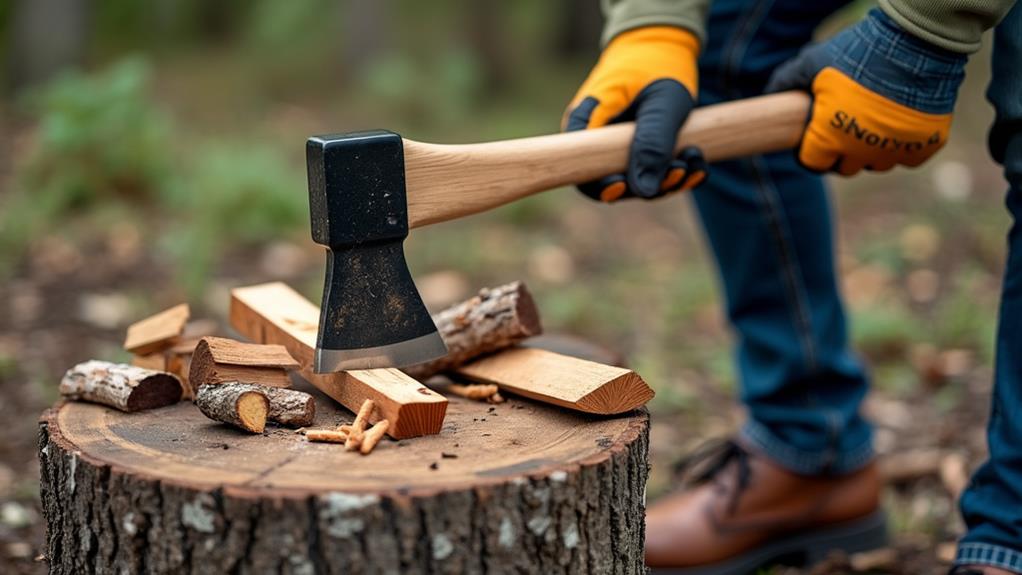
When splitting kindling, always use a large chopping block and position the wood at the back to protect your legs. Kneel while splitting and never hold the wood in your hand to prevent injuries. If your axe gets stuck, turn it over and strike the back on the block to free it safely.
Proper Axe Handling
Splitting wood safely with an axe requires proper handling techniques to minimize the risk of injury and improve efficiency. By mastering these techniques, each swing will be both safe and effective.
Key Tips for Safe and Efficient Axe Handling:
- Use a Stable Surface: Always place the wood on a large chopping block. Never hold the wood in your hand while splitting to prevent serious injuries.
- Freeing a Stuck Axe: If your axe gets stuck, turn the wood over and strike the back against the block to free it safely.
- Positioning for Accuracy: Ensure the axe head doesn't pass parallel to the wood when striking. This improves accuracy and reduces the risk of injury.
- Using a Hatchet: For smaller pieces of wood, a hatchet can be more manageable. Follow the same safety techniques as with a larger axe.
Additionally, placing the wood towards the back of the chopping block and kneeling while chopping can further reduce the risk of injury from errant swings.
Preventing Common Injuries
Preventing common injuries while splitting wood is essential for both safety and efficiency. Always use a large chopping block to provide a stable surface and protect your legs from missed swings. Position the wood towards the back of the block to ensure that any missed strikes won't hit your legs. Kneeling while chopping can further reduce injury risk by giving you better control over your axe, thereby minimizing the chance of a missed swing causing harm.
Never hold the wood in your hand; instead, use a secure base to avoid severe injuries. If your axe gets stuck, avoid yanking it out forcefully. Instead, turn the axe over and strike the back of it against the block to free it safely, preventing accidental slips that could lead to injury.
Storing and Drying Kindling
Keeping your kindling dry is essential for easy ignition and efficient burning. Proper storage and drying methods ensure your kindling is ready when needed. Store your kindling in a well-ventilated area away from moisture to prevent dampness, which can hinder fire lighting.
To keep your kindling organized and accessible, use two large baskets. This setup allows for easy refilling and quick access while keeping the kindling tidy. Additionally, stack your firewood to promote air circulation. Cover only the top with a tarp to protect it from rain, leaving the sides exposed to facilitate drying. Cut and stack your firewood by July to maximize the drying process. This timeline ensures your kindling is well-seasoned and ready for the colder months.
Here are some key tips:
- Store kindling in a dry, well-ventilated area.
- Use two large baskets for easy access and organization.
- Stack wood to promote air circulation; cover only the top with a tarp.
- Cut and stack firewood by July for optimal drying.
Using Wood Splitters
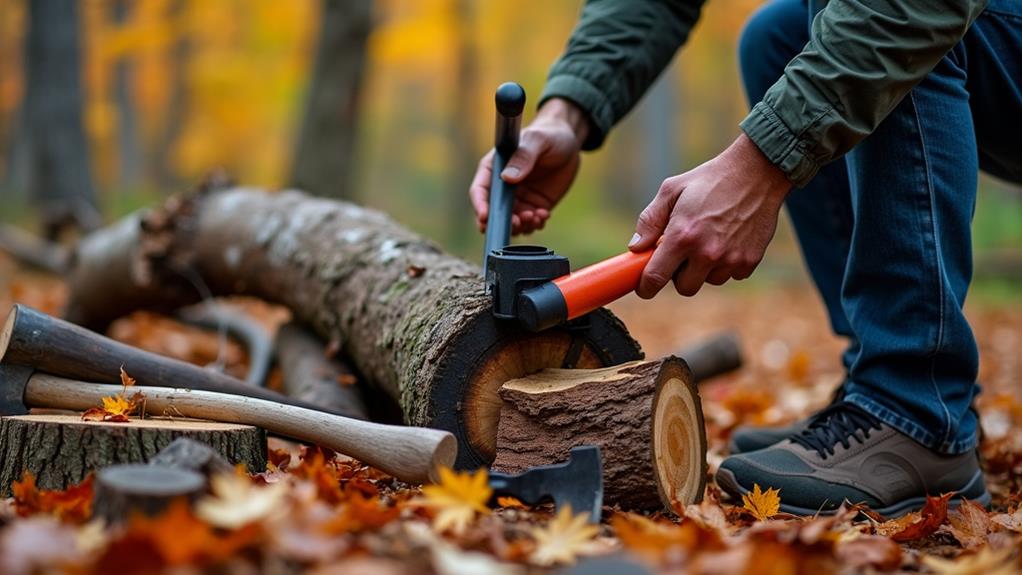
Wood splitters offer a modern, efficient, and safer alternative to traditional axes. Whether you're an experienced professional or a beginner, wood splitters can significantly speed up kindling production while minimizing physical strain. For example, the Flint Spanmesser model employs a downward knife motion to split wood effortlessly. This design eliminates the repetitive motion and potential hazards associated with swinging an axe.
Another notable option is the Kindling Cracker, which uses a hammer to drive wood against a stationary knife. This method allows for safe kindling processing without the risk of flying blades. Various models are available to accommodate different sizes of wood blocks, enabling you to select the most suitable tool for your needs.
Quick Comparison:
| Model | Key Feature |
|---|---|
| Flint Spanmesser | Downward knife motion, minimal effort |
| Kindling Cracker | Hammer-driven, stationary knife for safety |
| Various Models | Size accommodation, user-specific needs |
Using wood splitters can significantly reduce the physical strain associated with traditional splitting methods, making it easier for everyone, including those who might struggle with manual techniques. If you're looking to streamline your kindling production, investing in a wood splitter is a wise choice.
Conclusion
Preparing kindling with an axe can be efficient and safe with the right approach. First, select seasoned hardwood for its ease of splitting and burning. Use a stable chopping block to reduce the risk of accidents. Control your swings and avoid holding the wood with your hands while chopping to prevent injuries. By following these guidelines, you'll produce kindling efficiently, ensuring your fires ignite quickly and easily. Stay safe and happy chopping!