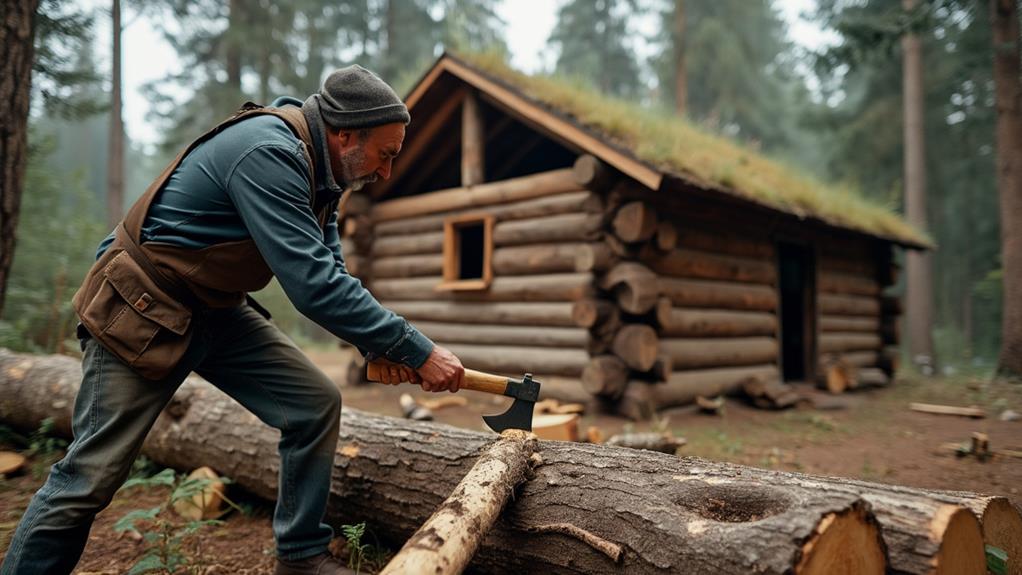
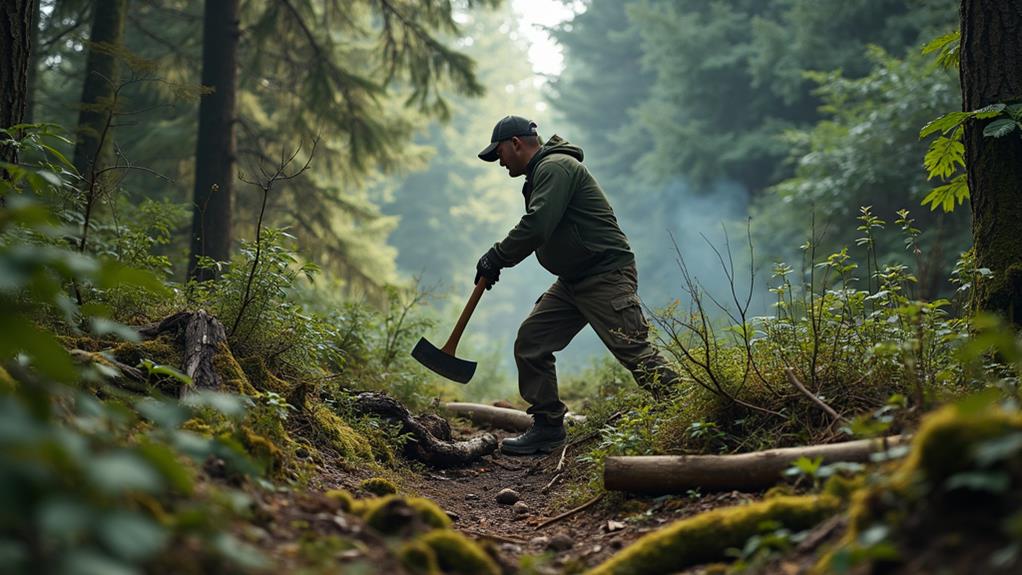
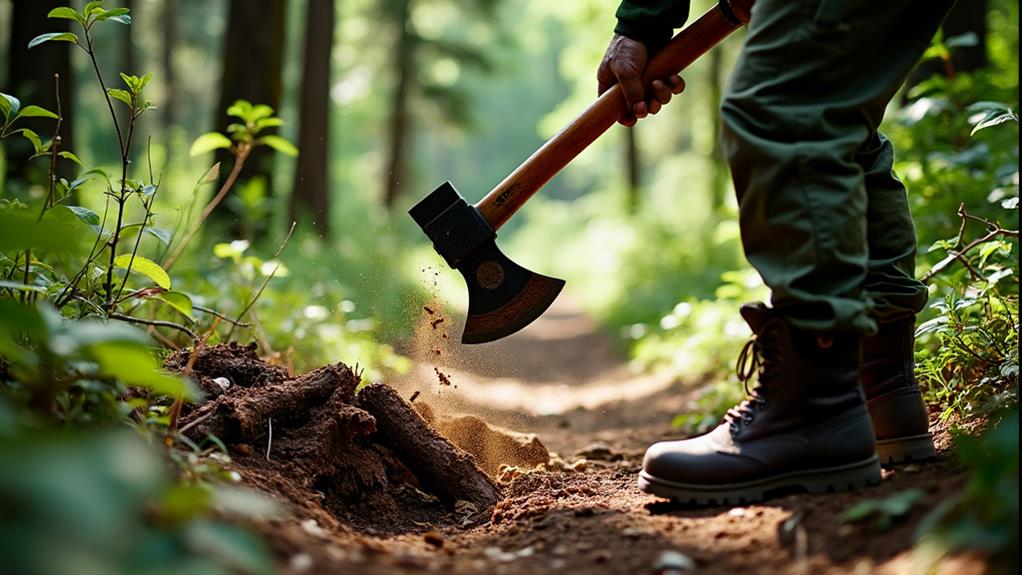
Axe Techniques for Ice Chopping and Snow Removal
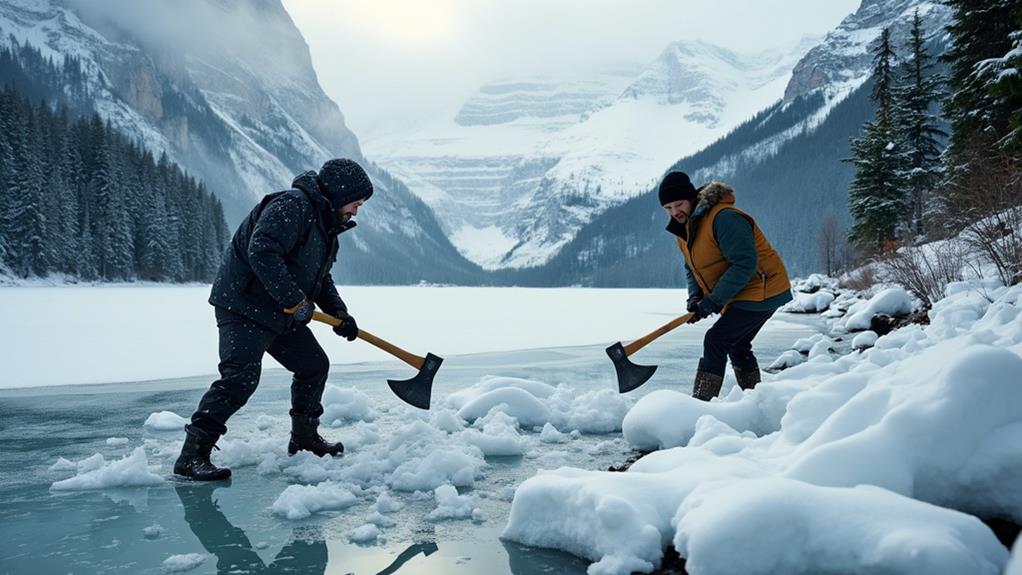
Mastering axe techniques for ice chopping and snow removal is crucial for efficiency and safety. Focus on horizontal chopping to prevent your axe from getting stuck, and remember that creating steps in snow requires stable, controlled swings.
A sharp axe is essential, but so are your grip and control. Seasoned pros make these tasks look effortless because they understand the right techniques, which go beyond mere strength. Knowing the proper methods can make all the difference.
Importance of Axe Safety
Ensuring axe safety is essential when chopping ice. To prevent slips and avoid injury, always maintain a firm grip on the axe with both hands, keeping the pick facing away from your body. Proper body positioning is equally important; stand with your feet shoulder-width apart for stability and keep your eyes on the target to maintain control.
Before you start, clear the area of other people to minimize the risk of accidents from stray axe swings. Regularly inspect the axe for any signs of damage or wear, as a compromised blade can lead to ineffective chopping and increase the risk of injury. Take your time when using an axe. Avoid rushing and focus on your technique to prioritize safety and reduce the likelihood of accidents.
Proper stance, careful body positioning, and a firm grip all contribute to effective and safe ice chopping. By following these principles, you can ensure a safer and more controlled chopping experience.
Essential Axe Techniques
A sharp axe head is your best asset for ice chopping. Keeping it sharp enhances cutting efficiency and reduces the effort required for each swing. When chopping ice or snow, maintain a firm, controlled grip. Hold the axe by the head with the pick facing backward for safety, especially during descents.
Utilize horizontal chopping techniques for effective ice and snow removal. This method optimizes force and minimizes the risk of the axe getting stuck. Vertical chopping often leads to the axe becoming lodged, complicating your work and making it less efficient.
When creating steps in the snow, cut horizontally to form stable footholds. These steps should be wide enough to provide secure footing, reducing the risk of slipping. Always prioritize safety. After chopping or cutting steps in snow, practice self-arrest techniques. This preparedness is crucial in case of a slip or fall, ensuring you can stop yourself and avoid injury.
Selecting the Right Axe
Choosing the right axe for ice chopping and snow removal can significantly enhance your efficiency and safety on the slopes. For snow slopes, a walking axe with a longer, straight shaft, typically between 50-75 cm, offers the necessary stability.
Unlike technical axes meant for steep snow and ice routes, a walking axe is more suited for general snow clearing tasks. Opt for an ice axe with a robust steel head that features both a pick for gripping and an adze for cutting and clearing snow. This combination allows you to handle various tasks with a single tool.
A comfortable grip is essential, especially for prolonged use in cold conditions, so a rubberized handle can help prevent frostbite and improve control. Additionally, select an ice axe with a T-rating for winter mountaineering. This rating indicates that the axe can withstand forces up to 3.5 kN, ensuring its durability and safety in winter conditions.
Efficient Fuel Management
After selecting the appropriate axe for your ice chopping needs, it's equally important to manage your fuel effectively, especially in winter conditions. Establishing a firewood processing area near your camp increases efficiency in gathering and preparing fuel.
Start by clearing snow to create a stable snow platform, which aids in using the axe to chop wood more safely and effectively. Initially sourcing firewood while the snow platform freezes is crucial. It provides better stability and ease of processing.
Ensure your grip on the axe is firm yet comfortable to avoid shoulder injury. Horizontal sawing on a flat surface is essential for splitting logs, offering a more stable base. Stacking kindling and fuel near the stove guarantees quick access, reducing time spent in the cold. Efficient fuel management involves not just chopping wood but also organizing your tools and supplies.
Designate storage areas for your gear to streamline operations. Using an ice axe also helps clear snow effectively, making your firewood processing smoother.
Practicing Axe Skills
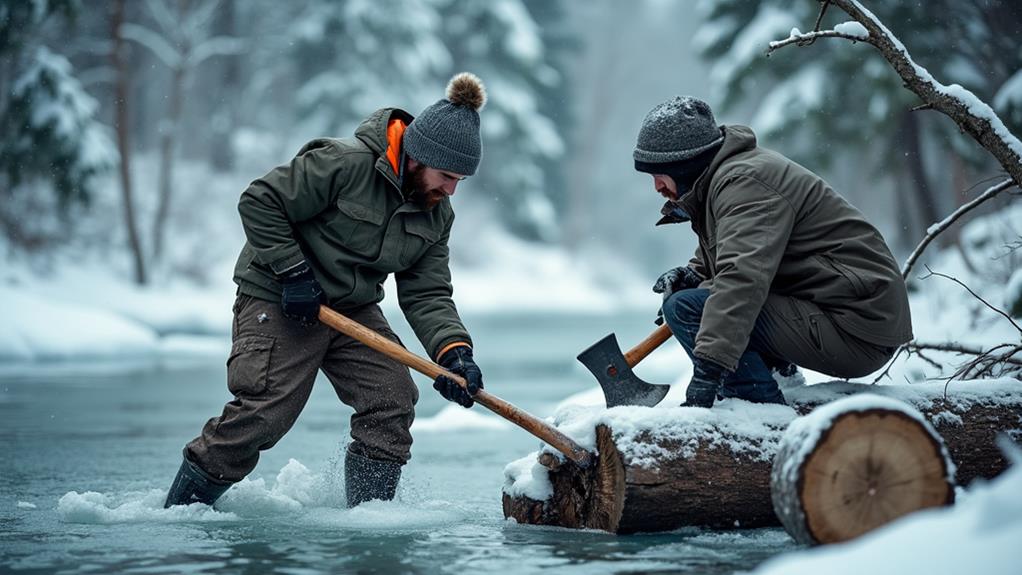
Mastering axe skills requires dedication and practice in a controlled environment, such as a flat, clear area free from obstacles. This setting ensures you can safely develop techniques for ice chopping and snow removal without risking injury. Begin by focusing on maintaining a firm grip, especially in cold conditions where dexterity can diminish. Using appropriate gloves will simulate real-world scenarios and protect your hands.
Incorporate dynamic movements into your practice. Alternate between horizontal and vertical chops to improve adaptability and control in different snow and ice conditions. Regularly using both a saw and an axe is also beneficial. A saw can cut wood to precise lengths, while an axe excels in splitting, enhancing overall efficiency.
| Technique | Focus Area | Benefit |
|---|---|---|
| Horizontal Chops | Snow removal | Increases control and accuracy |
| Vertical Chops | Ice chopping | Improves force application |
| Saw and Axe Combo | Firewood cutting | Enhances efficiency |
Conclusion
Mastering axe techniques for ice chopping and snow removal requires a focus on safety and precision. By selecting the appropriate axe, utilizing horizontal chopping methods, and maintaining a firm grip, you can perform these tasks efficiently. Additionally, practicing self-arrest techniques is crucial for preventing slips. Regular practice in a controlled environment will enhance your skills and confidence, preparing you for challenging conditions. Remember, consistent practice leads to perfection, and safety must always come first.