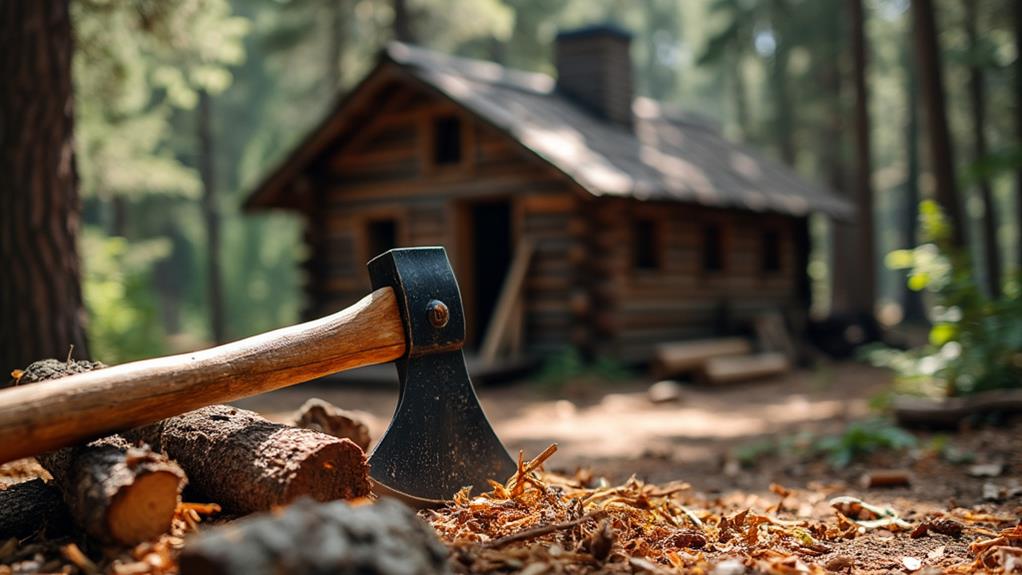
Axe Techniques for Clearing Firebreaks on an Off-Grid Property

When living off-grid and needing to clear firebreaks, mastering axe techniques is essential. Start by selecting a sharp, well-balanced axe suitable for the task. Your swing technique is crucial; controlled swings at a 45-degree angle are more effective and less exhausting. Felling trees safely and efficiently requires precise, calculated movements, not just brute strength. Prioritize significant safety practices before starting.
So, how do you elevate these basics to expert-level skills?
Choosing the Right Axe
Selecting the right axe for clearing firebreaks is crucial for both efficiency and safety. The type of work dictates the choice of axe. For larger trees and dense brush, a felling axe or broad axe is ideal due to their weight and design, which provide enhanced power and control.
For breaking down larger logs after felling, opt for a splitting axe or maul. These tools have heavy heads that create effective splits, making large logs more manageable with less effort. For precision tasks and smaller brush, a hatchet or lighter axe is more suitable, offering greater maneuverability and reducing fatigue during extended use.
Consider the axe handle as well. A comfortable grip and appropriate weight for your body size improve control and reduce the risk of injury. Regular maintenance, including sharpening the blade and checking handle integrity, ensures optimal performance and extends the life of your tool, making your firebreak clearing tasks more efficient.
Proper Swing Techniques
When swinging an axe to clear firebreaks, focus on a controlled, 45-degree downward swing for maximum efficiency and accuracy. Maintain a firm but relaxed grip to ensure control and reduce fatigue. Practicing these techniques will help you save energy and make cleaner, more effective cuts.
Controlled Swing Efficiency
Mastering proper ax swing techniques is essential for efficient firebreak creation. Controlled swing efficiency ensures that each swing is impactful and energy-conserving. Focus on maintaining a controlled and consistent arc, aiming for the ax head to come down at a 45-degree angle. This angle offers ideal force and precision, allowing you to clear brush effectively.
To improve your controlled swing efficiency, practice muscle memory with repetitive swings. Concentrate on keeping a steady grip and a balanced stance. This will conserve your energy and enhance your precision over time. The goal is to make each swing count without wasting effort.
Here are some tips to help you achieve controlled swing efficiency:
- Maintain a sharp ax: A dull blade requires more force, leading to quicker fatigue and reduced cutting efficiency.
- Use overlapping strikes: Each swing should follow the previous one closely to ensure thorough coverage and prevent missed areas.
- Position logs and brush effectively: Elevate them to appropriate heights to facilitate more effective and controlled swings.
Accurate Ax Placement
Achieving controlled swing efficiency is crucial for precise ax placement, a fundamental aspect of effective firebreak creation. To master this skill, maintain a firm and steady grip, ensuring the ax head follows a straight trajectory towards your target. This enhances accuracy and optimizes energy use.
Begin by aligning the ax head with your intended cut line before each swing. Keep your feet shoulder-width apart for stability, which translates to better control. A stable stance ensures more precise swings, facilitating efficient vegetation clearing.
Practice overlapping strikes during bucking to create notches in the wood, resulting in cleaner cuts with less effort. Repetitive practice is key to developing muscle memory and mastering proper swing techniques.
Consistent practice leads to more effective and accurate ax placement, enhancing your overall efficiency in creating firebreaks.
Energy-Saving Techniques
Proper swing techniques are crucial for conserving energy during the demanding task of creating firebreaks. Engaging your entire body, rather than just your arms, to generate power can significantly reduce fatigue. This holistic approach is a key energy-saving technique for extended tasks.
Key Tips for Energy-Saving Techniques:
- Swing at a 45-degree angle: Maintaining a consistent 45-degree angle ensures effective cuts with minimal effort, making it easier to fell trees or clear brush.
- Develop muscle memory: Practice helps improve accuracy and efficiency, leading to cleaner cuts and reduced energy expenditure.
- Use overlapping strikes: When felling or limbing, overlap your strikes to optimize each swing's effectiveness, ultimately saving time and energy.
Position logs securely and utilize natural cracks when splitting. This technique requires less force and facilitates easier energy management.
By employing these energy-saving techniques, you can work more efficiently and conserve your strength for longer periods, making the challenging task of clearing firebreaks more manageable.
Felling Trees Safely
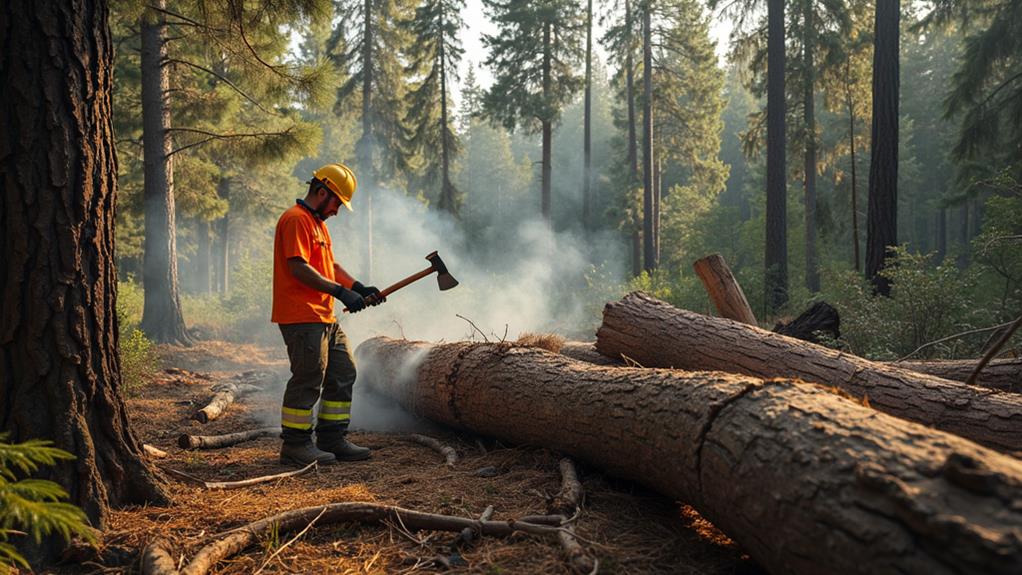
Felling trees safely is essential for creating effective firebreaks and ensuring your well-being. Begin by assessing the area for hazards such as dead branches, commonly known as widowmakers, which can fall unexpectedly and cause serious injury. Ensure a clear path for the tree to fall, minimizing the risk of accidents.
To start the felling process, make a front cut at a 45-degree angle on the side facing the direction you want the tree to fall. This cut helps control the tree's descent. Follow this with a back cut on the opposite side, slightly above the front cut. This technique ensures the tree falls in the intended direction and reduces the risk of splitting or kickback.
Always shout "timber" loudly before the tree begins to fall to alert those nearby. Quickly move away from the fall path to secure your safety. When working on slopes, stay on the uphill side to avoid being caught in any unexpected movements. Maintain control of your axe or chainsaw, and keep the cutting area free of debris to minimize accidents.
Limbing and Bucking Methods
When limbing a felled tree, start from the bottom up, focusing on the underside of branches to ensure safety and prevent the trunk from rolling. For bucking, cut the tree into sections, beginning with a cut furthest from your body and maintaining a 45-degree angle to avoid glancing blows. Always use a chopping platform to elevate logs, which makes your cuts cleaner and reduces physical strain.
Efficient Limbing Techniques
Limbing and bucking are essential techniques for creating efficient firebreaks, and mastering them can significantly enhance your effectiveness.
When limbing a felled tree, always cut from the bottom up to prevent branches from springing back and causing injury. Keep the trunk between the ax head and your body to maintain control over your swing. If you're working on a slope, position yourself on the uphill side of the trunk to stay stable and reduce the risk of losing balance.
Key tips to remember:
- Cut from the bottom up: Minimizes the chance of branches springing back.
- Use the trunk as a barrier: Keep it between the ax head and your body for better control.
- Stay uphill on slopes: Enhances stability.
For effective bucking, cut the log into thirds. Begin with the cut furthest from your body, then make the nearest cut, and finally connect the two. Ensure the kerf is wide enough to accommodate the log's thickness, preventing your saw from binding. Using a wooden baton can also help in splitting logs after bucking, making the process safer and more controlled.
Safe Bucking Practices
Mastering efficient limbing techniques is crucial for safe bucking practices, both essential for creating effective firebreaks. When limbing a felled tree, always make cuts from the bottom up to prevent branches from snapping back unexpectedly. On slopes, stay on the uphill side of the trunk for added safety.
For effective bucking, follow a three-stage cutting process: start from the furthest point away from your body, then the nearest, and finally connect the two cuts. Maintain a 45-degree angle to avoid glancing blows. Ensure the kerf is wide enough for the log's thickness to prevent the saw from binding.
| Task | Safety Tip |
|---|---|
| Limbing | Cut from the bottom up |
| Limbing on slopes | Stay on the uphill side |
| Bucking | Use a three-stage cutting process |
| Kerf management | Confirm the cut is wide enough |
| Control during swings | Keep the ax head between body and log |
Utilize natural wood cracks or pre-existing splits to assist in splitting logs. Always position logs securely before striking to optimize safety and efficiency. Maintaining control during swings by keeping the ax head between your body and the log improves precision and reduces accident risks. Adhering to these safe bucking practices not only protects you but also helps create effective firebreaks on your off-grid property.
Splitting and Hewing Logs

Splitting and hewing logs are essential skills for creating effective firebreaks, ensuring both stability and ease of handling. When splitting logs, always look for natural cracks in the wood. These cracks guide your axe, making the process smoother and more efficient.
Position your logs safely: vertical chops are best when logs are propped up, while horizontal swings are effective if logs are placed securely on the ground.
To improve your technique:
- Use a wooden baton: This helps apply greater force without damaging the axe.
- Maintain a 45-degree angle: This ensures cleaner cuts and reduces the risk of glancing blows.
- Score cuts for hewing: Make uniform depth cuts along the log's length for flat, straight surfaces.
When hewing logs into square beams, start by scoring the log. Make cuts along its length at a consistent depth. This initial step is fundamental for achieving a flat, straight surface.
Once scored, use your axe to remove the waste wood between the cuts, working methodically to maintain precision. Effective firebreaks rely on the stability and ease of handling of your logs, so take your time to master these techniques.
Axe Maintenance Tips
How often do you check the condition of your axe? Regular inspections are essential for maintaining both safety and efficiency. Begin by examining the handle for any signs of wear or damage. A compromised handle can lead to accidents, so replace it promptly if needed.
Next, focus on the axe head. Apply linseed oil to both the head and the handle to prevent rust and deterioration, especially in humid environments. This simple step can significantly extend the life of your tool. Keep a sharpening puck handy for regular touch-ups, ensuring a sharp blade edge, which makes your tasks easier and more efficient.
Don't forget to clean your axe after each use. Removing sap, dirt, and debris will prevent rust and keep your tool in top condition. Finally, store your axe in a dry location, ideally hanging it to avoid moisture contact.
Here's a quick reference table for maintaining your axe:
| Maintenance Task | Frequency | Why It Matters |
|---|---|---|
| Inspect the handle | Before each use | Prevents accidents and ensures safety |
| Apply linseed oil | Monthly | Protects against rust and deterioration |
| Clean after use | Every use | Prevents rust and maintains performance |
Common Safety Practices

Ensuring a safe environment while clearing firebreaks is crucial. Begin by assessing the area for hazards such as dead branches (widowmakers) and uneven terrain, which can pose significant risks. Identifying and addressing these dangers before starting work with your ax is essential.
Establish a safety circle by maintaining a distance of at least 10 feet from others. This buffer zone is vital to prevent injuries from swinging axes or falling trees, ensuring a secure workspace.
Proper grip and stance are also key. Stand with your feet shoulder-width apart and hold the ax handle firmly to maintain control and minimize accidents. Correct technique significantly enhances safety.
Always wear appropriate personal protective equipment (PPE), which includes:
- Safety glasses to shield your eyes from flying debris
- Gloves to protect your hands from sharp edges
- Sturdy boots to protect your feet from dropped tools or debris
Regularly inspect your ax for damage. Ensure the head is securely attached and the blade is sharp. This not only facilitates efficient cutting but also improves safety by reducing the risk of mishandling the tool. Prioritizing these practices ensures a safer and more effective firebreak clearing process.
Conclusion
With the right knowledge, you can effectively and safely clear firebreaks on your off-grid property. By choosing the appropriate axe, mastering proper swing techniques, and practicing felling, limbing, and bucking methods, you'll efficiently manage brush and fallen trees. Remember to maintain your axe and follow standard safety practices. These skills will help you create a secure, fire-resistant zone that protects your property and enhances your self-reliance. Stay safe and happy chopping!