Axe Safety Tips for Beginners
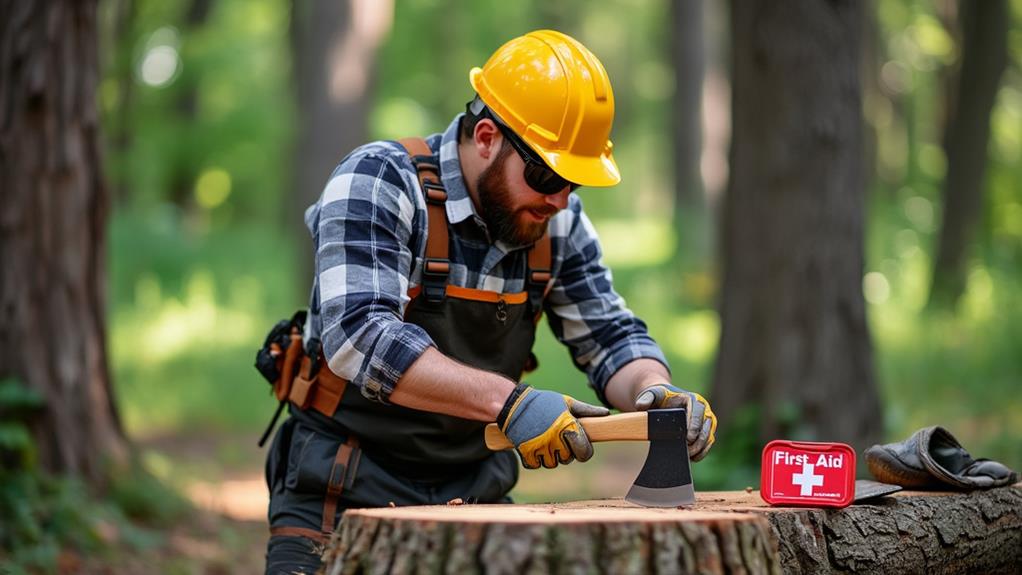
When starting with axe handling, prioritizing safety is crucial to avoid injuries and ensure effective chopping. Begin by inspecting your axe for any signs of damage and ensuring it is sharp. Always carry your axe with a sheath and wear appropriate protective gear, including steel-toed shoes and gloves.
Proper handling techniques, such as maintaining a firm grip and directing your swings away from your body, are essential. Focusing on these foundational tips will prepare you for more advanced techniques. Let's delve into the specifics of each safety measure.
Preparing Your Axe
Before you start using your axe, it's crucial to prepare it properly to ensure both safety and efficiency. Begin by thoroughly inspecting the axe head for any signs of cracks, rust, or damage. Confirm that the axe head is securely attached to the handle; a loose or damaged axe head can lead to dangerous accidents.
Next, focus on sharpening your axe. A sharp blade not only delivers clean and efficient cuts but also reduces the risk of glancing blows, which can be hazardous. Use honing pucks or Arkansas stones to maintain a keen edge. Regular sharpening ensures that your axe performs effectively and safely.
After sharpening, apply a protective oil to the axe blade. This step prevents rust and preserves the axe's performance and lifespan. A well-maintained blade is essential for both safety and effectiveness. When you're done, store your axe in a dry, designated area. Use a sheath or cover to protect the blade and yourself from accidental cuts.
Establish a consistent cleaning routine after each use. Keeping the axe head clean and free of corrosion enhances its sharpness and reliability, ensuring you're always ready for the next task.
Essential Safety Gear
When using an axe, always wear closed-toe shoes with steel toes to protect your feet from accidental drops. Wear long pants and durable gloves for leg and hand protection. Additionally, use eye protection and a hard hat to guard against debris and falling objects.
Protective Clothing Essentials
When engaging in any axe-related task, it's crucial to wear appropriate protective clothing to reduce the risk of injury. Safety should be your foremost concern. Start by donning long pants made of durable materials like denim or canvas to protect your legs from cuts and abrasions caused by a slipping axe or contact with sharp objects.
Next, wear gloves with a good grip to enhance your control over the axe handle, thereby reducing the risk of it slipping from your hands. A firm grip is essential for safe axe use. Eye protection is also a must. Safety goggles will shield your eyes from flying debris or wood chips, which are common during chopping or splitting wood.
Lastly, if you're working in areas with potential overhead hazards such as falling branches, wearing a hard hat is advisable.
Proper Footwear Selection
Wearing the right protective clothing is crucial for axe safety, and choosing the appropriate footwear is equally important. Always opt for closed-toe shoes or boots made of sturdy materials to protect your feet from falling debris or accidental axe strikes. Leather boots are particularly recommended for their durability and resistance to cuts. Remember that footwear should be part of a comprehensive safety gear set for maximum protection.
Ensure your footwear has non-slip soles to maintain traction on uneven or slippery surfaces. Additionally, select boots with ankle support to stabilize your feet and reduce the risk of sprains or injuries while using an axe. Avoid sandals, flip-flops, or any open-toed footwear when handling an axe, as these expose your feet to severe injury risks.
Inspecting Your Axe
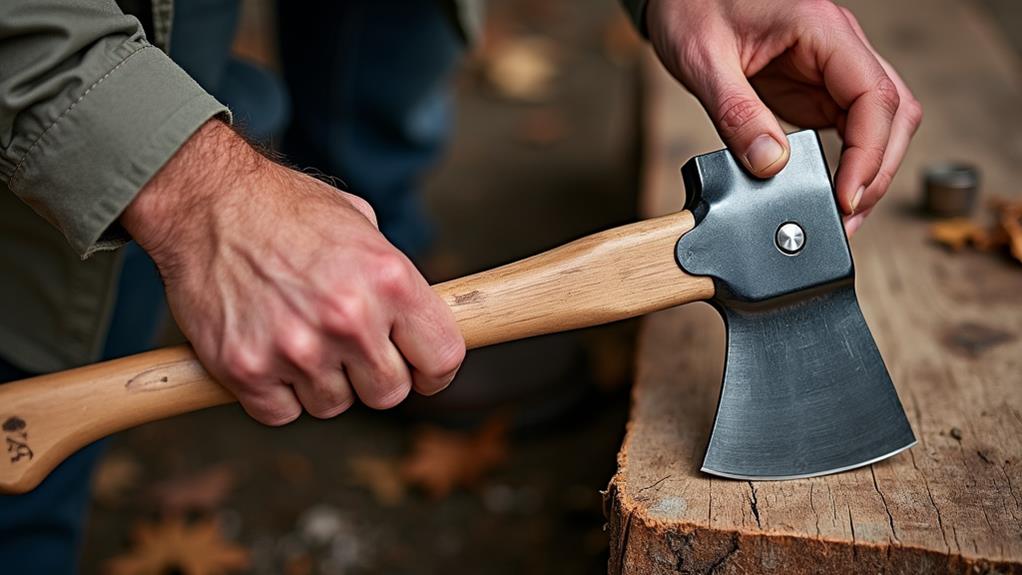
Before each use, carefully inspect your axe to ensure it's in peak condition. Start with the axe head—check for cracks, rust, or any signs of damage. A compromised head can be dangerous and ineffective. Next, examine the cutting edge. Ensure the bit is intact and sharp, as a dull or damaged edge can lead to accidents by requiring more force and causing slips.
Don't overlook the connection between the axe head and the handle. Confirm the head is securely fastened. A loose head can detach mid-swing, posing a serious hazard. If you notice any looseness, address it immediately by tightening or replacing the necessary components. Regular maintenance is essential. After each use, clean the axe head to prevent rust and maintain sharpness. This simple step can greatly prolong the tool's lifespan and ensure it remains safe to use.
Perform a thorough safety check every time you pick up your axe. Identifying signs of wear or damage early helps you avoid potential accidents and keeps your tool in top shape, ensuring you're always ready for the task at hand.
Proper Axe Handling
Proper axe handling is crucial for ensuring your safety and the safety of those around you. Always carry the axe sheathed with the cutting edge pointed outward to prevent accidental injuries. When passing the axe to someone else, confirm they've a firm grip before releasing it to prevent slips and accidents.
Hold the axe securely by the handle with the head directed vertically towards yourself, providing better control and reducing the chances of accidental contact. While walking, keep the axe pointed down and away from your body to minimize the risk of injury if you stumble or fall. Never throw or toss the axe over your shoulder. Instead, carry it securely by your side to ensure the safety of both yourself and those around you.
Proper axe handling isn't just about your safety; it's about creating a safe environment for everyone involved in using an axe. By adhering to these guidelines, you can significantly reduce the risk of accidents and injuries. Always be mindful and deliberate in how you handle and transport your axe.
Safe Chopping Techniques
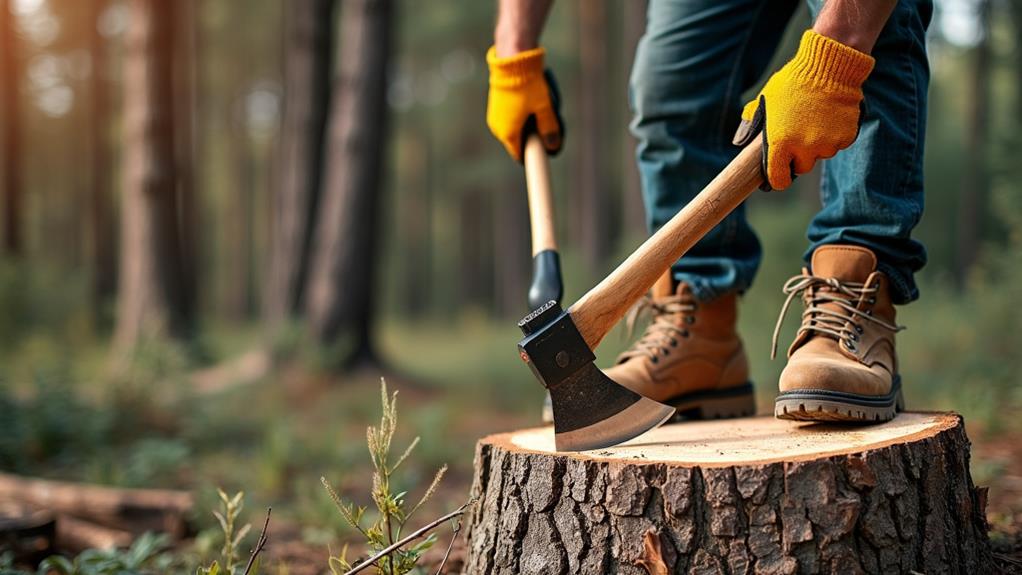
- To chop safely, adopt a proper stance and grip.
- Stand with your feet shoulder-width apart and hold the axe firmly with both hands.
- Practice controlled swings to maintain accuracy and prevent accidents.
Proper Stance and Grip
When wielding an axe, your stance and grip are crucial for both safety and efficiency. Start with an offset stance by positioning your feet shoulder-width apart and placing one foot slightly forward. This stance improves balance and control. Grip the axe firmly with both hands; your dominant hand should be near the axe head, while your non-dominant hand is at the end of the handle. This grip optimizes power and stability during the swing.
Keep your elbows slightly bent and engage your legs and core to generate power, rather than relying solely on your arms. Focus on the target area to guarantee accuracy and allow your body weight to drive the swing. Always direct the axe head safely away from your body and any bystanders to lessen the risk of injury.
Here's a quick reference table to summarize the key points:
| Tip | Description |
|---|---|
| Offset Stance | Feet shoulder-width apart, one foot slightly forward for balance and control. |
| Firm Grip | Dominant hand near the axe head, non-dominant hand at the handle's end. |
| Elbows Slightly Bent | Use legs and core for power, not just arms. |
| Focus on Target | Maintain a clear line of sight and drive the swing with body weight. |
| Safe Axe Direction | Keep the axe head directed away from your body and bystanders. |
Follow these tips to improve your chopping efficiency and safety.
Controlled Swing Practice
Mastering controlled swing practice is crucial for safe and efficient chopping. Focus on accuracy over power when using your axe, aiming each swing precisely at the designated area to ensure effective cuts. Maintain a firm yet relaxed grip on the axe handle to improve control and reduce the risk of losing your grip during swings.
Always adhere to the rule of stopping the axe in one of the Three Safe Places: in the workpiece, on the cutting surface (ground), or in the air. This precaution helps prevent unintended contact with bystanders or obstacles, creating a safer environment.
Incorporate your body weight into each swing to increase power without sacrificing control. This technique allows for smooth, effective chopping motions, reducing the effort needed while maintaining precision. Remember, the goal is controlled swings, not brute force.
Take regular breaks to avoid fatigue, as tiredness can lead to diminished focus and increased risk of accidents. By resting periodically, you maintain your concentration, ensuring each swing is as controlled and effective as the first.
Carrying and Storing Your Axe
Properly carrying and storing your axe is crucial for both safety and maintenance. When carrying your axe, always use a sheath or cover to protect both the blade and yourself from accidental cuts. Hold it by the handle with the head pointing down and away from your body to minimize the risk of injury. Avoid clipping it to your belt, as this can lead to accidental injuries. Instead, grasp the handle below the head for safer transport.
When you need to store your axe, choose a designated area away from foot traffic. Ensure it's secured in a way that prevents accidental contact or falls. Before storing, inspect your axe for any damage and clean it to prevent rust. Applying protective oil to the blade can improve its longevity.
| Key Action | Best Practice |
|---|---|
| Carrying | Use a sheath or cover |
| Holding | Handle below the head, head pointing down |
| Belt Clip | Avoid using; grasp the handle |
| Storing | Designated, safe area away from foot traffic |
Maintaining Your Axe
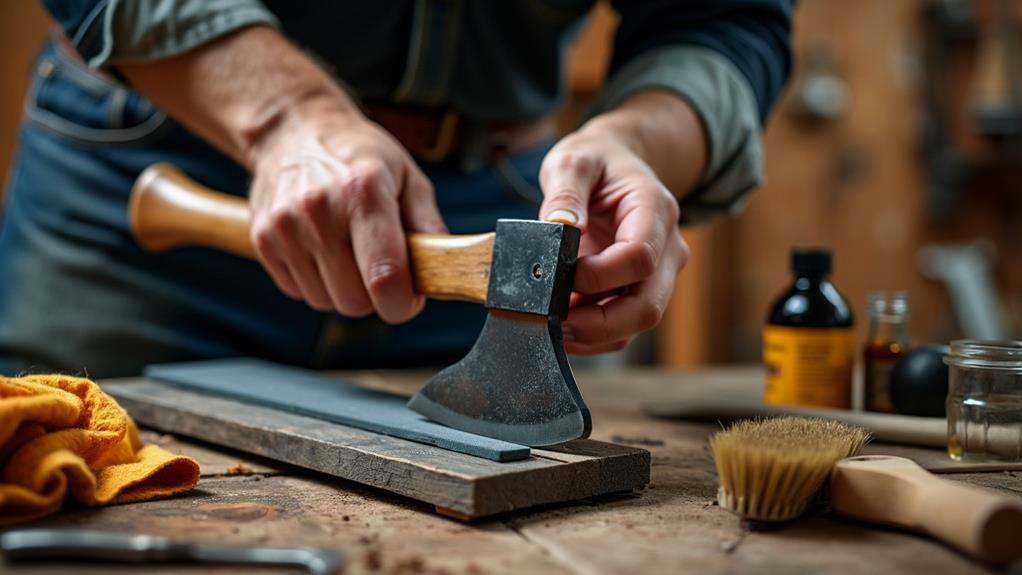
Maintaining your axe is crucial for ensuring its performance and safety over time. Regularly sharpen your axe using honing pucks or paddles. A sharp axe provides a clean, efficient cut, making it safer and more effective than a dull one. After each use, clean the axe head to maintain its sharpness and prevent corrosion, as rust can degrade the blade's performance.
Inspect your axe periodically for signs of wear or damage, especially the handle. Check for cracks or splinters that could lead to breakage during use. The handle's integrity is essential to the tool's overall quality, so don't overlook this aspect.
After cleaning, apply a protective oil to the blade to prevent rust and extend the axe's lifespan. Keeping the metal in good condition is key to maintaining a high-quality axe. Store your axe in a dry place and use a sheath or cover to protect the blade and ensure safe handling when the axe isn't in use. By following these steps, you'll keep your axe in top condition, ready for any task.
Creating a Safe Workspace
When preparing to use your axe, start by creating a safe workspace to prevent accidents. Begin by clearing the area around you of all tools, debris, and obstacles that could interfere with your axe swings. This ensures you won't trip, slip, or get caught on anything while working.
Next, communicate boundaries to everyone nearby. Ensure they're aware of the designated safe zones during your axe use. It's crucial to keep bystanders at least 16 feet away to minimize the risk of injury from falling debris or mis-swings. Clear boundaries help everyone stay safe and aware of restricted areas. Regularly assess your workspace for potential hazards. Look for unstable ground or overhanging branches that could cause you to lose balance or obstruct your work.
Conclusion
To ensure safety and efficiency while using an axe, always inspect and maintain your tool, wear appropriate protective gear, and practice safe handling techniques. Keep your workspace clean and free from hazards. Carry your axe in a sheath and store it properly to prevent accidents. By following these guidelines, you can enhance both your safety and effectiveness while chopping. A well-maintained axe and a cautious approach will make your chopping experience safer and more enjoyable. Stay safe and happy chopping!