Active Shooter Preparation Drills & Response Practice
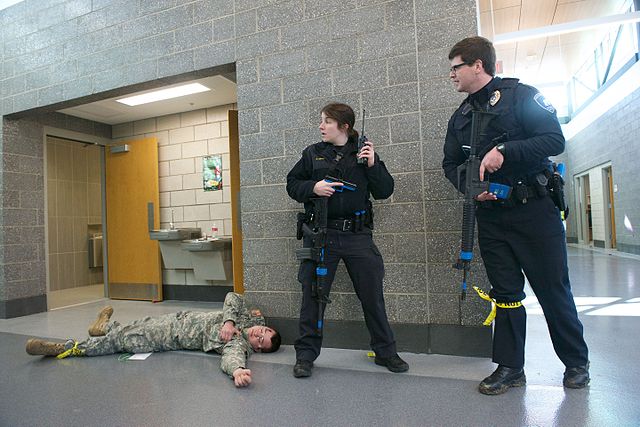
Active shooter drills are training exercises designed to prepare participants to respond to the threat of an active shooter. Implementing preparedness training that includes active shooter drills may help to reduce injury and loss of human life if such an incident were to occur.
Active shooter drills also remind organizations of the necessity of equipping themselves with bleeding control kits to prevent severe blood loss. Bleeding control kits contain several life-saving tools that can be used to control traumatic hemorrhage and prevent shooting victims from bleeding out.
Active Shooter Drills Shortlist
The most effective active shooter drills are designed to prepare individuals and organizations to respond effectively to an active shooter situation. Active shooter training programs are provided by both government and private organizations.
Some of the most common and effective active shooter drills and preparation steps include the following:
- Develop an emergency response plan: Developing an emergency response plan is the first line of defense for minimizing injury and loss of life in actual active shooter incidents.
- Conduct physical risk assessments: Identifying physical vulnerabilities in the structure or design of a facility can be effective in preventing potential attacks. This may also include analyzing weak points in a building's security or communication plans.
- Practice situational awareness: Being aware of threatening or suspicious behavior and learning how to differentiate a threat from the crowd could save lives because this identification allows the organization or individual to contact law enforcement or de-escalate a potentially dangerous situation before it occurs.
- Practice response strategies: Practicing strategies such as Run, Hide, and Fight teaches participants how to evacuate, find shelter, or, as a last resort, fight in an emergency. These active shooter response strategies can help individuals survive an active shooter event.
- Using the "ALICE" method: ALICE training provides proactive steps for American schools and organizations to handle the intrusion of an active shooter. ALICE active shooter drills include Alert, Lockdown, Inform, Counter, and Evacuate. These strategies can increase survivability on school grounds and in other places where shootings occur.
- Receiving bleeding control training: Bleeding control training teaches individuals how to properly use bleeding control kits manufactured by trusted brands like True Rescue. Understanding the components of a bleeding control kit, such as tourniquets, wound packing gauze, and hemostatic agents, could save a life during or after active shooter events.
Please note: An active shooter drill should not just be a one-time event. After completing active shooter and bleeding control training courses, it's important to follow up with regular drills that reinforce response strategies and life-saving techniques such as tourniquet application and wound packing.
The Primary Goals of Active Shooter Drills
The primary goal of active shooter drills is to provide individuals and communities with strategies to keep them safe during an active shooter event. For instance, having a clear communication plan and designated safe areas helps to minimize the number of casualties during an active shooter incident.
Other goals of active shooter drills include:
- Enhancing situational awareness: Participants in an active shooter drill may learn how to identify potential threats by practicing situational awareness. This practice helps them develop a keener sense of their environment and enables them to identify and alert others about any risky behavior they observe.
- Practicing response strategies: Drills provide participants with specific response strategies, such as where to evacuate or hide during an emergency.
- Reducing panic and anxiety: Familiarity with procedures and protocols during active shooter events may reduce panic and anxiety. This is because active shooter drills help individuals feel more prepared to respond in high-stress situations.
- Building empowered communities: Active shooter drills help community members feel empowered and prepared to assist others in a crisis.
Ultimately, active shooter drills are designed to give as many people as possible the best chance at survival. Rehearsing these drills empowers participants to make informed decisions in the heat of a crisis. Collecting feedback from participants also helps the organization or school identify strengths and areas in which active shooter drills could be improved.
Benefits of Active Shooter Drills and Preparation
Active shooter drills have a myriad of benefits such as increasing response efficiency and empowering individuals to stay safe in dangerous situations. Apart from this, active shooter drills may reveal gaps or weaknesses in emergency plans that are already in place. This helps the school or organization develop a more effective emergency response plan in case an active shooter incident occurs.
Other benefits of active shooter drills include improved decision-making and coordination among employees or students. This cohesive action can help large groups of people synchronize and communicate better during a real emergency. Finally, active shooter drills can help individuals better manage their emotions under stress, giving them the best chance of survival.
Who Can Benefit from Active Shooter Drills?
Schools, workplaces, and civilians can all benefit from active shooter drills that help them to be more prepared in the case of an emergency. The specifics of active shooter drills may vary depending on the type of organization in which they are implemented.
- School communities may focus on the need for access to mental health professionals and support for at-risk students, as well as creating space spaces where students and personnel can hide and barricade themselves against gunfire.
- Companies and community organizations can benefit from active shooter drills by learning how to identify threats and de-escalate dangerous situations. These drills are also an important opportunity to identify and practice using escape routes.
- Civilians can benefit from active shooter drills by learning situational awareness, escape tactics, and bleeding control techniques they can use to save lives before law enforcement officers and EMS personnel arrive.
Understanding Active Shooter Events
Mass shooting events in the United States are a major issue, and gun violence is higher in the United States compared to similarly developed nations. There are growing concerns about safety in schools, workplaces, places of worship, and public spaces because of the frequency and severity of active shooter incidents. Preventing school shootings and active shooter incidents in the workplace or public spaces requires a multi-faceted approach in addition to the kinds of active shooter drills described above.
- Threat assessment programs help individuals practice situational awareness and identify suspicious behavior.
- Proactive school safety measures, such as monitoring bullying and students’ mental health, may support a more nurturing school environment and lead to less school crime.
- States can enact laws relating to gun acquisition and secure firearm storage to prevent prospective shooters from getting their hands on guns.
- Organizations can make certain medical supplies available, such as bleeding control kits. These kits empower anyone to take immediate action to stop bleeding before first responders arrive.
Prepare Your Team or School Community to Respond
Active shooter drills prepare your team or school community to respond effectively if an active shooter incident breaks out. Active shooter events are tragic and can cause major loss of life and psychological trauma for survivors. When a community is prepared to respond beneficially in a dangerous event, it increases the likelihood of survival.
Active shooter drills and training also encourage individuals to remain calm and make rational decisions during an active shooter event. Practicing drills that identify safe places to evacuate and hide can be the difference between life and death. Unfortunately, gun violence is a reality in the U.S., so being prepared for active shooter situations is critical for reducing harm.