What You Need to Know Before Moving Into a Tiny Home
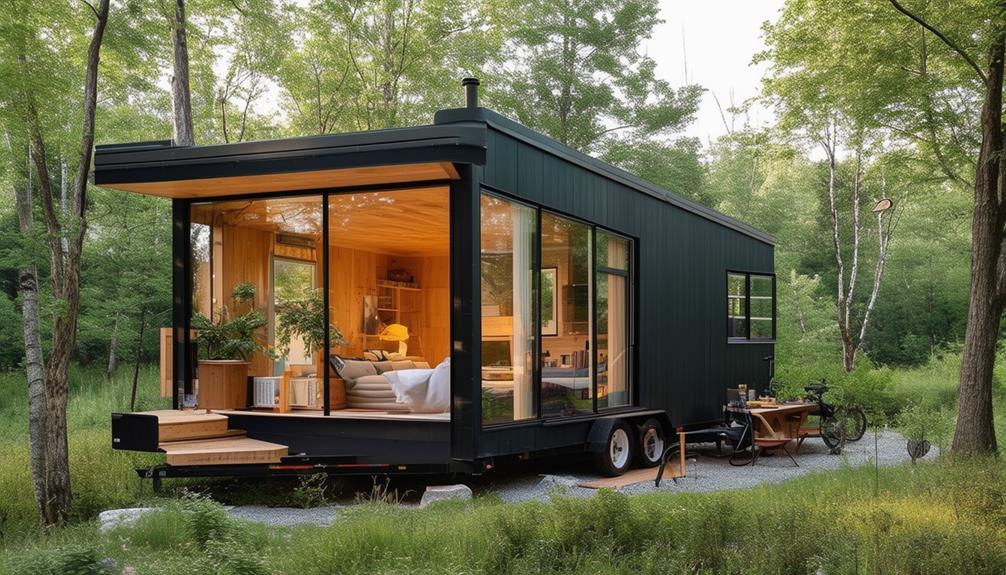
When considering a move to a tiny home, embracing a minimalist lifestyle is essential. Focus on simplifying your life by prioritizing necessities over excess. Think about how to maximize your limited space with creative storage solutions and multifunctional furniture. Additionally, be aware of the financial aspects, including both the benefits of lower construction costs and the potential for unexpected expenses. Have you considered the legal requirements, such as zoning laws and permits? These factors are crucial in your tiny home journey, but there's even more to consider.
Tiny House Basics
When considering a move to a tiny home, it's vital to understand that these dwellings are typically 500 square feet or less, promoting a minimalist lifestyle. Tiny house living requires you to adopt a simpler way of life, focusing on what truly matters and letting go of unnecessary possessions. The limited space encourages creativity with storage solutions and a focus on functionality over excess.
Tiny homes come in various sizes and styles, with companies like Liberation Tiny Homes offering custom-built options ranging from 12 to 40 feet in length. This range allows you to find a tiny house tailored to your specific needs and preferences. Whether you seek a cozy retreat or an efficient living space, there's likely a design that suits your lifestyle.
Additionally, many tiny homes offer off-grid capabilities, providing the freedom to live self-sufficiently. You can generate your own energy and manage your water usage, thereby reducing your environmental footprint. However, to truly thrive in a tiny house, embracing the 'less is more' philosophy is essential. This mindset is crucial for fully adopting the minimalist lifestyle and maximizing the potential of your small space.
Pros and Cons
When considering a move to a small dwelling, it's crucial to evaluate both the benefits and challenges to make an informed decision. One of the most appealing aspects of small homes is financial freedom. Building a small house is generally less expensive than buying a prefabricated model, and you can save significantly on utilities and maintenance costs. With proper construction, these homes can last between 7-10 years, making them a viable option for long-term living. Additionally, small homes offer the possibility of off-grid living, allowing for a sustainable and independent lifestyle.
However, small homes come with their own set of challenges. A significant drawback is the stringent building codes and zoning regulations that can limit where you can place or build your small home. These restrictions can make it difficult to find a permanent location. Another disadvantage is the lack of a fixed address, complicating mail delivery and access to certain services. Lastly, small homes often have lower resale potential compared to traditional houses, making it harder to recoup your investment if you decide to sell.
Legal Considerations

When considering a tiny home, it is essential to understand local zoning laws and obtain the necessary permits to legally place your home. Additionally, be aware of property tax implications, which can vary depending on your home's classification. Consulting with legal professionals can help you navigate these requirements and avoid potential issues.
Zoning and Permitting Requirements
Navigating zoning and permitting requirements is essential for legally situating your tiny home on your desired property. Zoning regulations vary widely by location, making it crucial to understand local rules. Some jurisdictions permit tiny homes as permanent residences, while others restrict them to accessory dwelling units (ADUs). Understanding these distinctions can help you avoid fines or legal complications.
To comply with local zoning laws, you must adhere to building codes specifically designed for small living spaces. These codes ensure that your tiny home meets safety and habitability standards. Researching these requirements or consulting with professionals can help you avoid costly errors.
Here's a guide to help you through the process:
| Requirement | Description | Tips for Compliance |
|---|---|---|
| Zoning Regulations | Rules governing where tiny homes can be placed | Check local zoning maps and ordinances |
| Building Codes | Standards for construction and safety | Ensure your tiny home meets these codes |
| Local Regulations | Specific local laws affecting tiny home placement | Consult local planning departments |
| Permitting Process | Steps to obtain legal permission for tiny home placement | Gather necessary documents and complete applications |
Understanding and adhering to these requirements ensures that your tiny home is legally and safely placed on your chosen property.
Property Tax Implications
Understanding property tax implications is crucial when considering a move into a tiny home. Depending on your location, your tiny home could be classified as either real estate or personal property, significantly affecting your tax bill.
In some regions, tiny homes are considered personal property, usually leading to lower property taxes compared to traditional homes. However, this is not always the case. Some jurisdictions may impose higher taxes on alternative housing structures like tiny homes. Therefore, it is essential to research how your locality categorizes tiny homes and understand the specific tax regulations that apply.
Additionally, certain areas offer tax breaks or incentives for tiny homeowners, which could provide financial benefits worth exploring. Conversely, neglecting to investigate these property tax implications could result in unexpected expenses.
To navigate these complexities, seek advice from tax professionals or local authorities. They can provide precise information on property tax implications, ensuring you are well-prepared and accurately budgeting for your new lifestyle. Understanding these factors will help you make an informed decision about moving into a tiny home.
Financial Realities
Managing the financial realities of tiny living involves preparing for unexpected expenses and budgeting for higher fuel costs and insurance. While living with less can reduce some financial burdens, it doesn't eliminate them entirely. Unexpected expenses can arise from needing a larger truck for towing or additional maintenance. Higher fuel costs, especially for diesel vehicles, can also impact your budget significantly. Additionally, insuring your tiny home and paying taxes for parking locations add to these financial burdens.
Here are three key financial considerations:
- Maintenance and Towing: You'll likely need a larger vehicle to tow your tiny home, which means higher upfront costs and ongoing maintenance expenses.
- Fuel Costs: Diesel fuel is typically more expensive, and frequent travel can quickly add up, straining your budget.
- Insurance and Taxes: Insuring a tiny home can be costly, and you'll also need to factor in taxes for wherever you park your home.
Taking these factors into account is crucial for avoiding pitfalls some tiny house owners face, such as losing their homes due to financial issues. Periodic returns to a stable parking spot can help save money before you hit the road again.
Preparing the Living Space
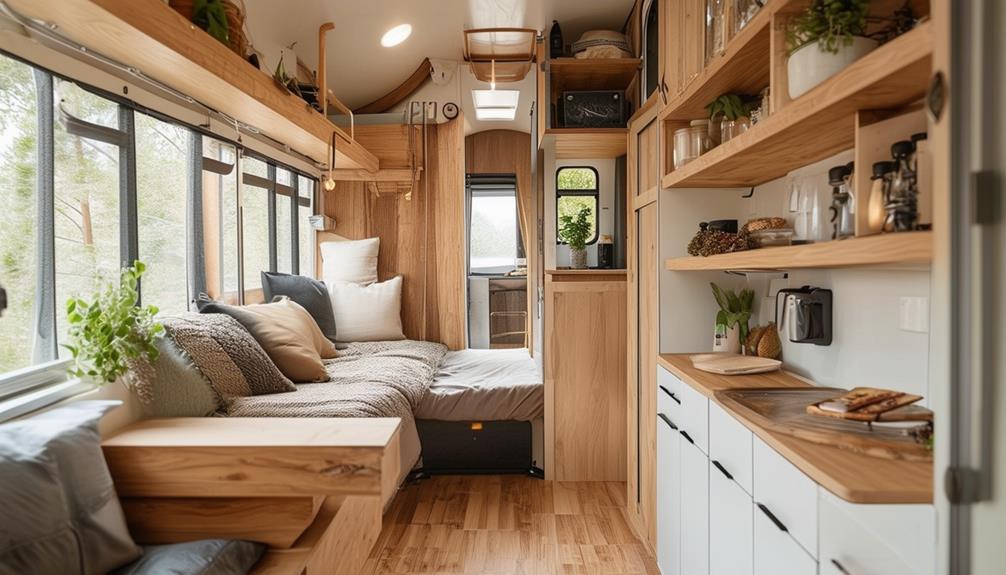
When preparing your tiny home, begin by decluttering and downsizing your possessions to maximize space. Invest in multi-functional furniture to enhance your living areas. Make the most of vertical space for storage and functionality.
Decluttering and Downsizing Possessions
Decluttering and downsizing your possessions are crucial steps in preparing for life in a small home. With limited space, efficiently utilizing every square inch is essential. Start by categorizing your items into four groups: keep, donate, sell, and discard. This approach helps you concentrate on what's truly important for your new, compact living environment.
To streamline the process, follow these steps:
- Digitize Essential Documents and Media: Convert paper documents and media collections to digital formats. This saves physical space and keeps your home organized.
- Adopt Minimalism: Keep items that serve a purpose or bring you joy. Letting go of non-essential belongings reduces stress and creates a cleaner living space.
- Choose Multi-Functional Items: Opt for items that serve multiple purposes to make the most of your limited space. While we'll discuss furniture solutions next, remember this principle during downsizing.
Multi-Functional Furniture Solutions
After streamlining your possessions, the next step is to select multi-functional furniture to optimize your tiny home's limited space. Embracing the tiny house lifestyle means every piece of furniture should serve multiple purposes. For instance, a Murphy bed can transform your bedroom into a living area during the day, while a convertible sofa provides both seating and a sleeping solution.
Consider dining tables that expand for meals and fold down when not in use, freeing up valuable living space. Storage ottomans offer hidden compartments for stashing away items, doubling as extra seating or a coffee table. Loft beds with built-in desks or storage underneath are ideal for maximizing floor space, providing a place to sleep, work, and store belongings all in one.
Choosing the right multi-functional furniture is essential for creating a functional and comfortable tiny home. These pieces allow you to reduce the need for excess furniture, making your living space feel more open and organized. By thoughtfully integrating multi-functional furniture into your tiny house lifestyle, you can ensure that every square inch of your home is used efficiently, enhancing your overall living experience.
Maximizing Vertical Space
Maximizing vertical space in a tiny home can significantly enhance both your living area and storage options. Since tiny houses are designed for efficiency, using vertical space effectively is essential. Here are some strategies to optimize that space:
- Loft Beds and Raised Platforms: Incorporate loft beds and raised platforms to create multifunctional areas. A loft bed, for example, provides sleeping space above while freeing up the area below for a workspace or lounge.
- Tall Storage Solutions: Invest in tall shelves and cabinets to capitalize on the height in your tiny home. This adds extra storage and frees up floor space, making the living area feel more open and less cluttered.
- Wall-Mounted Organizers: Use hanging organizers, hooks, and pegboards to keep your necessities within reach without occupying floor space. Floating shelves and wall-mounted racks are also excellent for storing items like kitchenware, books, and decorative pieces.
Storage Solutions
Maximize your tiny home's storage capacity by utilizing vertical space with shelving units, hooks, and hanging organizers. In tiny living, every inch counts, so these solutions help optimize storage without taking up precious floor space. Often underutilized, vertical space can become a key part of your organizational strategy with the right approach.
Invest in multi-functional furniture like storage ottomans, beds with drawers, and convertible tables. These pieces not only save space but also offer clever storage solutions for your belongings. Under-bed storage, built-in cabinets, and hidden compartments keep items organized and out of sight, making your tiny home feel more spacious and tidy.
Use storage baskets, bins, and containers to categorize and store items efficiently, making it easier to quickly locate what you need in limited space. Custom storage solutions tailored to your specific needs, such as bike racks, tool storage, or pantry organizers, can further optimize space usage. Planning for these storage solutions ensures that every item has its place, making your tiny living experience more comfortable and organized.
Outdoor Living
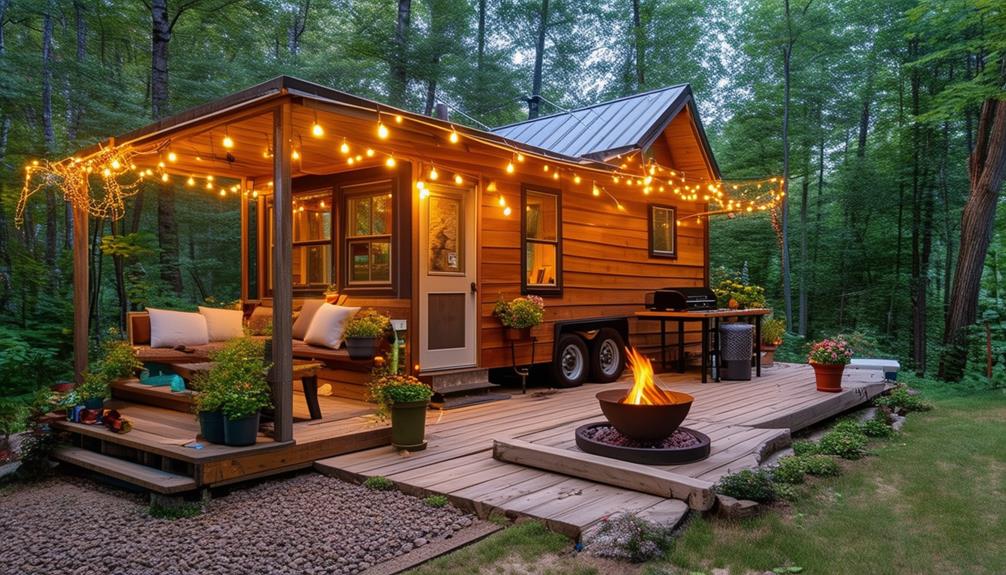
Moving into a tiny home encourages you to embrace nature's rhythms, fostering a more active and healthy lifestyle. Outdoor living becomes central to your daily routine, whether you're hiking, biking, or simply enjoying your surroundings.
Embracing Nature's Daily Routine
Living in a tiny home encourages you to embrace the outdoors, integrating activities like hiking and biking into your daily routine. With limited indoor space, you'll naturally gravitate towards outdoor pursuits, fostering an active lifestyle and a deeper appreciation for nature's ever-changing beauty. Here are three ways tiny living strengthens your connection with the outdoors:
- Daily Outdoor Activities: Morning hikes, afternoon bike rides, and evening walks become part of your routine, replacing traditional indoor comforts with the joys of exploring nature.
- Year-Round Engagement: Tiny homes foster a year-round appreciation for nature, encouraging outdoor activities in every season—from summer picnics to winter sledding.
- Healthier Lifestyle: The physical activities associated with outdoor living—whether hiking, biking, or walking—promote better overall health and well-being, with nature always as your backdrop.
Active Lifestyle Encouragement
Living in a compact home naturally encourages a more active lifestyle by promoting outdoor activities. With limited indoor space, you're likely to spend more time outside, engaging in activities such as hiking, biking, or even sledding during the winter months. This lifestyle integrates outdoor experiences into your daily routine.
Compact home living fosters a deeper connection with nature. Instead of staying indoors, you'll be more inclined to explore your surroundings and embark on new adventures. While traditional indoor comforts can lead to a sedentary lifestyle, compact living shifts the focus to more dynamic and active pursuits.
Community Engagement
Engaging with online forums and groups dedicated to tiny homeowners can provide invaluable advice and guidance. These communities offer a wealth of information and support for your small home adventure. Community engagement is crucial for learning the intricacies of tiny living, and you'll find ample opportunities to connect with like-minded individuals.
To optimize your community engagement, consider the following steps:
- Attend local small home meetups: These events facilitate face-to-face interactions where you can meet experienced tiny homeowners who can offer practical tips and encouragement.
- Connect with eco-conscious living organizations: These groups provide resources and events tailored to tiny homeowners. They can support you in adopting environmentally friendly practices and sustainable living, values often shared by the tiny home community.
- Rent a small home initially: Experiencing tiny living firsthand through renting allows you to gain insights and ask current owners about their experiences, challenges, and solutions.
Utilities and Sustainability
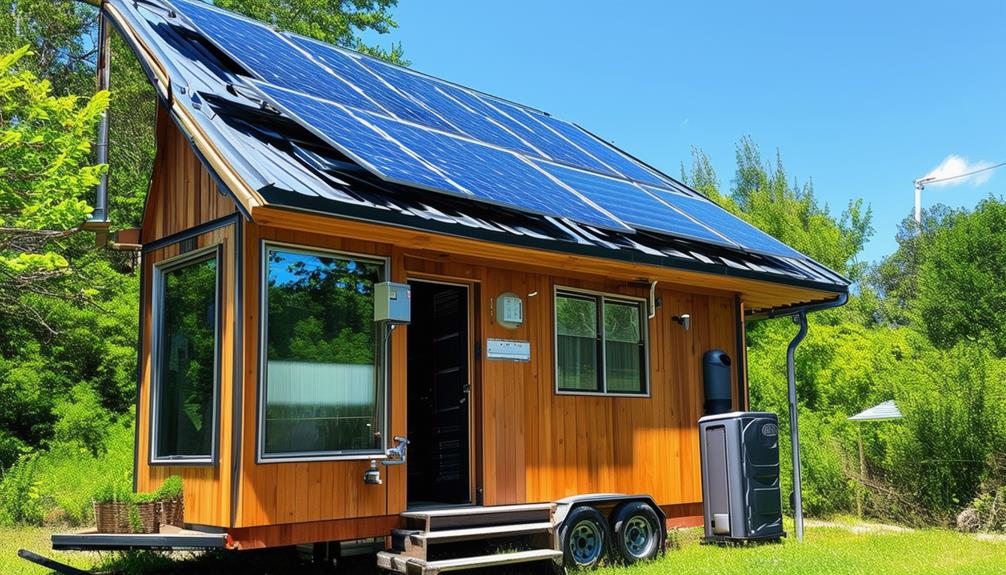
Optimizing utilities and embracing sustainability are essential considerations when transitioning to tiny home living. Efficient heating and cooling systems are crucial to maintaining a comfortable environment year-round. Investing in high-quality insulation and energy-efficient appliances ensures your tiny home stays cozy without consuming excessive energy.
Water-saving fixtures, such as low-flow showerheads and faucets, help reduce water consumption, promoting sustainability and aligning with the minimalist ethos of tiny home living. Solar panels provide a renewable energy source, reducing reliance on traditional power grids. They are particularly beneficial if you aim to live off-grid, offering both self-sufficiency and eco-friendliness.
For waste management, consider installing a composting toilet. This sustainable option minimizes water usage and converts waste into usable compost, enhancing your tiny home's green credentials. Off-grid power solutions, such as solar or wind energy systems, not only decrease your utility bills but also provide independence from traditional utility services.
Transitioning to Tiny Living
Shifting focus from sustainable utilities, it's vital to assess your lifestyle and space needs before embracing tiny living. Downsizing from a conventional home to one with 400 square feet or less demands a significant lifestyle adjustment. Start by evaluating what truly matters to you and how your current lifestyle will fit into a smaller space.
To make the transition smoother, follow these steps:
- Prioritize Your Belongings: Identify items based on their frequency of use. This helps you determine what's necessary and what can be decluttered. For example, do you really need that extra set of dishes or those old magazines? Probably not.
- Maximize Functionality: Every item in your tiny home should serve a purpose. Multifunctional furniture, like a sofa bed or a foldable table, can save space and add utility. Think critically about each possession's role in your limited space.
- Embrace Minimalism: Shifting to tiny living is an opportunity to focus on experiences over material possessions. This change not only reduces stress but also brings clarity, making your new lifestyle more fulfilling.