Tiny Home Living With a Partner: Tips for Co-Habiting in Small Spaces

Living in a tiny home with your partner can be both rewarding and challenging. To maximize your limited space, effective communication and clear expectations are essential. Imagine navigating shared areas smoothly while balancing personal time and responsibilities. How do you create a harmonious environment that supports both individual needs and your relationship? The answer lies in thoughtful planning and mutual respect. Ready to discover strategies to thrive together in a compact home?
Navigating Shared Spaces
Navigating shared spaces in a tiny home requires adaptability and a thorough understanding of each other's habits and preferences. In such confined quarters, every inch counts, making respect for each other's boundaries essential. To maintain harmony, both partners need to be mindful of routines and personal space.
Living in a tiny house means sharing most areas, from the kitchen to the bathroom. Clear communication about needs and schedules is indispensable to ensure that one person's morning routine doesn't clash with another's late-night work habits. Understanding each other's patterns can prevent unnecessary friction and maintain a peaceful atmosphere.
Setting and respecting boundaries is crucial. Close quarters do not give license to invade personal space without permission. Courtesy goes a long way in such confined living conditions. Small gestures like taking turns using the bathroom or designating quiet zones can make a significant difference.
In a tiny home, open communication and mutual understanding help navigate shared spaces effectively, turning potential challenges into opportunities for deeper connection and a harmonious living environment.
Effective Communication Strategies
When sharing a tiny home with your partner, effective communication is essential. Begin by establishing clear boundaries to avoid misunderstandings and foster harmony. Regular check-ins and active listening will help you address issues early and strengthen your relationship.
Setting Clear Boundaries
Establishing clear boundaries in a tiny home is essential for respecting each other's personal space and individual needs. In such a compact living environment, effective communication is crucial for harmonious cohabitation. Start by discussing your individual needs and defining shared and private areas. This fosters comfort and mutual respect.
Set boundaries explicitly. For example, designate specific times and areas for work or quiet hours. This practice minimizes potential conflicts and ensures mutual respect. Regularly review these boundaries and adjust them as necessary. Open and honest communication about your expectations prevents misunderstandings and creates a supportive living environment.
Respecting personal space in close quarters is vital. Communicate your needs effectively and listen to your partner's concerns. This ensures both of you feel heard and valued. By establishing and maintaining clear boundaries, you build a foundation of mutual respect, making cohabitation in a tiny home not only possible but also enjoyable. Remember, a little consideration goes a long way in shared spaces.
Active Listening Techniques
Active listening is crucial for maintaining a strong and supportive relationship, especially in the confined space of a tiny home. This involves fully concentrating on your partner, understanding their message, responding thoughtfully, and remembering what they've said. By giving your full attention and showing empathy, you can transform communication, fostering trust and respect.
Here are some effective active listening techniques for navigating small spaces:
| Technique | Description | Benefit |
|---|---|---|
| Paraphrasing | Rephrase your partner's words to show understanding | Improves clarity |
| Reflecting | Acknowledge and articulate your partner's emotions | Provides emotional validation |
| Summarizing | Condense the key points of the conversation | Reinforces understanding |
| Open-ended Questions | Ask questions that require more than yes/no answers | Deepens the dialogue |
These techniques are essential for promoting empathy and effective communication, which are crucial for resolving conflicts and validating each other's emotions in close quarters. Paraphrasing helps to clarify misunderstandings, while reflecting shows respect and acknowledgment of your partner's feelings. Summarizing ensures mutual understanding, and asking open-ended questions keeps the conversation engaging.
Practicing active listening daily builds a deeper connection, making your tiny home feel more spacious. It creates an environment where both partners feel heard, understood, and valued, leading to more harmonious cohabitation and better conflict resolution.
Regular Check-Ins
Regular check-ins are crucial for maintaining open communication and preventing misunderstandings in a tiny home. In a small space, tensions can escalate quickly if issues go unaddressed. Scheduling these check-ins ensures that both partners have dedicated time to discuss any concerns or feelings, making each person feel heard and understood.
In such confined quarters, it's easy to step on each other's toes—both figuratively and literally. By having regular discussions, you'll understand what's bothering your partner and vice versa. This proactive approach helps navigate the challenges of tiny home living more smoothly. Clear communication is vital, as you can't assume your partner knows what's on your mind.
Balancing together time and alone time is also essential. Use check-ins to discuss your needs for personal space. Whether you need a few hours alone to recharge or more time to connect, these conversations ensure both partners feel comfortable and happy in the shared home. Regular check-ins foster empathy and mutual understanding, creating a harmonious living environment.
Balancing Personal Space
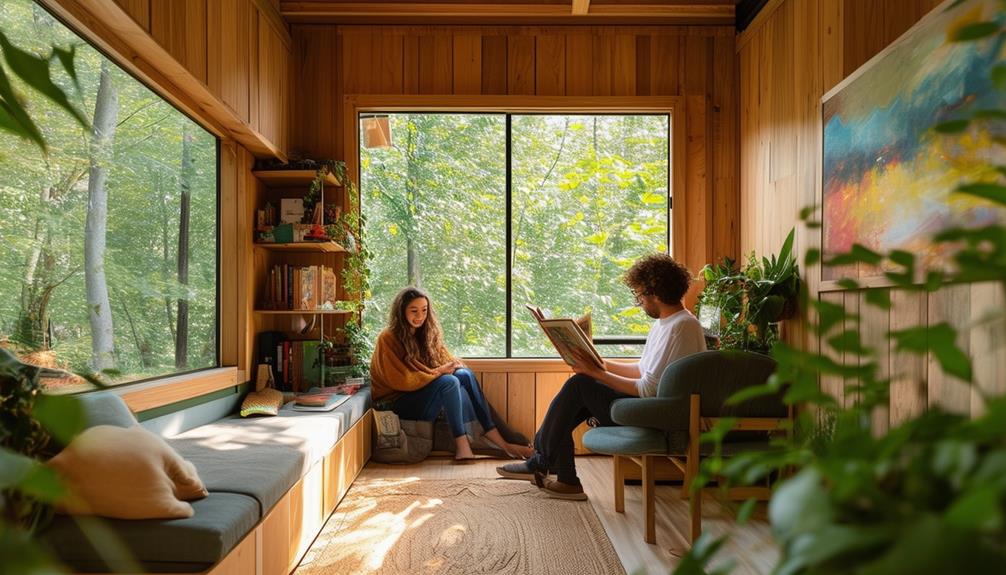
Balancing personal space in a tiny home requires creativity and intentional planning to ensure both partners feel content and rejuvenated. Living in such a small space encourages exploring outdoor activities like kayaking or working out, which provide essential self-care and individual relaxation. It's crucial to find a balance between shared spaces and personal time, allowing both partners to pursue their hobbies and decompress.
Nature can serve as a retreat, offering a serene environment for personal rejuvenation. Activities like hiking, biking, or enjoying a quiet moment in a park can help maintain harmony in your relationship. Engaging in outdoor activities not only benefits your physical well-being but also provides necessary personal space.
Inside your tiny home, designate specific areas for individual activities. This might involve setting up a small nook for reading or a corner for crafting. By clearly defining these spaces, you both can enjoy your hobbies without feeling cramped. The goal is to balance your need for personal time with the shared responsibility of cohabitation, ensuring that both partners feel respected and fulfilled.
Conflict Resolution Tips
Effective communication is essential for resolving conflicts in a tiny home, where limited space necessitates addressing issues directly. Start by actively listening to understand each other's concerns fully, giving your partner undivided attention without interruptions. Setting clear boundaries for personal space and respecting them is crucial to prevent friction.
Regular communication and check-ins can help address issues before they escalate. Schedule times to discuss any concerns constructively. Using 'I' statements such as 'I feel' or 'I need' can promote understanding and reduce defensiveness, facilitating common ground.
Sharing responsibilities evenly is indispensable for harmony. Fairly dividing chores and tasks reduces feelings of resentment and promotes teamwork. Flexibility and adaptability are also vital; plans and routines may need to be adjusted to accommodate each other's needs.
Mutual support forms the foundation of a harmonious tiny home. Encourage and uplift each other, especially during stressful times. A united front makes tackling challenges easier. By fostering cooperation and understanding, conflict resolution in a tiny home becomes manageable and even an opportunity for growth.
Design and Space Optimization
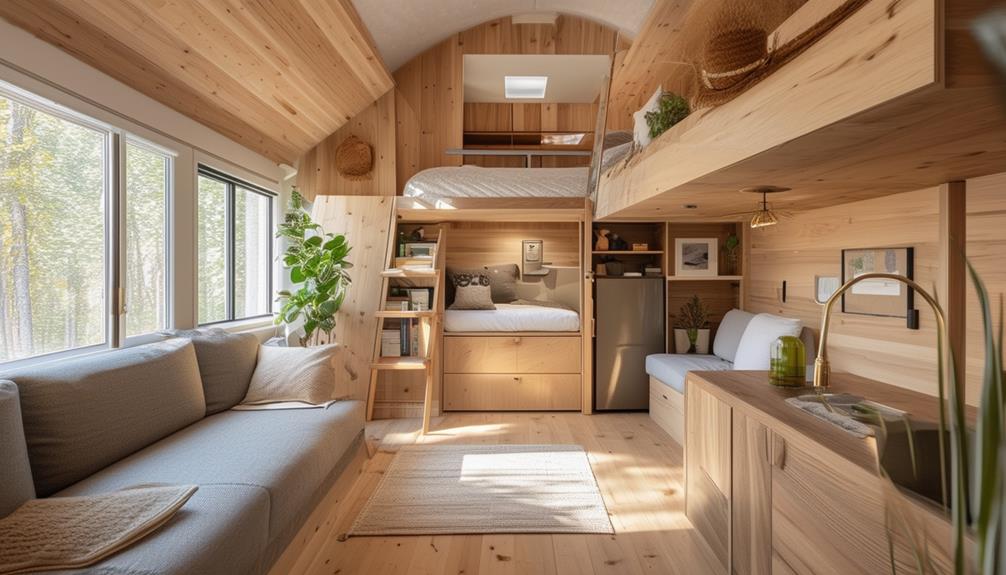
When designing a tiny home, maximizing space through multifunctional furniture and vertical storage solutions is essential. You can make the most of every square foot by incorporating pieces that serve dual purposes, such as a sofa that transforms into a bed or a dining table that doubles as a workspace. Vertical storage solutions, like shelves and hanging organizers, can free up valuable floor space.
To ensure the tiny home meets both your and your partner's needs, consider creating customized workspaces and personalized storage. Tailor these areas to fit your daily routines and preferences, whether it's a fold-out desk for working from home or designated storage bins for hobbies.
Design choices should also consider future planning. Think about long-term comfort and possible family expansion. Prioritize areas for relaxation and privacy to maintain intimacy and comfort. Using blackout shades can help create a private and cozy atmosphere, crucial for a tiny home shared by a couple.
Here's a quick guide to key elements:
| Element | Purpose | Example |
|---|---|---|
| Multifunctional Furniture | Space optimization | Sofa-bed, convertible table |
| Vertical Storage Solutions | Free up floor space | Shelves, hanging organizers |
| Customized Workspaces | Tailored to individual needs | Fold-out desk, storage bins |
Embracing Minimalism
To fully embrace minimalism in your tiny home, begin by decluttering and retaining only essential items. This method maximizes your space and enhances daily efficiency. Simplifying your belongings not only reduces stress but also fosters a sense of tranquility.
Declutter and Simplify
Embrace minimalism in your tiny home to reduce clutter and enhance functionality. Adopting a minimalist lifestyle not only optimizes your limited space but also promotes a stress-free environment. By focusing on quality over quantity, you ensure that each item serves a purpose and enriches your daily life.
Decluttering is essential for effective tiny home living. Start by assessing your possessions to determine what truly adds value to your life. Intentional consumption involves carefully considering each purchase and its impact on your space. Efficient organization maximizes your limited area, making it easier to locate items and maintain order.
Here's a quick guide to get started:
| Step | Action |
|---|---|
| 1. Evaluate | Sort items into keep, donate, and discard piles |
| 2. Simplify | Keep only what adds value or joy |
| 3. Organize | Use storage solutions to maintain order |
Essential Items Only
Thriving in a tiny home often hinges on owning only essential items that truly enhance your daily life. Embracing minimalism involves making intentional choices about what to keep and what to let go. Prioritize quality over quantity. Instead of filling your space with numerous items, select essential pieces that serve a purpose and add value to your life.
Regular decluttering is crucial. It helps maintain organization and ensures your tiny home remains a peaceful living environment. Each item should have a designated place, contributing to the overall simplicity and functionality of your space.
Focus on multi-functional furniture. A sofa that doubles as a guest bed or a coffee table with hidden storage can optimize your limited space. This approach not only saves room but also supports a minimalist lifestyle by reducing the need for multiple separate pieces.
Maintaining Privacy
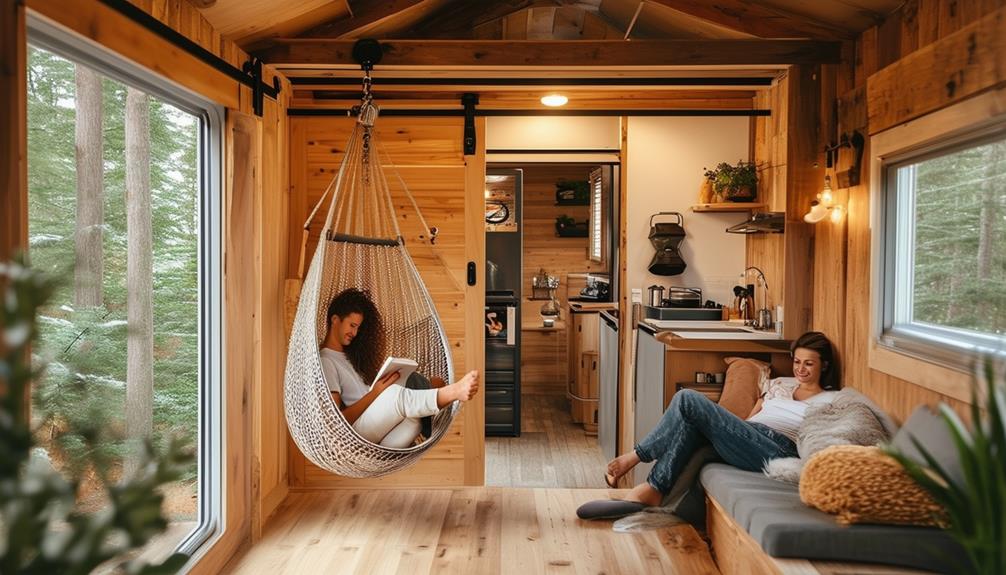
Maintaining privacy in a tiny home requires creativity and mutual respect. Balancing shared and private spaces is essential for individual privacy in such a compact living environment. Use blackout shades or curtains in loft areas to create personal spaces within the tiny home. Implement creative solutions for private moments, such as using dividers or setting up designated areas.
Design considerations for intimacy can include soundproofing or creating cozy nooks for couples to retreat to. Having designated areas where each person can enjoy some solitude will help maintain privacy and personal space. Respecting each other's personal space and needs is critical for fostering harmonious cohabitation in a tiny home.
Here's a quick reference for maintaining privacy:
| Privacy Considerations | Creative Solutions |
|---|---|
| Blackout shades or curtains | Dividers for designated areas |
| Soundproofing | Cozy nooks for retreats |
| Respect for personal space | Balancing shared and private spaces |
Strengthening Relationship Dynamics
Living in a small home with your partner can significantly enhance your relationship by fostering better communication and deeper connections. The limited space necessitates more polite and considerate interactions, as you both become acutely aware of each other's needs and boundaries. This heightened awareness underscores the importance of balancing togetherness and personal time, ensuring that your relationship flourishes in the shared environment.
Effective communication is crucial in small home living. Discussing how to optimally use both individual and shared spaces can prevent misunderstandings and conflicts. By being transparent about your need for personal time, you can ensure that neither of you feels overwhelmed or neglected. This type of dialogue strengthens your relationship, creating a harmonious living environment.
In a small home, close quarters naturally lead to more physical closeness, such as snuggling and bonding in shared areas. These moments of togetherness deepen your emotional connection. However, it's essential to maintain a balance between these intimate times and allowing each other space to breathe. By prioritizing polite and considerate interactions, you'll cultivate a deeper understanding and a stronger relationship, making small home living a rewarding experience for both partners.