Tiny Home Living and Fire Safety: Tips and Precautions

Living in a tiny home requires heightened vigilance regarding fire safety due to the restricted space and the proximity of appliances. Ensuring your heating units and electrical systems are correctly installed and regularly maintained is crucial. Utilizing fire-resistant materials and having a well-thought-out fire safety plan can make a significant difference. But what specific precautions should you take to protect your tiny home from fire hazards? Let's explore the essential steps and safety measures you can implement to minimize risks and ensure your tiny home remains safe.
Causes of Fires
Fires in small dwellings often originate due to the limited space and reduced clearances for appliances. One major cause is the use of propane and diesel appliances, which involve flammable gases. Even a minor leak in these systems can quickly become dangerous. Proper installation, venting, and regular inspections are crucial to prevent potential fires.
Electrical components also pose a significant risk. Many small dwellings utilize solar power systems, which, if not properly maintained, can malfunction and ignite a fire. Additionally, the compact nature of small dwellings means that electrical wiring is often near combustible materials. Faulty wiring or overloaded circuits can easily spark a fire, so regular professional inspections are essential.
Reduced Clearances
In tiny homes, limited space often complicates maintaining the recommended clearances for appliances like wood stoves and gas-fired heating units. Reduced clearances can elevate fire hazards, making it essential to take proactive safety measures.
First, ensure the proper installation of your wood stove, incorporating concrete board surrounds to create a heat-resistant barrier. Ventilation is equally critical. Utilize appropriate venting solutions, such as chimney systems or exhaust fans, to ensure safe operation and prevent the buildup of hazardous fumes.
Building with fire safety in mind from the outset can significantly mitigate risks. Use fire-resistant materials and strategic design choices during construction to better manage the challenges posed by reduced clearances.
Here are four tips to effectively manage reduced clearances:
- Install concrete board surrounds around your wood stove to create a heat-resistant barrier.
- Ensure proper ventilation with chimney systems or exhaust fans.
- Use fire-resistant materials in the construction and design of your tiny home.
- Regularly inspect and maintain heating units and their clearances to prevent hazard buildup.
Propane Appliance Safety
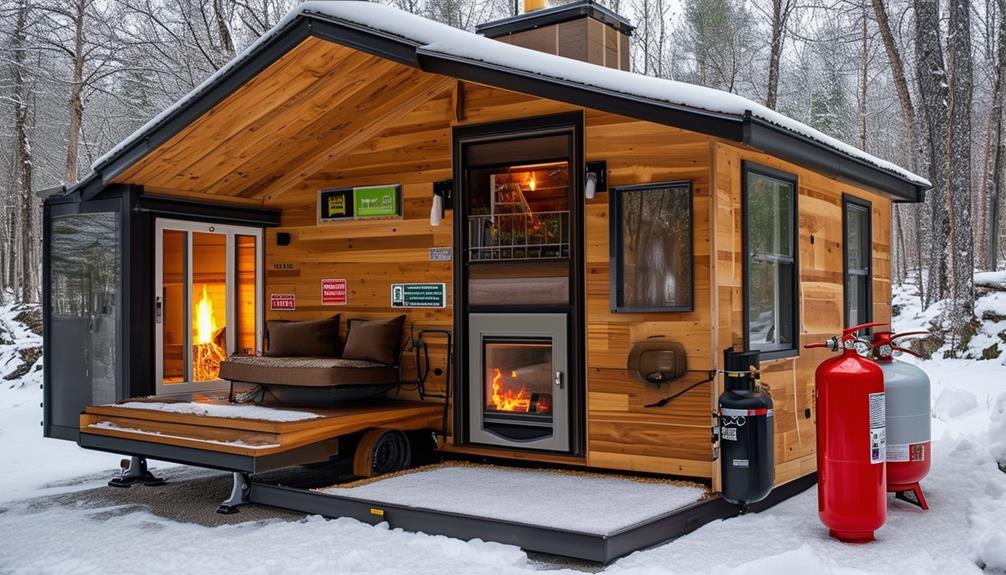
Ensuring your propane appliances are properly installed and maintained is crucial for fire safety in a tiny home. Due to the limited space in tiny homes, the risk of fire from improperly handled propane is significantly higher. To mitigate these risks, have your propane appliances installed by a certified professional. Proper installation ensures that appliances are securely fitted, reducing the chances of gas leaks.
Regular inspections are essential. Frequently check your propane systems for signs of wear or damage, such as loose fittings or corrosion, which can indicate potential gas leaks. A gas leak in a tiny home can lead to the rapid accumulation of flammable propane, creating a hazardous situation.
Ventilation is also critical. Ensure your propane appliances are well-vented to prevent the buildup of dangerous gases inside your tiny home. Proper venting directs harmful gases outside, making your living space safer.
Lastly, always use propane appliances according to the manufacturer's guidelines. This includes not altering the appliances and ensuring they are used as designed. By following these steps, you can safely enjoy the benefits of propane appliances in your tiny home.
Diesel Appliance Safety
Diesel appliances, such as heaters and generators, can be highly beneficial in tiny homes but also pose fire risks if not properly managed. Improper maintenance can lead to diesel leaks and the accumulation of flammable vapors in confined spaces, increasing fire hazards. Here are four essential tips to ensure diesel appliance safety in your tiny home:
- Regular Inspections: Routinely examine your diesel appliances for wear, leaks, or damage. Early detection of issues can prevent severe problems.
- Routine Maintenance: Follow the manufacturer's maintenance guidelines, including changing filters, checking fuel lines, and ensuring all components are in good working order.
- Proper Ventilation: Ensure professional installation of diesel appliances with adequate ventilation to prevent the buildup of flammable vapors.
- Leak Detection Systems: Invest in a high-quality leak detection system to identify leaks early and mitigate the risk of fire.
Solar System Safety
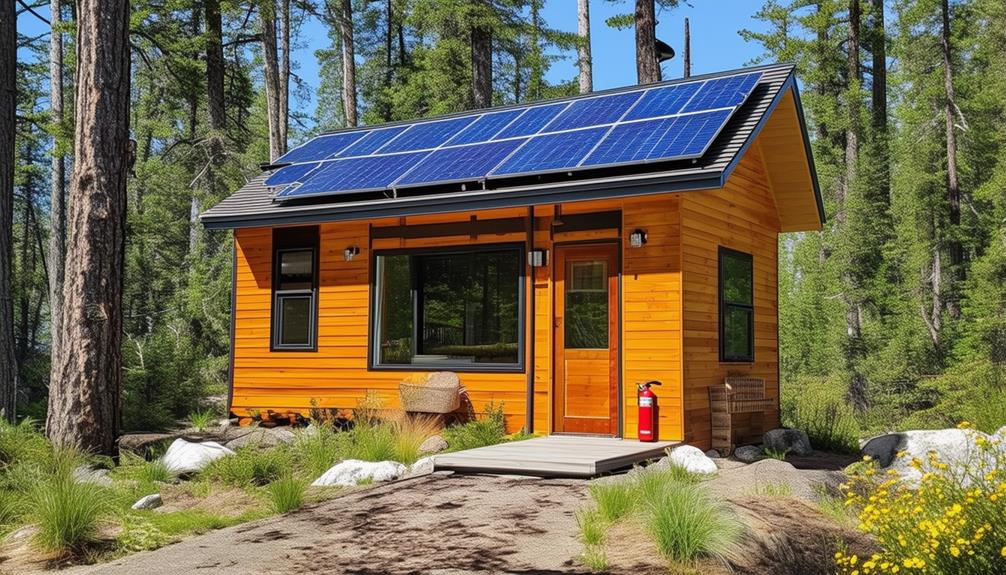
Proper installation and maintenance of solar systems are crucial for preventing electrical fires in your tiny home. Start by ensuring your solar panels are placed where they receive adequate sunlight and are securely mounted to avoid damage. Poorly positioned or improperly secured panels can lead to inefficiencies and potential hazards.
Overloading your solar system or using incompatible components can pose significant fire risks. Always use components designed to work together and avoid exceeding the system's power capacity. This involves carefully calculating your energy needs and selecting appropriately sized batteries, charge controllers, and inverters.
Regular maintenance is essential. Frequently inspect your solar panels and other components for signs of wear, corrosion, or damage, and address any issues promptly. Cleaning the panels to remove dust and debris can also improve efficiency and reduce overheating risks.
Monitoring your system's performance can alert you to potential issues before they become serious problems. A monitoring system helps track energy production and consumption, ensuring smooth operation. By taking these precautions, you'll help ensure a safe and efficient solar system in your tiny home.
Electrical System Safety
Ensure the safety of your tiny home by focusing on preventing wire damage due to movement and maintaining your solar components. Implement overload protection measures to prevent electrical malfunctions that could lead to fires. Regularly inspect and maintain your electrical systems to ensure they operate smoothly and safely.
Prevent Wire Damage
Regularly inspecting your tiny home's electrical wiring for wear and tear is essential for preventing damage and reducing fire risks. Due to frequent movement and jostling during transportation, tiny homes are particularly prone to wire damage. Ignoring this can significantly increase the risk of electrical fires, so vigilance is crucial.
To keep your electrical systems in top shape, follow these steps:
- Perform Regular Inspections: Examine your wires at least once a month for signs of fraying, cuts, or other damage. Watch for discoloration or scorch marks, which may indicate overheating.
- Secure Loose Wires: Ensure that all wires are properly fastened to prevent shifting during transportation. Use cable ties or clamps to keep them in place, minimizing movement-related wear.
- Avoid Overloading Circuits: Do not plug too many devices into a single outlet. Overloading circuits can cause overheating, increasing the likelihood of wire damage and fires.
- Hire a Professional Electrician: Have a qualified electrician inspect your electrical systems annually. They can identify issues you might overlook and ensure everything meets safety standards.
Solar Component Maintenance
Maintaining the solar components of your tiny home's electrical system is vital to ensuring safety and optimal performance. Regular upkeep can prevent malfunctions and reduce the risk of electrical fires. Given the compact nature of tiny homes, any issues within your solar energy system can have immediate and severe consequences.
Movement within your tiny home can lead to wire damage in solar components. Routinely checking for loose connections and signs of wear is crucial. Proper installation and ventilation of your solar panels and electrical components are necessary to prevent overheating and potential fire hazards.
To keep your solar energy system in top condition, adhere to a maintenance schedule. Below is a simple guide to help you stay on track:
| Task | Frequency | Importance Level |
|---|---|---|
| Inspect solar panels | Monthly | High |
| Check wiring connections | Every 3 months | Medium |
| Clean solar panels | Bi-annually | High |
Overload Protection Measures
To ensure your tiny home's electrical system is safeguarded against overloads and potential fire hazards, it is crucial to implement effective overload protection measures. Here are some essential tips to maintain a safe and secure living environment:
- Install Circuit Breakers or Fuses: Circuit breakers and fuses are critical for preventing excessive current flow. These devices automatically cut off power if an overload is detected, protecting your wiring and appliances from damage.
- Use Properly Sized Wiring and Outlets: Ensure all electrical wiring and outlets are adequately sized to handle the electrical load. This prevents overheating and reduces the risk of fire from overloaded circuits.
- Add Surge Protectors: Install surge protectors to safeguard your electronics and appliances from power surges. These devices can prevent damage during electrical storms or sudden power spikes, keeping your tiny home safe.
- Regular Inspections and Maintenance: Conduct regular inspections and maintenance of your electrical system. Look for signs of wear or damage and address issues promptly to avoid potential hazards and overload-related fires.
Fire Safety Plan
Developing a fire safety plan for your tiny home is essential. Install fire alarms, perform regular inspections on all appliances, and establish clear evacuation routes. These measures will ensure the safety of you and your loved ones.
Develop Evacuation Routes
Ensure you've established clear evacuation pathways in your tiny home to guarantee a safe exit during a fire emergency. A comprehensive fire safety plan involves identifying both primary and alternative escape routes from various areas of your home. This increases your chances of a quick and safe evacuation. Here's how to effectively develop these pathways in your tiny home:
- Identify Primary and Alternate Escape Routes: Pinpoint main exits, such as doors and windows, and ensure you have backup routes in case the primary ones are blocked.
- Practice Your Fire Safety Plan: Regularly rehearse escape pathways with all household members. This ensures everyone knows what to do and where to go during an emergency.
- Install Fire Ladders: If your tiny home has an upper level, consider installing fire ladders. These provide additional escape routes and can be vital for a swift evacuation.
- Map Out Routes Visibly: Place a clear map of your evacuation pathways in a visible area. This helps everyone familiarize themselves with the escape plan and serves as a quick reference during a fire.
Having a well-thought-out fire safety plan, including multiple evacuation pathways, can save precious seconds and potentially lives.
Install Fire Alarms
Installing fire alarms in your tiny home is a critical step in enhancing fire safety and ensuring early detection of potential hazards. Smoke detectors are essential for identifying fires in their early stages and can reduce the risk of fatalities by up to 50%. In a tiny home, where space is limited and fires can spread rapidly, having these alarms is even more crucial.
You should install smoke alarms in every bedroom, outside each sleeping area, and on every level of your home. This placement ensures thorough coverage and maximizes the chances of early fire detection. Additionally, consider installing carbon monoxide alarms near sleeping areas to detect this odorless gas, which is produced by burning fuel and can be deadly.
Regularly testing your smoke and carbon monoxide alarms is essential to ensure they function properly. Make it a routine to check them at least once a month and replace the batteries annually. A well-planned fire safety escape route is also significant. Ensure all household members are familiar with the route and practice it regularly. By taking these precautions, you can greatly enhance your safety and minimize the risks associated with tiny home fires.
Regular Appliance Inspections
To ensure the safety of your small residence, prioritize regular inspections of key appliances such as propane stoves and wood stoves. Proper maintenance of these devices is crucial to prevent fire hazards. By integrating routine maintenance checks into your fire safety plan, you can identify and mitigate potential risks before they become serious issues.
Here's a quick guide to assist you with appliance inspections:
- Propane Stove Inspection: Check for gas line leaks and ensure all connections are secure. Clean the burners and remove any accumulated grease or debris.
- Wood Stove Maintenance: Inspect the chimney and flue for obstructions or creosote buildup, which can ignite and cause a fire. Ensure the door seals are intact and replace any damaged components.
- Electrical System Checks: Regularly examine electrical outlets, wiring, and appliances for signs of wear or damage. Replace worn-out wires promptly and avoid overloading circuits.
- Smoke and Carbon Monoxide Alarms: Test these alarms monthly to ensure they are functioning properly. Replace batteries as needed and follow the manufacturer's recommendations for periodic unit replacement.
Essential Alarms
In a small dwelling, essential alarms like smoke and carbon monoxide detectors are critical for your safety. Smoke detectors have a proven track record of saving lives, emphasizing their importance. To ensure optimal performance, install these alarms following the manufacturer's guidelines. Given the tightly constructed nature of tiny homes, carbon monoxide detectors are crucial to prevent potential poisoning from this invisible, odorless gas, which can accumulate rapidly, especially with inadequate ventilation.
Combo smoke and carbon monoxide detectors provide a practical solution, addressing both safety needs in a single device. These dual-function alarms conserve space, a valuable asset in a small home. However, alarms alone are not enough; proper ventilation is equally essential. Ensure good ventilation in the kitchen to avoid gas buildup from appliances like propane stoves. Always turn off your propane stove when not in use to minimize risks of gas leaks and fire hazards.
Fire Extinguishers
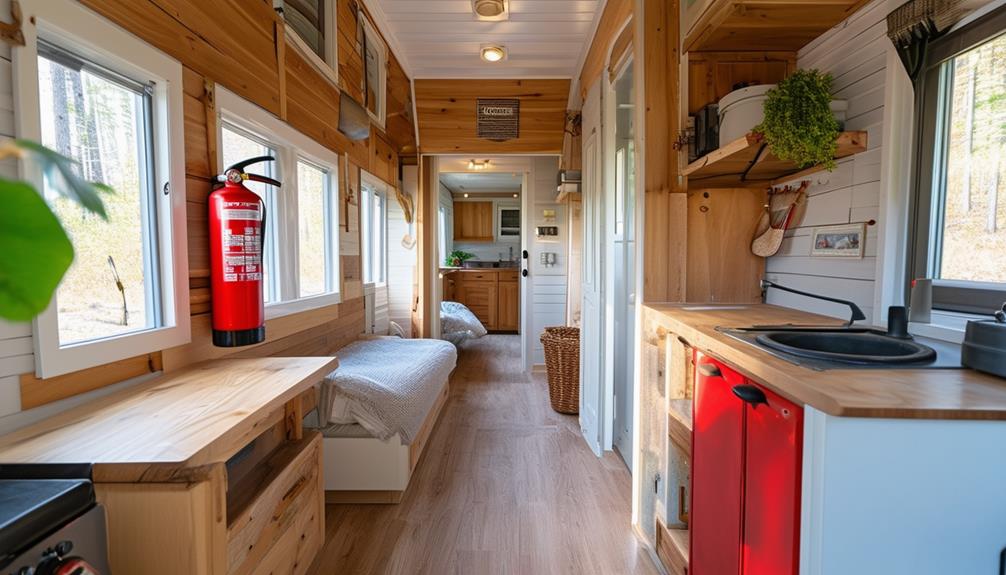
Having a properly sized and maintained fire extinguisher within reach is crucial for tiny home safety. In such compact spaces, fires can spread rapidly, necessitating quick action. Here are essential tips for using fire extinguishers effectively in tiny homes:
- Appropriate Size and Rating: Ensure your fire extinguisher is suitable for the size of your tiny home and is rated for common household fires. A 2.5-pound extinguisher with a 2A:10B:C rating is often recommended.
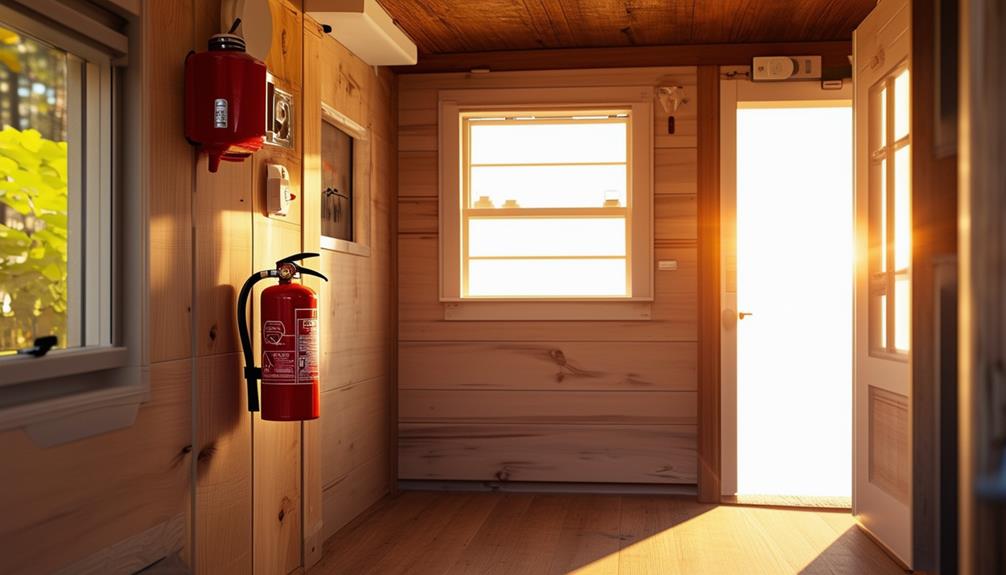
- Easy Accessibility: Keep your fire extinguisher visible and within easy reach. Position it within 2 feet of the entrance door to enable quick access during an emergency, even if you need to use it while exiting.
- Outdoor Extinguisher: Consider placing an extra fire extinguisher outside for campfires or vehicle fires. This additional precaution can help address external fires that pose a threat to your tiny home.
- Regular Maintenance: Routinely check and maintain your fire extinguisher. Ensure it is fully charged and not expired. A well-maintained extinguisher is vital for controlling small fires before they escalate.
Following these tips can significantly enhance your fire preparedness in a tiny home.