The Role of Axes in Early American Frontier Life

Imagine you're a settler on the American frontier, and your survival hinges on a single tool: the axe. With it, you clear land, build your home, and gather firewood. It's more than just a tool; it's a symbol of your resilience and self-reliance. The felling axe, in particular, stands out with its robust design, making it indispensable for shaping timber into sturdy shelters.
This tool also played a crucial role in craftsmanship, strengthening community bonds and contributing to cultural identity. The impact of the axe on early American society was profound, influencing daily life and the overall development of frontier communities.
Importance of Felling Axes
The felling axe was indispensable in early American pioneer life, enabling settlers to clear land, build homes, and gather essential firewood. As a settler, you relied heavily on felling axes to transform dense forests into habitable land. This essential tool wasn't just for chopping down trees; it also played a crucial role in shaping logs for timber frame construction, fundamental for building sturdy shelters and barns.
With its sharp edge and versatile design, the felling axe allowed for efficient homestead management. The American felling axe, distinguished by its shorter head and pointed lugs, offered an improved grip and was more effective and user-friendly compared to its European counterparts. This design innovation made daily chores more manageable and less physically demanding.
Community events, known as "bees," were vital for survival and social cohesion. During these gatherings, you and your neighbors used felling axes to clear land and raise barns, reinforcing a spirit of cooperation.
Each settler's uniquely identifiable axe symbolized not just practicality but also the self-sufficiency and pioneering spirit that defined early American life.
Design and Craftsmanship
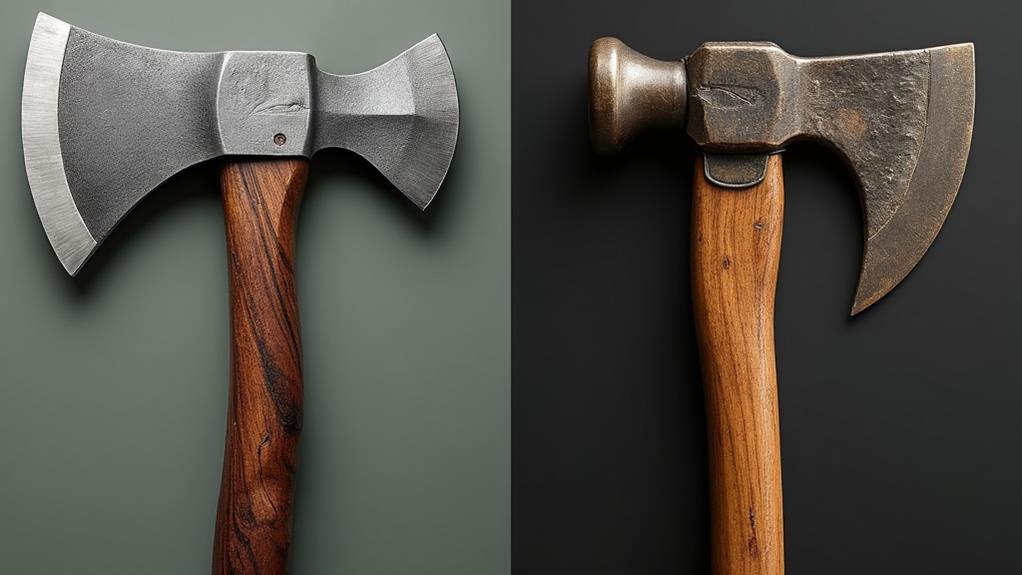
The American felling axe features a shorter, less triangular head, enhancing grip and functionality compared to its English counterpart. The handles, crafted from straight-grained oak or hickory, often include unique finials to prevent slipping and aid in identification during gatherings. Additionally, the axe's design incorporates a poll for hammering and splitting, making it highly versatile for various frontier tasks.
Distinctive American Axe Features
American felling axes possess distinctive features that differentiate them from their English counterparts, making them indispensable tools in early frontier life. The head of the American felling axe is shorter and less triangular, optimizing it for cutting the dense, hardwood trees common in North America. This design allows for deeper, cleaner cuts with each swing, enhancing efficiency.
The axe handle is secured with pointed lugs, providing better grip and control, which is crucial when working in rugged, unpredictable conditions. Additionally, American felling axes often feature a poll—a flat, hammer-like surface—adding versatility for tasks like hammering and splitting, beyond just felling trees.
Handles are typically made from straight-grained oak or hickory, prized for their strength and durability. Unique finials at the handle's end prevent slipping and help distinguish individual axes within a community.
Each handle is meticulously crafted to fit comfortably in the user's grip, ensuring both comfort and efficiency. This meticulous craftsmanship made the American felling axe a vital tool for frontier settlers.
Handle Crafting Techniques
Moving from the distinctive features of American felling axes, let's delve into the artistry behind their handles. In early frontier life, handle crafting techniques were essential. Made from straight-grained oak or hickory, these handles provided the strength and durability necessary for rigorous use.
Every handle was more than a mere tool component; it was a labor of precision and care. Craftsmen followed specific patterns to ensure each handle fit the user's grip perfectly. This attention to detail was crucial, as a well-crafted handle could mean the difference between efficiency and fatigue during long working hours.
The design of the American felling axe handle, shorter and less triangular than its English counterpart, improved grip and usability, reflecting the unique needs of frontier life. Distinctive finials at the end of handles prevented slipping and made each axe easily identifiable during community gatherings.
This blend of functionality and social nuance highlights the intricate craftsmanship involved. Key emotional takeaways include:
- Strength and Durability: Reliance on a tool that never let you down.
- Individuality: Each handle, a perfect fit for its user.
- Community: Personalized touches that fostered a sense of belonging.
These elements of handle crafting techniques underscore the deep connection between the craftsman, the tool, and its user.
Versatility and Functionality
The American felling axe stands out for its versatility and functionality, a testament to its thoughtful design and precise craftsmanship. Distinguishing itself from the English axe, the American version has a shorter, less triangular head, which enhances control and grip with pointed lugs. This design is multifunctional, featuring a poll for hammering and splitting, making it indispensable for tasks ranging from construction to self-defense.
Typically, the handles of these axes are made from durable, straight-grained oak or hickory. Unique finials on the handles prevent slipping and make it easy to identify your axe among others. Each handle is meticulously crafted to fit perfectly in your grip, with patterns often preserved for creating replacement handles.
The American felling axe was crucial in timber frame construction. It was used for cutting corner notches and shaping logs, while the broadax smoothed timbers to ensure structural integrity.
| Feature | Design Element | Functionality |
|---|---|---|
| Head Shape | Shorter, less triangular | Improved control and grip |
| Poll | Hammering and splitting | Multifunctional for diverse tasks |
| Handle Material | Oak or hickory | Durability and comfort |
| Unique Finials | Custom crafted | Prevents slipping and easy identification |
The American felling axe embodies a blend of form and function, making it a reliable tool for various applications.
Construction Tools and Techniques
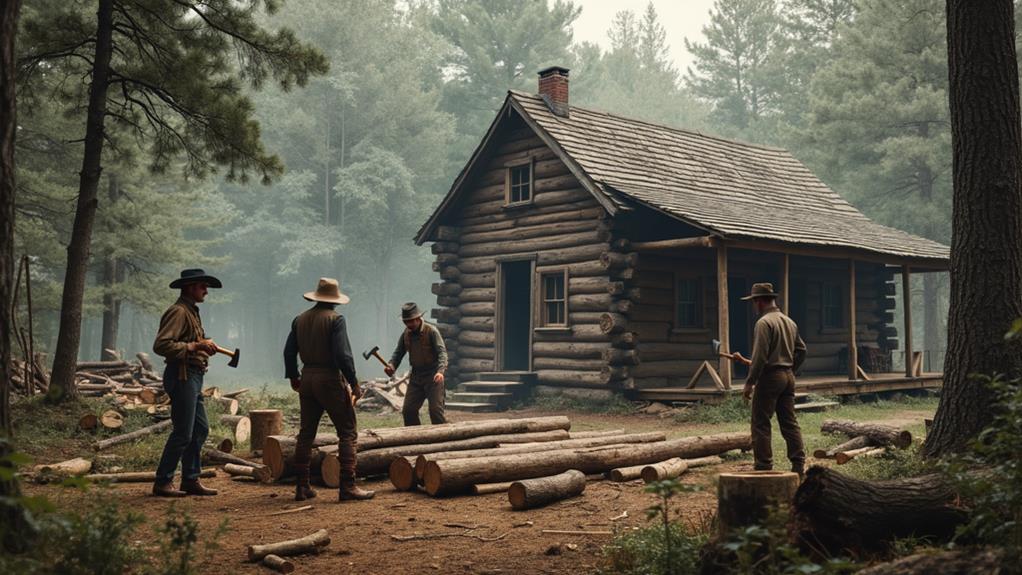
Early American settlers relied heavily on specific construction tools and techniques to build their homes and barns, with the felling axe and broadax playing vital roles. The felling axe was fundamental for cutting corner notches in logs, pivotal for creating sturdy timber frame structures essential for the settlers' homes and barns. Without precise notches, their buildings wouldn't endure.
The broadax was used to score the faces of logs for hewing, a process that, when combined with the felling axe, allowed settlers to achieve flat log walls. These walls provided better insulation and stability. Proper scoring techniques ensured logs fit tightly together, a requirement for a well-constructed home.
Consider the emotional weight:
- Imagine your family shivering through a harsh winter because poorly scored logs let in freezing drafts.
- Picture the relief knowing that your sturdy home can withstand the test of time, keeping your loved ones safe.
- Visualize the pride of crafting a home with your own hands, using essential tools like the felling axe and broadax.
Precision in mortice and tenon joinery, facilitated by these axes, guaranteed the stability and longevity of timber frame constructions.
Community and Social Aspects
Community gatherings, known as "bees," were crucial for settlers on the American frontier to tackle large tasks like house raising and land clearing. These events, essential to frontier life, saw everyone bringing their uniquely marked axes for identification. Settlers worked side by side, transforming daunting tasks into manageable projects through collective effort.
Communal meals shared during these bees fostered a strong sense of community and cooperation. These gatherings not only got work done but also deepened social bonds. Expert axe men, whose skills were honed through frequent tree cutting, often emerged as local heroes. Their expertise was vital for navigating the challenges of frontier life.
Axes were more than tools; they were heirlooms passed down through generations, preserving techniques and cultural significance within the community. Observing these projects, one could see the settlers' resourcefulness and adaptability.
These gatherings didn't just build homes and clear land; they built a resilient, tightly-knit community ready to face any obstacle together.
Repurposing and Recycling
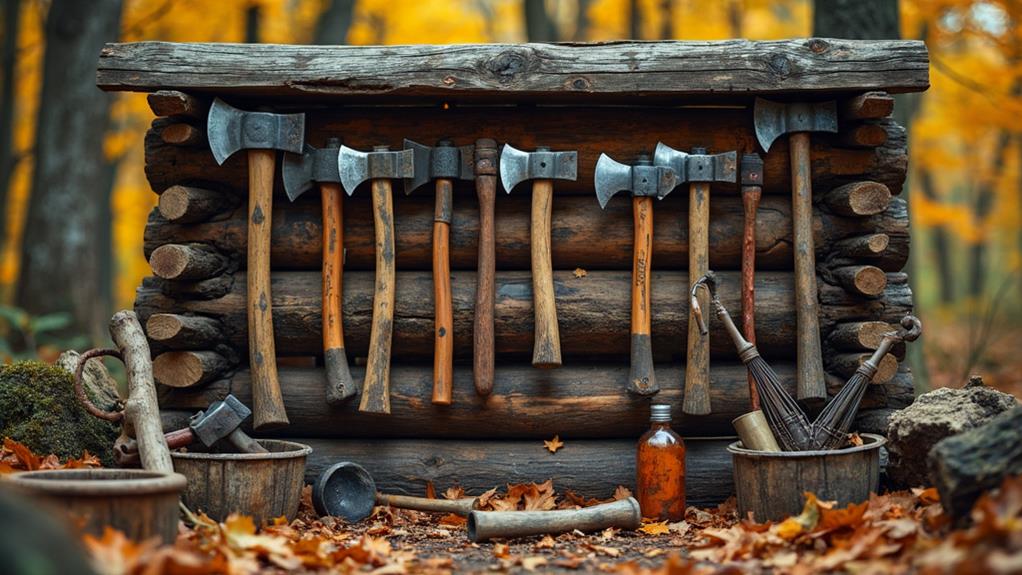
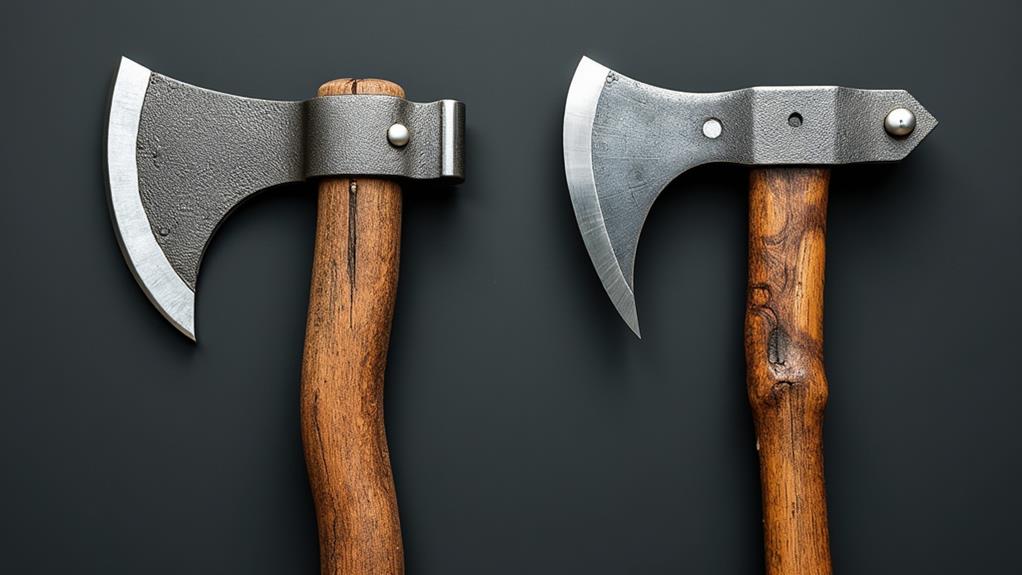
Early American settlers demonstrated ingenuity by repurposing worn-out axe heads into useful tools. Blacksmiths often transformed these old axe heads into barn hinges or essential farm implements, maximizing their utility. This practice not only conserved resources but also showcased the community's resourcefulness and creativity.
Blacksmithing Old Axe Heads
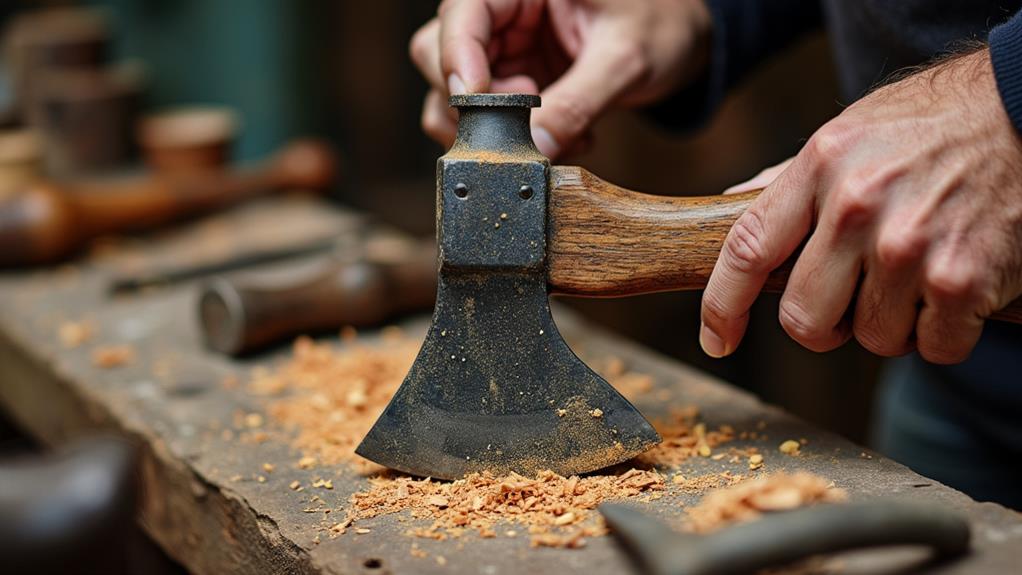
Repurposing old axe heads into new tools exemplified frontier ingenuity. On the early American frontier, blacksmiths showcased incredible resourcefulness by transforming worn-out axes into essential items. When an axe became too short from repeated sharpening, skilled artisans repurposed the metal into barn hinges or farm tools, ensuring nothing went to waste. This practice wasn't only practical but essential for survival.
The blacksmith's forge was a hub of innovation. Repurposed axe heads were transformed into raft dogs for river travel, embodying adaptability. By recycling these tools, settlers conserved precious metal resources and maintained a steady supply of functional implements. This practice was crucial in a world where every piece of metal was valuable.
Consider the emotional impact of this:
- Survival: Each repurposed axe head meant fewer trips to the distant blacksmith, saving time and effort.
- Community: Blacksmiths' skills fostered a sense of interdependence among settlers.
- Innovation: Every new tool created from an old axe head was a testament to human ingenuity and adaptability.
In this way, blacksmiths did more than repair tools; they kept the community thriving, turning worn-out axes into symbols of resilience.
Transforming Tools for Utility
In the rugged world of the early American frontier, transforming tools for utility was essential to daily survival. Early felling axes, once worn down from frequent sharpening, weren't discarded but repurposed. Blacksmiths ingeniously converted these axe heads into barn hinges or other farm tools, reflecting settlers' resourcefulness and commitment to sustainability.
Repurposing extended beyond farm tools. Worn-out axe heads were also transformed into raft dogs for river travel, showcasing the settlers' ability to maximize the utility of every tool. This practice extended the lifespan of tools, helping settlers adapt to their evolving needs and making the most of scarce resources.
Interestingly, repurposed items often survived in greater numbers than the original axes, highlighting the practical and sustainable approach of early American settlers. This transformation of tools underscores a broader trend of ingenuity and sustainability that characterized frontier life.
Historical Significance
The axe stands as an essential symbol of early American frontier life, reflecting its vital role in shaping the New World. As a fundamental tool, the axe enabled settlers to clear vast tracts of land, build shelters, and gather firewood, greatly influencing their daily lives and survival.
The American felling axe, with its versatile design, became the primary tool for timber framing, allowing settlers to construct essential homes and barns.
By 1900, settlers had cleared approximately 500 million acres of forestland using axes, underscoring their historical importance in land development and agricultural expansion. This immense achievement wasn't just about clearing trees; it symbolized the settlers' strength, self-sufficiency, and determination to tame the harsh wilderness of the frontier.
Consider these emotional milestones:
- Clearing Land: Imagine the back-breaking effort of transforming dense forests into fertile farmland.
- Building Homes: Envision the pride in constructing a secure, warm shelter for your family.
- Gathering Firewood: Feel the satisfaction of ensuring your loved ones stay warm through brutal winters.
Axes were more than tools; they were lifelines. The craftsmanship evolved over time, with settlers adapting European designs to better suit the North American landscape, further cementing the axe's role in American history.
Evolution of the Axe
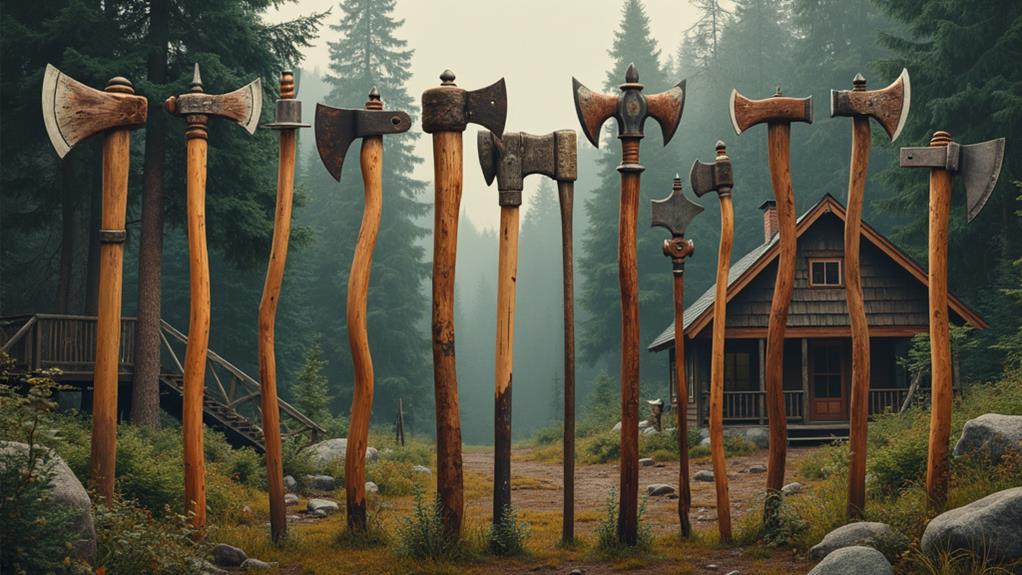
Through centuries of adaptation, the axe has evolved from a rudimentary stone tool to a finely crafted instrument essential for frontier life. Initially, axes were made from crude stones, but advancements in metalworking led to more efficient and durable axes.
Influenced by European designs, early American axes were adapted to handle the larger North American timber, resulting in the modern felling axe. This new design featured a heavier poll for better balance and a shorter bit for precise, powerful cuts.
The craftsmanship of axes improved significantly over time. Specialized handle patterns emerged, offering better grips and customized fits for individual users, which facilitated tasks like land clearing and shelter construction.
By the late 19th century, the functional role of axes began to decline as mechanization took over, leading to a cultural shift. Axes transitioned from essential tools to collectible vintage items.
Enthusiasts started to appreciate the historical and aesthetic value of early American axes, giving rise to a collector culture. Today, these vintage axes are treasured not only for their utility but also for their craftsmanship and historical significance.
Usage and Impact
The importance of axes in clearing approximately 500 million acres of forestland can't be overstated, as they enabled early settlers to create essential farmland and build shelters. The felling axe, in particular, allowed for the efficient cutting of trees and shaping of logs required for constructing homes and barns, which were vital for survival. Community gatherings, known as "bees," where everyone contributed with their axes, not only expedited the work but also strengthened social bonds.
Forestland Clearing Techniques
Axes were indispensable tools for early American settlers, who cleared approximately 500 million acres of forestland by 1900. Envision the frontier with the persistent swing of a felling axe, its blade cutting into the core of a tree. This tool not only chopped wood but also played a crucial role in transforming dense forests into arable land.
Land clearing involved several important techniques, each with distinct impacts.
- Felling Trees: Settlers used felling axes to cut down large trees, a labor-intensive task requiring strength and precision. The axe's shorter head and poll design enabled effective cuts, aiding in timber collection.
- Girdling: This technique involved removing a band of bark around the tree's circumference, causing it to die and facilitating easier removal. Girdling was slower but essential for large-scale land clearing.
- Community Bees: Land clearing was often a communal effort. Settlers organized "bees," where the community gathered to help, each person bringing their axe. These events accelerated the clearing process and strengthened community bonds.
Timber Frame Construction
Clearing forestland wasn't just about removing trees; it was the foundation for building homes and structures essential for settler survival. Timber frame construction was pivotal in this process, with the felling axe playing a crucial role. This tool was used to cut precise corner notches in logs and shape timber, ensuring structural stability and integrity.
Mastery of the felling axe was vital, as any mistake could compromise the building's strength. After initial shaping with the felling axe, the broadax was employed to smooth timbers, ensuring walls were flat and fit together seamlessly. Through careful scoring techniques, settlers achieved well-finished, durable log walls.
Axes were indispensable to settlers, used not only for chopping down trees but for every construction step. Within a week, land could be cleared, and materials prepared to erect a basic cabin. The design of the axe, from its handle to its head, reflected the ingenuity and resourcefulness of early American settlers, making timber frame construction both practical and efficient.
Community Tool Usage
In early American frontier life, community gatherings known as "bees" were essential for both survival and social cohesion. Settlers would come together for house-raising, land-clearing, and other critical projects, each brandishing their uniquely identifiable axes. These communal efforts extended beyond mere labor, fostering a deep sense of unity. Sharing meals and stories while working side by side turned these gatherings into vital social events.
Axes were more than just tools; they were lifelines. The versatile felling axe was indispensable, not only for cutting trees but also for hammering nails and splitting wood. Picture a scene where a group of settlers, each an expert in their craft, collaborates using these multi-purpose tools. This shared labor built homes and, by extension, the community.
Reflect on these emotional touchpoints:
- Unity in Purpose: Every swing of the axe was a step towards a common goal.
- Craftsmanship: Each axe's handle reflected the individuality and resourcefulness of its owner.
- Legacy: Tools were passed down through generations, becoming cherished family heirlooms.
Thus, axes were symbols of cooperation and survival, embodying the spirit of the community.
Decline and Resurgence
The mid-20th century witnessed a significant decline in axe usage, driven by the advent of chainsaws and the rise of suburban living, which drastically reduced the demand for traditional tools. Chainsaws offered unparalleled efficiency, making them the preferred choice for many tasks that axes once handled.
Additionally, as fewer homes relied on wood for heating, the necessity for chopping firewood diminished. In response, axe manufacturers consolidated, relocated, and shifted their focus from professional lumberjacks to casual suburban users, resulting in the production of cheaper, lower-quality axes and a subsequent decline in the tool's reputation.
In recent years, however, there's been a resurgence in the appreciation of traditional tools. A cultural shift towards valuing historical craftsmanship and outdoor skills has emerged.
Boutique axe makers now produce high-quality, handcrafted axes that appeal to both enthusiasts and practical users. These axes, often regarded as functional art, enable modern consumers to connect with their heritage, valuing the utility and aesthetic appeal of well-crafted tools.
This renewed interest reflects a deeper cultural longing for authenticity and a tangible link to the past.
Influence of Media
The resurgence of traditional axe craftsmanship reflects a cultural shift towards authenticity, a movement significantly amplified by media portrayals. Shows like *Wagon Train* vividly illustrate the historical significance of axes, depicting their crucial roles in land clearing and shelter building for settlers.
These portrayals spark renewed interest in traditional craftsmanship, making you appreciate both the practical applications and the historical roots of these tools.
In historical films and series, the axe often symbolizes rugged individualism and self-sufficiency, romanticizing the pioneer spirit. This depiction connects with contemporary audiences, encouraging you to view the axe as more than just a tool—it's a piece of cultural heritage.
Documentaries and educational programs highlight the evolution of axes, emphasizing the skills required for their use in frontier life. This content not only informs but also inspires you to investigate the craftsmanship behind these iconic tools.
Online platforms and social media have created communities of axe enthusiasts where you can share knowledge and stories about vintage axes.
Here are three compelling reasons to join these communities:
- Rediscover historical significance.
- Learn traditional craftsmanship.
- Connect with like-minded individuals.
Conclusion
Axes were more than just tools; they were lifelines and symbols of resilience on the early American frontier. Their sturdy design and versatility enabled settlers to build homes, clear land, and foster community bonds. While their importance has evolved with technological advancements, axes remain iconic. Whether in history books or modern media, they continue to evoke the pioneering spirit that shaped early American life.