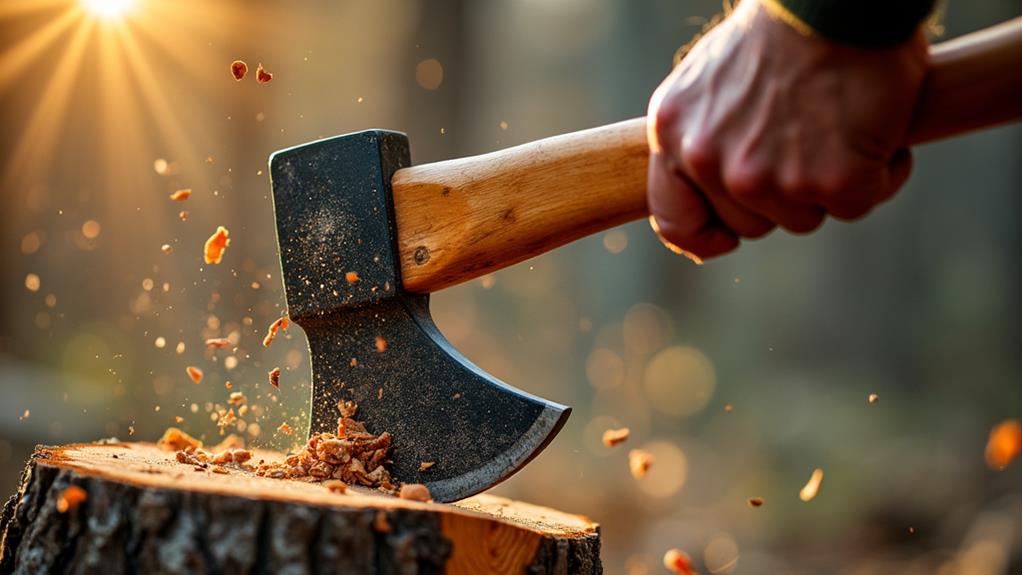
The Importance of Balance in Axe Design
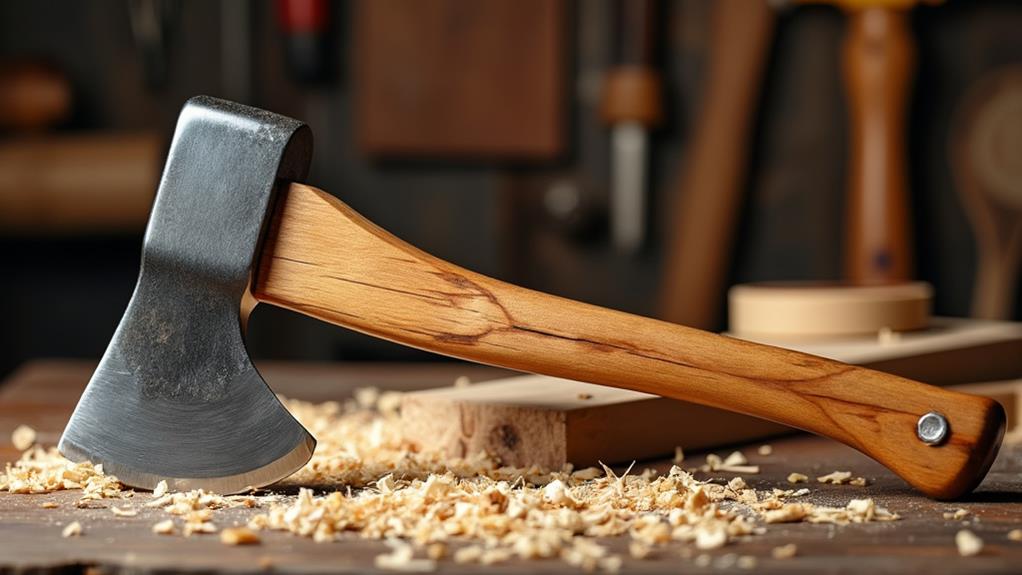
Balance in axe design is crucial for both safety and efficiency. A well-balanced axe facilitates smoother swings, enhances control, and minimizes user fatigue. The distribution of weight between the head and handle significantly impacts performance. The principles of center of gravity and proper alignment are key, influencing tasks from chopping wood to competitive axe throwing.
Understanding these factors can transform your entire experience with the tool. Therefore, balance elevates an axe from a mere tool to a precision instrument.
Understanding Axe Balance
Understanding axe balance is fundamental for mastering axe throwing or chopping. Proper balance requires evaluating the mass distribution between the axe's poll (the back of the head) and the bit (the cutting edge). A well-balanced axe is crucial for accurate and controlled throws.
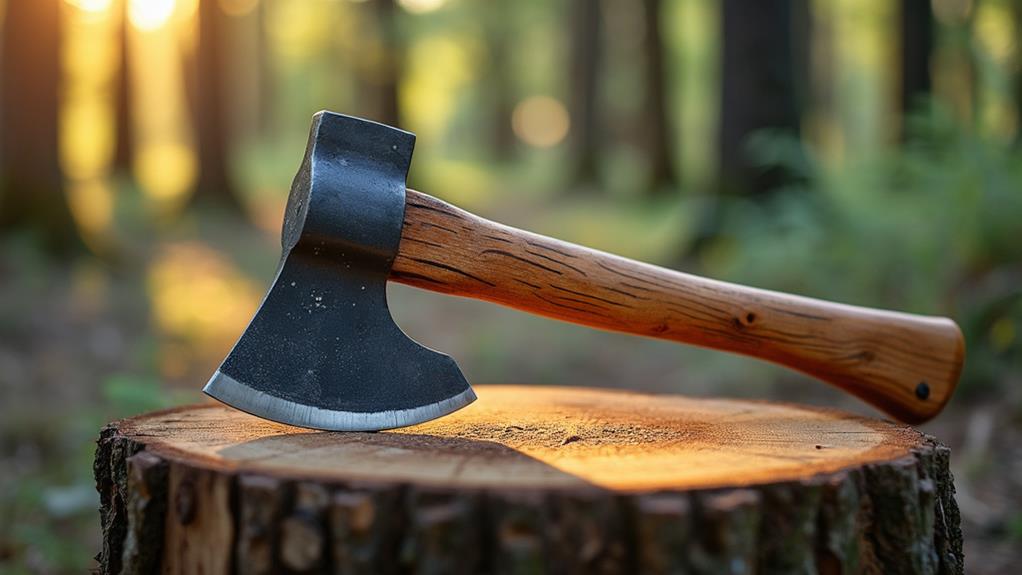
To assess an axe's balance, use the handle as your reference point. Place the axe head on the handle or eye and observe if it lies horizontally. A horizontally balanced axe ensures smoother swings, enhancing your cutting efficiency and precision.
An axe that's front-heavy, with a large bit and small poll, may wobble during swings, negatively impacting performance.
Regularly checking your axe's balance is essential. Over time, even a well-balanced axe can develop imbalances, leading to increased fatigue and reduced control. Maintaining proper balance reduces wobble and ensures consistent results.
Weight Distribution Principles
When considering weight distribution principles, focus on the center of gravity, handle length, and the bit-to-poll weight ratio. Positioning the center of gravity near the handle's midpoint ensures better control. The handle length affects leverage and precision, while balancing the bit and poll weight maintains stability and reduces fatigue.
Center of Gravity
The center of gravity in an axe is essential for its balance and effectiveness. Proper distribution of mass between the head (bit) and the handle maximizes the axe's balance, making it easier to control and more effective for throwing or chopping. A well-balanced axe typically has its center of gravity near the intersection of the handle and the head, allowing for smoother swings and improved accuracy.
If the center of gravity is too far forward, making the axe bit-heavy, it will wobble and be harder to control, leading to inefficient use and quicker fatigue. Conversely, a properly balanced axe enhances stability and reduces fatigue during prolonged use.
The weight distribution along the handle also affects torque, where a lower hand position increases the tendency for the axe head to drop, impacting throw consistency. To ensure optimal performance, you can test the center of gravity using methods like the armchair balance test. This helps you find an axe best suited to your throwing style and preferences.
Handle Length Impact
The length of your axe's handle significantly impacts its overall performance, particularly in terms of weight distribution. A shorter handle provides better control and quicker rotation, making it ideal for precision throws. Conversely, longer handles shift the center of gravity away from your hands, generating more torque but potentially reducing control, especially for beginners.
For a well-balanced axe, consider how the handle length aligns with your height and reach. A handle proportional to your body enhances comfort and stability, leading to more accurate throws and fluid movement, which reduces fatigue during extended use.
Adjusting the handle length also affects the perceived weight of the axe. Longer handles often feel heavier and require more strength to manage, particularly with dynamic throwing styles. In contrast, shorter handles make the axe feel lighter and more maneuverable.
Ultimately, selecting the right handle length is crucial for a well-balanced axe. This ensures the axe feels like a natural extension of your body, thereby improving your overall performance.
Bit and Poll Weight
Achieving an ideal balance in an axe relies on the precise weight distribution between the bit and the poll. When designing or selecting an axe, it is crucial to focus on how the weight is allocated between these two components. A well-balanced axe can rest horizontally on its handle, indicating even mass distribution. This balance is vital for controlled swings and reduced user fatigue.
If the axe is bit-heavy, with a larger bit and smaller poll, it may wobble during use, decreasing cutting efficiency and accuracy. Conversely, a balanced axe with appropriate weight distribution provides better control and stability. The center of gravity should align with the pivot shaft to minimize torque and enhance performance.
Understanding these principles will help you choose an axe that meets your specific needs. Here is a comparison to illustrate the differences:
| Axe Type | Weight Distribution | Performance Impact |
|---|---|---|
| Bit-Heavy | More weight on the bit | Wobbling, reduced accuracy |
| Balanced Axe | Even weight distribution | Controlled swings, less fatigue |
| Back-Heavy | More weight on the poll | Less common, can hinder cuts |
Impact on Throw Accuracy

In axe throwing, balance is crucial for accuracy. The balance point, where the mass is evenly distributed between the bit and the poll, directly impacts a thrower's precision. A well-balanced axe stabilizes during flight, reducing wobble and maintaining a true trajectory. This stability allows you to focus on your technique without constantly adjusting for an imbalanced tool.
An axe that's front-heavy can result in inconsistent throws. The heavier bit may cause the axe to drop prematurely or veer off course, making it challenging to achieve a straight path to the target. Conversely, a properly balanced axe ensures smoother swings and more precise aim. Consistent rotation and alignment upon release become much easier, which is essential for hitting the bullseye at varying distances.
User feedback often indicates that axes with symmetrical weight distribution, such as double-bit designs, improve throw accuracy. These designs provide a more stable and predictable throwing experience, enabling you to perfect your aim and consistently hit your target.
Handle and Head Design
When evaluating handle and head design, the shape of the handle significantly influences balance and control, with shorter handles allowing for quicker rotation. The distribution of weight between the bit and the poll of the head is crucial for stability, facilitating more accurate swings. Properly balancing these elements ensures that your axe performs efficiently while minimizing fatigue.
Handle Shape Impact
The shape of an axe handle is crucial for overall balance, directly influencing both its effectiveness and user comfort. A well-designed handle distributes weight evenly between the head and the haft, enhancing control during swings.
Straight handles typically offer better balance than curved ones, providing a more stable and predictable throwing trajectory for efficient use. Offset handles can significantly improve user experience by mimicking the dynamics of double-bit axes in single-bit designs. This optimizes weight distribution, reducing user fatigue and allowing longer periods of use without discomfort.
Handle length also plays a vital role: shorter handles offer quicker rotation and responsiveness for tasks requiring precision, while longer handles increase power but may affect balance. Therefore, handle length should be chosen based on specific needs.
Additionally, the connection point between the handle and the head must be perfectly aligned to maintain balance. Misalignment can cause wobbling, making the axe harder to control and less effective. Attention to these details ensures that your axe performs optimally.
Head Weight Distribution
Understanding head weight distribution is crucial for crafting a well-balanced axe. The balance between the axe head and the handle directly impacts accuracy and reduces wobble during throws. A heavier axe head increases momentum, enhancing penetration and stability upon impact, resulting in more powerful and consistent strikes. Conversely, a lighter handle allows for quicker rotations and easier control, improving aim precision.
The design of the axe head also plays a significant role. Its shape and mass distribution affect the axe's behavior during flight. A well-designed axe head minimizes drag, optimizing the trajectory for a smoother, more predictable throw.
For double-bit axes, symmetrical weight distribution generally offers better balance compared to single-bit axes, which can become front-heavy due to the larger bit size. Handle length and material further influence head weight distribution. Shorter handles facilitate faster throws and quicker response times, while longer handles offer greater control and overall balance.
Balance and Control
Achieving balance and control in axe design depends on the intricate relationship between the handle and the head. When holding the axe, balance is crucial for ensuring controlled and accurate swings. The mass distribution between the head and the handle primarily determines this balance. Ideally, the center of gravity should be near the head to improve stability and reduce wobble during throws, ensuring consistent flight and better performance.
Shorter handles are often preferred for quicker rotation and enhanced control, especially if precision is a priority in your throwing technique. The handle length, combined with the weight and design of the axe head, significantly influences achieving a smooth swing. A well-weighted head minimizes the effort required, allowing for efficient energy transfer during throws.
Balanced axes not only enhance performance but also reduce fatigue. The right balance between the handle and head means you're less likely to tire quickly, maintaining control throughout your session. Whether for sport or work, a well-balanced axe ensures you can handle it efficiently and effectively, maximizing both control and accuracy.
Testing Balance Effectiveness
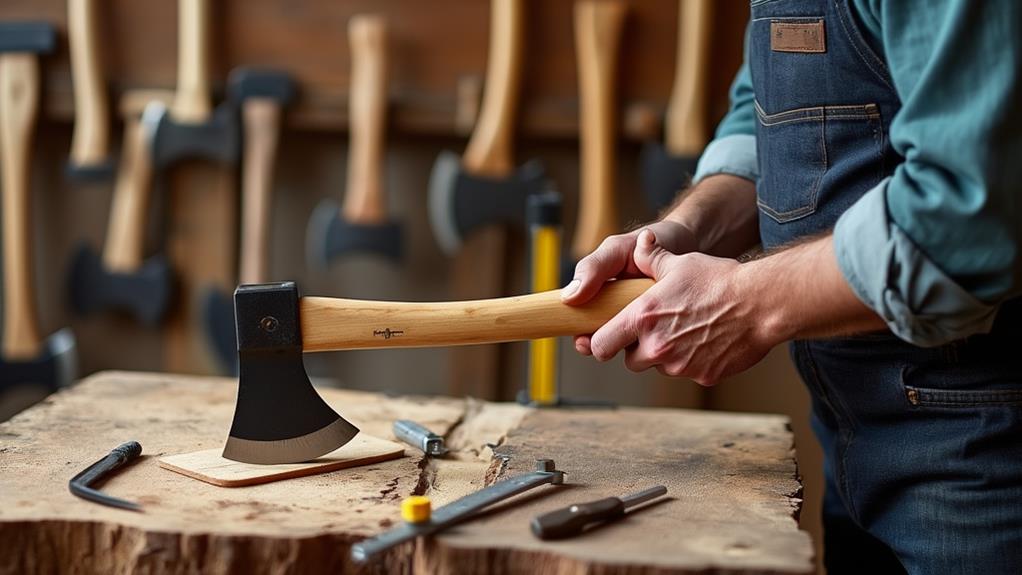
Testing the balance effectiveness of an axe often begins with straightforward yet informative methods, such as laying the axe across the back of a wooden chair. This technique allows you to observe if the axe tilts towards the head or remains horizontal, indicating whether it's balanced or head-heavy. A well-balanced axe is crucial, especially for tasks like axe throwing, where precision and control are paramount.
Another effective method is the one-finger balance test. By placing a finger under the axe's handle and finding its balance point, you can determine if the mass distribution between the head and handle is optimal. A properly balanced axe should stay horizontal during this test. For more detailed insights, you can attach weighted lines to the handle to simulate different usage scenarios and further examine the balance.
Using real-world testing with specific models, such as the Council 3.5lb Classic Jersey, demonstrates how theoretical principles apply in practice. These tests highlight performance variations and provide a deeper understanding of balance dynamics. Mastering these methods ensures improved control and reduced fatigue, enhancing overall performance whether you're axe throwing or cutting.
User Experience Insights
User feedback consistently highlights the critical role of balance in axe throwing, impacting both performance and comfort. Balanced axes significantly enhance accuracy by reducing wobble, leading to more consistent hits. This results in a satisfying thud into the target and fewer misses.
A well-balanced axe also reduces fatigue, particularly during extended sessions. If your arm tires quickly, an improperly balanced axe is often the culprit. Balanced designs facilitate easier handling, allowing for prolonged throwing without excessive weariness.
While personal preferences vary, many users favor balanced single-bit axes for their versatility and ease of use. These axes are often preferred over double-bit axes due to their maneuverability and adaptability to different throwing styles. Historical user experiences underscore that even slight imbalances can affect performance, making it crucial to choose an axe that feels balanced to you.
Historical Design Evolution
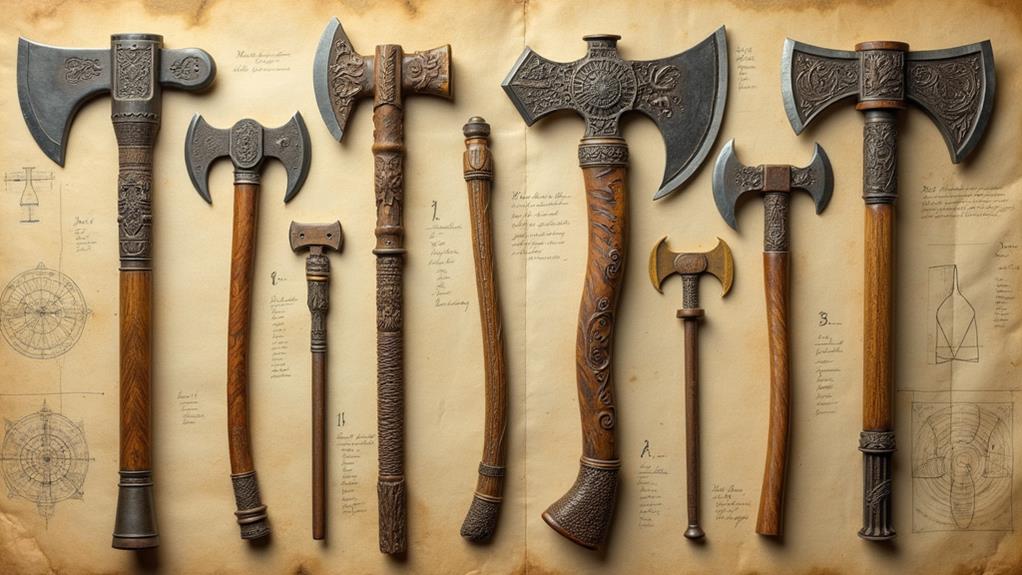
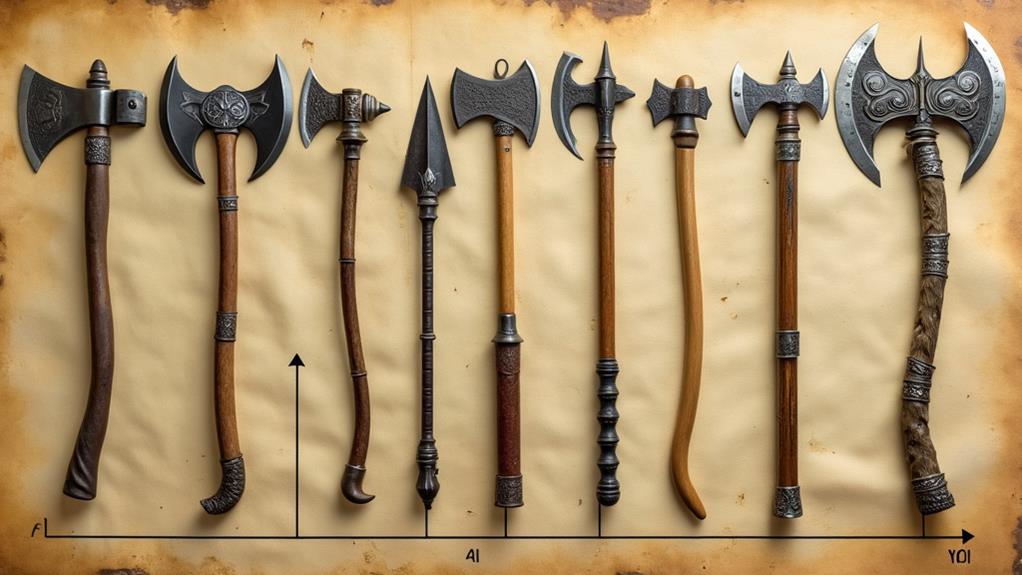
Throughout history, axe designs have evolved considerably to meet user demands. Early axes, such as the traditional Hudson Bay axes, often had a front-heavy design to enhance cutting efficiency. However, these designs could lead to an unbalanced axe, causing user fatigue and reduced accuracy over time.
The evolution continued with the advent of double-bit axes, featuring symmetrical axe heads that offered better balance compared to single-bit versions. This innovation allowed for more controlled swings and reduced user strain.
Offset handles are another key development, adapted from historical preferences. These handles reduce user fatigue and improve swing dynamics by distributing the weight more efficiently. They refine older designs for contemporary uses.
Historical axes, particularly those with large bits and small polls, were tailored for specific tasks like chopping or cutting. Modern axes draw heavily from these historical lessons, incorporating balanced designs that enhance performance and user comfort.
Conclusion
In conclusion, understanding axe balance is crucial for both efficiency and comfort. By considering factors such as weight distribution, handle length, and head weight, you can achieve better throw accuracy and chopping performance. A well-balanced axe reduces fatigue and enhances control, making tasks easier and more precise. Keep these principles in mind when selecting an axe to ensure you get the optimal tool for your needs, reflecting historical advancements in design and user insights.