The Future of Tiny Home Living: Trends to Watch
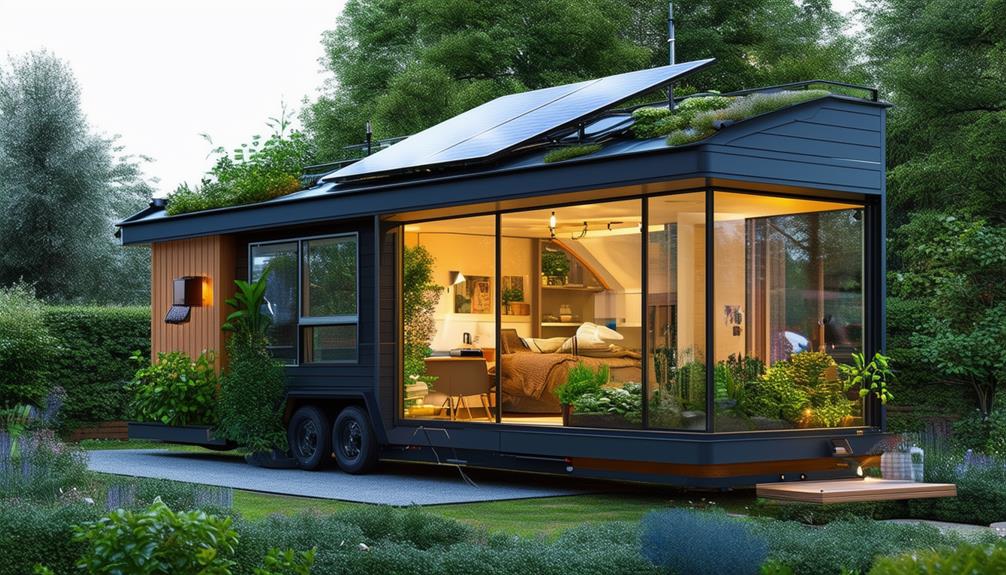
Tiny homes have gained significant popularity, but have you considered how their future is shaping up? The integration of smart technology, sustainable materials, and innovative space-saving designs are just the beginning. As urban areas become more crowded, vertical tiny homes are emerging as a viable solution. Additionally, a shift towards community-oriented living and supportive regulatory changes are making tiny home communities more feasible. These trends are not just about downsizing your space; they're about enhancing your lifestyle and fostering community connections. Curious about what these developments mean for you?
Technological Integration
Embracing smart technology in your small home can significantly enhance both convenience and efficiency. By integrating features like intelligent thermostats, smart lighting, and voice-controlled assistants into your compact living space, you simplify daily routines while optimizing space.
In small homes, every inch counts, and smart technology is crucial for maximizing functionality. Transformative furniture, such as beds that convert into sofas or kitchen counters that double as work desks, merges technological advancements with space-saving solutions. These innovative approaches cater to your daily needs, ensuring you make the most of your limited space.
Smart technology integration in small homes transcends mere gadgets; it creates a tech-enhanced living environment tailored to your lifestyle. Incorporating these advancements elevates comfort and efficiency. The rise of smart small homes reflects a growing trend toward tech-enhanced living in compact spaces, offering a modern, functional, and enjoyable living experience.
Sustainable Design
Sustainable design in tiny homes emphasizes the use of eco-friendly materials such as bamboo, recycled steel, and reclaimed wood to reduce environmental impact. By selecting these materials, you support a greener planet and make environmentally responsible choices. Tiny homes lead the way in sustainable living through green building practices that prioritize eco-friendly construction methods.
Incorporating energy-efficient appliances and solar panels in your tiny home not only lowers utility bills but also significantly reduces your carbon footprint. Energy-efficient living has become a major trend in the tiny home community, showcasing a collective shift towards more sustainable lifestyles.
Here's a quick comparison of some sustainable materials and practices:
| Eco-Friendly Material | Benefit |
|---|---|
| Bamboo | Rapidly renewable resource |
| Recycled Steel | Reduces waste and energy consumption |
| Reclaimed Wood | Minimizes forest depletion |
| Solar Panels | Provides sustainable energy |
Vertical Tiny Homes
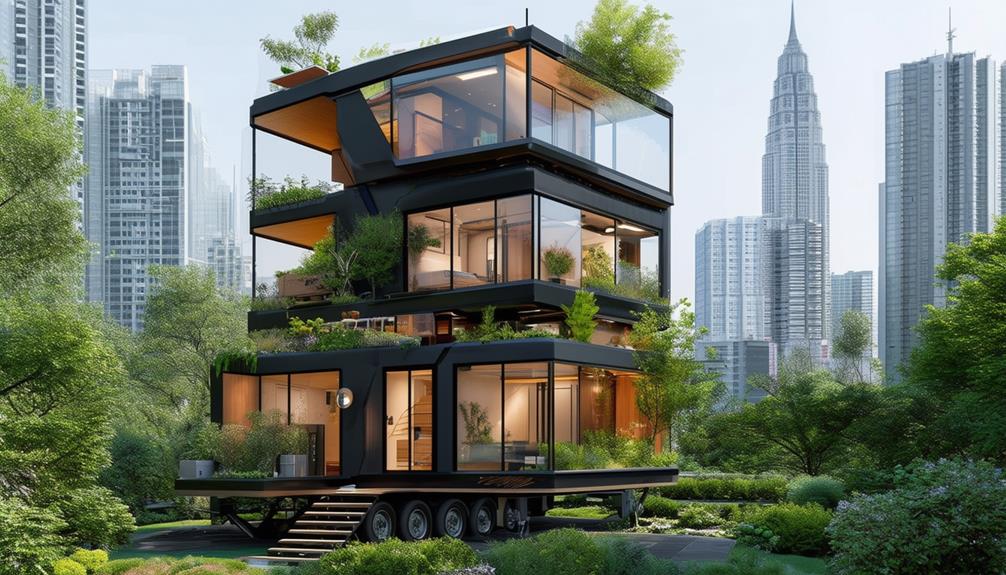
Vertical tiny homes are revolutionizing space utilization in compact living environments. By adopting multi-story designs, these homes maximize every square foot, offering highly efficient use of space. Common features include lofted sleeping areas that free up floor space for other activities, and folding desks that create workspaces without occupying permanent room. Wall-mounted storage solutions keep belongings organized and accessible, avoiding clutter.
Key features of vertical tiny homes include:
- Multi-story designs: These designs leverage vertical space, creating distinct living, sleeping, and working areas within a small footprint.
- Innovative space-saving furniture: Multi-functional pieces like fold-out desks and hidden storage options enhance practicality and comfort.
- Architectural creativity: Unique layouts and clever design solutions ensure tiny homes are not just livable but also enjoyable.
Living in vertical tiny homes challenges traditional housing norms and supports a sustainable lifestyle. The architectural innovation in these designs demonstrates that small spaces can be both aesthetically pleasing and functional. By emphasizing efficient space utilization, tiny homes offer a high-quality living experience while reducing environmental impact.
Community-Oriented Living
Tiny home villages, with their shared amenities and communal spaces, are redefining community living. These villages emphasize efficient land use and shared resources, fostering a sustainable lifestyle. Features like communal gardens and co-working areas reduce individual resource consumption while increasing social connections and mental well-being.
In these settings, residents enjoy a lifestyle rooted in shared values and cooperation. The shift towards community-oriented living reflects a growing desire for stronger social bonds and a more meaningful way of life. By living in close proximity and sharing amenities, you can significantly reduce your environmental impact. This arrangement ensures that resources are used efficiently, benefiting both the planet and your finances.
Many tiny home villages are evolving into self-sustaining ecosystems. These communities often incorporate renewable energy sources, waste reduction practices, and local food production, creating a more resilient and sustainable lifestyle. The collective effort in maintaining these ecosystems supports the environment and enriches your sense of purpose and belonging. Embracing this trend can lead to a healthier, happier, and more connected life.
Regulatory Changes

Regulatory reforms are creating a more accommodating landscape for tiny home living, making it a more viable permanent lifestyle option. Anticipated changes in zoning laws and building codes are being tailored to address the unique needs of tiny home dwellers, resulting in fewer legal obstacles and a more supportive environment.
Navigating the complex landscape of zoning and building codes can be challenging, but new opportunities are emerging as restrictions ease. Here are three key aspects to watch:
- Flexible Zoning Laws: Increasingly, municipalities are adopting flexible zoning laws that recognize tiny homes as permanent residences, paving the way for tiny home communities to thrive.
- Tailored Building Codes: Updated building codes specifically designed for tiny homes are being developed, simplifying the construction process and removing unnecessary legal hurdles.
- Supportive Tiny Home Communities: With relaxed zoning restrictions, the establishment of tiny home communities is becoming easier, fostering a supportive environment for residents.
These regulatory reforms demonstrate a growing recognition of the benefits of tiny living, offering a promising future for tiny home enthusiasts in the current housing market.