The Best Tiny Home Maintenance Tips
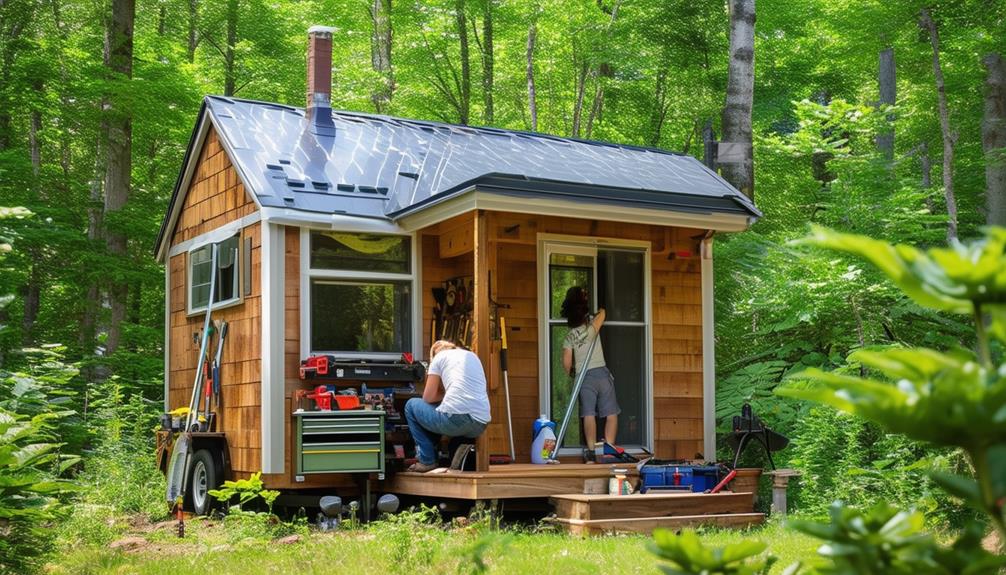
Maintaining your tiny home in optimal condition requires regular upkeep. Begin with monthly exterior inspections to detect leaks and damage early, particularly on the roof, windows, and doors. Regularly check your plumbing and electrical systems to address problems promptly, preventing larger issues. HVAC maintenance is also vital—replace air filters monthly and arrange yearly inspections for a comfortable living area. However, there's more to preserving a tiny home than these basics. Interested in often overlooked tips that can make a significant difference?
Regular Inspections
Regular inspections of your small home are crucial for identifying potential issues before they escalate. Monthly exterior checks are essential. Inspect the roof, windows, and doors for leaks, damaged seals, or other maintenance concerns. Addressing these issues promptly can prevent costly repairs.
Inside, focus on plumbing and electrical systems to ensure they function smoothly. Regularly check appliances for signs of wear and tear. This proactive approach helps maintain the overall performance and efficiency of your home, ensuring everything operates effectively.
While HVAC systems will be discussed in detail later, regular inspections of these systems during your routine checks can prevent future problems. Regular inspections maintain the structural integrity of your home, extend its lifespan, and preserve its value. By dedicating time each month to these tasks, you ensure your home remains a comfortable, safe, and efficient space. Consistency in your inspection routine is key to catching and addressing issues early on.
HVAC Maintenance
To keep your HVAC system running efficiently, adhere to a regular maintenance schedule. In tiny homes, your HVAC system works hard to maintain a comfortable environment in a smaller space, making regular upkeep essential. Start by changing your air filter every 30 days. A clean air filter ensures optimal airflow and prevents dust and debris buildup, which can degrade air quality and strain your system.
Schedule an annual professional inspection. A technician can identify potential issues early, saving you from costly repairs. They'll check all components, including the thermostat and ductwork, to ensure everything is functioning effectively. This not only keeps your HVAC system in top shape but also prolongs its lifespan.
Additionally, periodically check for any unusual sounds or odors coming from your HVAC unit. These can be early indicators of underlying problems. Regular maintenance is crucial in tiny homes because any inefficiency can quickly impact your comfort and energy bills. By staying proactive, you can ensure your tiny home remains a cozy haven, regardless of the season.
Roof and Siding Care
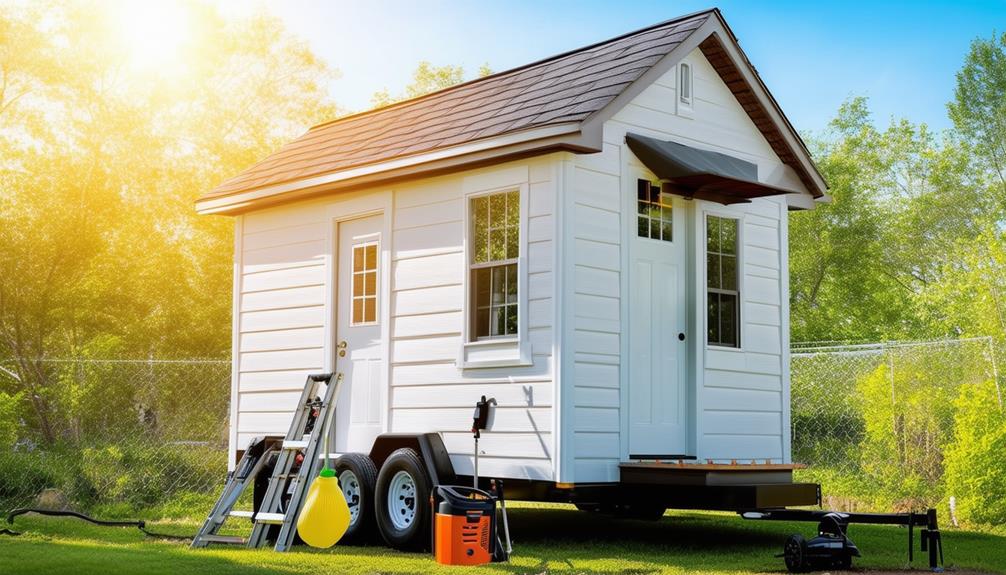
Maintaining your roof and siding is essential for protecting your tiny home from the elements. Here's how to ensure they remain in top condition:
Roof Maintenance
- Regular Inspections: Perform inspections every 3-6 months to catch any early signs of damage. Look for wear in shingles, metal panels, and caulking.
- Debris Removal: Clean debris off the roof monthly to prevent water pooling, which is crucial for maintaining structural integrity and avoiding leaks.
- Gutter and Caulking Checks: Inspect gutters and caulking every 6 months to prevent water damage.
- Shingles and Metal Panel Checks: Examine these components every 6 months to prevent wear and tear.
Siding Maintenance
- Annual Inspections: Check the exterior for cracks, warping, or signs of mold. Promptly addressing these issues can preserve both the functionality and aesthetic appeal of your tiny home.
Quick Reference Table for Roof and Siding Care
| Task | Frequency | Importance |
|---|---|---|
| Roof inspection | Every 3-6 months | Maintains structural integrity |
| Clean debris off roof | Monthly | Prevents water pooling and leaks |
| Inspect gutters & caulking | Every 6 months | Avoids water damage |
| Check shingles & panels | Every 6 months | Prevents wear and tear |
| Siding inspection | Annually | Preserves exterior protection |
Controlling Humidity
After ensuring your tiny home's exterior is well-maintained, it's crucial to manage indoor humidity levels to prevent mold and mildew. High humidity can cause condensation, damaging walls, furniture, and personal items. To start, use a dehumidifier, especially in humid climates, to control moisture levels and improve air quality.
Additionally, regularly ventilate your tiny home. Install vent fans in the kitchen and bathroom to expel humid air and reduce overall indoor humidity. Make it a habit to turn these fans on whenever cooking or showering.
Daily dusting and cleaning are also effective strategies. Dust mites and allergens thrive in high-humidity environments, so keeping surfaces clean can help mitigate this issue. This not only improves air quality but also ensures your home remains a healthy living space.
Decluttering Tips
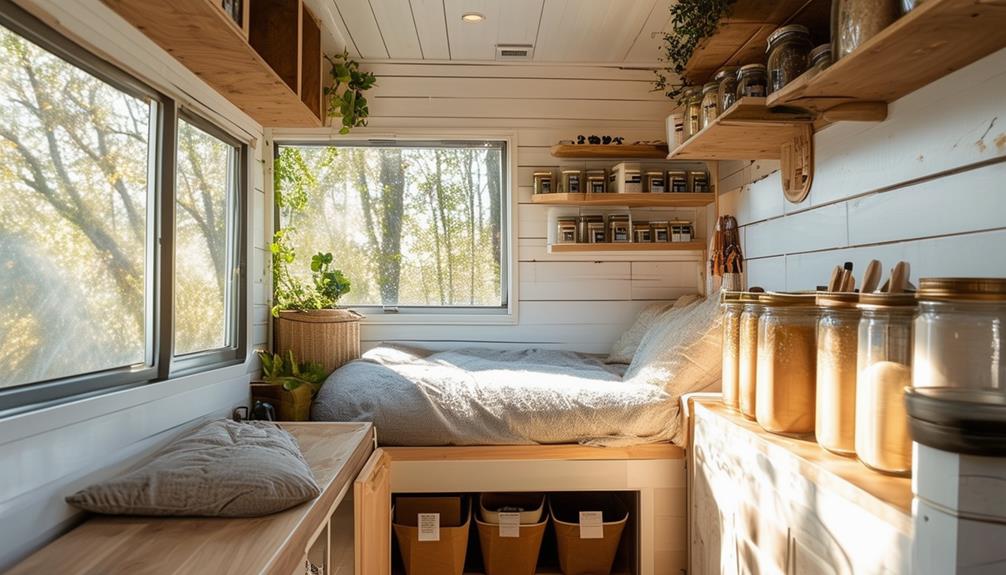
To keep your tiny home organized and functional, prioritize essential belongings and adopt smart storage solutions. Regularly declutter by removing items you no longer need to maintain a clean and efficient living space.
Prioritize Essential Belongings
Decluttering your small home starts with prioritizing the belongings you use most often. Given that the average person owns around 300,000 items but only uses 20% regularly, it's pivotal to focus on what truly matters. Start by identifying your essential belongings. If you haven't used an item in a year, it's time to consider letting it go. This approach not only reduces clutter but also enhances your organization.
Downsizing your possessions will save you time and money while freeing up valuable space. Designate specific areas for different categories of items to maintain order and prevent clutter buildup. Regularly assess your belongings to ensure they align with your current needs and lifestyle in your small home.
Here's a quick guide to help you sort out your essential belongings:
| Category | Keep If Used Often | Donate/Discard If Unused |
|---|---|---|
| Clothing | Worn in last year | Not worn in last year |
| Kitchen Items | Used monthly | Never or rarely used |
| Books | Read frequently | Gathering dust |
| Electronics | Used daily/weekly | Outdated or unused |
Implement Storage Solutions
Maximizing space efficiently in a tiny home starts with implementing smart storage solutions. Utilize under-bed storage for items you don't need daily access to. Wall-mounted shelves help keep surfaces clear and clutter-free. Opt for multi-functional furniture, like sofas with built-in storage or coffee tables that double as desks, to maximize every inch.
Custom storage solutions, such as built-in cabinets and floating shelves, offer additional space without occupying too much room. Hidden compartments are ideal for organizing and concealing belongings. Use storage baskets, bins, and organizers to keep everything in its place, making it easier to find items when needed.
Don't overlook vertical storage options. Hanging hooks, pegboards, and over-the-door organizers can free up floor space and reduce clutter. By utilizing vertical space, you can make the most of your tiny home's limited square footage. These storage solutions will help maintain a tidy environment and make your tiny home feel more spacious and comfortable.
Regularly Purge Unnecessary Items
To maintain a clean and organized small home, make it a habit to regularly purge unnecessary items. In a compact living space, keeping clutter at bay is crucial for optimizing storage and maintaining a sense of order. By routinely decluttering, you ensure that only essential items remain, preventing clutter buildup.
Decluttering not only frees up physical space but also reduces visual distractions. This creates a calmer, simpler living environment, which is particularly important in limited spaces where every item counts. Set aside time each month to review your belongings, questioning the necessity of each item.
Regularly downsizing your belongings helps avoid feelings of overwhelm, common in small living spaces. Focus on retaining multipurpose items that serve more than one function, thereby maximizing utility while minimizing clutter. The goal is to create an organized, functional space that enhances your daily life.
Appliance Upkeep
To keep your tiny home's appliances running efficiently, establish a regular cleaning routine and adhere to the manufacturer's maintenance guidelines. This practice extends the longevity of your appliances and helps reduce energy costs. Regularly inspect for leaks or unusual noises and address issues promptly to prevent expensive repairs.
Regular Cleaning Routine
Keeping your tiny home's appliances clean is essential for maintaining their performance and longevity. Establishing a regular cleaning routine is crucial for tiny house maintenance. Regularly clean appliances like stoves, refrigerators, and microwaves to prevent dirt buildup and ensure efficient operation. This consistent upkeep not only keeps them looking good but also prevents potential safety hazards.
Schedule routine maintenance checks for all your appliances. Frequently inspect seals, filters, and vents to prolong their lifespan and efficiency. For example, cleaning the condenser coils on your refrigerator and air conditioner enhances their energy efficiency and prevents overheating. If you're uncomfortable performing these tasks, consider hiring an HVAC technician for a thorough inspection and cleaning.
Use manufacturer-recommended cleaning products and techniques to avoid damaging your appliances. Implement a weekly cleaning schedule to address food odors, grease buildup, and other issues before they become significant problems. This proactive approach will save you time and money in the long run. Remember, a well-maintained appliance is more reliable and efficient, making your tiny house maintenance routine manageable and effective.
Efficient Energy Use
To maximize energy efficiency in your tiny home, start by properly maintaining your appliances. Regular upkeep ensures effective energy use and extends the lifespan of your devices. For instance, replace the air filters in your HVAC unit every 30 days. Clean filters help the unit operate more efficiently, reducing energy consumption and maintaining comfort.
Routine maintenance for other key appliances, such as refrigerators, water heaters, and stoves, is also crucial. Clean the coils on your refrigerator and check for leaks or sediment build-up in your water heater to prevent energy waste and keep your appliances performing optimally.
Upgrading to energy-efficient appliances can further reduce electricity consumption and lower utility bills. Choose models with high energy efficiency ratings, as they use less power and significantly impact overall energy use.
Additionally, implementing smart home technology can help monitor and control energy usage efficiently. For example, smart thermostats can adjust temperatures based on your habits, ensuring efficient energy use without sacrificing comfort. By following these tips, you can maintain energy efficiency and keep your tiny home running smoothly.