The Best Tiny Home Communities for Sustainable Living
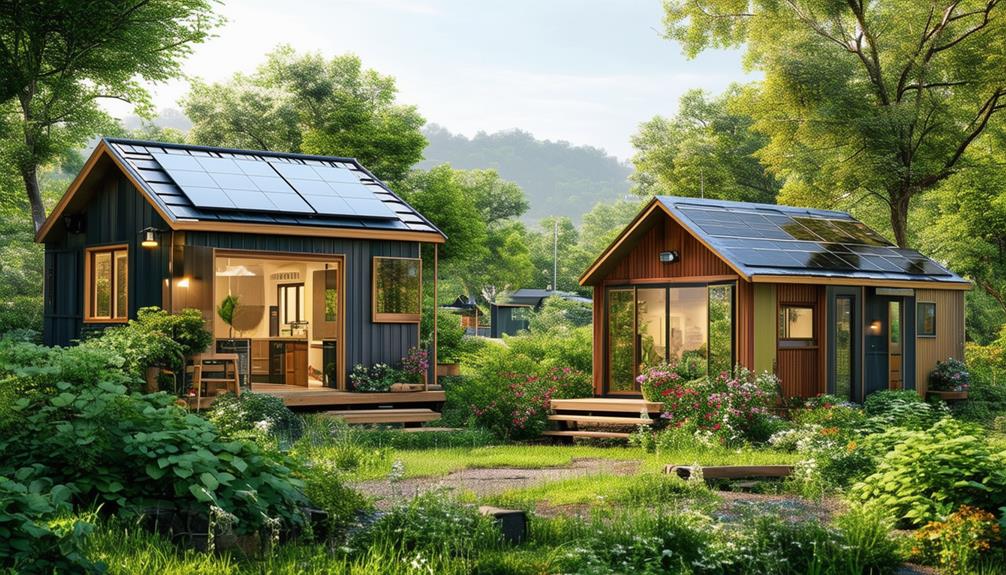
If the idea of sustainable living in a tiny home community appeals to you, communities like Majestic Hills and Lake Dallas Tiny Village set the benchmark. These communities offer more than just affordable housing—they actively promote eco-friendly practices such as rainwater harvesting and energy-efficient designs. By reducing your environmental footprint, you can also enjoy the benefits of a close-knit community. What truly distinguishes these communities is the unique combination of financial benefits and sustainable living choices, resulting in an exceptional living experience. So, what makes these communities so effective in promoting sustainable living?
Top Tiny Home Communities
Discover some of the top tiny home communities reshaping sustainable living and providing unique lifestyle experiences. Majestic Hills in Willis, Texas, stands out as a leading Tiny Home Community that emphasizes Sustainable Living and a Minimalist Lifestyle. This community fosters a collective lifestyle that enriches the overall living experience for its residents.
At Majestic Hills, you'll find shared amenities designed to encourage social connections and a strong sense of community among like-minded individuals. The focus here is not just on living smaller but living better—embracing sustainability and minimalism without sacrificing comfort.
The homes in this community are built using eco-friendly materials, ensuring that your living space has a minimal environmental impact. In addition, they come equipped with energy-efficient appliances, making it easier for you to maintain a sustainable lifestyle. The result is an eco-friendly and cost-effective living solution that aligns with modern values.
Affordable housing is another key feature at Majestic Hills. The tiny home pricing structure is designed to make homeownership accessible while still prioritizing quality. This allows you to invest in experiences and personal growth rather than being burdened by traditional housing costs. Majestic Hills truly offers a harmonious balance of sustainability, community, and affordability.
Lake Dallas Tiny Village
Located within city limits, Lake Dallas Tiny Home Village offers a unique lakeside living experience with close proximity to the vibrant city life of Dallas. This charming village stands out among tiny house communities for its blend of minimalist living and a sustainable lifestyle. You'll find a serene environment that lets you escape the hustle and bustle of city life while still enjoying the conveniences that come with living near Dallas.
Lake Dallas Tiny Home Village boasts amenities that cater to a sustainable lifestyle. You can relax in the courtyard, tend to plants in the community garden, or take advantage of the lawn care services provided. The village's location just two blocks away from the Lake Dallas Downtown District means you're always close to parks, shops, and the local library, offering a perfect balance between a small-town experience and vibrant city life.
Community First! Village
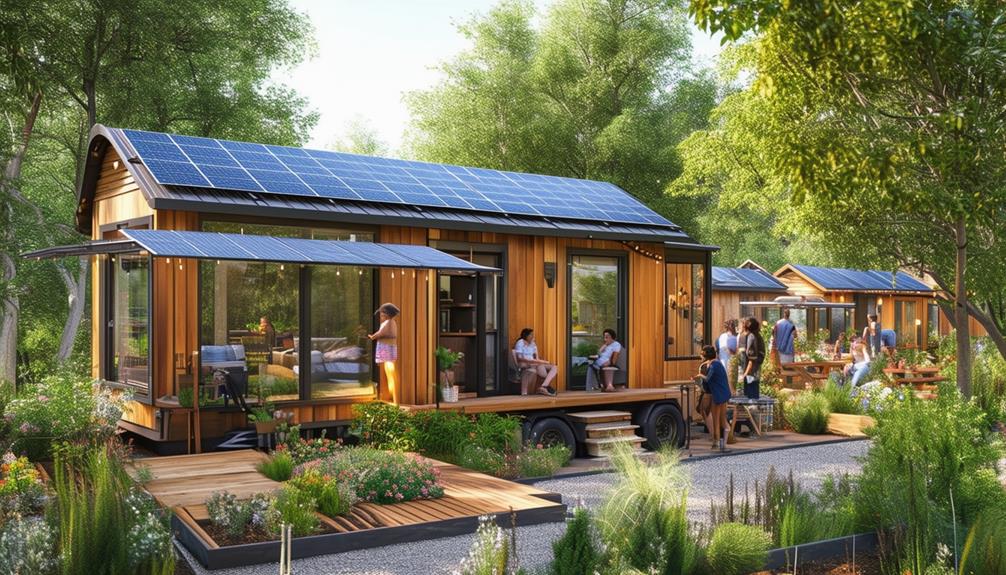
Located in Austin, Texas, Community First! Village is a 51-acre master-planned community dedicated to providing affordable, permanent housing for the chronically homeless. More than just shelter, it creates a nurturing environment with on-site medical facilities, a community market, gardens, art studios, and a movie theater.
Community First! Village emphasizes sustainable living through the use of recycled materials in its tiny homes, rainwater collection systems, and organic gardening practices. These initiatives not only support environmental stewardship but also foster a sense of pride and responsibility among residents.
Vocational training and job opportunities are integral to the community, equipping residents with essential skills to break the cycle of homelessness. Shared meals and community events further strengthen the sense of belonging, ensuring everyone feels valued and respected.
Key features include:
| Feature | Description | Benefit |
|---|---|---|
| Affordable Housing | Permanent homes for the chronically homeless | Stability and security |
| Sustainable Practices | Recycled materials, rainwater systems | Environmental stewardship |
| Vocational Training | Job skills and opportunities | Pathway to independence |
| Supportive Environment | On-site medical, market, and more | Essential care |
| Community Engagement | Shared meals, events | Strong sense of belonging |
Community First! Village serves as a model for sustainable living and supportive housing, demonstrating how communities can effectively address homelessness with dignity and care.
Vintage Oaks Farm
Nestled in the scenic Texas Hill Country, Vintage Oaks Farm in Wimberley, Texas, offers an eco-friendly sanctuary that promotes sustainable living and a self-sustaining lifestyle. This tiny home community is an ideal retreat for those committed to eco-friendly practices and harmonious living with nature.
Vintage Oaks Farm emphasizes reduced environmental impact and sustainability, providing a serene rural setting surrounded by natural beauty. Here, residents can fully immerse themselves in a self-sustaining lifestyle that aligns with and preserves the environment.
Key features of Vintage Oaks Farm include:
- Eco-friendly practices: The community utilizes sustainable development technologies and methods to minimize its ecological footprint.
- Natural beauty: Nestled in the picturesque Texas Hill Country, residents are captivated by lush landscapes and pristine surroundings.
- Self-sustaining lifestyle: Opportunities abound for residents to engage in gardening, renewable energy use, and other sustainable activities.
Vintage Oaks Farm exemplifies how a tiny home community can foster a harmonious and environmentally conscious way of life.
Spur Tiny Home Town
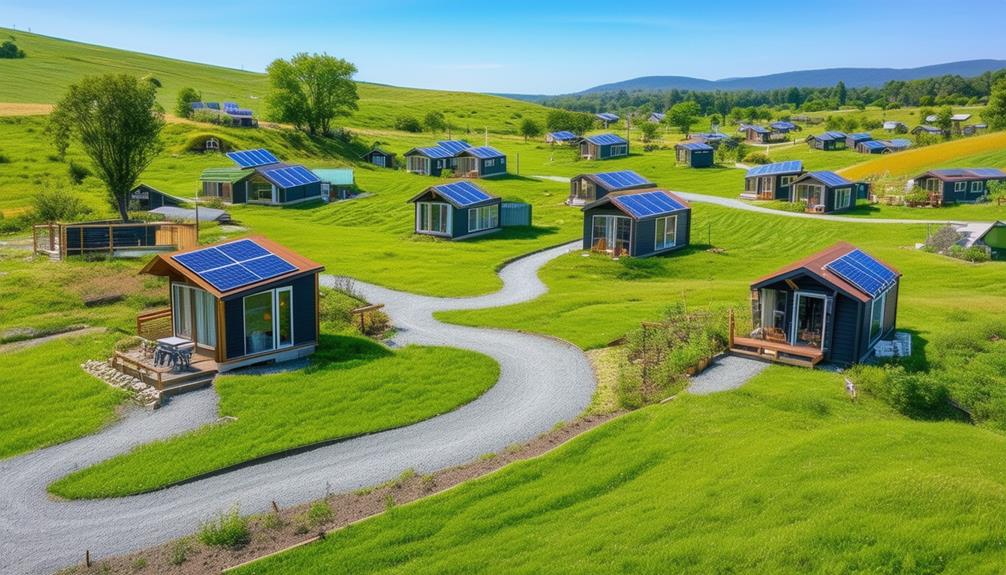
Spur, Texas, proudly stands as the first tiny home-friendly town in the United States, embodying a minimalist lifestyle with a homesteading feel. Nestled in Northwestern Texas, this town combines small-town charm with the convenience of urban amenities, making it an ideal location for sustainable living. Spur's ethos encourages residents to embrace a simpler way of life while enjoying modern comforts.
Residents in Spur benefit from a close-knit community that promotes sustainable living practices. From eco-friendly building materials to community gardens, there are numerous ways to live sustainably here. The town's commitment to sustainability extends to its local amenities, which are designed specifically for tiny home dwellers.
| Feature | Description |
|---|---|
| Location | Northwestern Texas |
| Community Ethos | Minimalist lifestyle, homesteading |
| Urban Amenities | Tailored for tiny home lifestyle |
| Sustainable Practices | Eco-friendly materials, community gardens |
| Community Feel | Tight-knit, small-town charm |
In Spur, you'll experience the perfect blend of small-town charm and modern urban amenities. The strong sense of community makes it easier to adopt a simpler lifestyle. This tiny home-friendly town offers a unique and fulfilling lifestyle focused on sustainability and community.
Benefits of Tiny Living
Tiny living offers numerous advantages, from lower utility bills to a reduced environmental footprint. Adopting this lifestyle means you're not just living in a smaller space; you're making a conscious choice to prioritize sustainability. Tiny homes consume significantly less energy, leading to lower utility bills and reduced maintenance costs. This compact living minimizes your environmental impact and encourages eco-friendly practices such as rainwater harvesting and the use of solar power.
Opting for a minimalist lifestyle also involves reducing material possessions, which results in less waste and a simpler, more fulfilling life. Tiny home communities often foster strong social connections among residents. The close quarters and shared spaces create opportunities for meaningful interactions and collaboration.
Key benefits of tiny living include:
- Lower Utility Bills: Smaller spaces require less energy for heating, cooling, and lighting.
- Reduced Maintenance Costs: Less square footage means fewer repairs and upkeep.
- Enhanced Sustainability: Eco-friendly practices are easier to implement in a tiny home.
Affordable Housing in Texas
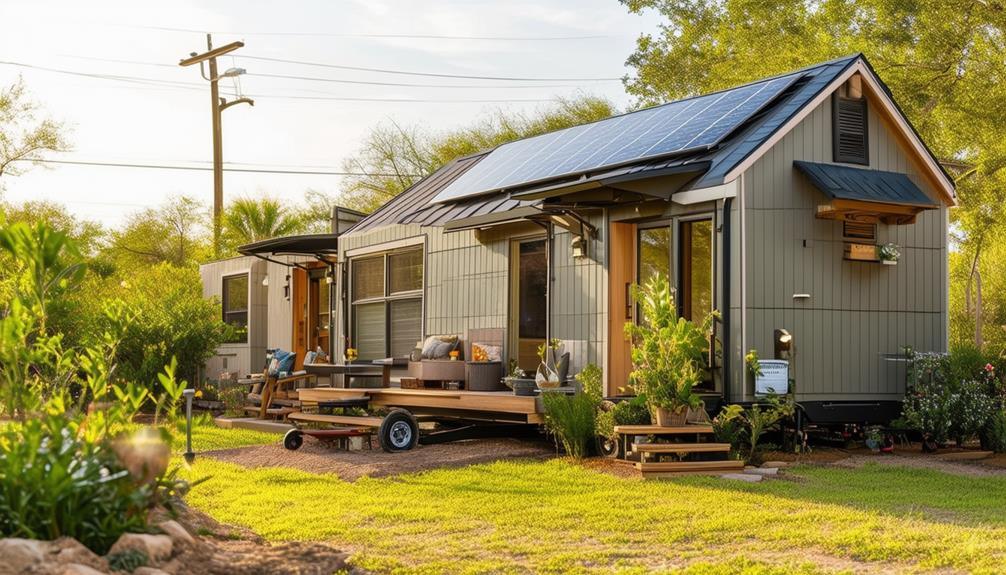
Living in Texas offers cost-effective housing options that make it easier to stretch your budget. One of the key attractions of the Lone Star State is its housing affordability, which provides significant financial benefits due to the lower cost of living. Additionally, Texas' lack of a state income tax further enhances these savings, allowing you to allocate funds to other priorities.
Tiny Home Villages are gaining popularity across Texas, as they combine economical housing with sustainable living. These communities are designed to be environmentally friendly, offering smaller, more efficient living spaces that reduce your carbon footprint. The lower cost of living in a Tiny Home Village allows you to enjoy financial benefits while contributing to a more sustainable lifestyle.
Many Tiny Home Villages feature communal spaces that foster a sense of community among residents. Shared gardens, outdoor activities, and common areas make it easy to connect with neighbors. These communal spaces are perfect for socializing, gardening, or participating in group activities, enriching your quality of life without straining your budget. In Texas, affordable housing options like Tiny Home Villages provide an ideal balance of financial savings and sustainable living.
Sustainable Living Practices
Living in a tiny home community focused on sustainability offers numerous benefits, including the use of eco-friendly building materials and energy-efficient home designs. These practices not only minimize your environmental footprint but also support a healthier lifestyle. By adopting a sustainable living approach, you actively contribute to a greener future.
Eco-Friendly Building Materials
Eco-Friendly Building Materials in Tiny Home Communities
Eco-friendly building materials, such as recycled wood and reclaimed metals, are essential for promoting sustainable living in tiny home communities. These materials not only reduce environmental impact but also contribute to a healthier living environment. By choosing green building materials, you support sustainability and eco-friendly initiatives.
To maximize sustainability in your tiny home, consider using:
- Recycled wood and reclaimed metals: These materials repurpose old resources, reducing the demand for new raw materials.
- Bamboo and cork: Both are rapidly renewable resources that offer durability and have a minimal environmental footprint.
- Recycled glass: Ideal for countertops, tiles, and other surfaces, this material provides a unique aesthetic while being eco-friendly.
Tiny home communities often aim for green building certifications like LEED and ENERGY STAR to demonstrate their commitment to environmentally conscious living. By incorporating recycled materials and sustainable practices, these communities not only minimize waste but also create energy-efficient spaces that align with modern sustainability goals.
Choosing eco-friendly building materials for your tiny home is a significant step toward reducing your environmental impact and promoting a sustainable lifestyle.
Energy-Efficient Home Designs
Energy-efficient home designs in compact communities prioritize reducing energy consumption through advanced technologies and sustainable practices. By integrating solar panels, LED lighting, and high-efficiency windows, homeowners can significantly lower their energy costs and environmental footprint. These homes are built with sustainability at the forefront, using eco-friendly materials like reclaimed wood, bamboo flooring, and recycled countertops.
Passive design features are essential for enhancing energy efficiency. Strategic window placement maximizes natural light and ventilation, decreasing the need for artificial lighting and air conditioning. Proper insulation ensures that homes stay warm in winter and cool in summer, all while consuming less energy.
Sustainable living practices extend beyond energy usage. Many compact home communities implement rainwater harvesting systems, eco-friendly toilets, and greywater recycling to conserve water. Energy Star appliances, smart thermostats, and energy-efficient HVAC systems are standard features that contribute to the overall sustainability of these homes.