The Anatomy of an Axe: Understanding Its Parts
When you pick up an axe, you might not immediately consider the intricate design and functionality of its parts. Understanding the anatomy of an axe can significantly improve your usage and maintenance of this essential tool.
Each component, from the sharp cutting edge known as the bit to the sturdy handle that ensures control, plays a crucial role. Have you ever wondered why the poll is so significant or how the eye secures the head to the handle?
Let's explore these details and understand how each part contributes to the axe's overall performance.
Axe Overview
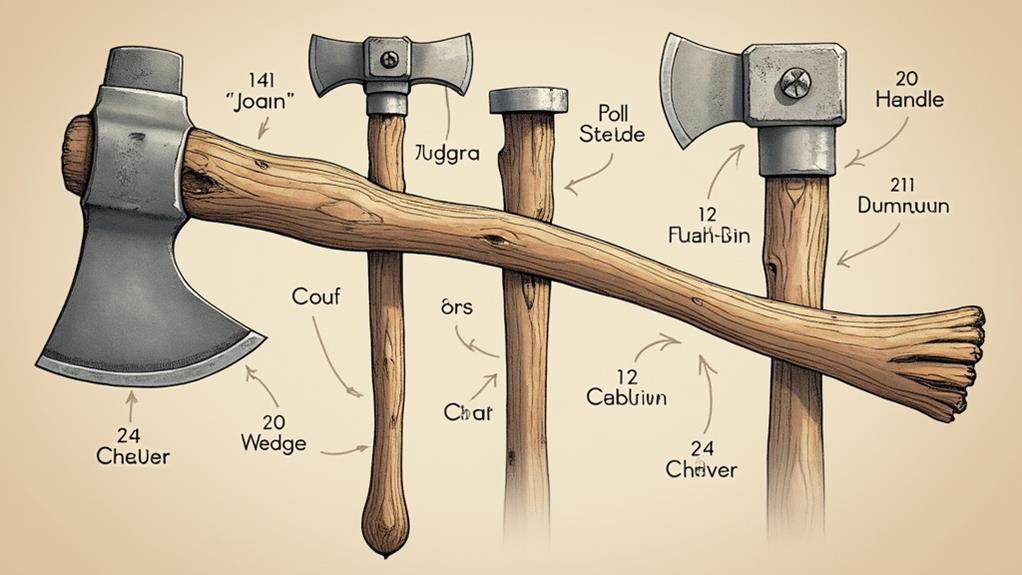
To understand an axe's anatomy, let's start with an overview. An axe consists of two primary components: the axe head and the handle (or haft). The axe head is the core functional part, featuring the cutting edge, or bit, designed for slicing through wood. This part is crucial for tasks like chopping, splitting, and carving. Opposite the cutting edge is the poll, which can be used for hammering or striking, adding versatility to the tool.
The handle connects the axe head to the user and is essential for control and precision. The eye of the axe head is the opening where the handle is secured, ensuring a snug fit to prevent loosening during use.
Lugs on the axe head increase the contact area between the head and the handle, enhancing stability and durability. At the end of the handle, the butt aids in balance and control. This straightforward yet effective design makes the axe a reliable tool for a variety of tasks.
Head Components
When examining an axe, start by understanding its head components: the cheek, butt, lug, eye, heel, and tip. Each part plays a crucial role in the axe's performance and durability. Knowing the design and function of these elements helps you choose and maintain the right axe effectively.
Key Head Parts
Understanding the key components of an axe head is essential for anyone aiming to master its use. Each part of the axe head plays a crucial role in its functionality. The most prominent feature is the bit, the sharp cutting edge designed for slicing through wood effectively. This part is crucial for making clean, precise cuts. Next, the cheeks provide structural integrity to the axe head and extend down the handle, contributing to the tool's balance and strength.
Another critical component is the poll, or butt, the flat rear end of the axe head, which can be used for hammering tasks, making the axe a versatile tool. The lug increases the surface area of contact between the axe head and handle, ensuring a secure fit and preventing loosening during use.
Finally, the heel and toe are essential for the effective slicing motion. The heel is crucial for initial contact with the wood, while the toe aids in control during cuts, enhancing accuracy.
| Component | Function |
|---|---|
| Bit | Cutting edge for slicing through wood |
| Cheeks | Provide structural integrity and balance |
| Poll | Flat end used for hammering tasks |
| Lug | Secures the head to the handle |
| Heel | Important for initial contact |
| Toe | Aids in control during cuts |
Understanding these key head parts will enhance your proficiency with an axe.
Material and Durability
Understanding the key components of an axe head is crucial, but equally important are the materials and durability of these parts. Axe heads are commonly made from forged steel, known for its high durability and wear resistance during intense cutting tasks. This ensures your axe remains reliable over extended use, maintaining its sharpness and effectiveness.
The weight of the axe head significantly influences its performance. Heavier heads deliver more force with each swing, ideal for tasks requiring substantial cutting power. Conversely, lighter heads offer better control and precision, suitable for detailed work. Whether you need brute strength or delicate accuracy, selecting the appropriate weight is essential.
The poll, located opposite the cutting edge, is another important feature. Its flat surface can be used for hammering, adding to the axe's versatility. Regular maintenance is crucial to maintaining your axe's performance and preventing the head from slipping off the handle. Keeping the axe head clean and sharp will prolong its lifespan and ensure optimal performance every time you use it.
Design and Function
The design and function of an axe head rely on several key components, each crucial for optimal performance. The cheeks provide structural integrity, extending down the handle to enhance the tool's durability.
The lug is essential for securing the axe head to the handle. By increasing the contact surface area, it ensures a tight, secure fit, preventing the head from loosening during use. This is particularly important for maintaining consistent, dependable performance.
The bit, or cutting edge, is the most critical component for effective cutting. It requires regular maintenance to stay sharp and perform optimally. The poll, or butt, of the axe head isn't just additional weight; it often serves a dual purpose for hammering, adding versatility to the axe.
Handle Features
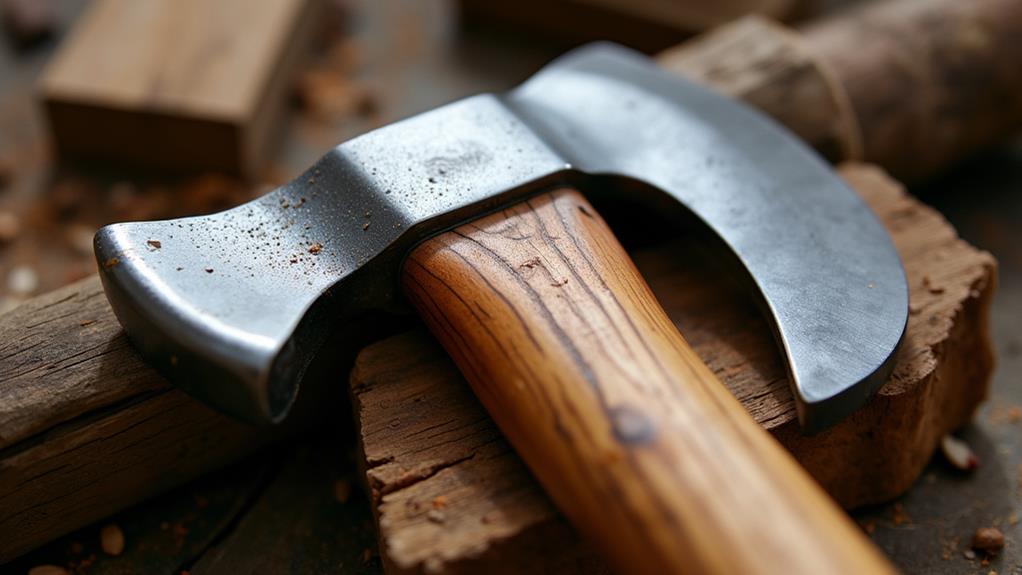
The handle features of an axe are crucial for both safety and performance. One key aspect is the end knob, which prevents the axe from slipping out of your hands, thereby enhancing safety during use. A thicker knob design not only improves grip security but also reduces the risk of accidents while swinging the axe.
Handle length is another essential feature, varying based on specific uses and user heights to optimize ergonomics and efficiency. When selecting an axe, consider the length that best suits your needs and body type.
The materials used for axe handles significantly impact performance and maintenance. Common choices include wood, such as hickory or ash, which offer a classic feel and are relatively easy to maintain. Fiberglass handles provide excellent durability and are less prone to breaking, while steel handles, though heavier, offer unmatched strength.
Ergonomic designs in axe handles are crafted to provide comfort and efficiency, allowing for prolonged use without causing fatigue. These designs make your work easier and safer. Every feature of the handle contributes to a better, safer chopping experience.
Types of Axes
After exploring the handle features, it's essential to understand the different types of axes available, each designed for a specific function.
- Felling Axe: Ideal for cutting across the wood grain, making it perfect for chopping down trees.
- Splitting Axe: Excels at dividing wood along the grain, making it the preferred tool for splitting logs.
- Broad Axe: Perfect for precision work, specifically crafted for hewing to shape wood with accuracy.
- Hatchet: A small, lightweight variant designed for one-handed use, essential for camping and travel tasks.
- Mortising Axe: Designed to create mortises by removing wood between drilled holes, often featuring one or two blades for versatility.
- Pulaski Axe: Combines an axe and a mattock, making it indispensable for firefighting and trail maintenance.
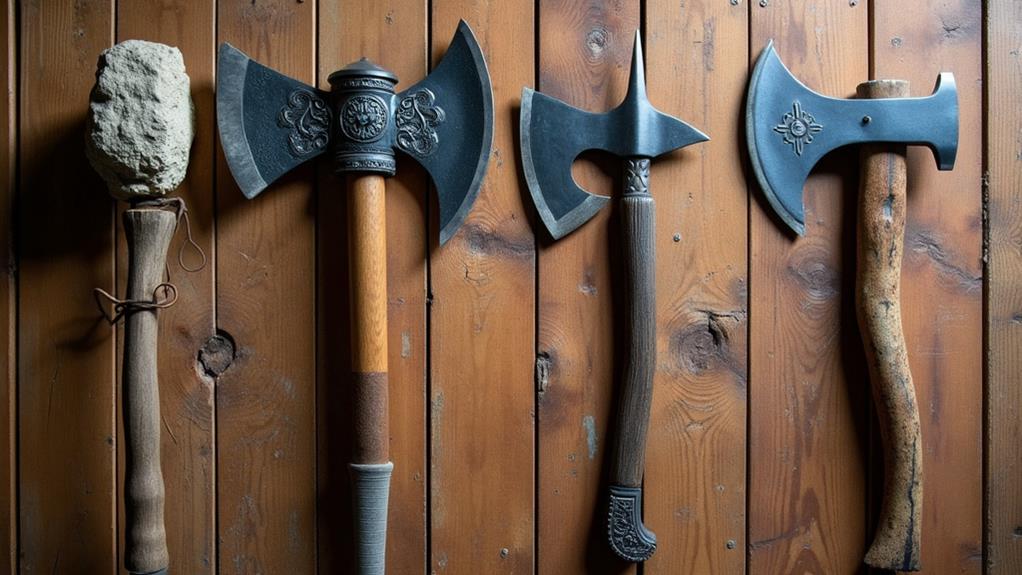
Cultural events like aizkolaritza celebrate traditional log-cutting techniques, highlighting the adaptability and significance of different axe types in rural sports. Understanding these types of axes ensures you choose the right tool for your task.
Cutting Edge Details
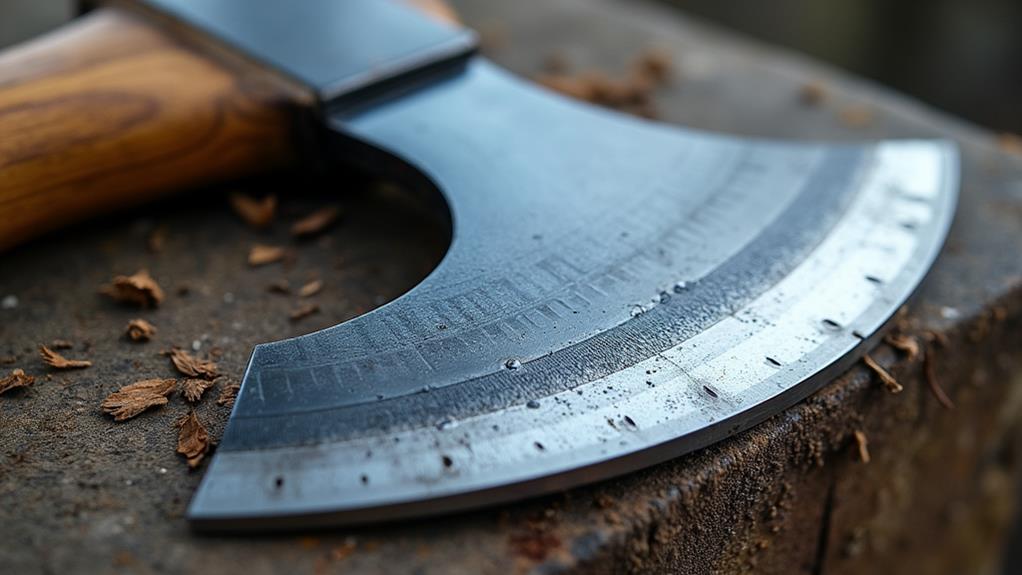
Delving into the details of an axe's cutting edge reveals that its sharpness and design are crucial for optimal performance. The cutting edge, also known as the bit, is where the primary cutting action occurs. Its sharpness is essential for effective use, enabling you to slice through wood with minimal effort.
The bevel of the cutting edge is critical for sharpening your axe. This bevel defines the angle that allows for efficient slicing. A well-maintained bevel ensures that your axe remains sharp and effective for various tasks. Paying attention to the angle during sharpening is key to maintaining peak performance.
The heel and toe significantly impact the cutting edge's effectiveness. The heel, the rear part of the blade, and the toe, the front part, determine how the axe penetrates the material. Understanding the dynamics of these parts is vital for enhancing cutting efficiency.
Proper maintenance of the cutting edge, including regular sharpening and an understanding of its design, enhances your cutting efficiency. By adapting your technique based on the axe's design, you ensure optimal performance for its intended use. Keep your cutting edge in top condition, and your axe will serve you well.
Material Choices
When choosing axe materials, traditional wood handles like hickory offer excellent strength and shock absorption, while modern synthetic options such as plastic and fiberglass provide enhanced durability and low maintenance.
Each material has distinct advantages, from the classic aesthetic and tactile feel of wood to the long-lasting resilience of synthetics. Your decision will ultimately hinge on whether you prefer the timeless appeal of wood or the practical benefits of modern materials.
Traditional Wood Options
Traditional wood options for axe handles have proven their worth over time due to their natural properties and effectiveness. When selecting an axe handle, you'll encounter several traditional wood types known for their performance and reliability.
- Hickory: The most popular choice, hickory is renowned for its exceptional strength, flexibility, and shock-absorbing properties. It can endure rigorous tasks without splintering or breaking, making it ideal for heavy use.
- Ash: Valued for its lightweight nature and resilience, ash offers easier maneuverability while maintaining durability. It's a solid choice if you need a handle that's easier to swing yet still robust.
- Oak: Though less common, oak is sometimes used for its hardness. However, its heavier weight and reduced shock absorption compared to hickory and ash can make it less comfortable for extended use.
- Maple: Another less frequent option, maple is strong but lacks the shock absorption of hickory or ash. Its heavier weight can be a downside for prolonged tasks.
For added durability and resistance to breaking under stress, always choose handles with straight grain alignment.
Modern Synthetic Materials
In recent years, modern synthetic materials have revolutionized axe handle design, offering several advantages over traditional wood. Opting for an axe with a handle made from materials like fiberglass or plastic ensures increased durability and resistance to environmental factors. Unlike wood, these materials won't warp or split, making your tool longer-lasting with less maintenance.
Synthetic handles are generally lighter than their wooden counterparts, which makes the axe easier to maneuver and helps reduce user fatigue during extended use. Additionally, fiberglass handles provide superior shock absorption, minimizing vibrations during impact. This enhances comfort and control when using the axe.
Modern synthetic materials also often feature ergonomic designs. Enhanced grip and reduced slippage lead to safer and more efficient handling, allowing you to focus on your task without worrying about losing control of your tool.
Comparative Material Benefits
Choosing the right material for your axe handle is crucial for optimizing its performance, durability, and user comfort. Each material offers distinct advantages, so understanding these can help you make the most informed decision for your needs.
Here's a concise comparison:
- Hickory: The most popular choice due to its strength, flexibility, and excellent shock absorption. Hickory handles are ideal for heavy-duty use and often feature a swell knob for a secure grip.
- Plastic: Modern plastic handles are lightweight and require minimal maintenance. They're durable and less susceptible to environmental damage, making them a practical alternative to wood.
- Fiberglass: Renowned for its resistance to rot and breakage, fiberglass handles are well-suited for harsh outdoor conditions. They frequently include a swell knob, ensuring a consistent grip and comfort.
- Steel: Steel handles offer unmatched durability and strength but can be heavier and less forgiving on your hands, especially during prolonged use. Some designs lack a swell knob, which may affect grip security.
Your choice of material will significantly influence the axe's weight, balance, and overall user comfort.
Safety Considerations
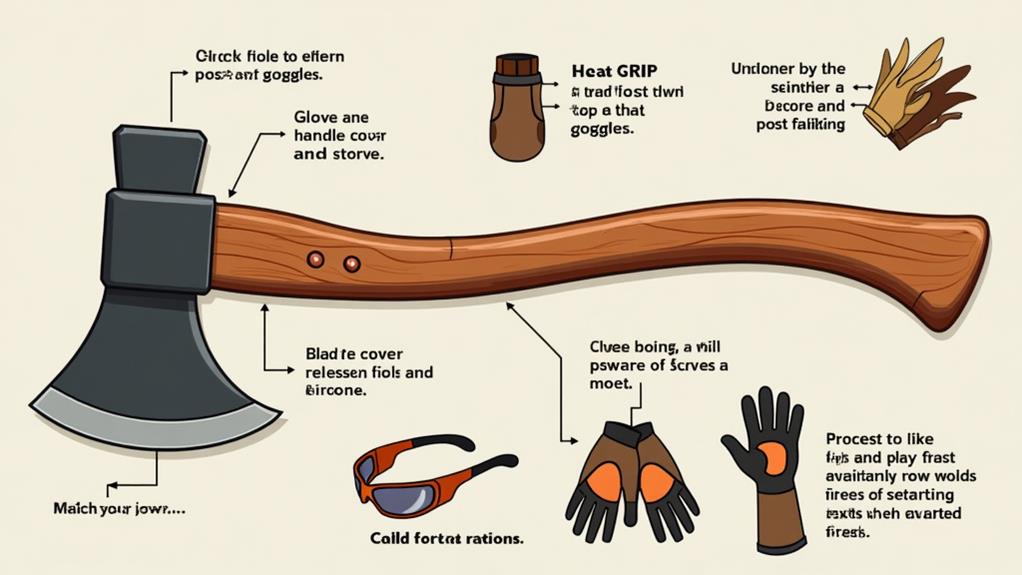
When handling an axe, prioritizing safety is essential. One vital aspect is the grip design. A well-designed grip, especially near the end of the handle, enhances control, reducing the risk of slippage and accidents.
- Ensure the handle feels secure in your hand.
- Weight distribution in an axe is also crucial for safety. Properly balanced axes are easier to handle and help mitigate fatigue, making them safer for extended use.
- An axe that's too heavy or poorly balanced can lead to mistakes and potential injuries.
- When the axe isn't in use, always cover the cutting edge with a protective sheath to prevent accidental injuries.
- Regular maintenance is necessary. Inspect the handle and head for any signs of damage or wear.
A compromised handle or a loose head can lead to dangerous situations.
Usage Tips
To maximize the efficiency and safety of your axe, consider these practical usage tips. By focusing on these key points, you can enhance your performance and ensure the longevity of your tool.
- Select an Aligned Grain Haft: Ensure the grain of the haft runs straight along the length of the handle. This increases durability and minimizes the risk of breakage during heavy use.
- Regularly Sharpen the Bevel: Maintain a sharp bevel on your axe for optimal cutting performance. A sharp blade makes wood cutting and splitting easier and more efficient.
- Correct Grip Position: Grip the handle correctly. Proper hand placement improves power and accuracy, making your tasks easier and more precise.
- Use Proper Splitting Technique: When splitting wood, strike at the right angle and maintain a controlled swing. This technique enhances effectiveness and reduces effort, making the job less strenuous.
Additionally, be mindful of your proprioception during precision tasks. This awareness aids in better control and accuracy when cutting or carving.
Maintenance Advice
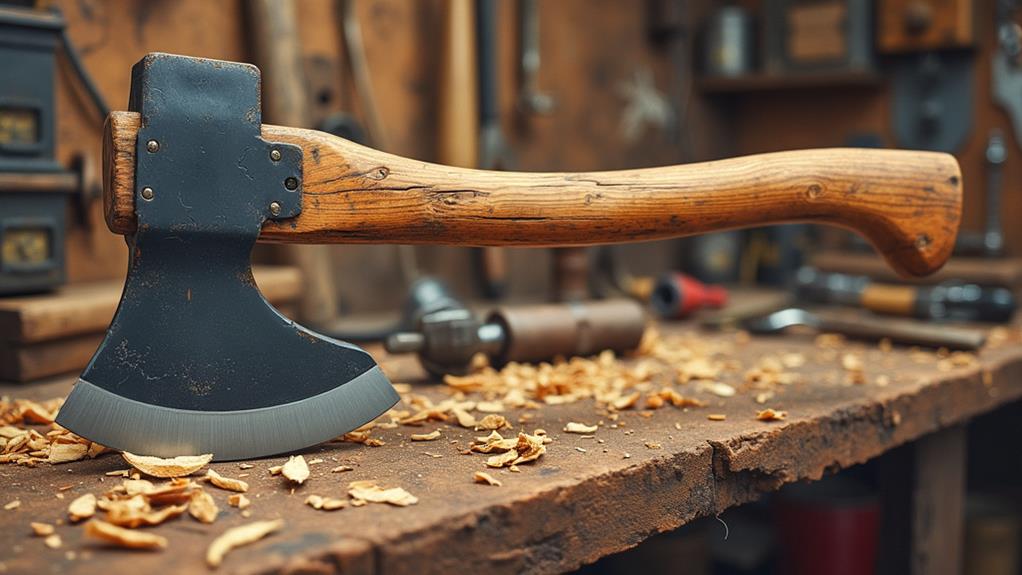
Maintaining your axe properly is essential for its longevity and performance. Regularly inspect your axe for wear and damage, especially around the lugs and the knob at the end of the handle. Early detection of issues can prevent larger problems and ensure safe usage.
Keep your axe clean and dry to prevent rust and corrosion. Rust can significantly reduce the lifespan of your axe. After each use, wipe down the bit and other metal components, then store the axe in a dry place.
For storage, keep your axe in a vertical position or lay it flat. Storing it at an angle can warp the handle, affecting usability and safety. Regularly sharpen the bit to maintain a sharp cutting edge. A sharp axe is more efficient and requires less effort, enhancing your productivity.
Periodically apply a light coat of oil to the handle to maintain the wood's integrity and prevent it from drying out or cracking. Consistent maintenance will keep your axe in optimal condition for years.
Conclusion
Having gained a solid understanding of an axe's anatomy, from its versatile head to its sturdy handle, you can now choose the right axe, use it effectively, and maintain it properly. Always prioritize safety by following best practices when handling your axe. With these insights, you're well-equipped to master this essential tool. Happy chopping!