Sustainable Living in Tiny Homes: Eco-Friendly Tips
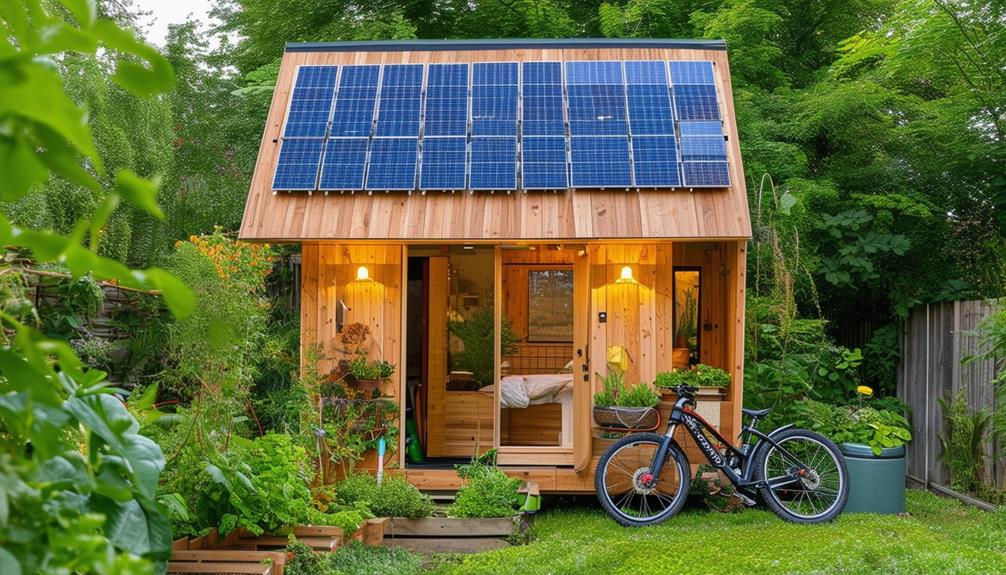
When considering sustainable living in tiny homes, you can implement numerous eco-friendly practices that make a significant impact. Maximizing natural light and utilizing solar panels not only boost energy efficiency but also promote a greener lifestyle. Water conservation techniques, such as composting toilets and greywater systems, help reduce your water footprint. Using sustainable building materials like reclaimed wood and bamboo further minimizes environmental impact. Energy-efficient upgrades, including LED lighting and smart thermostats, can also be beneficial. Additionally, exploring off-grid living options can offer greater independence and a lower environmental footprint.
Eco-Friendly Features
Tiny homes are designed with eco-conscious features that make sustainable living both practical and economical. By integrating natural light and passive solar design principles, heating and cooling costs can be significantly reduced. Large windows and strategically placed skylights optimize natural light, minimizing the need for artificial lighting during the day.
Solar panels can be used to generate electricity, further lowering energy consumption. Solar power facilitates off-grid living, enhancing the sustainability of your tiny home. Additionally, incorporating energy-efficient LED lighting throughout will further decrease energy usage.
Water conservation is another critical aspect. A composting toilet can manage waste sustainably, eliminating the need for water-intensive traditional toilets. Greywater systems recycle water from sinks and showers for irrigation, improving overall sustainability.
Using upcycled materials like reclaimed wood or repurposed glass tiles in construction and interior design reduces your environmental footprint. These materials contribute to sustainable living while adding unique character to your home. By incorporating these eco-friendly features, you'll enjoy a higher quality of life with a smaller ecological impact.
Sustainable Building Materials
Choosing sustainable building materials for your tiny home minimizes environmental impact while creating a cozy, efficient living space. Opt for eco-friendly choices like reclaimed wood, which reduces deforestation and adds unique character. Bamboo flooring is another excellent option, as bamboo grows rapidly and requires fewer resources than traditional hardwoods.
For insulation, consider natural materials like denim cotton or wool batt. These options provide excellent thermal resistance and are biodegradable, enhancing your tiny home's sustainability. Proper insulation is crucial for maintaining an energy-efficient environment, reducing the need for excessive heating and cooling.
Incorporate natural lighting to minimize reliance on artificial lights. Large windows and strategically placed skylights can brighten your space while reducing energy consumption. Utilizing renewable energy sources, such as solar panels, can further enhance your tiny home's sustainability.
Energy Efficiency Upgrades
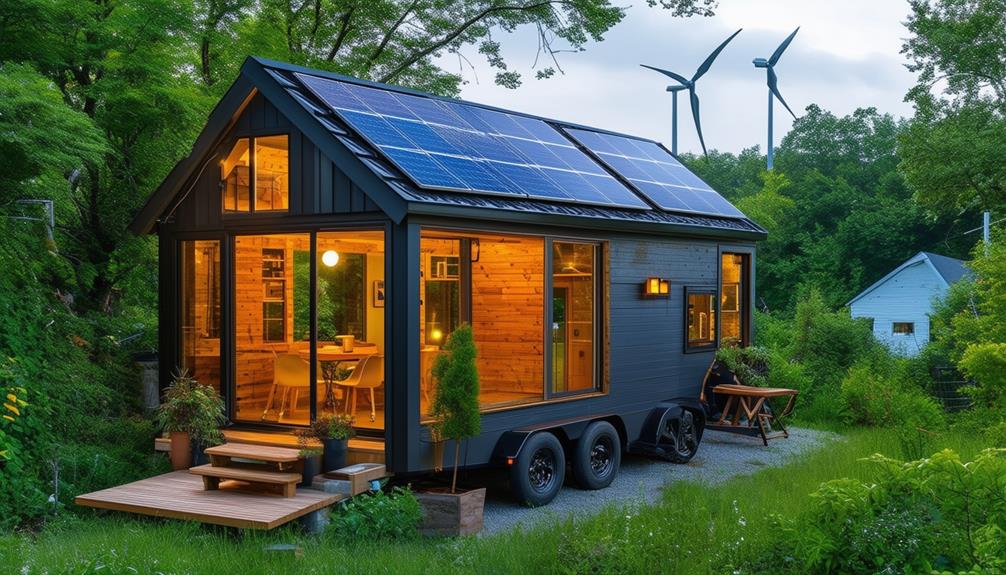
Enhance the sustainability of your small home with energy efficiency upgrades that lower both energy usage and utility bills. Start by replacing traditional light bulbs with LED bulbs, which can save up to 90% in energy consumption and result in average annual savings of $225. Next, install Energy Star windows to reduce energy loss by 25-30%, significantly cutting heating and cooling costs.
Consider upgrading to a tankless water heater, which is highly energy-efficient and heats water only on demand, making it ideal for small homes. Complement this with smart thermostats that learn your schedule and adjust temperatures accordingly, ensuring energy is not wasted when you are not home.
Proper insulation is crucial for maintaining a consistent indoor temperature, keeping heat inside during winter and out during summer. Additionally, seal air leaks around windows, doors, and other openings to maximize your home's energy efficiency. These upgrades not only reduce energy costs but also promote sustainable living by lowering your environmental footprint. Transform your small home into an eco-friendly haven with these effective and straightforward changes.
Water Conservation Techniques
Enhance your tiny home's sustainability by adopting effective water conservation techniques. Install low-flow fixtures and water-efficient appliances to decrease water usage by up to 30%. Implement rainwater harvesting systems to save up to 50,000 gallons of water annually, which reduces reliance on municipal water for non-potable uses such as irrigation and cleaning.
Incorporate greywater recycling systems to reuse water from sinks and showers for irrigation, thereby minimizing water waste and lowering overall consumption. Opt for native plant landscaping in outdoor areas, as these plants require less water than traditional lawns, potentially reducing water usage by up to 50%.
Consider adding green roofs to your tiny home. These roofs capture and filter rainwater, reducing stormwater runoff and supporting water conservation efforts. Additionally, green roofs provide insulation, lowering heating and cooling needs.
Off-Grid Living Options
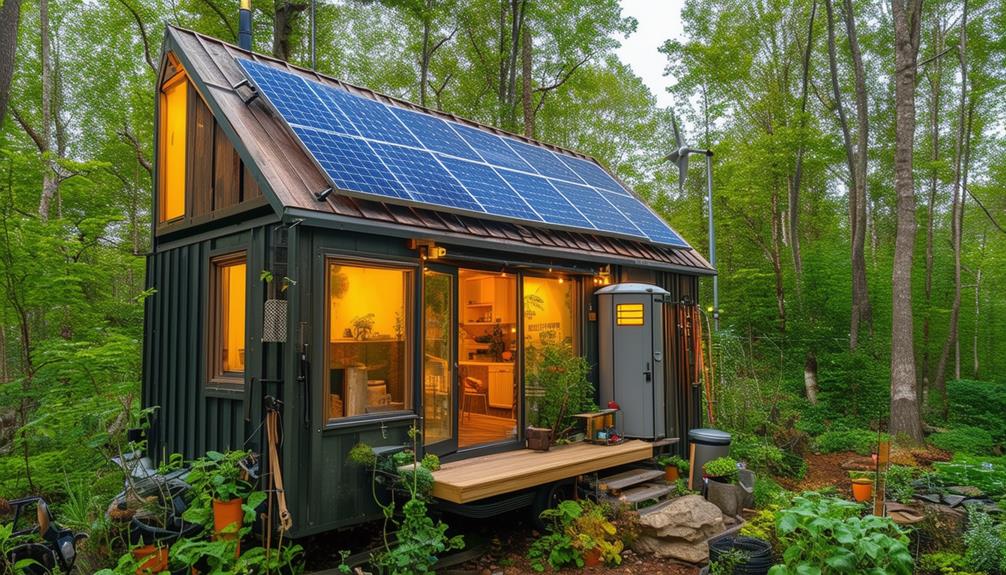
Living off-grid in a tiny home involves relying on self-sustaining systems for power, water, and waste management. This lifestyle can significantly reduce your environmental impact and lower living costs. Off-grid power sources like solar panels, wind turbines, and micro-hydro systems allow you to generate your own electricity, ensuring sustainable energy consumption.
Achieving water self-sufficiency is crucial. Options include rainwater harvesting, well systems, and advanced water filtration methods to meet your water needs. Effective waste management is also essential in tiny homes, with composting toilets and greywater systems enabling you to handle waste sustainably.
Here's a quick overview of off-grid living options:
| Aspect | Options/Methods |
|---|---|
| Off-Grid Power Sources | Solar panels, wind turbines, micro-hydro systems |
| Water Self-Sufficiency | Rainwater harvesting, well systems, advanced filtration |
| Waste Management | Composting toilets, greywater systems |
| Sustainable Practices | Energy-efficient appliances, proper insulation |
Living off-grid in a tiny home requires careful planning but offers the reward of independence and a reduced environmental footprint. By adopting these sustainable practices, you'll contribute to a more eco-friendly lifestyle while enjoying lower living costs and greater self-reliance.