Living Off-Grid in a Tiny Home: What You Need to Know
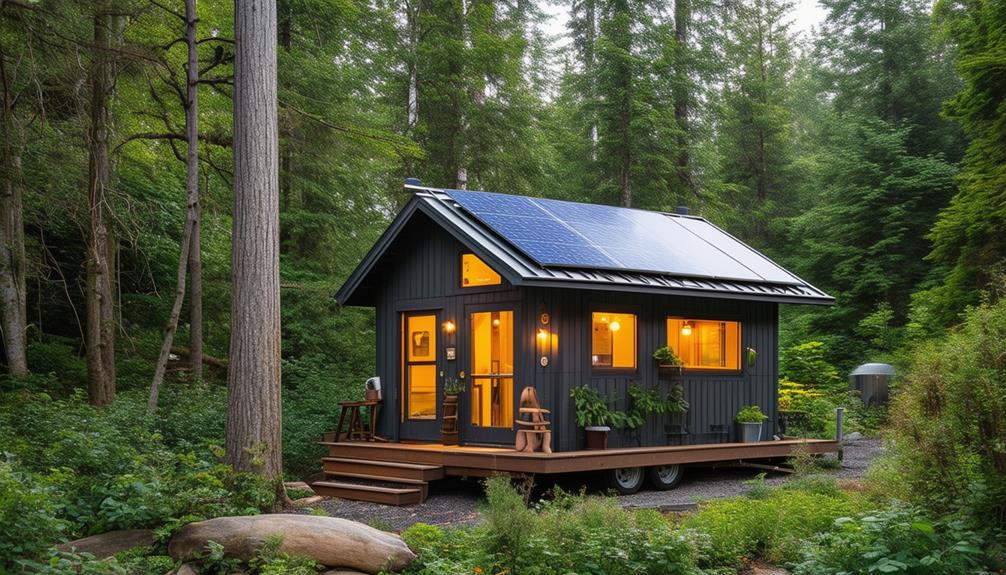
Living off-grid in a tiny home isn't just about downsizing; it's about embracing a lifestyle of self-sufficiency and sustainability. Renewable energy sources, such as solar power, are essential for keeping your home running smoothly. Efficient water collection and waste management systems are also crucial. Designing your space with intelligent choices can significantly enhance comfort and functionality. However, challenges like finding suitable land and installing off-grid power systems need careful consideration. Let's explore the key elements that can make or break your off-grid tiny home experience.
Off-Grid Tiny House Basics
Living off-grid in a tiny house involves leveraging alternative energy sources and efficient design to meet your daily requirements. To successfully embrace the off-grid lifestyle, you should integrate renewable energy systems such as solar power. Solar panels can serve as a primary electricity source, offering a sustainable solution that minimizes your environmental impact. Additionally, wind turbines or hydropower can be employed to supplement energy needs if conditions are suitable.
Water supply is another crucial aspect. Rainwater harvesting systems can collect and store water, ensuring a reliable source. Proper filtration and purification are essential to ensure the water is safe for drinking and daily use.
Managing waste in an off-grid tiny house demands innovative approaches. Composting toilets are a popular option, converting waste into usable compost while conserving water. Greywater systems can recycle water from sinks and showers for irrigation, further enhancing sustainability.
Efficient energy management is vital for off-grid living. Energy-efficient appliances and lighting can significantly reduce energy consumption. By adopting these strategies, you can enjoy the independence and simplicity of off-grid living while minimizing your environmental footprint.
Designing and Building
When designing and constructing your off-grid small home, prioritize solar orientation, insulation, and sustainable materials to enhance efficiency and comfort. Position your home to maximize natural light and effectively harness solar energy, reducing reliance on external power sources and boosting energy efficiency.
High-quality, eco-friendly insulation is crucial for maintaining a comfortable temperature throughout the year, keeping your home warm in winter and cool in summer. Using sustainable materials like reclaimed wood or recycled metal minimizes environmental impact and ensures durability.
A sturdy foundation is vital for the longevity and structural integrity of your off-grid home. Consult construction experts to avoid common pitfalls and ensure your home meets safety standards. Optimize space with versatile furniture and smart storage solutions. Choose energy-efficient appliances to reduce power consumption and maximize the benefits of your off-grid setup.
Essential Off-Grid Tips
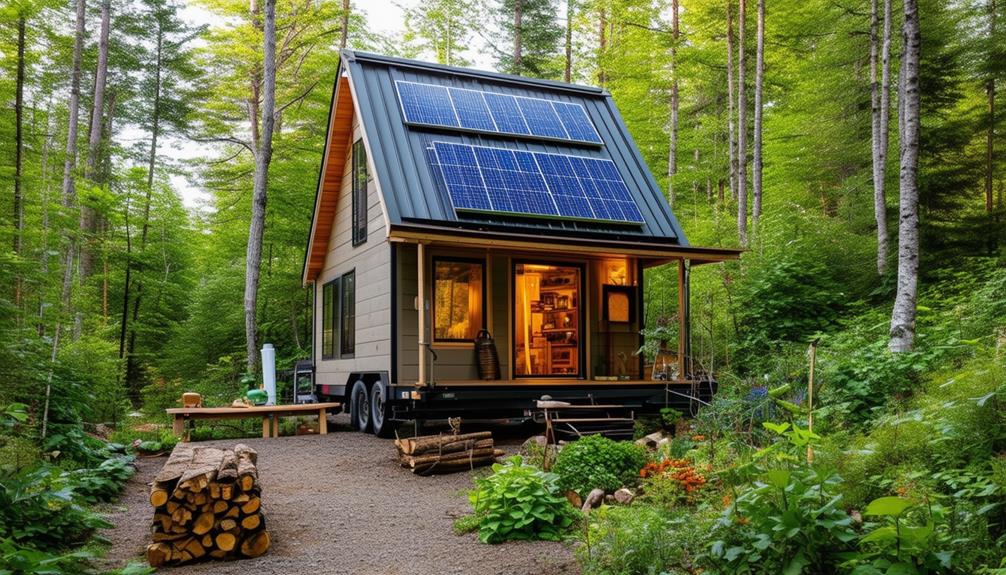
Maximizing space and minimizing clutter are essential for a comfortable and efficient off-grid tiny home. Utilize multi-functional furniture and smart storage solutions to keep your living space tidy. Efficient energy use is critical for a sustainable lifestyle, so consider installing solar panels to power your home. Solar panels reduce reliance on external power sources and promote sustainability.
Composting toilets are a beneficial addition to off-grid homes. They require no water, reduce waste, and produce nutrient-rich compost for gardening. For water sources, rainwater collection is both sustainable and cost-effective. Ensure you have a reliable filtration system for clean drinking and cooking water.
Staying organized and connected with the off-grid community offers valuable advice and support. Budgeting for essentials like your energy and power systems ensures a smooth transition to off-grid living.
Here's a quick reference table:
| Essential Tips | Benefits | Implementation |
|---|---|---|
| Multi-functional furniture | Maximizes living space | Purchase or DIY |
| Solar panels | Sustainable energy source | Install on the roof |
| Composting toilets | Eco-friendly waste management | Install in the bathroom |
| Rainwater collection | Reliable water source | Set up gutters and tanks |
This approach ensures semantic accuracy, completeness, consistency, conciseness, relevance, interoperability, and trustworthiness.
Energy Solutions
When living off-grid in a tiny home, consider renewable energy solutions like solar power to maintain self-sufficiency. Solar panels, wind turbines, and hydropower systems can help reduce your carbon footprint and decrease dependence on external power grids. Investing in these sustainable options not only supports environmental stewardship but also offers long-term cost savings.
Solar Power Essentials
Solar panels provide a reliable and efficient energy solution for tiny homes, converting sunlight into electricity for an off-grid lifestyle. When you transition to off-grid living, solar power becomes a crucial component of your energy strategy, ensuring a consistent power supply. Proper planning and sizing of your solar panel system are essential to meet your specific energy needs. To achieve efficient power generation, you'll need to calculate your tiny home's energy consumption and install an adequate number of solar panels to meet those requirements.
Winter months can present challenges for solar power generation due to shorter daylight hours and cloudy conditions. To mitigate this, you may need additional energy storage solutions, such as battery banks, to store excess energy generated during sunnier days. Having a generator as a backup can also ensure a consistent power supply during periods of low solar production.
Regular maintenance and cleaning of your solar panels are crucial to maintaining their performance. Dust, dirt, and debris can reduce their efficiency, so periodic cleaning is necessary. By following these steps, you can optimize the benefits of solar power and maintain a reliable energy source for your off-grid tiny home.
Renewable Energy Options
While solar power is a popular choice, consider wind turbines and hydropower as additional renewable energy options to enhance your off-grid tiny home's sustainability. Solar panels are highly effective, capable of generating sufficient electricity to power essential appliances and lighting. They are a cornerstone of off-grid living, utilizing the sun's abundant energy in many locations. However, wind turbines and hydropower systems are also viable alternatives or supplementary sources.
Wind turbines are particularly beneficial if your tiny home is situated in a windy area. They convert wind energy into electricity, ensuring a steady power supply even when the sun isn't shining. Hydropower, though less common, can be an excellent option if you have access to a nearby water source. It employs flowing water to generate electricity, providing a consistent and reliable energy supply.
Selecting the appropriate renewable energy source depends on your location, climate, and specific energy needs. Combining solar panels with wind turbines or hydropower can create a more resilient and efficient energy system for your off-grid tiny home.
Sustainable Practices
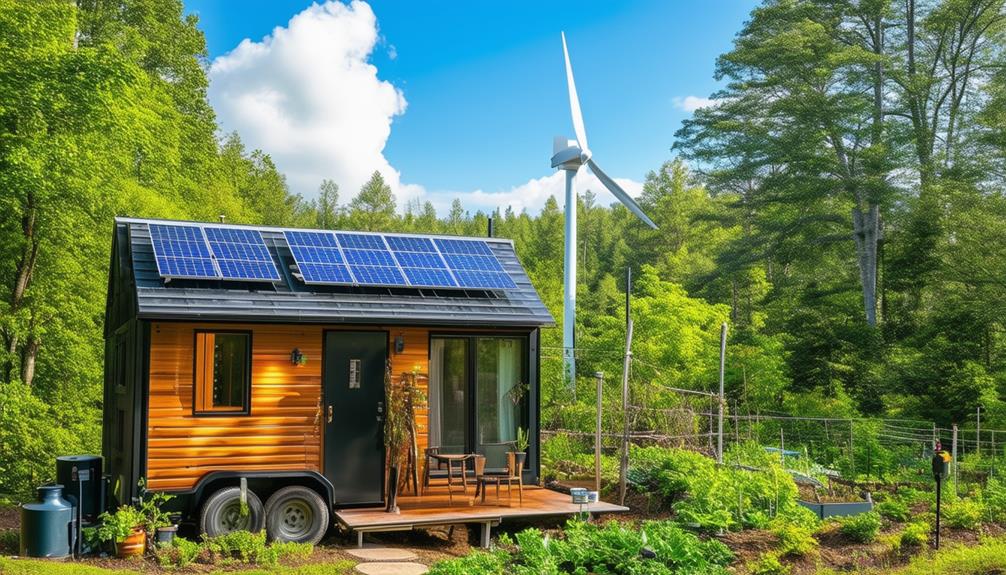
To live sustainably in your off-grid tiny home, prioritize efficient energy use, effective waste management, and food self-sufficiency. Installing solar panels or wind turbines can significantly reduce your environmental footprint. Additionally, using composting toilets and maintaining a garden for growing your own food can help manage waste and support self-sufficiency.
Efficient Energy Use
To significantly reduce energy consumption in your off-grid small home, incorporate energy-efficient devices and lighting. Start by considering solar power as your primary energy source. Solar panels harness the sun's energy to provide sustainable power, making your home more eco-friendly. Opt for energy-saving appliances to ensure your limited energy supply lasts longer.
Next, apply passive solar design principles to maximize natural light and heat. Position windows strategically and use materials that absorb and gradually release solar heat to reduce reliance on artificial lighting and heating. High-quality insulation is crucial for maintaining a comfortable temperature throughout the year, minimizing the need for energy-intensive heating and cooling systems.
Implement a smart energy management system to monitor and optimize your energy usage. These systems provide real-time data on your energy consumption, helping you make informed decisions on when and how to use power efficiently. By adopting these sustainable practices, you can effectively manage your energy needs and enjoy the benefits of off-grid living while minimizing your environmental impact.
Waste Management Solutions
Sustainable waste management is essential for maintaining an eco-friendly off-grid tiny home. Incorporating composting toilets is a highly effective solution. These systems turn human waste into nutrient-rich compost, significantly reducing water use and enriching the soil. By using composting toilets, you embrace eco-friendly practices and promote a sustainable lifestyle.
Effective waste management extends beyond composting. Segregating waste into recyclables, compostables, and non-recyclables is crucial to minimizing environmental impact. Recycling reduces landfill waste, supporting a responsible disposal system. It's not just about managing waste but also about reducing overall waste production.
Composting organic materials further enriches your garden soil, enhancing self-sufficiency and environmental responsibility. Always adhere to local waste management regulations to avoid legal complications.
Practicing responsible waste disposal is vital for sustainable off-grid living. By adopting these methods, you'll maintain a smaller ecological footprint and foster a more sustainable lifestyle in your tiny home.
Food Self-Sufficiency
Achieving food self-reliance in an off-grid tiny home begins with growing your own food. Incorporate space for gardening to cultivate vegetables and herbs, reducing dependence on external food sources and ensuring a steady supply of fresh produce.
Composting toilets are essential for sustainable waste management, converting human waste into valuable compost that enriches garden soil while minimizing water usage. Coupling this with sustainable power options like solar panels ensures energy needs are met without environmental impact.
Effective waste management and sustainable power systems are crucial, but so is budgeting. Allocate funds for necessities like solar panels and gardening supplies to maintain food self-reliance. Careful budget planning ensures your off-grid tiny home remains both eco-friendly and efficient.
Common Challenges
Finding suitable land that complies with zoning regulations and meets resource access requirements is often one of the biggest hurdles for those wanting to live off-grid in a tiny home. Zoning regulations can be restrictive, and not every piece of land offers essential resources like water and off-grid power sources. Legal complications may also arise, adding complexity to the process.
Adapting to off-grid living involves overcoming significant technical challenges. For example, installing solar panels or other off-grid power sources can be complex and may require professional help. Initial costs can be high, and ongoing maintenance can add up. Efficient water management is crucial to ensure a sustainable lifestyle.
Transitioning to off-grid living in a tiny home requires a significant lifestyle adjustment. You must be prepared for a simpler, more self-sustaining way of life. While this change can lead to cost savings in the long run, the initial investment and adjustment period can be challenging.
Common Challenges
| Challenge | Description | Example |
|---|---|---|
| Zoning Regulations | Legal requirements for land use | Finding suitable land |
| Technical Challenges | Expertise needed for installing off-grid systems | Solar panel installation |
| Lifestyle Adjustment | Adapting to a self-sustaining, simpler way of life | Efficient water usage |
Successfully navigating these obstacles is crucial for achieving a sustainable off-grid living experience.