How to Transition From a Big House to a Tiny Home

Transitioning from a large house to a tiny home involves more than just downsizing; it requires a fundamental shift in lifestyle and priorities. Start by evaluating what you genuinely need for daily living—a process that can provide valuable insights. Once you've identified essential items, the next step is to declutter efficiently and design a space that maximizes every square foot. How can you balance creativity and practicality in your new, compact environment? Let's explore the steps to make this transition smooth and rewarding.
Assess Your Needs
When transitioning to a tiny home, start by evaluating your essential living needs for each area: a bed, kitchenette, bathroom, and relaxation space. Identify what is crucial for your daily life to ensure you focus on the most important elements of your new environment.
Adapting to minimalist living means prioritizing truly necessary items. Make a list of essentials based on your lifestyle, emphasizing practicality and functionality. Quality will often outweigh quantity in a tiny home. Streamline your belongings before moving to prevent overcrowding and facilitate a smoother transition.
Use versatile furniture to maximize your space. Consider a bed with storage underneath or a fold-out table that doubles as a workspace. Concealed storage solutions can help keep your tiny home organized and efficient. These strategies not only save space but also enhance the functionality of your home.
Start Downsizing Gradually
To make the transition easier, start downsizing gradually by decluttering one room at a time. This focused approach helps prevent you from feeling overwhelmed. Begin with less sentimental areas like the bathroom or kitchen. As you progress, you'll gain momentum and confidence.
Try living temporarily in a smaller space within your current home. This can help you adjust to the idea of living with less and identify what's truly essential. Use the KonMari Method to categorize your possessions and decide what to keep, donate, or sell. This method encourages you to retain only items that "spark joy," making the downsizing process more mindful.
Here's a simple plan to get started:
| Room | Action |
|---|---|
| Bathroom | Discard expired products |
| Kitchen | Donate duplicate utensils |
| Bedroom | Sort clothes using the KonMari Method |
| Living Room | Sell unused furniture |
Use Effective Decluttering Methods
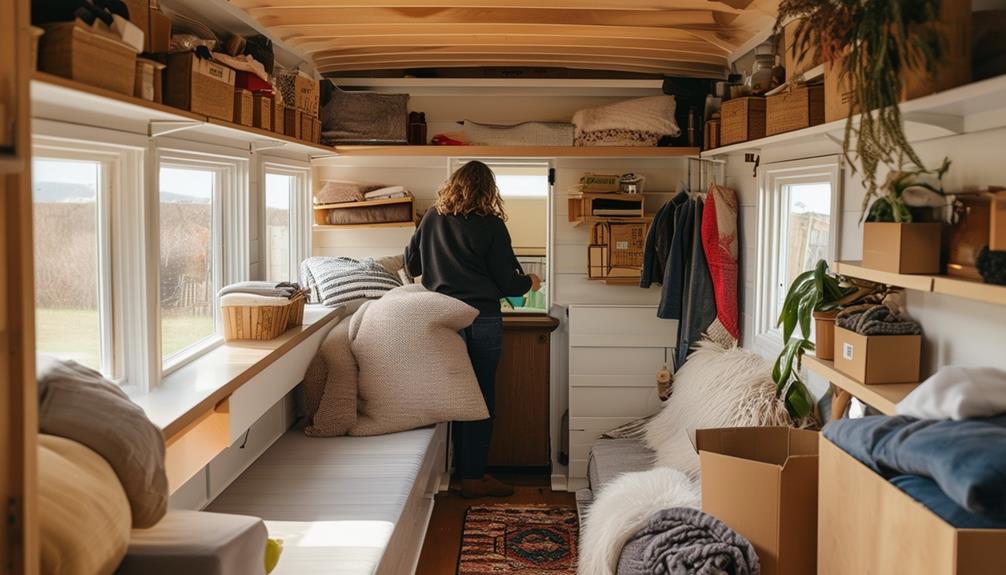
When you start decluttering, focus on categorizing your items rather than tackling everything at once. Prioritize essential items and reduce duplicates by keeping only what you truly need. Begin with non-sentimental areas, such as the kitchen, to build momentum and simplify the process.
Declutter By Category
Whether you're downsizing to a tiny home or simply aiming for a more organized space, effective decluttering methods like the KonMari Method can make the process more manageable. When you declutter by category, you start by tackling one group of items at a time. Begin with books, then move on to other categories. This method simplifies decision-making and helps you focus on what you truly need to live comfortably in a tiny home.
Here's a quick guide to get you started:
| Category | Recommended Order | Tips |
|---|---|---|
| Books | First | Gather all books and sort through each one |
| Clothes | Second | Assess practicality and necessity |
| Papers | Third | Keep only vital documents |
| Miscellaneous | Fourth | Minimize multiples, focus on essentials |
| Sentimental Items | Last | Handle with care, keep only meaningful items |
This structured approach ensures you prioritize effectively, making it easier to create a clutter-free living space.
Prioritize Essential Items
After decluttering by category, it's crucial to prioritize items that will truly serve you in your new small home. To make small house living successful, you'll need to focus on essential items like a bed, kitchenette, and relaxation area. Start by identifying what you use daily and what adds value to your life to maximize space and ensure comfort.
Use effective decluttering methods, such as the KonMari Technique, to determine which possessions are necessary. Ask yourself if each item sparks joy or serves a practical purpose. Another approach is to go room-by-room, evaluating what's essential in each space. Downsizing becomes easier when you adopt minimalism and let go of items you haven't used in the past year. Consider donating these items to simplify your transition.
Your kitchen is a great place to start minimizing. Keep only necessary dishware and utensils to reduce clutter and optimize your limited storage space. By focusing on what's truly needed, you'll create an efficient and cozy living environment.
Minimize Multiples Efficiently
Streamline your tiny home by eliminating duplicate items and keeping only one of each essential. This approach reduces clutter and optimizes space. Begin in the kitchen with non-sentimental items to simplify decision-making. For instance, if you have four spatulas, retain just one. This will facilitate a smoother transition to tiny home living.
Next, practice deciding on non-essential items. This will help streamline your belongings and prevent unnecessary duplicates. Consider functionality and practicality. Do you need three coffee mugs per person? Likely not.
Continue by identifying and removing multiples in all categories of your home. Whether it's towels, bed linens, or office supplies, focus on what's truly necessary. Minimizing duplicates creates a more organized environment, enriching your tiny house experience.
Choose Your Tiny House Design
Choosing your tiny house design involves balancing creativity and practicality to create a space that meets your needs and reflects your style. Embracing the tiny house lifestyle means optimizing every square foot, as these homes typically range from 100 to 400 square feet. Lofted beds can free up valuable floor space, allowing for more living or storage areas below. Built-in storage solutions are crucial to keeping your space organized and clutter-free.
An open concept layout helps make a small area feel more spacious. By minimizing walls and using multifunctional furniture, you can enhance the sense of openness. Light, neutral colors and ample windows will further brighten your tiny home, making it feel larger and more inviting. Prioritize essential elements like a bed, kitchenette, toilet/shower, and a relaxation area when planning your layout. These key components will make your tiny house functional and comfortable.
Find the Ideal Location

Finding the ideal location for your small residence involves thorough research and careful planning. Start by examining local zoning laws to ensure your tiny house complies with regulations. Many areas have specific rules for small dwellings, and understanding these will save you from future complications.
Next, consider joining small home communities, which offer security, camaraderie, and essential facilities. Look for communities that align with your lifestyle preferences and provide necessary utilities such as power, water, and sewage.
If you prefer a more secluded setting, explore options near natural environments like parks and hiking trails. Living close to nature can provide a peaceful atmosphere and fresh air, but ensure the location still offers access to essential utilities.
For those interested in an eco-friendly lifestyle, consider off-grid possibilities. Solar energy and composting toilets can be viable alternatives in remote areas, reducing your environmental impact and providing independence from conventional utility services.
Embrace Minimalist Living
To fully embrace minimalist living, begin by decluttering your space and donating items you haven't used in a year. This process helps you let go of unnecessary possessions and makes the transition to a tiny home smoother. Focus on vital items that add value to your daily life. For example, in the kitchen, retain only the dishware and utensils you use regularly to avoid clutter.
Minimalist living emphasizes simplicity and practicality. As you declutter, ask yourself if each item serves a purpose or brings joy. If not, it's time to let it go. This mindset shift is crucial when downsizing from a large house to a tiny home. By keeping only what's essential, you create a more functional and peaceful living space.
When planning your tiny home, identify key non-negotiable items—those things you can't live without. Design your space around these essentials to ensure it meets your needs without excess. Remember, the goal of minimalist living is to focus on what truly matters, allowing your tiny home to reflect a simpler, more intentional lifestyle. This approach not only makes the process smoother but also more fulfilling.