How to Split Wood Efficiently With an Axe
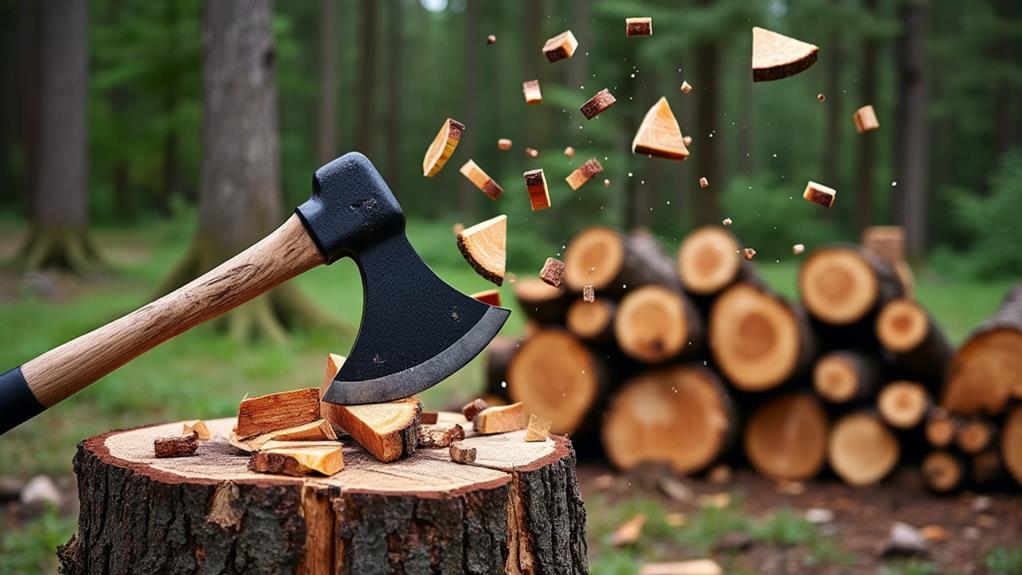
To split wood efficiently with an axe, start with the right tools and setup. Use a sturdy, knee-height chopping block and a well-sharpened axe appropriate for splitting. Don't forget safety measures, such as wearing protective gear.
Beyond the basics, focus on technique and understanding the wood's natural lines to make each swing count without exhausting yourself. By honing these skills, you can turn a laborious task into a methodical, almost effortless process.
Essential Tools
When splitting wood, having the right tools is essential for both efficiency and safety. A splitting axe is your primary tool; it has a heavier head specifically designed to push blocks apart effectively. Before starting, ensure the axe head is securely attached and sharpened. A dull or loose axe not only makes the job harder but also increases the risk of injury.
Equally important is your chopping block. Ideally, it should be knee-height and straight. This helps prevent injury and protects the axe edge during wood splitting. The right chopping block offers a stable surface, making the process more efficient.
For larger logs, you may need supplementary tools like wedges and sledgehammers, which can apply more force to the wood, making it easier to split. If you're dealing with smaller pieces, a Kindling Cracker can be a safe and effective alternative. Just ensure the wood fits within its top ring for optimal performance.
Safety Measures
When splitting wood, ensure you start with a proper stance; stand with your feet shoulder-width apart for stability. Always wear protective gear, including safety goggles and gloves, to guard against flying wood and sharp edges. Adhering to these basic safety measures significantly reduces the risk of injury, making your wood-splitting experience safer.
Proper Stance and Positioning
A stable stance is crucial for splitting wood both efficiently and safely. Ensure your feet are shoulder-width apart to maintain balance and reduce the risk of injury from missed swings. Stand close enough to the wood to allow full arm extension, keeping the axe's edge aligned with your target for greater accuracy.
| Step | Description |
|---|---|
| 1 | Stand with feet shoulder-width apart for stability |
| 2 | Position yourself close to wood for full arm extension |
| 3 | Align axe edge with the target |
Place the wood upright on a sturdy chopping block or firm ground to enhance stability. This setup ensures your strikes are effective and minimizes the likelihood of the axe bouncing back. Position the wood at the far edge of the chopping block to further reduce rebound risk.
Slightly bend your knees as you swing. This allows you to use your body weight to increase power without straining your back. Proper stance and positioning are essential for effective wood splitting, ensuring each strike is both powerful and accurate. Adhering to these steps will improve your wood-splitting efficiency and maintain safety throughout the process.
Essential Protective Gear
Maintaining proper stance and positioning is crucial for effective wood splitting, but equally important is wearing the right protective gear to ensure your safety.
Here's a list of essential items you should always use:
- Safety glasses: Protect your eyes from flying wood chips and debris that could cause serious injury.
- Earplugs: Shield your hearing from the loud sounds produced by splitting wood, especially when using an axe or maul.
- Sturdy work boots: Choose boots with non-slip soles to prevent slips and protect your feet from heavy falling tools or wood pieces.
- Thick gloves: Essential for protecting your hands from blisters and cuts, while also providing a better grip on the axe handle.
In addition to wearing the proper protective gear, ensure your work area is clear of obstacles and bystanders.
Creating a safe zone around your splitting area minimizes the risk of accidents, allowing you to focus on splitting wood efficiently without worrying about potential hazards.
Choosing the Right Axe
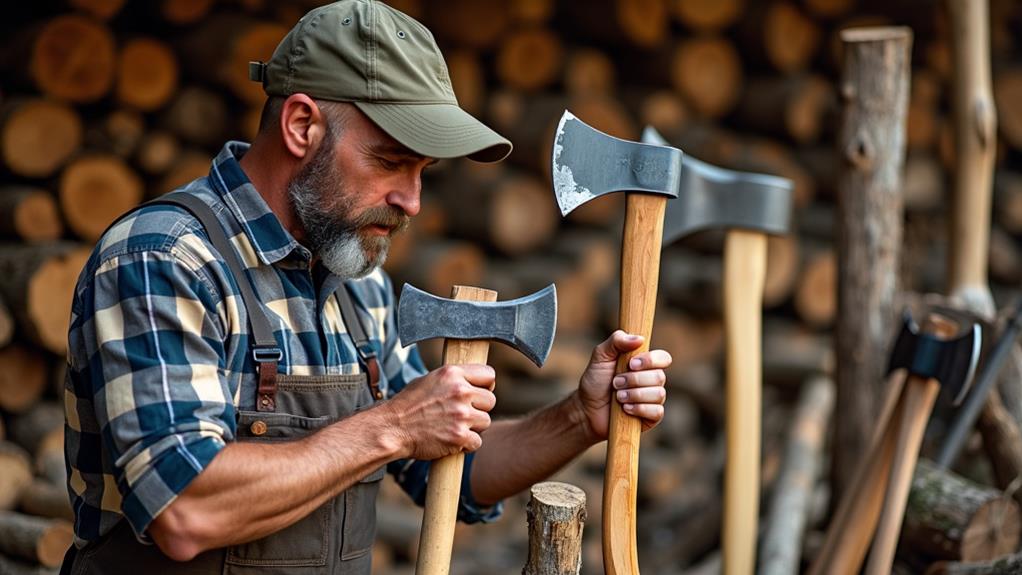
Choosing the right axe for splitting wood can significantly improve your efficiency and safety. You'll need to decide between a splitting axe or a maul:
- Splitting Axe: Lighter with a sharpened blade, easier to handle, ideal for many users.
- Maul: Heavier with a wider head, designed to push wood fibers apart effectively, especially for tougher jobs.
For smaller tasks or one-handed use, a half-sized axe is ideal. It offers better control and maneuverability, perfect for lighter splitting jobs. Beginners may find a full-sized axe more challenging due to its weight and length.
Ensure your axe has a secure head attachment and a sharp blade. A loose head can be dangerous, and a dull blade requires more effort, increasing the risk of accidents. For logs larger than 8 inches in diameter, a splitting maul or wedge provides the necessary force to split tougher wood efficiently. Regular maintenance is essential: sharpen your axe every 3-6 months to keep it performing optimally.
Setting Up the Chopping Block
To set up your chopping block properly, choose a straight, knee-height block to prevent injury and protect your axe's edge. Ensure it's wide enough for stability, allowing you to place the wood at the far edge for safe splitting. Regularly inspect the chopping block for damage to maintain a safe and efficient wood-splitting environment.
Chopping Block Height
A well-chosen chopping block, ideally knee-height, is essential for efficient and safe wood splitting. This height minimizes excessive bending, allowing you to maintain better control over your axe. When the chopping block height is correct, you can split wood more effectively and reduce the risk of injury.
Key points to consider:
- Use a straight, sturdy piece of wood: Provides stability and reduces the risk of injury from missed swings.
- Place the wood to be split at the far edge: Ensures safety and allows for a clean swing.
- Avoid excessively high chopping blocks: Swinging from too high can cause accidents and less accurate hits.
- Choose a broader chopping block: Improves stability during the splitting process, minimizing unexpected wood movement.
Stability and Safety
Ensuring the stability and safety of your chopping block is essential for effective and secure wood splitting. For optimal stability, select a chopping block that's straight and approximately knee-height. This height helps maintain controlled and precise swings, reducing the risk of injury. A broader chopping block is ideal as it minimizes the likelihood of tipping, providing a solid foundation for your wood-splitting tasks.
Position the wood to be split at the far edge of the chopping block. This placement ensures that your axe strikes with maximum force while keeping your hands and body safely distant from the impact zone.
Before beginning, inspect the chopping block's surface for any irregularities. A level and secure surface is crucial for safe splitting practices, preventing the wood from wobbling or sliding off. Elevating the chopping block off the ground can further enhance stability and safety. This practice prevents moisture from seeping into the block, which can compromise its integrity and dull your axe's edge.
Proper Placement Techniques
When setting up your chopping block, prioritize proper placement to ensure a safe and efficient wood-splitting process. Start by choosing a straight chopping block that's around knee-height. This height offers stability and helps prevent injuries while splitting wood. Position the wood at the far edge of the chopping block to allow for a safer swing and better control of the axe.
Here are some key tips to keep in mind:
- Select a broad chopping block: Ensure it's wide enough to support the wood securely as you split it.
- Avoid excessive height: A chopping block that's too high can increase the risk of accidents and make it more challenging to control your swings.
- Take breaks safely: Place the axe edge into the chopping block when you need a break. This prevents accidents and keeps the axe in good condition.
- Maintain control: By positioning the wood at the far edge, you maintain better control, reducing the chances of mishaps.
Ensure your chopping block setup is safe and sturdy. Proper preparation will make the process smoother and more efficient, allowing you to split wood with confidence.
Proper Splitting Techniques
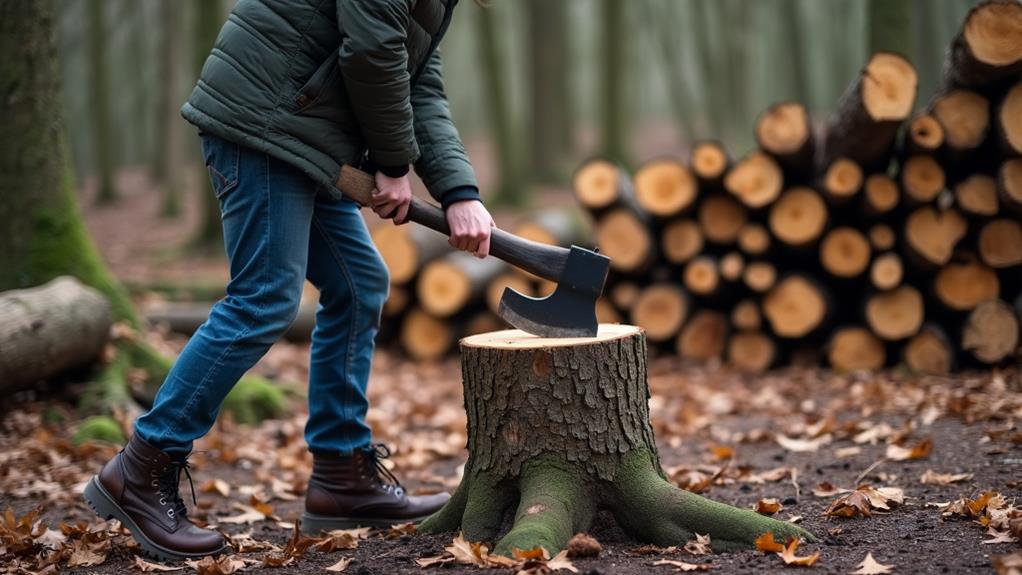
To split wood efficiently, start by positioning the wood upright on a stable chopping block. This ensures stability and maximizes the effectiveness of your strikes. Aim for existing cracks or natural lines in the wood, as these weak points allow for cleaner splits. Always strike at a 90-degree angle to the growth rings for optimal results.
Adopt a proper stance with your feet shoulder-width apart and your knees slightly bent. This stance helps maintain balance and control during your swings. Focus on the weight of the axe and the speed of your swing rather than relying solely on brute strength. This approach optimizes efficiency and reduces strain.
For larger logs, begin by removing sections from the sides to make splitting the center easier. Precision and technique are more important than raw power. By refining your approach, you'll find the process of cutting wood more efficient and less physically taxing.
Using these proper splitting techniques ensures you convert logs into usable pieces of wood swiftly and safely.
Dealing With Stuck Axes
Getting an axe stuck in a log is a common frustration when splitting wood, but there are effective ways to handle it without risking injury. Avoid the instinct to lift the axe straight out. Instead, use the palm technique: place your hand on the axe head and gently wiggle it free. This method reduces the risk of injury and keeps you in control.
To minimize the likelihood of the axe getting stuck in the first place, aim for the front edge of the piece of wood. This technique reduces friction and allows for better splits. If your axe does become lodged, try striking the side of the axe head with a piece of wood or a mallet to dislodge it. This method is effective and won't damage your tools.
Here are some practical tips to remember:
- Use the palm technique to wiggle the axe free.
- Aim for the front edge of the wood to reduce friction.
- Strike the side of the axe head with another piece of wood or a mallet.
- Inspect for knots or irregularities and adjust your technique accordingly.
- Maintain a safe distance from others to prevent accidents from flying debris or unexpected movements.
Wood Drying Process
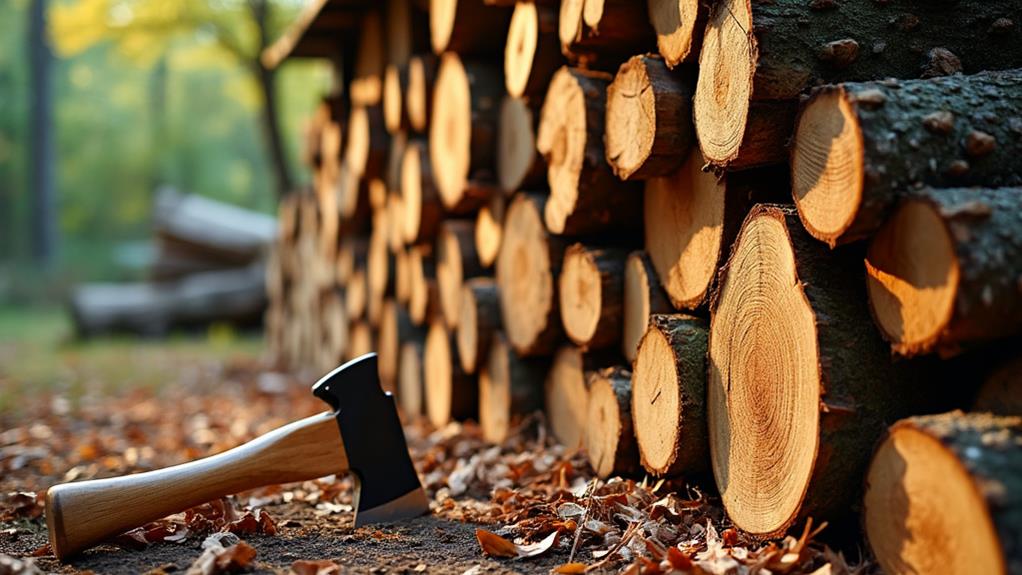
After mastering techniques to handle a stuck axe, it's important to focus on the wood drying process for efficient burning. Freshly cut wood contains about 80% moisture, making it difficult to ignite and prone to generating excessive smoke. For wood to burn efficiently, its moisture content should be reduced to around 20%.
Drying times can vary: pine and poplar typically take about a year, while denser woods like oak may need up to 2.5 years. To accelerate the drying process, stack your wood in a location exposed to both wind and sunlight, which helps reduce moisture content more rapidly. Sheltered drying is also effective—use a roof or tarp to protect the wood from rain while ensuring ample airflow.
It is crucial to raise your wood off the ground to prevent moisture absorption from the soil, which would otherwise impede the drying process.
Once your wood reaches the ideal dryness, it will ignite more easily and produce significantly less smoke. Properly dried wood not only burns more efficiently but also heats your space more effectively, making your efforts worthwhile.
Time-Saving Tips
When splitting wood, efficiency is crucial, and a sharp axe can be your best tool. Follow these time-saving tips to streamline the process:
- First, for large logs, begin by removing sections from the sides. This creates easier splitting surfaces and reduces the overall size of the wood. Smaller pieces are much easier to handle than a massive log all at once.
- Use proper technique and body mechanics. Leverage your whole body rather than relying solely on brute strength. This conserves energy and increases efficiency, allowing you to split more wood without exhausting yourself.
- Keep your axe blade sharp. A sharp blade requires less force and time to split wood effectively, ensuring cleaner cuts every time. Regularly sharpening your axe can save you significant effort and time in the long run.
- Work in manageable stages. Break larger tasks into smaller sections to maintain momentum and prevent fatigue. This approach helps you stay productive and avoid burnout.
Key points to remember:
- Start with side sections for large logs
- Use proper technique and body mechanics
- Keep your axe blade sharp
- Work in manageable stages
Ensure your workspace is clear and safe, allowing you to work efficiently without interruptions.
Conclusion
By following these tips, you'll be able to split wood efficiently and safely. Use the right tools, prioritize safety, and set up your chopping block correctly. Focus on technique rather than strength, and keep your axe sharp. If your axe gets stuck, know how to handle it properly. Make sure your wood is adequately dried. With practice, you'll become quicker and more proficient, making your wood-splitting tasks easier and more enjoyable. Happy chopping!