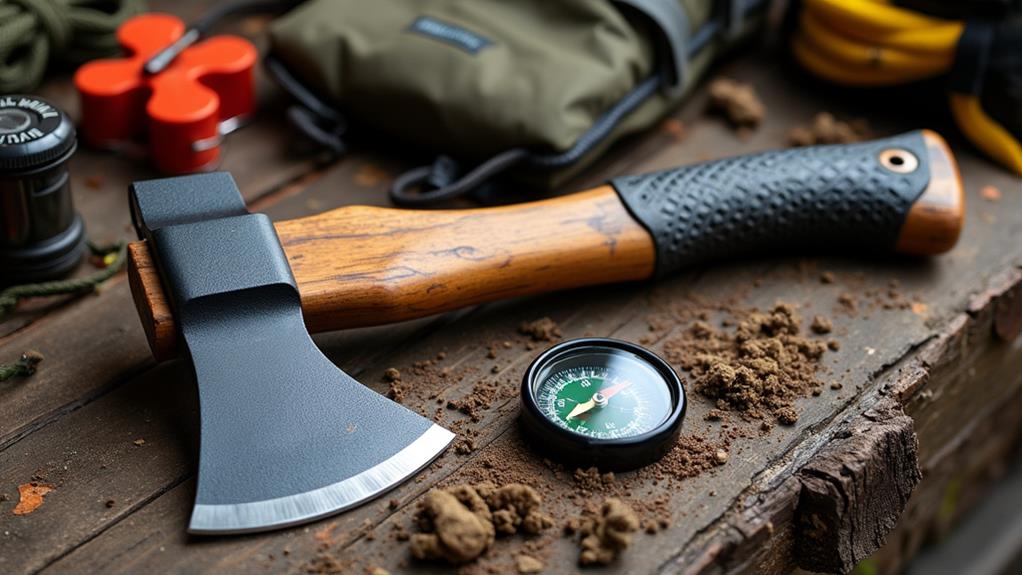
How to Secure Your Axe in a Survival Situation
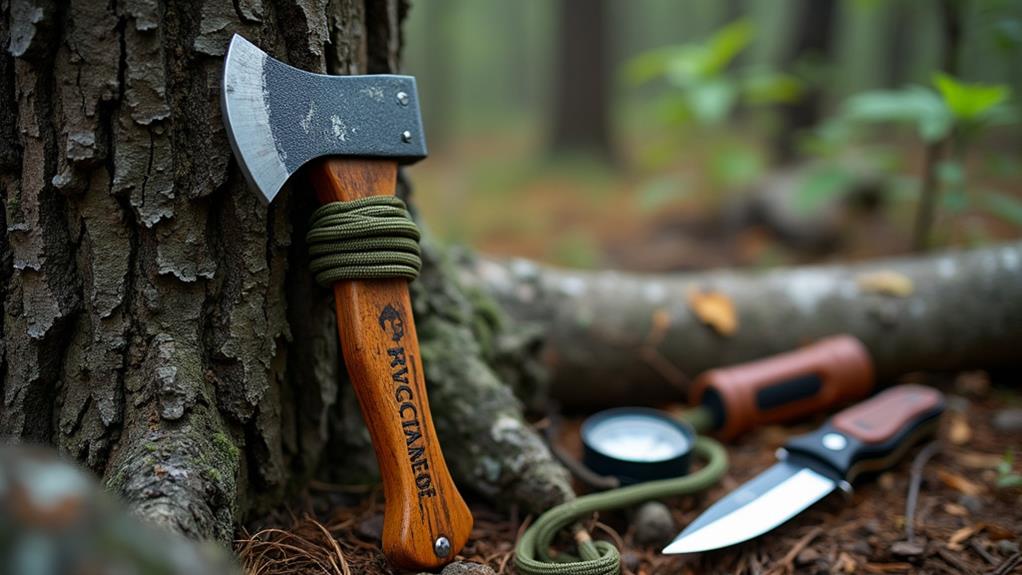
Securing your axe in a survival situation is crucial for both efficiency and safety. Accidental injuries or losing your primary tool can be disastrous. Always use a sheath when the axe is not in use, and embed it in a stable stump or log to keep the blade concealed. How can you carry your axe without risking injury or damage to your gear? And how can you ensure that your axe remains reliable and sharp throughout your survival expedition?
Let's explore these practices and understand how they can make a significant difference.
Axe Safety Fundamentals
Safety should always be your top priority when handling an axe, given the potential severity of injuries. Begin by assessing the risk, considering both the likelihood and severity of potential injuries. Axe injuries are generally more severe than those from knives, so extra precautions are essential.
Wear protective clothing and gear, such as safety glasses and gloves, to shield yourself from flying debris and potential slips. Maintain a safe distance of 15 to 20 feet from others when swinging an axe to prevent accidents.
A sharp blade enhances both safety and effectiveness. Regularly inspect your axe to ensure the blade is sharp and the head is securely attached to the handle. A damaged axe is a hazard and should never be used. When not in use, store the axe in a sheath or mask to prevent accidental injuries. Remember that a masked axe can still be dangerous if mishandled, so always handle with care.
Choosing a Survival Axe
Selecting the right survival axe can significantly impact your outdoor adventures. Prioritize lightweight models, typically weighing between 2-3 pounds, to ensure easy transport while maintaining functionality. Opt for high carbon steel heads for superior durability and edge retention, essential for long-term survival. A sharp cutting edge is crucial, so choose an axe that remains sharp over extended use.
Handle material is another key consideration. Hickory handles offer excellent shock absorption, reducing hand fatigue during prolonged tasks. Alternatively, fiberglass handles provide outstanding durability and resistance to environmental wear, making them suitable for various conditions.
Versatility is critical in survival situations. Consider multi-purpose axes or survival hatchets with integrated tools, which enhance utility and allow you to tackle a range of tasks without carrying multiple tools.
Lastly, ensure the axe has a comfortable grip and balanced design. A well-balanced axe reduces fatigue and optimizes efficiency, helping you work safely and effectively. With these factors in mind, you'll be well-equipped to choose a survival axe that meets your needs in any outdoor scenario.
Carrying Your Axe Safely
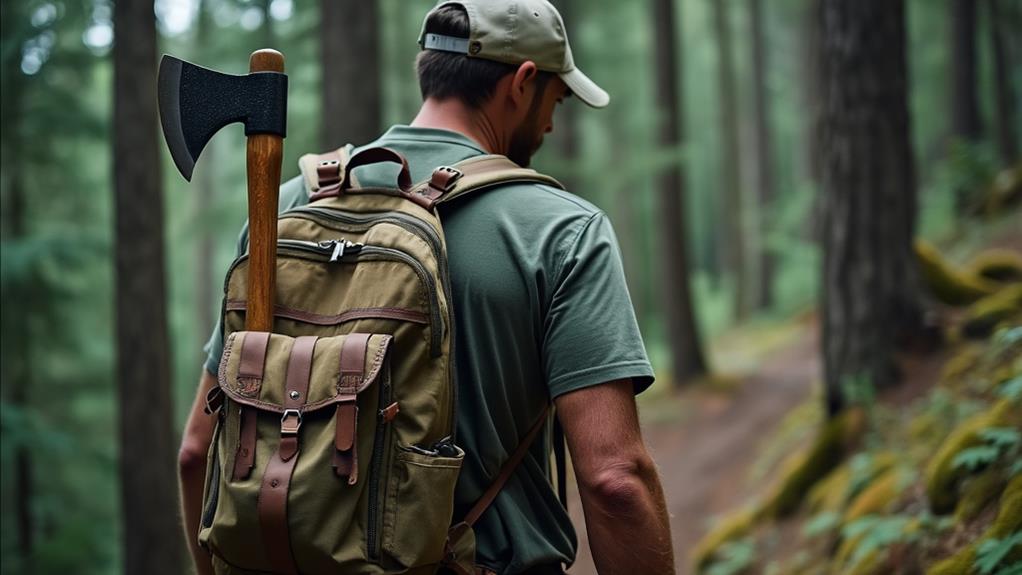
Carrying your axe safely is crucial to prevent injuries and ensure you're prepared for any task. Start by using an axe mask, a protective cover that prevents accidental cuts from the blade, offering peace of mind as you move.
For optimal control and safety, adhere to these guidelines:
- Hold the handle below the head: This grip offers better control and reduces the risk of accidental drops.
- Avoid clipping to your belt: Although convenient, carrying the axe on your belt can lead to accidents if it shifts or falls unexpectedly.
- Be ready to jettison: Always carry your axe in a way that allows you to easily drop it if you lose balance or need to react quickly.
- Grip behind the bit: Another stable method is to grip the axe head behind the bit and cradle the handle for extra stability and control.
Effective Axe Handling
When handling your axe, always carry it with the handle below the head to maintain control and prevent accidents. Use an axe mask for safe transport and avoid clipping it to your belt to reduce unexpected movements. During activities, grip a half-length axe mid-handle for better control and be ready to drop it if you fall to prevent injuries.
Proper Carrying Techniques
Ensuring your axe's safety and your own well-being begins with effective handling. Proper carrying techniques are essential to prevent accidents and injuries. The recommended method involves holding the axe handle just below the head, providing better control and increasing safety.
Here are the best practices for carrying your axe:
- Use an Axe Mask: Always cover the blade with an axe mask to prevent accidental cuts and injuries.
- Correct Carry Position: Hold the axe handle near the head for better balance and control, reducing the risk of accidents.
- Avoid Belt Carrying: Don't clip the axe to your belt. While it may seem convenient, it can lead to accidents, especially when moving or climbing.
- Secure Grip: Grip the axe head behind the bit and cradle the handle. This ensures a firm hold while allowing you to release the axe quickly if you fall or need to navigate tricky terrain.
Safe Placement Practices
Mastering safe placement practices for your axe is crucial for preventing injuries and ensuring your tool's longevity. Always store your axe in a way that minimizes the risk of accidental contact. Embedding it in a stump or log with the sharp edge hidden is ideal. This method ensures secure storage and reduces the chance of anyone accidentally touching the blade.
When embedding the axe, make sure it aligns with the wood grain. This alignment provides a stable hold and prevents the axe from falling unexpectedly. Avoid placing the axe in rocky areas where the blade could become damaged or unstable. Even if the blade is covered, handle the axe carefully during placement to avoid any force that might cause injury.
Regularly check the axe's position, especially after moving or using it, to ensure it remains secure and safe. Here's a quick reference table to help you remember these key points:
| Practice | Reason |
|---|---|
| Embed in stump/log | Conceals sharp edge, prevents contact |
| Align with wood grain | Ensures stable and secure storage |
| Avoid rocky areas | Prevents blade damage and instability |
Handling During Activities
Effective axe handling is crucial for both safety and efficiency during activities. To ensure you're using your axe correctly, follow these key practices:
- Proper Carrying Technique: Always carry the axe with the handle below the head. This method provides better control and reduces the risk of accidents while moving.
- Safe Transport: Use a protective axe mask to cover the blade. This prevents accidental contact and ensures everyone's safety.
- Avoid Belt Clipping: Don't clip the axe to your belt, as this can cause accidental injury if you bend or move quickly. Instead, securely cradle the handle in your hand.
- Optimal Grip Position: Your grip on the axe handle is important. For one-handed use of a half-length axe, a mid-handle grip is ideal. This helps dampen motion, providing better speed and control.
Safe Axe Placement
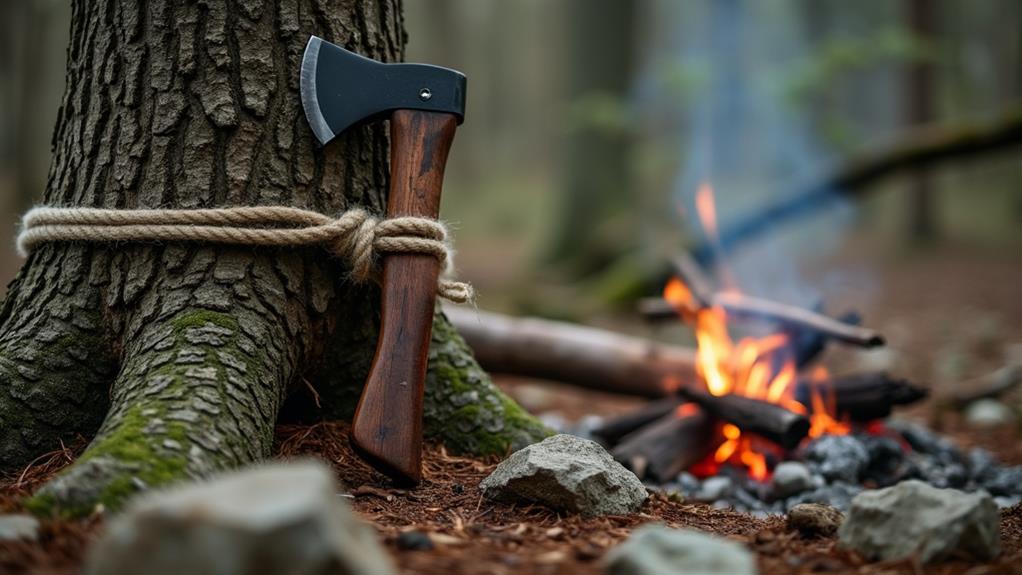
When you're done using your axe, it's crucial to place it safely to prevent accidents and maintain the tool's integrity. Always embed the axe in a stump or log with the blade concealed to minimize accidental contact and ensure stability.
Align the axe with the grain of the wood to secure it and prevent rolling or falling. Avoid placing the axe in rocky areas to protect the blade from damage, which is vital for its longevity and performance.
Store the axe in a designated area away from high-traffic paths to reduce the risk of accidents. For added protection, use an axe mask or sheath when storing or transporting the axe to prevent injuries and protect the blade. Proper storage and placement are essential for safety and tool preservation.
Firewood Processing
When processing firewood, select a designated area away from other camp activities to ensure safety. Gather dead trees or fallen branches, as green wood burns poorly and produces excessive smoke. Split logs upright on a stable surface, aiming for the center to ensure both efficiency and safety.
Choosing Safe Locations
Choosing the right spot for firewood processing is essential for both safety and efficiency. When using an axe, prioritizing safe locations is crucial to prevent accidental injuries. Select a site away from other camp activities to minimize the risk posed by swinging axes or flying debris.
Ensure that this area doesn't obstruct important pathways, such as those leading to water sources or latrines, to maintain clear and safe routes for everyone.
Consider the following key points to select the best firewood processing spot:
- Distance: Maintain at least 15 to 20 feet from others when using an axe to create a safe buffer zone, reducing the risk of slips or errant swings.
- Ground Stability: Choose a location with stable ground to prevent accidents. A firm surface ensures that the axe can be safely embedded in logs, concealing the edge when not in use.
- Overhead Hazards: Check for low-hanging branches or other overhead obstacles that could interfere with your axe swings and cause injuries.
- Separation: Keep the firewood processing area distinct from other camp activities to avoid distractions and reduce the risk of accidental injuries.
Proper Splitting Techniques
Once you have chosen a safe location for processing firewood, mastering proper splitting techniques is crucial. Start by setting your log upright on a stable surface to enhance control and safety, and to prevent your axe from getting stuck. Aim for the center of the log when chopping to boost efficiency and reduce the risk of the axe bouncing back.
Position the wood on the far side of the block to minimize injury risk to your legs and feet. Maintain a proper stance by keeping your feet shoulder-width apart for balance and control during each swing. Slightly bend your knees to enhance vertical impact efficiency, ensuring a cleaner cut and better energy transfer.
Developing good axe skills is essential in a survival situation. Each swing should be steady and controlled. Avoid rushing; focus on precision. Proper splitting techniques not only make the task easier but also significantly improve safety.
Efficient Wood Gathering
Efficient wood gathering is essential for maintaining a steady supply of firewood, especially in survival situations. Prioritize dead trees or fallen branches, as they've lower moisture content and burn more effectively than green wood. Employing the right techniques can significantly improve your efficiency.
To maximize your efforts, follow these key steps:
- Use a heavy-duty survival axe: Its weight and durability make chopping and splitting tasks more efficient compared to lighter axes.
- Split logs upright on a stable surface: Aim for the center to minimize accidents and ensure safety. This method allows for quicker and safer wood processing.
- Create kindling from larger logs: Shave smaller pieces to help ignite your fire more easily. A good supply of kindling is crucial for starting and maintaining a fire in survival situations.
- Maintain a safe distance from others: Keep 15 to 20 feet away to avoid injuries from flying debris or accidental slips.
Carving and Splitting Safety
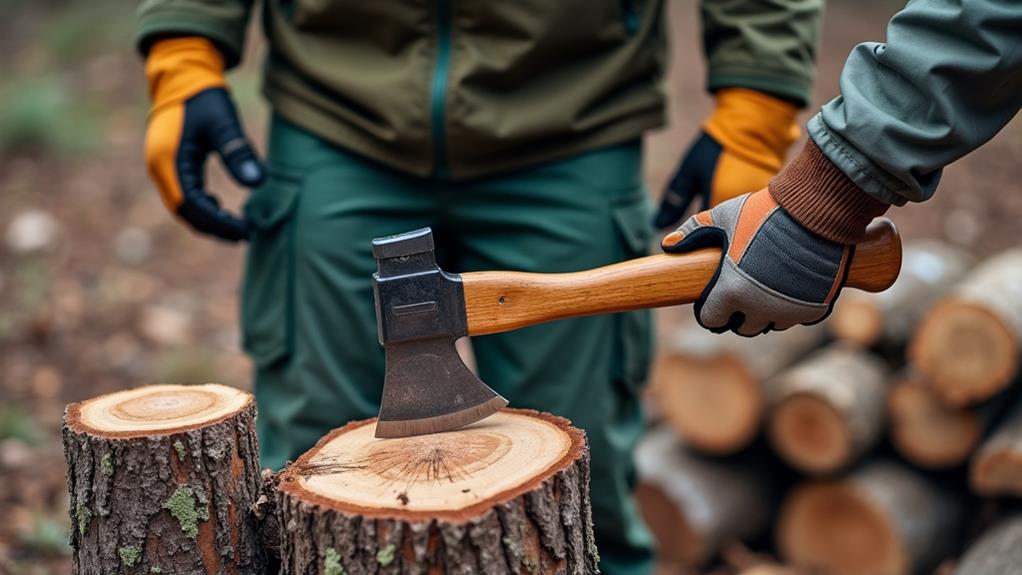
Ensuring safety while carving and splitting wood is essential to prevent injuries. When working with an axe, always position your hands away from the cutting path to significantly reduce the risk of accidents.
Place the log on a stable surface and aim for the center when splitting wood. This practice helps you maintain control, enhances the efficiency of your swing, and minimizes the chance of mishaps. Proper alignment ensures your chopping efforts are effective and safe.
Never raise the axe's cutting edge above your holding hand. Keeping the blade below this level enhances control and prevents accidental cuts. Additionally, avoid kneeling too close to the workpiece. Maintain a safe distance to accurately judge your swing and reduce the risk of misjudgment.
To prevent overstrikes, where the axe handle hits the wood instead of the head, ensure correct positioning of the wood and employ proper swinging techniques. Bend your knees to improve the vertical impact efficiency of your swing.
Maintaining Your Axe
To keep your axe in top shape, establish a regular cleaning routine to prevent rust, particularly after exposure to moisture or sap. Store the axe in a sheath or case to protect the blade and prevent accidents. Regularly sharpen the blade, and inspect for any damage to ensure it remains safe and effective.
Regular Cleaning Routine
How often do you clean your axe after each use? Regular cleaning is essential to maintaining your axe's efficiency and longevity. After every use, make it a habit to check for dirt, sap, and moisture, as these can cause rust and deterioration if not promptly removed.
Follow this simple cleaning routine:
- Wipe Down the Axe Head: Use a damp cloth to clean the blade, then dry it thoroughly to prevent corrosion.
- Apply Oil: Coat the axe head and handle with a light layer of mineral oil to protect against moisture and improve longevity.
- Inspect for Damage: Regularly check the axe for any signs of damage or wear. Address any issues immediately to maintain safety and performance.
- Store Properly: Storing the axe in a sheath or protective case prevents accidental damage and keeps it ready for the next use.
Proper storage techniques will be explored in detail later.
Proper Storage Techniques
Proper storage techniques are essential for maintaining your axe's durability and performance. When your axe isn't in use, store it in a protective sheath or case to prevent accidental injuries and protect the blade from damage.
Regularly clean your axe to remove any dirt or sap that could compromise its condition, as a clean blade is less likely to suffer from rust and corrosion. For long-term storage, apply a light coat of oil to both the blade and handle. This step helps prevent rust on the metal and maintains the integrity of the wooden handle.
Periodically inspect your axe, paying close attention to the handle junction and blade for any signs of wear or damage. Catching issues early ensures your axe remains safe and effective. Avoid storing your axe in damp or humid environments, as moisture can lead to rust on the blade and weaken the wooden handle over time.
Effective Sharpening Methods
Maintaining a sharp axe is essential for its performance and your safety. A well-sharpened blade requires less effort, minimizing the risk of accidents. Here's how to keep your axe blade in top form:
- Use a Sharpening Stone: Regularly employ a sharpening stone or puck to keep your axe's edge sharp. This ensures your blade remains effective, making your tasks easier and safer.
- Protect the Axe Blade: When splitting wood, place another piece of wood beneath to prevent the blade from hitting hard surfaces that can dull it quickly.
- Inspect for Damage: Before sharpening, check the blade for any nicks or damage. Defects can impact the sharpening process and overall performance of your axe.
- Maintain a Consistent Angle: Sharpen the axe at a consistent angle, typically 20 to 25 degrees. This helps preserve the blade's geometry and optimizes cutting efficiency.
After sharpening, clean the blade thoroughly and apply a light coat of oil to prevent rust, especially in damp environments common in survival situations.
Understanding Axe Types
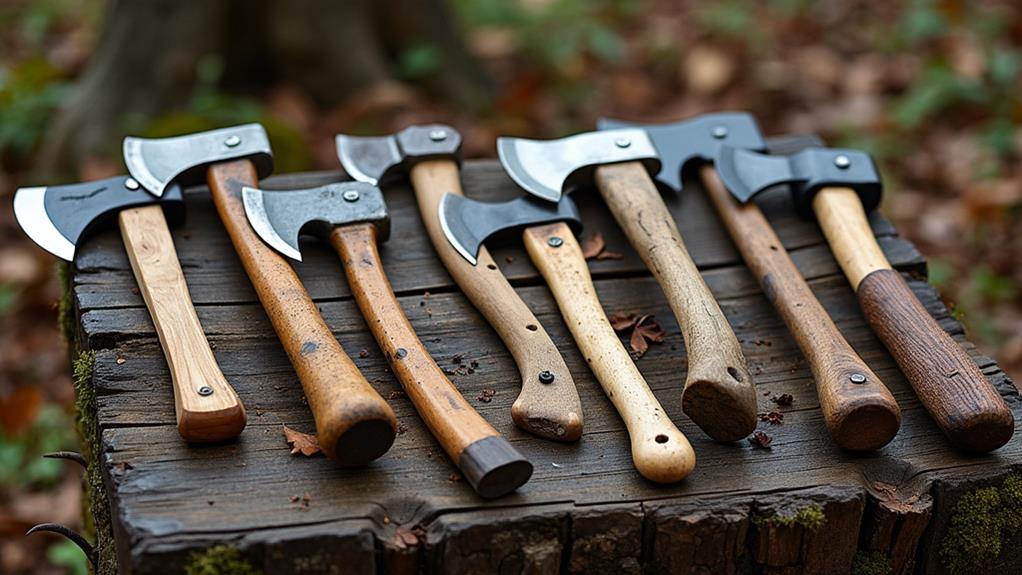
Understanding the diverse types of axes is crucial for selecting the right tool for your needs. There are four common axe types: hatchet, half-length axe, three-quarter axe, and felling axe. Each size serves a unique purpose, making them versatile tools in different scenarios.
- A hatchet, weighing around 0.6 kg (1.3 lb), is designed for portability and is perfect for light chopping and precision tasks, making it indispensable for quick, on-the-go jobs.
- A half-length axe, weighing approximately 0.9 kg (2 lb), offers a balance between portability and performance, making it versatile for general use across a variety of tasks.
- For larger jobs, a three-quarter axe, also around 0.9 kg (2 lb), provides more control and power without sacrificing too much portability.
The heaviest, the felling axe, at 1.5 kg (3.3 lb), enhances chopping efficiency, especially when dealing with larger trees or tougher wood.
Maximizing Axe Versatility
A versatile axe can significantly enhance your efficiency and effectiveness in various situations, especially in survival scenarios. By maximizing the versatility of your axe, you can replace multiple tools, lighten your load, and streamline gear management.
Here are some key ways to utilize your axe as a multi-functional survival tool:
- Chopping and Splitting Wood: Essential for building shelters and maintaining fires, a sharp axe blade allows you to quickly process large logs into manageable pieces.
- Hammering Stakes: The flat side of your axe can serve as a hammer, ideal for driving tent pegs or stakes into the ground, which is crucial for setting up a secure shelter.
- Carving Tools and Utensils: The sharp edge is perfect for carving spoons, fishing spears, and other necessary tools, invaluable for food gathering and preparation.
- Self-Defense: In critical situations, your axe can act as a means of self-defense against wildlife or other threats, adding another layer of utility.
Mastering various techniques, such as vertical chopping and horizontal slicing, will further enhance your axe's versatility, ensuring you maximize the functionality of this indispensable survival tool.
Conclusion
Securing your axe in a survival situation is crucial for both safety and efficiency. Always use a sheath to cover the blade when not in use, and embed the axe head in a stable stump to keep it secure. Remain aware of your surroundings to avoid accidents. Regularly inspect the axe's position and condition to ensure it remains safe to use. Proper handling, placement, and maintenance of your axe will protect you and keep the tool ready for any task. A well-secured axe is a reliable asset in the wild. Stay prepared and stay safe!