How to Safely Transport Your Axe on Outdoor Adventures
Transporting your axe safely during outdoor adventures is crucial to prevent accidents and ensure readiness. Begin by selecting the appropriate axe for your trip and always use a robust sheath to cover the blade.
Secure the axe to your backpack with reliable straps or paracord loops for stability and easy access. Positioning the axe correctly is key to maintaining comfort and safety on the trail.
Let's explore the best practices for carrying your axe without compromising your journey.
Choosing the Right Axe
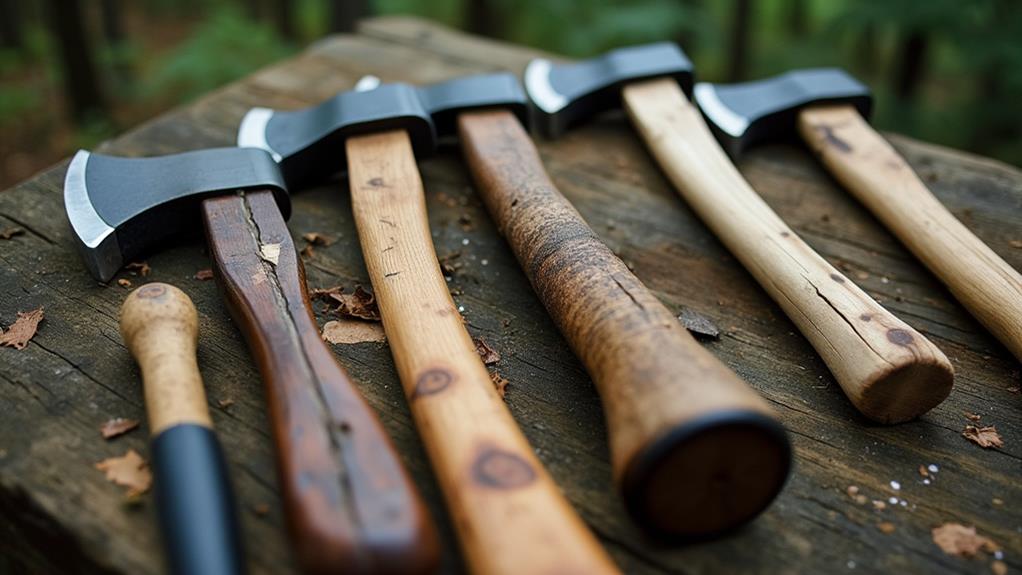
When selecting an axe for your outdoor adventures, consider both weight and size to match your tasks. A hatchet, weighing around 0.6 kg (1.3 lb), is excellent for portability and light duties like kindling splitting.
For more substantial chopping, a felling axe, weighing about 1.5 kg (3.3 lb), offers the cutting power you need. A versatile option is the half-length axe, weighing 0.9 kg (2 lb), suitable for a variety of tasks from chopping to splitting.
In boreal forest environments, a three-quarter axe, also weighing 0.9 kg (2 lb), balances weight and functionality, ideal for the demands of that terrain. Always match your axe choice to the specific tasks you plan to undertake for safety and efficiency.
Familiarity with different types of axes and their applications will enhance your performance and safety in diverse outdoor settings. Choose wisely to optimize both utility and protection.
Preparing Your Axe for Transport
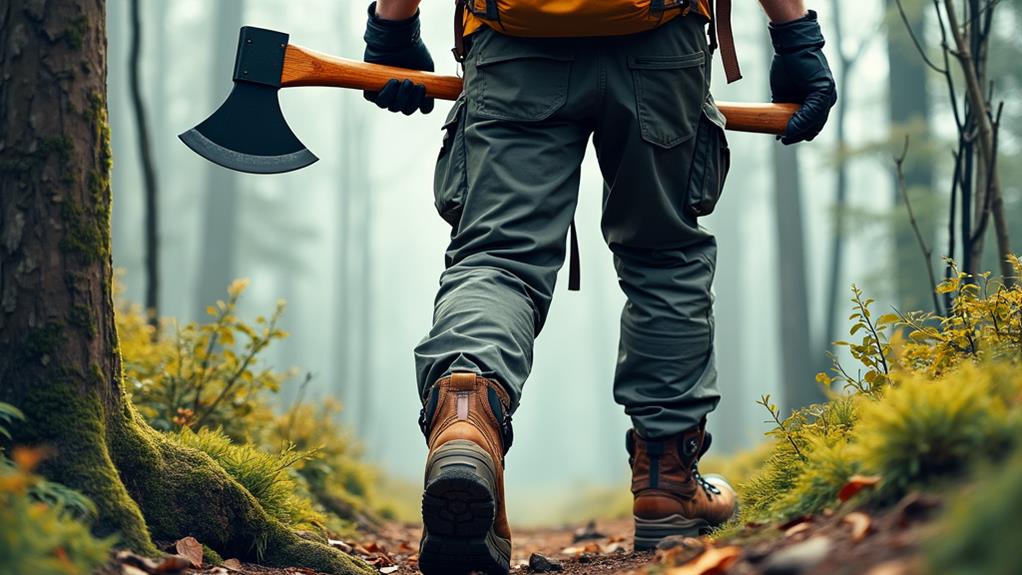
When preparing your axe for transport, always cover the blade with a sheath to prevent accidental injuries. Secure your axe to your pack using paracord loops or straps to keep it stable. Avoid clipping the axe to your belt; instead, carry it by holding the handle just below the head while walking to ensure safety.
Secure the Blade
To safely prepare your axe for transport, start by securing the blade with a protective sheath or cover to prevent accidental cuts and potential damage. Always use a high-quality sheath that fits snugly and completely covers the sharp edge. This precaution ensures both your safety and the protection of your gear.
Next, inspect your axe before packing. Check for any signs of damage and verify that the sheath is intact. A damaged sheath won't provide adequate protection, increasing the risk of injury and equipment damage.
Once you've confirmed everything is in good condition, proceed with securing the axe to your pack or vehicle. Use sturdy straps or loops to fasten the axe securely, preventing it from moving around during transit. This minimizes the risk of injury and loss of the axe.
Avoid placing the axe in a spot where it could shift or fall. Instead, secure it in a designated storage area or embed the blade in a stump or log, keeping the edge concealed.
Choose Carrying Method
Choosing the right carrying method is crucial for safely transporting your axe. Always use an axe mask to cover the blade, preventing accidental cuts or injuries. Never clip the axe to your belt, as it poses a significant safety risk. Instead, hold the axe handle below the head or cradle the handle behind the bit for a secure grip.
For longer hikes, consider using paracord loops or sheaths with straps to attach the axe to your backpack. This method keeps the axe accessible yet stable during movement. Store the axe close to your back to improve balance and comfort. Regularly check your mounting system, such as Quick Fists or compression straps, to ensure the axe remains securely fastened.
Here's a comparison of carrying methods:
| Method | Benefits |
|---|---|
| Axe mask | Prevents accidental cuts or injuries |
| Holding below the head | Offers secure grip, avoids belt clipping risk |
| Paracord loops | Easily attaches to backpack, offers stability |
| Sheaths with straps | Keeps axe accessible, improves comfort |
| Quick Fists/compression straps | Ensures secure fastening during transport |
Carrying Methods and Techniques
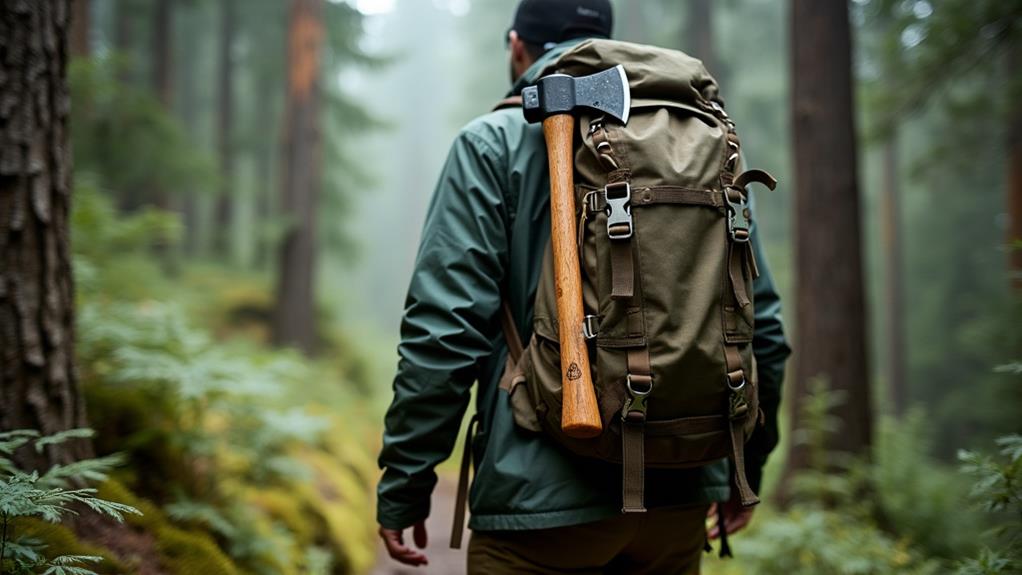
To securely transport your axe, use paracord loops to attach it to your backpack, ensuring it stays secure and doesn't tangle. Position the axe close to your back to maintain proper weight distribution and balance. For added convenience, opt for backpacks with specific attachment points like ice axe loops or custom webbing loops.
Secure Paracord Loops
Using secure paracord loops is an effective method for carrying your axe. These loops allow you to attach your axe to your backpack, providing quick access while keeping it stable. Ensure that your paracord loops are tight enough to prevent the axe from moving but loose enough for easy removal when needed.
Secure paracord loops not only offer convenience but also enhance safety by keeping your axe in a fixed position during your trek. If your backpack has built-in ice axe loops, consider using them for larger axes, as these loops are designed to hold tools securely and minimize swinging that could lead to injury.
For added safety, use sheaths with straps to cover the axe blade, preventing accidental contact and securing the blade. Additionally, utilize your pack's compression straps to hold the axe close to your body, which helps maintain balance and reduces discomfort on long hikes.
Backpack Attachment Points
Effectively utilizing your backpack's attachment points ensures your axe remains secure and easily accessible during your outdoor adventures. Employing the right technique can significantly enhance both comfort and safety.
Methods for Axe Attachment:
- Paracord Loops:
- Benefit: Offer stability and easy access.
- Usage: Thread the paracord through the axe handle and secure it to your pack's attachment points.
- Ice Axe Loops:
- Benefit: Provide better weight distribution and reduce strain.
- Example: Backpacks like the Osprey Aether 65 feature specific attachment points to keep the axe close to your body.
- Compression Straps:
- Benefit: Firmly hold the axe in place, preventing unwanted movement that could cause discomfort or accidents.
- Leather Holsters for MOLLE Webbing:
- Benefit: Improve accessibility, allowing for quick retrieval of your axe.
- Usage: Attach the holster to MOLLE webbing on your pack.
- Custom Webbing Loops:
- Benefit: Provide a tailored fit for your axe if your pack lacks built-in attachment points.
Using Backpack Features
When transporting your axe, utilizing the features built into your backpack can significantly enhance safety and convenience. Many backpacks, such as the Osprey Aether 65, are equipped with ice axe loops designed for securely attaching axes. These features ensure your axe remains in place, preventing accidental injuries or damage to your gear.
Compression straps are another valuable feature. They can effectively secure your axe, improving stability and reducing the risk of tangling during transport. This is especially beneficial during rigorous hikes where movement is constant and unpredictable.
For those using a Karrimor pack, the axe sleeve is a dedicated section that allows for easy carrying and quick access to your axe when needed. Additionally, some users find paracord loops or sheaths with straps useful for securely attaching axes to pack handles, enhancing both accessibility and safety.
Securing Your Axe in Vehicles
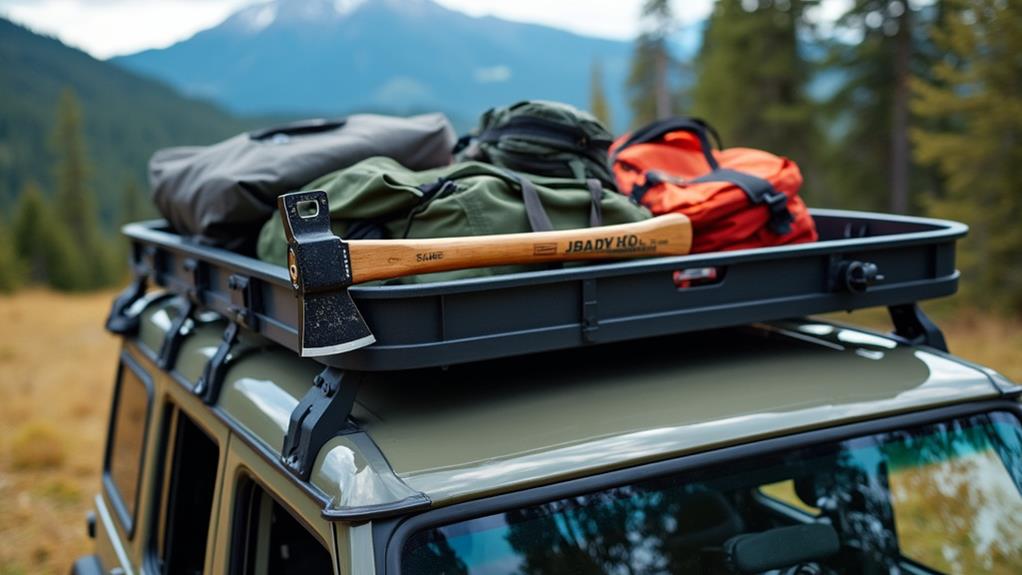
Transporting an axe in a vehicle requires attention to safety and security. Start by using a sheath or cover to protect both the blade and vehicle occupants. For external storage, mounting solutions like Quick Fists and conduit hangers are excellent choices. These options keep your axe accessible while minimizing interior clutter.
If you opt for exterior mounting, consider vertical mounting on rear bumpers for stability during travel. Maxtrax mounts offer another reliable solution, providing ample space and rubber contact points to keep tools stationary.
For interior transport, securing tools within truck beds or using clamps to anchor the axe against vehicle walls can prevent shifting during transit. Regular inspections are crucial. Check your mounted axes frequently for signs of wear or looseness. This ensures safe transportation and helps prevent theft or accidental injury.
Safe Handling Practices
Properly handling an axe is crucial for ensuring your safety and the safety of those around you. Always use an axe mask when carrying your axe to prevent accidental contact with the blade, which can cause serious injuries. When transporting your axe, hold the handle just below the head or cradle the handle behind the bit for a secure grip, greatly reducing the risk of dropping it.
Never carry an axe clipped to your belt, as sudden movements or falls can lead to accidents that are easily avoidable with proper handling techniques. If you lose your balance, ensure the axe can be easily jettisoned to prevent injuries during unexpected falls. Maintaining awareness of your surroundings is essential while handling an axe. Continuously assess for potential hazards or bystanders nearby to ensure a safe environment.
Storage Solutions in Camp
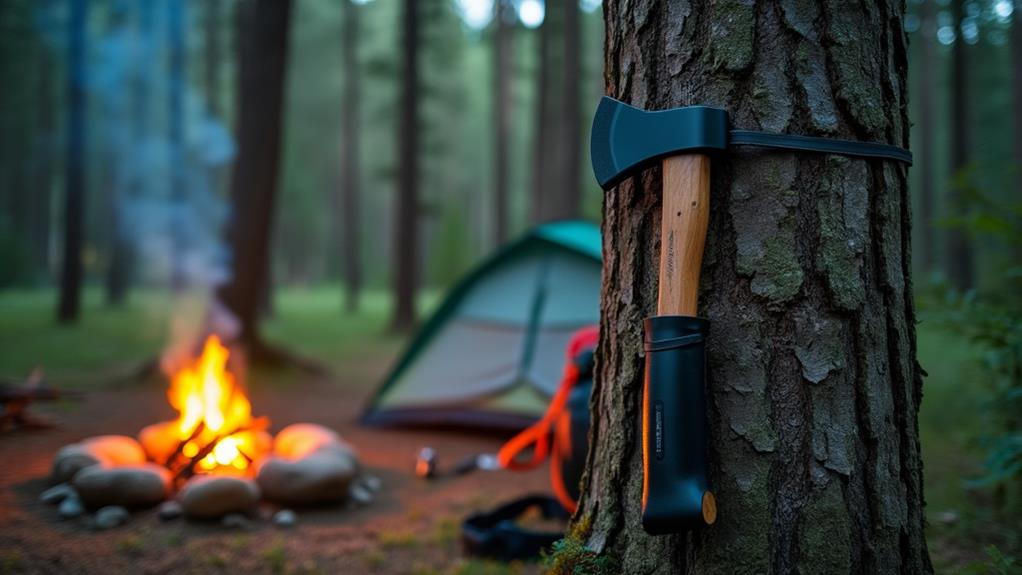
To maintain a safe camp environment, designate a specific storage area for axes and other cutting tools. This practice prevents accidents and ensures easy access to your tools when needed.
Here are some effective storage solutions:
- Axe Sheaths or Covers: Protect the blade and reduce the risk of injury by covering your axe after each use.
- Stump or Log Embedding: Store your axe embedded in a stump or log with the edge concealed to keep the blade secure and prevent accidental contact.
- Hard Cases or Dry Bags: These options organize your tools and protect them from dirt and damage, optimizing storage space for other gear.
- Tool Rack or Peg Board: A simple rack or peg board helps keep your tools orderly and easily accessible.
- Separate Tool Tent: If space allows, designate a small tent or area specifically for tool storage, keeping sharp implements away from living and sleeping areas.
Maintenance and Inspection
After organizing your camp storage, it's crucial to maintain and inspect your axe to ensure its safe and effective use. Start by regularly checking your axe for any signs of damage. Look for cracks in the handle and nicks on the blade, as these can compromise safety and performance. Address any issues immediately to prevent accidents.
Cleaning your axe after each use is essential. Use a mixture of sand and used motor oil to scrub off dirt and moisture. This cleaning method helps prevent rust and extends the lifespan of your tool. Once cleaned, check the tightness of the axe head on the handle. A loose head is a serious hazard, so ensure it's securely fastened before transporting or using the axe.
Applying a light coat of oil to the blade is another crucial maintenance step. This protects against corrosion, especially if the axe will be stored for an extended period or exposed to moisture.
Finally, verify that your axe sheath or mask is in good condition and fits properly. This will protect the blade and prevent accidental cuts during transportation.
Conclusion
By following these guidelines, you'll ensure your axe is safely transported and ready for use on your outdoor adventures. Choose the appropriate axe for your needs, prepare it properly, and use secure carrying methods. Utilize your backpack's features for safe transport and always ensure its secure placement in vehicles. Practice safe handling and store it correctly in camp. Regular maintenance and inspections will keep your axe in optimal condition, enhancing the safety and enjoyment of your trips. Happy adventuring!