How to Safely Pass an Axe to Another Person

When passing an axe to another person, first ensure the axe is properly sheathed, covering the blade. Hold the axe by the handle with the head pointed down and away from your body to prevent accidents. Communicate clearly by announcing your intention and waiting for the recipient's acknowledgment. Make eye contact and confirm their readiness before proceeding with the transfer.
Ensure the recipient has a firm grip and that the surroundings are safe for both of you to avoid any mishaps.
Prepare the Axe
Before handing an axe to someone, always ensure it's sheathed, with the bit covered to prevent accidental cuts. Proper safety starts with making sure the axe is securely covered, reducing the risk of injuries.
When ready to pass the axe, hold it by the handle with the head pointed down and away from your body. This position not only protects you but also facilitates a safe handover. Clearly communicate with the recipient by saying something like, "I'm passing the axe now," and ensure they acknowledge and are ready to receive it.
Wait for the receiver to establish a firm grip before letting go. This ensures they've secure control, minimizing the chance of drops or accidents. When dealing with a double-bit axe, drive one bit into a log first. This stabilizes the axe, making it safer to pass the other bit without risk.
Ensure Safe Environment
Creating a safe environment is crucial when passing an axe. Begin by confirming that the area around you is free of obstacles. Clear away any debris or equipment that might cause someone to trip or lose balance. Ensure no one is within two axe lengths to prevent accidental injury.
Before passing the axe, establish eye contact with the recipient to ensure they're ready and aware of the transfer. Communication is key; say "axe coming" to alert the receiver, helping everyone stay on the same page and preventing surprises.
Always hold the axe with the head pointing down and away from your body to minimize the risk of injury if the axe slips. Use safety equipment, such as gloves, to maintain a secure grip. Wait for the recipient to have a firm grip before releasing the axe. Don't let go until you're sure they're prepared to take it safely.
Proper Handling Technique
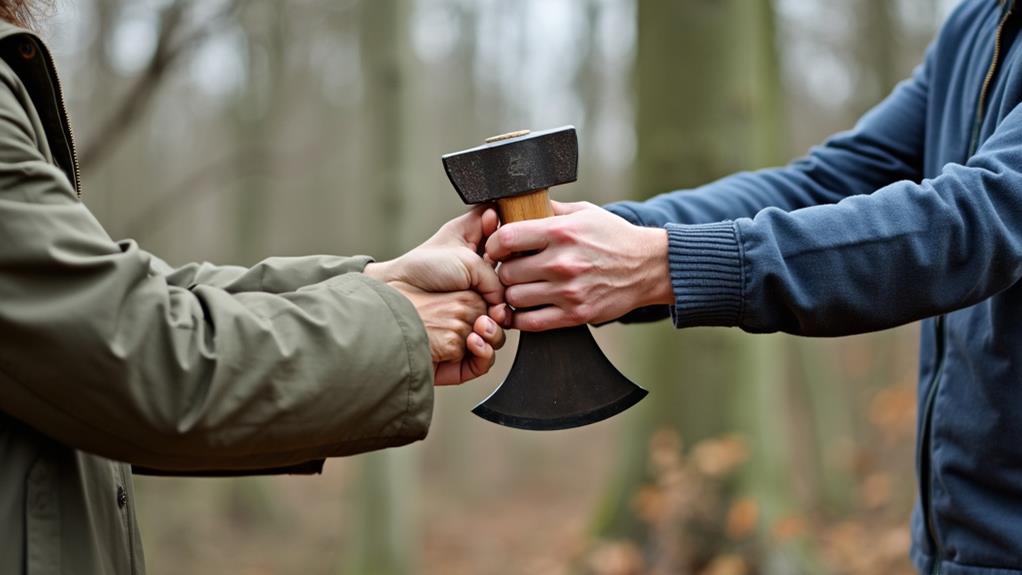
When passing an axe, make sure it's sheathed with the bit pointed outward and held down. Communicate clearly with the recipient and confirm they've a secure grip before letting go. This careful approach minimizes risk and ensures everyone's safety during the transfer.
Sheathed Axe Transfer
Ensuring safety during a sheathed axe transfer begins with securely covering the bit with its sheath to prevent accidental cuts. When you're ready to pass the axe, always hold it by the handle with the head pointing down and away from your body. This keeps you in control and minimizes the risk of injury during the transfer.
Ensure the axe is stable. If you're transferring a single-bit axe, drive the cutting edge into a log before passing it. This stabilizes the axe and reduces the chance of accidental contact with the blade, even when sheathed.
Never toss or throw the axe to another person. Instead, hand it directly to them. This direct hand-off ensures that the recipient can get a firm grip on the handle before you let go, making the transfer smoother and safer.
Clear Communication Protocol
Effective communication is crucial when passing an axe to ensure everyone's safety. A clear communication protocol ensures that both you and the recipient understand each step of the transfer process.
Begin by announcing your intention: say, "I'm passing the axe." This statement alerts the other person and prepares them to receive it.
Next, hold the axe by the handle with the bit facing downward and away from your body, minimizing the risk of injury if the axe slips. Always wait for the recipient to signal their readiness, either through a verbal acknowledgment or a nod.
Once you receive their signal, proceed with the pass while maintaining eye contact to confirm mutual understanding and readiness. If passing a double-bit axe, be extra cautious and only release the bit facing away from both of you for added safety.
Ensure the recipient has a firm grip on the handle before letting go. This step is crucial to avoid accidents.
Secure Grip Confirmation
To ensure a secure grip when passing an axe, maintain a firm hold on the handle until you're certain the recipient has a stable grasp.
- Start by clearly communicating with the person receiving the axe. Say, "I'm passing you the axe," to ensure they're alert and ready.
- Hold the axe with the head pointing down and away from your body to minimize injury risk if it slips.
- Extend the handle towards the recipient and wait for them to indicate they're ready. Only proceed to pass the axe once they signal their readiness.
- Keep your grip firm and steady until you visually confirm the recipient has a secure grip on the handle. Don't release your hold until their grasp is solid and stable. This double confirmation helps prevent accidental drops or slips, ensuring a safe transfer.
Communicate Clearly
Before passing an axe, ensure the receiver is ready by making eye contact and verbally confirming with "Passing the axe." Use clear phrases like "I'm passing it to you now" to avoid misunderstandings. Confirm the receiver has a firm grip before releasing the axe to maintain safety.
Confirm Receiver's Readiness
Confirming your partner's readiness is crucial when passing an axe to avoid accidents. Before handing over the axe, verify the receiver's readiness by making direct eye contact with them. This ensures they're aware and prepared for the transfer.
Next, position yourselves at a safe distance to minimize the risk of accidental contact. Ensure the receiver is in a secure position, ready to catch the axe effectively. Maintain a controlled hold on the axe to prevent any sudden movements that could cause drops or injuries. Wait until the receiver establishes a firm grip on the axe before releasing it.
Use Clear Verbal Cues
How do you ensure everyone is on the same page during a potentially dangerous task? Clear verbal communication is key when passing an axe. Start by announcing your intention: say, "I'm passing the axe," to alert the recipient and anyone nearby that the transfer is about to happen, reducing the risk of accidents.
Next, ask the recipient, "Are you ready?" to confirm they're prepared to receive the axe. The recipient should respond with a nod or a clear "Yes" to confirm their readiness. When you're ready to pass the axe, use a specific phrase like, "I'm handing it to you now," to indicate the exact moment of transfer, minimizing any surprise or confusion.
Before releasing the axe, ensure the recipient has a firm grip. Don't let go until you're confident they've securely grasped it. This step-by-step verbal process ensures both parties are synchronized, making the transfer of the axe safe and efficient.
Clear communication is fundamental to avoid mishaps and guarantee everyone's safety.
Maintain Eye Contact
Eye contact is crucial for safely passing an axe. By maintaining eye contact with the receiver, you ensure that both parties are fully aware of the transfer process. This visual connection confirms that the receiver is ready and able to securely take hold of the axe.
| Action | Importance |
|---|---|
| Maintain eye contact | Ensures mutual awareness during the transfer |
| Communicate clearly | Prevents accidents through clear signals |
| Confirm grip | Verifies receiver's readiness |
Clear communication about the axe's position and the act of passing it is imperative. Maintaining eye contact allows you to use verbal cues to avoid misinterpretation. A statement like "I'm handing you the axe now" while looking directly at the receiver reinforces your message and intentions.
Before letting go of the axe, make sure the receiver has a firm grip. Confirm this through both direct eye contact and a verbal affirmation such as "Got it." Always direct the axe head away from both yourself and the receiver to reduce the risk of accidental injury and ensure a calm, controlled exchange.
Maintaining eye contact throughout the process promotes safety awareness and ensures a smooth, secure handoff.
Execute the Transfer

When transferring an axe, always start by positioning the axe head down and away from both yourself and the recipient to minimize the risk of accidental injury. Clearly communicate with the person receiving the axe, ensuring they're ready and have a firm grip before you release it to avoid dropping the tool and causing potential harm.
Cover the axe bit with a sheath during the handover. This precaution significantly reduces the risk of cuts or injuries. Maintain a stable stance with your feet shoulder-width apart and avoid sudden movements to prevent loss of control or accidents.
Always pass the axe with the bit facing away from your body to ensure that, even if it slips, the sharp edge won't cause injury. Before executing the transfer, ensure the chopping area is clear of obstacles to prevent unintended contact that could interfere with the safe handover.
Confirm Safe Receipt
After confirming the axe is positioned correctly and communication is clear, the next step is to verify the recipient's safe receipt of the axe. Make sure the recipient has a firm grip on the handle before you let go to avoid accidental drops or injuries. Clearly state, "I'm passing the axe," and wait for the recipient to acknowledge with a verbal confirmation, ensuring they're ready and aware of the transfer.
Maintain eye contact with the recipient throughout the process to gauge their readiness and ensure they're paying full attention. Hold the axe by the handle with the head pointing down and away from your body. Never pass an axe while it's in motion or if the recipient isn't fully engaged in the transfer.
To ensure safety and responsibility:
- Prioritize safety: Always prioritize the safety of both parties.
- Communicate clearly: Use both verbal and non-verbal cues.
- Confirm grip: Ensure the recipient has a secure hold before releasing.
Conclusion
To ensure a safe and efficient axe transfer, follow these steps:
- Sheath the Axe: Always place the axe in its sheath to prevent accidental cuts.
- Check Your Surroundings: Ensure the area is clear of obstacles and people.
- Proper Grip: Hold the axe securely by its handle.
- Clear Communication: Inform the recipient that you are about to pass the axe and wait for their acknowledgment.
- Eye Contact: Make eye contact to ensure full attention.
- Secure Transfer: Only release the axe once the recipient has a firm grip.
- Maintain Safety: Stay alert and keep a safe distance from others.
By adhering to these precautions, you can confidently pass an axe without incidents.