How to Make Your Tiny Home Energy-Efficient
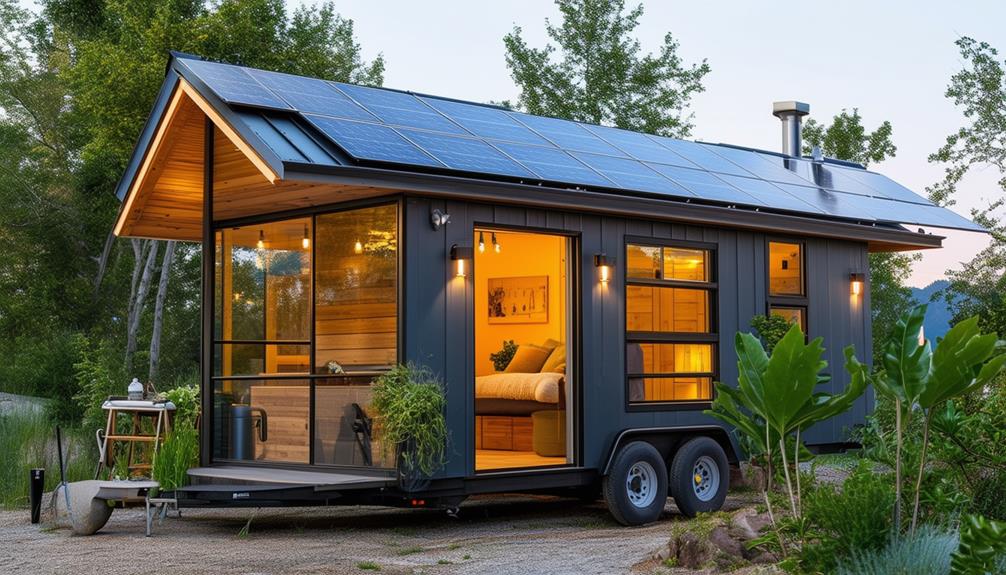
Optimizing the energy efficiency of your tiny home starts with your heating and cooling systems. Mini-split heat pumps and radiant floor heating can significantly reduce energy consumption. Beyond that, incorporating LED lighting, motion sensor lights, and skylights can further slash utility bills. Energy-efficient appliances like induction cooktops and tankless water heaters also make a noticeable difference. Don't overlook the importance of insulation and high-performance windows, as they play a crucial role in maintaining a cost-effective, sustainable living space. Let's explore these strategies to create an energy-efficient tiny home.
Efficient Heating and Cooling Systems
Selecting the right heating and cooling systems is crucial for making your small home energy-efficient. Small homes benefit significantly from energy-efficient solutions, and the right systems can make a substantial difference. Mini-split heat pumps are an excellent option, as they can be up to 60% more efficient than traditional heating methods. This efficiency reduces both energy costs and consumption, making them a sustainable choice for small homes.
Another effective option is radiant floor heating, which distributes heat evenly throughout the room. This type of heating optimizes comfort and maximizes energy efficiency, allowing you to stay warm without excessive energy use. When choosing heating and cooling systems, prioritize those with Energy Star certification. These high-efficiency HVAC systems consume less energy, helping to reduce your small home's carbon footprint and overall environmental impact.
Proper sizing and installation are essential for maximizing the efficiency of your chosen systems. Utilize programmable thermostats and schedule regular maintenance to ensure optimal performance. By making informed choices in heating and cooling, you'll not only enhance your small home's energy efficiency but also contribute to a more sustainable future.
Energy-Efficient Lighting
After optimizing your heating and cooling systems, focusing on energy-efficient lighting can further reduce your small home's energy consumption and costs. Start by replacing traditional incandescent bulbs with LED lights. These bulbs are up to 80% more energy-efficient and can last up to 25 times longer, decreasing both electricity usage and maintenance expenses.
Consider installing motion sensor lights in areas like closets, hallways, or bathrooms. These lights automatically turn off when no motion is detected, potentially saving up to 30% on lighting costs. For daytime illumination, skylights offer a great solution by providing natural light, thereby reducing the need for artificial lighting and conserving energy.
Energy-efficient fixtures also play an important role. They enhance your home's overall efficiency and extend the lifespan of your lighting solutions. Proper placement of these fixtures is crucial; position them strategically to maximize natural lighting during the day and create a cozy ambiance at night.
Energy-Efficient Appliances
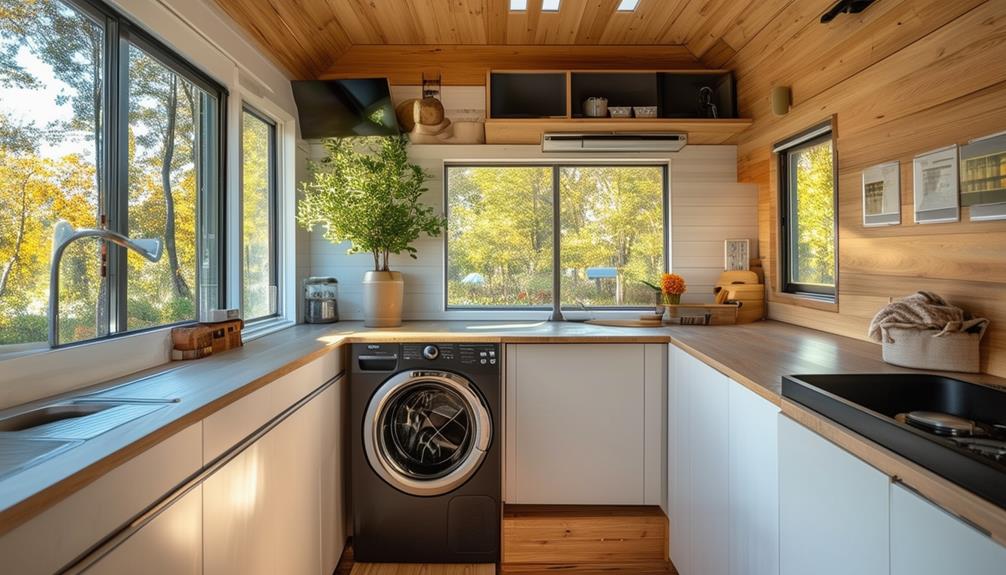
Investing in energy-efficient appliances can significantly reduce both the energy consumption and environmental impact of your tiny home. Start with induction cooktops, which use less energy and heat up quickly compared to traditional stoves. These cooktops not only prepare meals faster but also lower your energy bills.
Consider tankless water heaters, which heat water only when needed, saving energy and freeing up valuable space. Another excellent option is heat pump dryers, which recycle hot air to use less energy and are gentler on clothes.
Energy-efficient dishwashers are also beneficial in tiny homes, using less water and energy than hand-washing dishes. Choosing these appliances not only saves money but also reduces your carbon footprint and requires less maintenance over time.
Here's a quick comparison of the benefits of these energy-efficient appliances:
| Appliance | Key Benefits | Space Savings |
|---|---|---|
| Induction Cooktops | Less energy, quick heating | Moderate |
| Tankless Water Heaters | Heats water on demand, saves space | High |
| Heat Pump Dryers | Recycles hot air, gentle on clothes | Moderate |
| Energy-Efficient Dishwashers | Less water and energy use | Varies by model |
Insulation and Thermal Mass
To make your tiny home energy-efficient, prioritize using high-quality insulation materials like spray foam or rigid foam to minimize heat loss. Additionally, incorporating materials with high thermal mass, such as concrete or stone, helps regulate temperature fluctuations. This combination ensures your tiny home remains comfortable throughout the year, reducing the need for excessive heating or cooling.
High-Quality Insulation Types
High-quality insulation such as spray foam, rigid foam, and cellulose can significantly reduce heat loss in your compact home. Choosing the right insulation is essential for minimizing air leaks and maintaining consistent indoor temperatures. For instance, spray foam expands to fill gaps and crevices, creating an airtight seal that prevents drafts. Rigid foam offers exceptional thermal resistance, making it ideal for insulating walls, roofs, and floors. Meanwhile, cellulose, made from recycled paper, provides an eco-friendly option that's both efficient and sustainable.
Proper installation of these insulation materials can dramatically decrease the need for excessive heating or cooling, leading to lower energy bills. This not only saves you money but also supports a more sustainable living environment. High-quality insulation ensures your compact home remains comfortable year-round, regardless of the weather outside.
Investing time and resources in the right insulation types and techniques yields long-term benefits. Your compact home will become a model of energy efficiency, providing a cozy living space that aligns with your sustainable living goals.
Thermal Mass Benefits
Have you ever considered how integrating thermal mass into your small home can enhance its energy efficiency? By using materials like concrete, brick, or tile, you can significantly improve your home's ability to regulate indoor temperatures. These thermal mass materials absorb and store heat, which helps maintain a warm environment during chilly nights and a cool one during hot days.
Combining high-quality insulation with thermal mass is a highly effective strategy. Insulation materials, such as spray foam or rigid foam boards, create a barrier against heat transfer, preventing heat loss in the winter and heat gain in the summer. This ensures your home remains comfortable year-round without relying heavily on your HVAC systems.
Stable indoor temperatures lead to reduced energy costs since you're not as dependent on heating or cooling systems. This makes your small home more energy-efficient. Proper insulation and the strategic use of thermal mass can significantly reduce the energy required to maintain a comfortable living environment, saving you money over time. By optimizing both insulation and thermal mass, you create a well-balanced, energy-efficient small home that is both comfortable and cost-effective.
Reducing Heat Loss
To reduce heat loss and enhance energy efficiency in your tiny home, focus on insulation, thermal mass, and proper sealing. High-quality insulation, such as spray foam or rigid foam boards, is essential for minimizing heat loss, keeping your home warmer in winter and cooler in summer. Thermal mass materials, like concrete or stone, stabilize indoor temperatures by absorbing and gradually releasing heat, reducing the need for constant heating.
Proper sealing is also crucial. Pay close attention to windows, doors, and any gaps to prevent drafts and improve energy efficiency. Here are some effective steps:
- Install weatherstripping around doors and windows to block drafts.
- Use draft stoppers at the base of doors to prevent heat from escaping.
- Add curtains, blinds, or shades to windows for an extra layer of insulation.
- Seal all gaps around windows and doors with caulk or foam.
Windows and Natural Light
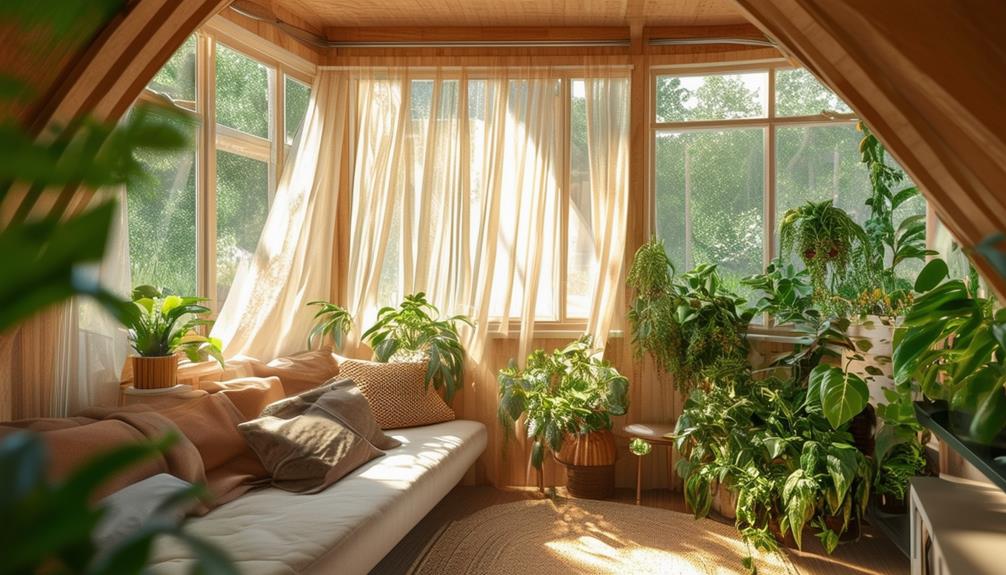
To enhance energy efficiency in your tiny home, selecting high-performance windows is essential. Strategically positioning these windows can optimize natural light and passive solar heating, reducing energy costs. Look for windows with Low-E coatings and multiple panes to improve insulation and maintain a comfortable indoor temperature.
High-Performance Window Selection
Choosing high-performance windows with low U-factor and SHGC values is essential for minimizing heat loss and gain in your tiny home. Energy-efficient windows can reduce heat loss by 25-30%, improving insulation and lowering energy consumption. When selecting windows, focus on these key features:
- Low U-factor: Indicates the window's insulating ability. Lower U-factors mean better insulation and less heat loss.
- Low SHGC values: Solar Heat Gain Coefficient (SHGC) values show how much solar radiation enters through the window. Lower SHGC values reduce heat gain from sunlight.
- Low-E coatings: These coatings reflect infrared light, helping to keep your tiny home cooler in the summer and warmer in the winter.
- Energy Star certification: Windows with this certification meet strict energy efficiency guidelines, providing excellent insulation and UV protection.
Additionally, energy-efficient windows allow natural light to flood your space, reducing the need for artificial lighting. By choosing the right windows, you create a comfortable, energy-efficient tiny home that maximizes natural light while maintaining ideal insulation.
Optimal Window Positioning
Strategically positioning your windows maximizes natural light, reducing dependence on artificial lighting and enhancing energy efficiency in your tiny home. Placing windows on the south side optimizes daylight, illuminating your space and aiding in temperature regulation.
Utilize high-performance windows with low-e coatings and insulating frames to minimize heat loss and boost energy efficiency. Consider skylights or clerestory windows for additional natural light without compromising privacy, especially useful in limited wall space.
Enhance insulation and reduce heat transfer with energy-efficient window treatments like thermal curtains or blinds. These measures help maintain stable indoor temperatures, keeping your tiny home warm in winter and cool in summer. Effective window placement also supports passive solar heating, capturing sunlight during colder months to naturally warm your home.
Passive Solar Heating
Maximizing sunlight exposure through strategic window placement enhances natural light and harnesses passive solar heating to keep your tiny home warm and energy-efficient. Positioning windows on the south side allows sunlight to penetrate deeply during the winter months while avoiding overheating in the summer.
High-performance windows with low-E coatings and insulated frames are essential for preventing heat loss, thereby reducing heating costs and maintaining indoor temperatures. Additionally, incorporating thermal mass materials like concrete or tile floors stores heat during the day and releases it gradually at night, ensuring a consistent and comfortable indoor climate.
Natural light significantly reduces the need for artificial lighting, saving both energy and money. By optimizing window placement and using high-quality windows, you can maximize the benefits of passive solar heating in your tiny home.
Consider the following tips to optimize passive solar heating:
- Position windows on the south side: Enhances sunlight exposure.
- Use high-quality windows with low-E coatings: Reduces heat loss.
- Integrate thermal mass materials: Stores and releases heat efficiently.
- Maximize natural light: Cuts down on the need for artificial lighting.
Renewable Energy Sources
Harnessing renewable energy sources can transform your small home into an eco-friendly sanctuary while reducing your dependency on traditional power grids. Installing solar panels is a popular choice, providing sustainable energy and significantly cutting down grid reliance. Wind turbines are another excellent renewable energy source, especially if you live in a breezy area. They can generate electricity efficiently and complement your solar setup.
If you have access to flowing water, a micro-hydro system can be an inventive way to produce renewable energy. It harnesses the power of water currents, offering a consistent energy supply. For heating, biomass systems use organic materials like wood pellets, delivering effective warmth without relying on fossil fuels. Meanwhile, geothermal heat pumps utilize the earth's constant temperature to heat and cool your home, ensuring comfort in an eco-friendly manner.
Here's a quick comparison of renewable energy options:
| Energy Source | Advantages | Ideal Conditions |
|---|---|---|
| Solar Panels | Reduces grid reliance | Sunny climates |
| Wind Turbines | Complementary to solar | Windy locations |
| Micro-Hydro System | Consistent energy supply | Nearby flowing water |
| Biomass Heating | Effective heating | Access to organic materials |
| Geothermal Heat Pumps | Year-round comfort | Suitable ground conditions |
Choosing the right combination of these systems will optimize your home's energy efficiency.
Water Conservation Strategies
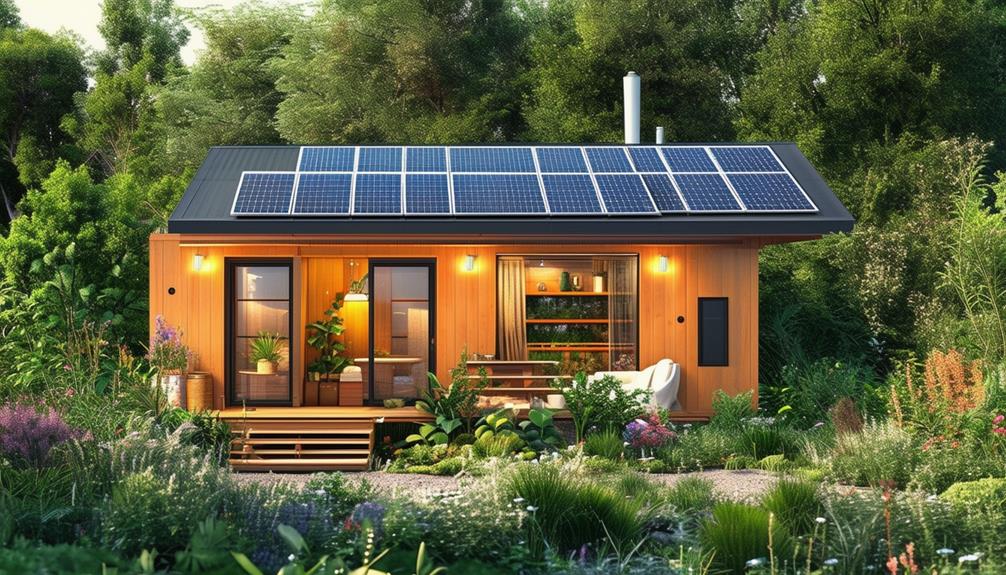
To improve water efficiency in your tiny home, consider several effective water conservation strategies. Start by installing low-flow fixtures, which reduce water usage and save on utility bills without sacrificing performance. Next, replace standard faucets and showerheads with water-saving models. These fixtures maintain effective water flow while using less water. Also, think about implementing greywater systems to recycle water from sinks and showers for non-potable uses like irrigation, significantly decreasing your overall water consumption.
Rainwater harvesting is another excellent method. Collect rainwater via your gutter system and store it for household purposes such as watering plants or flushing toilets. This approach not only conserves water but also reduces dependence on municipal water supplies. Lastly, invest in water-efficient appliances. Using low-flow toilets and energy-efficient washing machines can substantially lower your water usage.
Key steps:
- Install water-saving fixtures
- Utilize greywater systems
- Implement rainwater harvesting
- Invest in water-efficient appliances
Cost Analysis and Savings
Investing in an energy-efficient compact home offers significant savings on both initial and ongoing utility costs. Compact homes typically range from $30,000 to $60,000, which is considerably more affordable than traditional homes. This price range makes them an attractive option for many potential homeowners. Beyond the initial investment, these homes provide annual savings of $2,000 to $3,000 on utility bills due to their smaller size and efficient design.
Energy-efficient compact homes consume 40-75% less energy compared to traditional homes, resulting in substantial reductions in electricity, heating, and cooling demands. This decreased energy consumption directly lowers utility expenses. Additionally, various incentives and tax credits are available to help offset the initial costs of making your compact home energy-efficient, further easing the financial burden and enhancing long-term savings.
From a sustainability perspective, energy-efficient compact homes not only lower your carbon footprint but also promote an eco-friendly lifestyle. The cost analysis clearly highlights their affordability and sustainability benefits for homeowners. By making informed decisions now, you can enjoy ongoing financial advantages while contributing to a greener planet.