How to Handle Waste and Sanitation in a Tiny Home
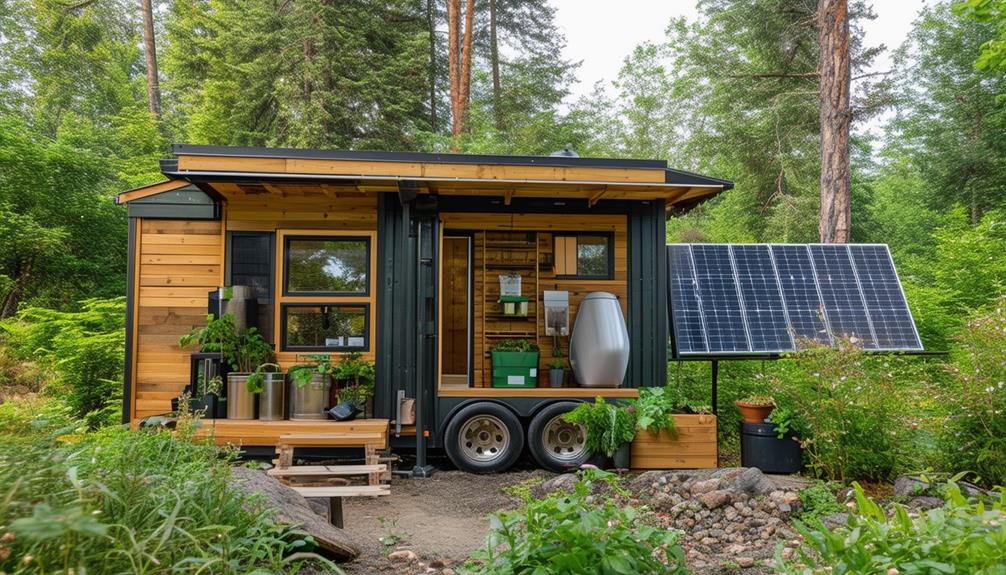
Managing waste and sanitation in a tiny home requires careful planning and sustainable practices. Installing a composting or dry flush toilet can minimize water use and handle waste sustainably. Additionally, managing greywater from sinks and showers is crucial for maintaining eco-friendliness. Implementing a composting system and practicing waste segregation are also essential steps. Adhering to local waste disposal regulations ensures compliance and environmental responsibility. Balancing these considerations helps maintain the minimalistic charm of a tiny home while promoting sustainability.
Choosing the Right Toilet
Choosing the right toilet for your tiny home can significantly impact your comfort and environmental footprint. Here are some options to consider:
- Composting Toilets: Eco-friendly and waterless, they turn waste into compost suitable for non-edible plants, reducing your waste disposal needs.
- Incinerating Toilets: Use high temperatures to convert waste into ash, minimizing odors and simplifying disposal.
- RV-Style Toilets: Ideal for mobile tiny homes, these come with holding tanks for straightforward waste disposal at designated dumping stations.
- Traditional Flush Toilets: Connected to septic tanks, they require more space, maintenance, and a reliable water supply, making them less eco-friendly.
- Dry Flush Toilets: Compact and odor-free, these use a sealing mechanism to contain waste in disposable bags, eliminating the need for water.
Each option has its own set of advantages, so consider your specific needs and environmental goals when making your choice.
Managing Greywater Effectively
Effective greywater management in your tiny home can significantly reduce your environmental impact and water usage. Greywater systems collect water from sinks and showers, allowing you to reuse it for tasks like watering plants or flushing toilets. This practice is particularly valuable in tiny houses where resource optimization is crucial.
To begin, consider installing a multi-tiered pond system that filters contaminants, making the greywater safer for reuse. It's essential to use environmentally friendly products, such as biodegradable soaps, to ensure the greywater is safe for your plants and soil. Regular maintenance is crucial; pump and clean your holding tank as needed to keep the system running smoothly.
Consult local authorities to ensure compliance with all relevant rules and regulations. This guarantees that your greywater management practices are both legal and sustainable. Effective greywater management not only benefits the environment but also supports a more self-sufficient lifestyle in your tiny home. By reusing greywater responsibly, you'll significantly reduce your water consumption and minimize black water production, making your tiny house more eco-friendly.
Installing a Composting System
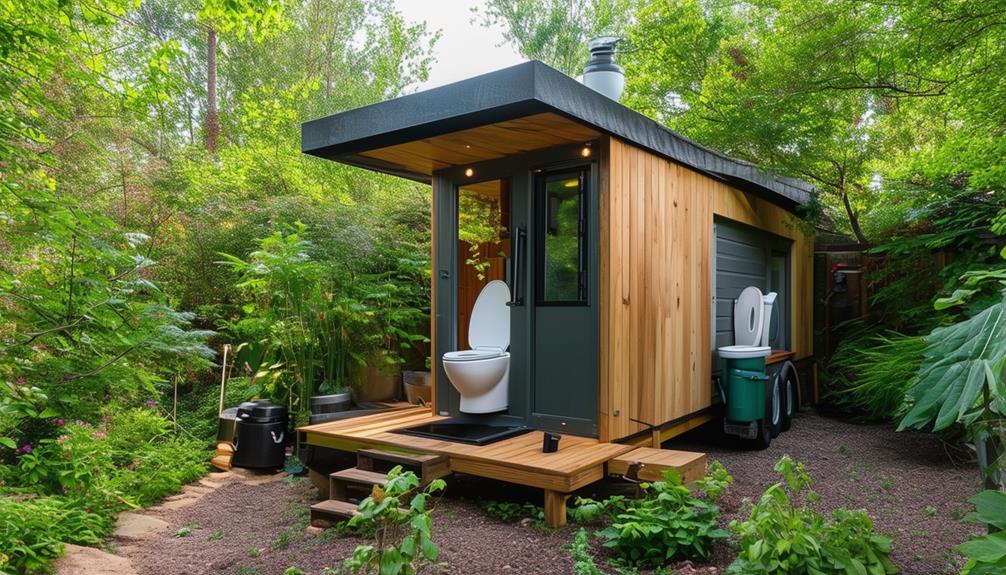
Establishing a composting system in your small home helps convert waste into valuable compost for your garden, significantly reducing your environmental footprint. These systems are an eco-friendly choice that efficiently manage waste and promote sustainable living. By using composting toilets, you save water and lessen the environmental impact associated with traditional sewage systems.
To ensure your composting system operates effectively, proper ventilation is essential. Adequate airflow facilitates the breakdown of waste and prevents odors. Adding carbon-rich materials like sawdust or coconut coir can enhance the composting process.
Here's a quick comparison to highlight the benefits and considerations:
| Aspect | Composting System |
|---|---|
| Eco-friendliness | High |
| Maintenance | Minimal |
| Odor | Odorless with adequate ventilation |
| Water Usage | None |
Installing a composting system in your small home supports sustainable living by turning waste into a useful resource. These systems require minimal upkeep and align perfectly with the eco-friendly principles of small homes. By managing waste and sanitation effectively, you contribute positively to the environment.
Recycling and Waste Reduction
Implementing a comprehensive recycling and waste reduction strategy in your tiny home is essential for maintaining an eco-friendly lifestyle. Begin by setting up an efficient waste segregation system that separates recyclables, compostables, and non-recyclables at the source. This facilitates easier recycling and effective waste management.
Consider using composting toilets, which significantly reduce water usage and process human waste in an environmentally friendly way. The resulting compost can be used in your garden, further enhancing sustainability.
Incorporate smart storage solutions for recyclables and compost materials. Opt for bins or containers that fit your compact space without causing clutter, ensuring your tiny house remains organized and recycling is hassle-free.
Adopting a minimalist lifestyle and conscious consumption habits can substantially reduce your overall waste. By purchasing only what you need and selecting products with minimal packaging, you contribute to waste reduction. Prioritize quality over quantity to simplify waste management in your tiny home.
Adhering to Local Regulations
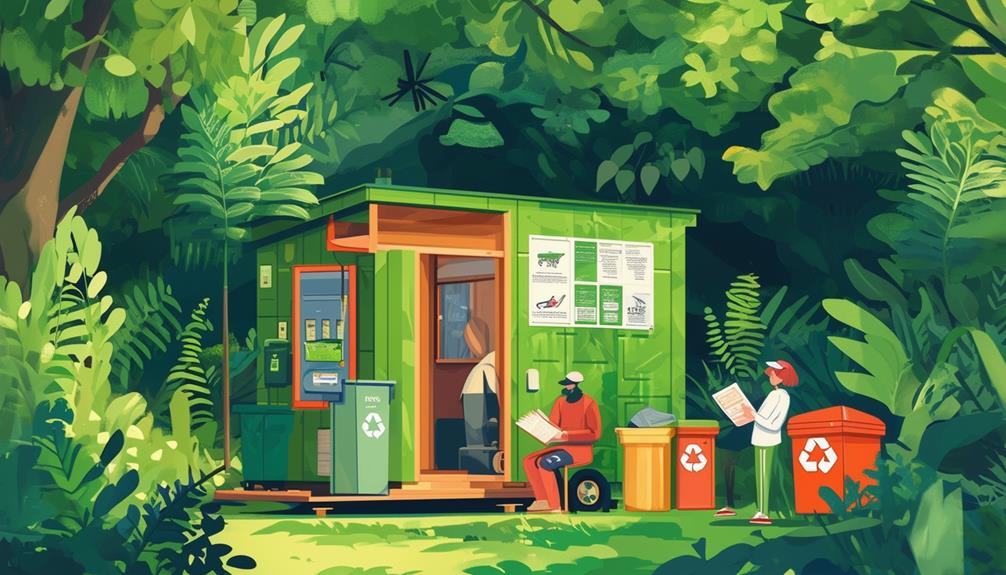
Implementing waste reduction strategies in a tiny house necessitates a thorough understanding and adherence to local regulations to ensure proper waste disposal and sanitation practices. Managing wastewater, particularly black water, requires strict compliance with local guidelines to avoid legal issues and environmental harm.
Local regulations often specify acceptable methods for waste disposal, such as using approved sanitation systems or connecting to municipal services. Ensuring your tiny house meets these standards is essential for community health and environmental sustainability. Start by researching the specific waste disposal regulations in your area. Some regions may mandate connection to the municipal sewer system, while others may permit composting toilets or other eco-friendly sanitation systems. Regularly monitor these guidelines, as changes can impact your compliance status.