How to Handle an Axe in Extreme Weather Conditions

Handling an axe in extreme weather conditions requires more than brute strength; it demands precision and safety. Choosing the right axe, such as a half-length or three-quarter length model made of high-quality steel, is crucial, particularly in cold environments.
However, selecting the right tool is just the beginning. Proper techniques for chopping on compacted snow and maintaining a firm grip to prevent fatigue are essential. Additionally, keeping your axe in optimal condition to avoid rust is critical. Understanding these elements can significantly impact the efficiency and safety of your winter tasks.
Importance of Axe Skills
Mastering axe skills is crucial for anyone depending on firewood, especially during harsh winters. Efficient axe use becomes essential as shorter days require quick and effective firewood processing to meet increased heating needs. Proper handling techniques, such as maintaining a light grip and building momentum before impact, not only reduce fatigue but also enhance performance.
Selecting the appropriate axe for specific tasks significantly impacts safety and efficiency. Understanding different axe weights and designs is key: a heavier axe may be better for splitting large logs, while a lighter one is more suitable for precise chopping.
Practicing in milder weather boosts your proficiency, preparing you for the demands of chopping and splitting in freezing temperatures. Maintenance is equally important. Regularly oiling the axe head and handle prevents rust and ensures the axe performs well in extreme cold. Neglecting care can turn an axe into a liability rather than a useful tool.
Consistent maintenance keeps your axe in optimal condition, making wood-splitting tasks more efficient and less strenuous, even in the harshest conditions.
Essential Safety Considerations
When handling an axe, especially in extreme weather, prioritizing safety is essential. Cold environments can conceal hazards like snow and ice, increasing the risk of accidents. Always be aware of your surroundings to avoid these hidden dangers. Make sure to maintain a firm, controlled grip on the axe handle, as cold temperatures can cause hand fatigue and decrease dexterity. Proper handling is fundamental for safe axe use.
Regularly inspect your axe for signs of damage or wear, as extreme temperatures can affect the integrity of both the axe head and handle. Here's a table to emphasize key safety checks:
| Safety Check | What to Look For | Action Needed |
|---|---|---|
| Axe Handle | Cracks or splits | Replace if damaged |
| Axe Head | Rust or loosening | Clean and tighten |
| Grip | Slippery or worn areas | Rewrap or replace grip |
| Hand Fatigue | Numbness or weakness | Take breaks, wear gloves |
| Surroundings | Hidden ice or obstacles | Clear area before chopping |
Practicing safe axe handling techniques and taking regular breaks can help you avoid repetitive strain injuries. Cold conditions can exacerbate discomfort and fatigue, making these precautions more important. Stay safe and vigilant to ensure your axe handling remains efficient and accident-free.
Winter Axe Techniques

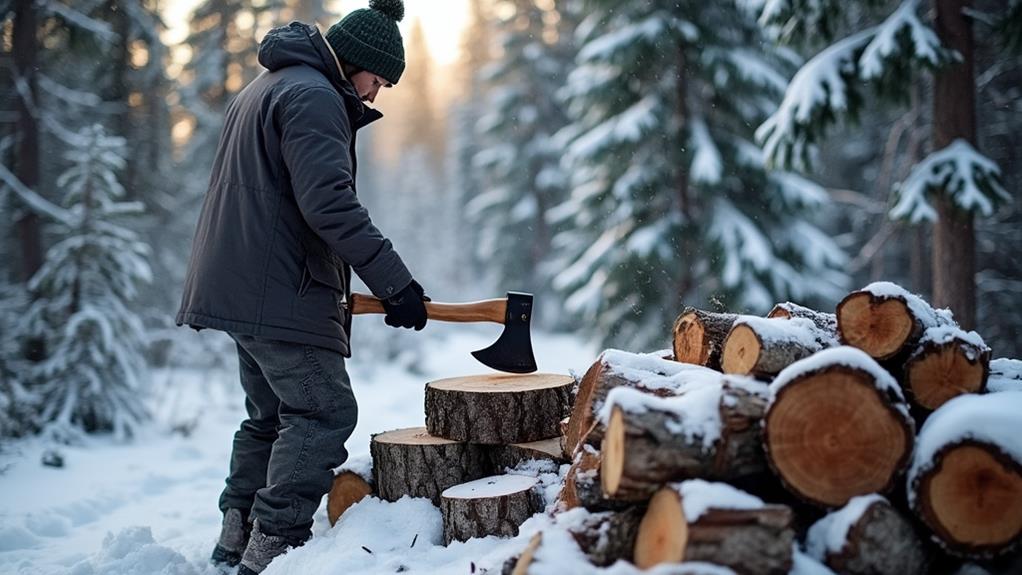
Navigating the challenges of winter axe use necessitates specific techniques to ensure both safety and efficiency. In cold conditions, always employ horizontal chopping methods on compacted snow to reduce accident risks and maintain a stable cutting motion.
It's crucial to understand your axe's weight and handling, as cold weather can impair dexterity. A firm grip is essential to maintain control and prevent injuries. Using a horizontal log as a chopping block on snow stabilizes your work area, making wood splitting more efficient and safer by providing a reliable surface.
Pre-splitting wood during warmer months can significantly reduce effort in winter, as cold weather makes wood harder to split and can potentially damage your axe blade if not done carefully.
Regular practice of your axe skills in milder conditions will enhance your proficiency. Cold exacerbates fatigue, so improving your technique beforehand will better prepare you for the rigors of winter wood splitting, ensuring both safety and efficiency.
Choosing the Right Axe
Selecting the perfect axe for winter tasks requires a blend of precision and practicality. For winter bushcraft, a half-length axe, around 50 cm and 2 pounds, provides an excellent balance between weight and maneuverability. For larger tasks requiring better reach and control, consider a three-quarter length axe, approximately 64 cm and 2.6 pounds.
When choosing axes for cold weather, prioritize the type of steel. Steels high in nickel and manganese, such as 4140, perform exceptionally well in freezing temperatures. These steels, with a carbon content below 0.6%, offer the toughness needed for winter conditions.
Custom axes are also available, allowing you to tailor the tool to specific cold weather tasks for peak performance and efficiency. Historical evidence indicates that older axes, crafted from high-quality steel and properly heat-treated, perform reliably in severe conditions. Therefore, consider the quality of steel and the regional climate in your selection process. By choosing the right axe, you ensure your tool will perform effectively, making winter tasks easier and safer.
Additional Tools for Winter

A reliable full-length saw with a 24-inch blade is an essential companion to your axe for winter tasks. It enhances firewood collection efficiency, enabling quicker and more precise cuts in challenging conditions. Pairing your axe with this saw allows you to handle thicker logs and branches with ease.
A three-quarter length axe, approximately 64 cm and 2.6 lbs, offers a perfect balance between weight and reach. It's versatile for various winter tasks, but it's crucial to familiarize yourself with its safe use. Stability is key, so using a horizontal log as a chopping block on compacted snow can significantly improve your safety and efficiency.
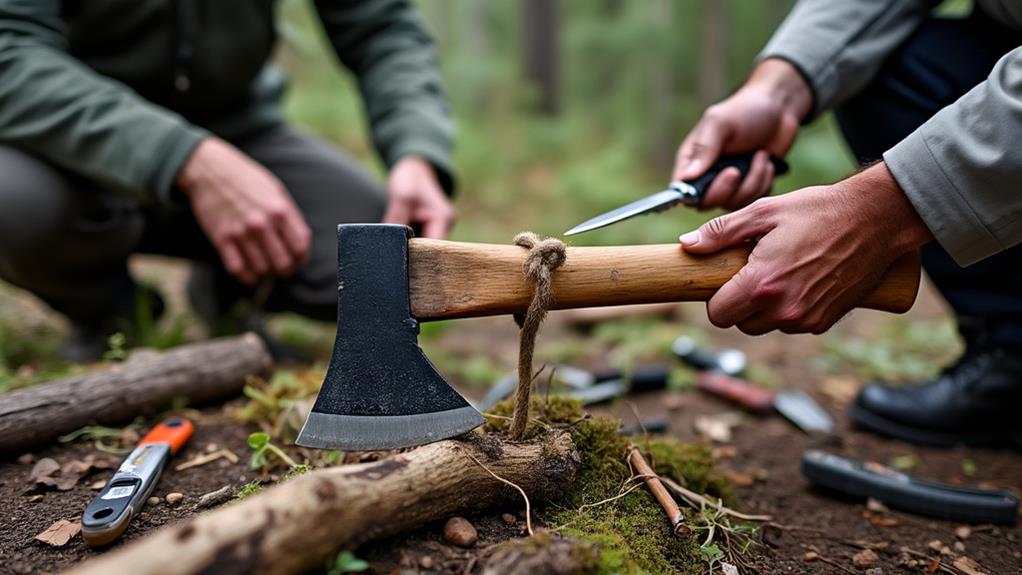
A quality bushcraft knife is also a valuable tool to use alongside your axe. This knife complements your cutting tasks and provides versatility in wood processing and fire preparation. Tool maintenance shouldn't be overlooked. Applying boiled linseed oil to your axe handle is crucial to prevent moisture damage and ensure optimal performance in extreme weather.
Regularly treating your tools with boiled linseed oil will keep them in top shape and extend their lifespan. Proper care of your equipment ensures they perform reliably when you need them most.
Efficient Fuel Management
Efficient fuel management is essential for maintaining warmth and conserving energy during winter. Start by setting up a firewood processing area close to your camp to save time and energy in harsh conditions.
Organize your firewood and tools inside your tent to streamline your workflow, increase comfort, and ensure easy access to necessary items during cold weather. Stack kindling and larger fuel logs near your stove to ensure quick availability for maintaining a fire, thus minimizing the time you need to spend outside. Gather your firewood when the snow platform is frozen, as this makes processing easier and reduces effort in extreme cold.
When splitting wood, use a horizontal log on the snow as a chopping block to enhance safety and efficiency, making your firewood processing quicker and less strenuous.
Practicing Axe Skills
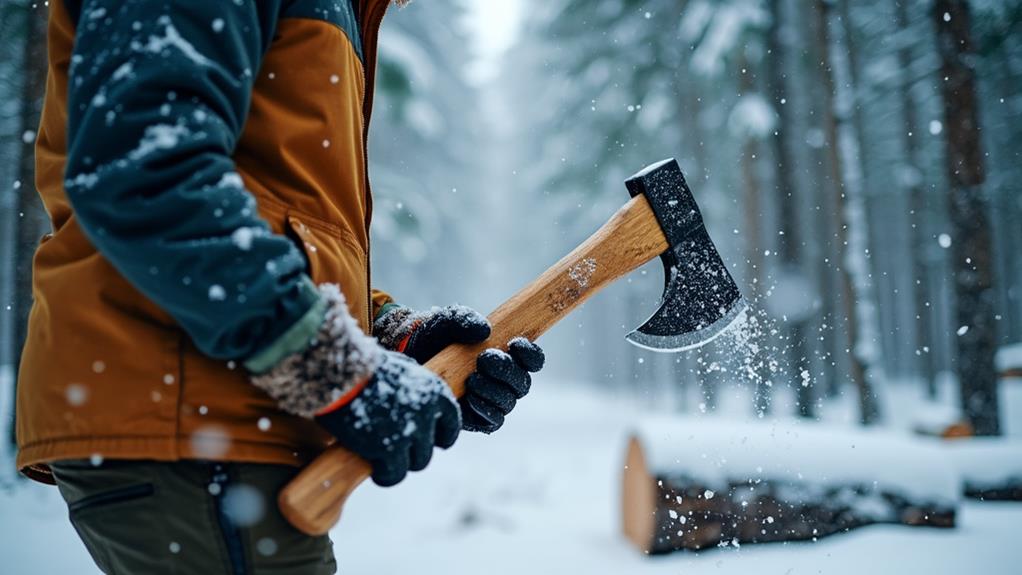
Why wait for winter to perfect your axe skills when you can start now? Practicing in warmer months allows you to develop thorough proficiency, essential for efficient use when daylight is limited in colder weather. Focus on mastering dynamic splitting techniques, which not only improve your grip but also help warm your hands—a critical skill for maintaining control in extreme cold.
Regular practice is key. Consistently work on your axe handling and chopping techniques to reduce the risk of repetitive stress injuries. Aim for a light grip and use a 45-degree angle for cuts to optimize efficiency and minimize strain.
Don't limit yourself to one type of axe. Incorporate different weights and designs in your practice sessions to understand their impact on performance, especially in varied weather conditions. This will prepare you for any scenario you might encounter.
Engage with community forums and local workshops to gain valuable insights and feedback. Shared experiences can greatly improve your skills. Practicing now ensures you'll be ready and proficient when extreme weather conditions hit, making your winter tasks safer and more efficient.
Maintaining Your Axe
Maintaining your axe is essential for ensuring its longevity and performance, especially in extreme weather conditions. Start by regularly applying mineral oil or 3-in-1 oil to the axe head. This forms a thin protective layer that prevents rust and corrosion without oversaturation. Keeping rust at bay is crucial for the blade's sharpness and safety.
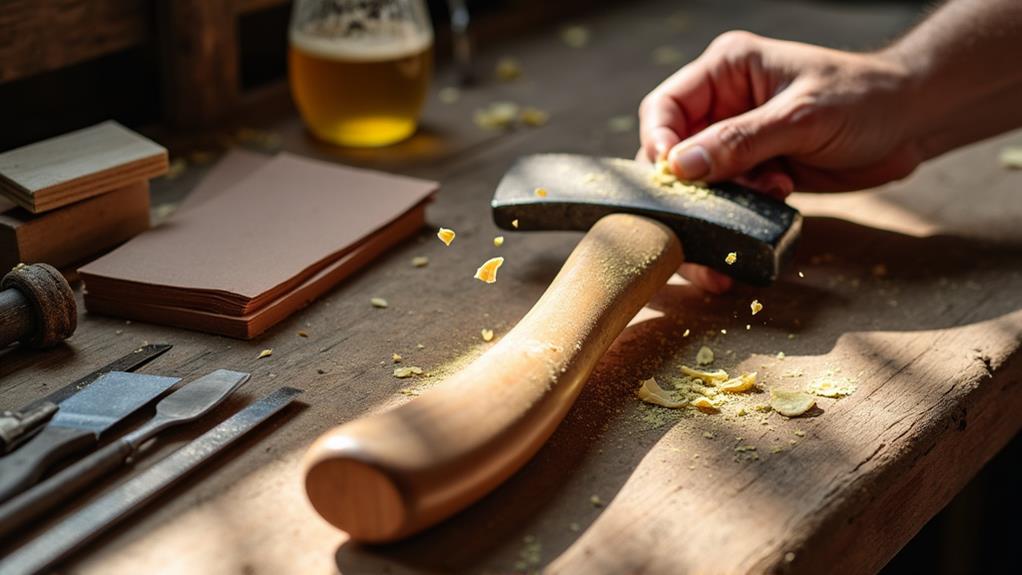
For the wooden handle, use boiled linseed oil. Apply a thin coat to preserve the wood quality and prevent wear. Allow it to dry overnight for optimal results. A well-maintained handle ensures a better grip and reduces the risk of splitting under harsh conditions.
After each use, clean your axe thoroughly. Remove debris and sap, as they can damage the blade and affect its performance, particularly in extreme weather. Regular inspections are also vital. Check for signs of rust or a loose head and address these issues promptly. This ensures safe usage and extends the axe's lifespan.
Axe Storage Solutions
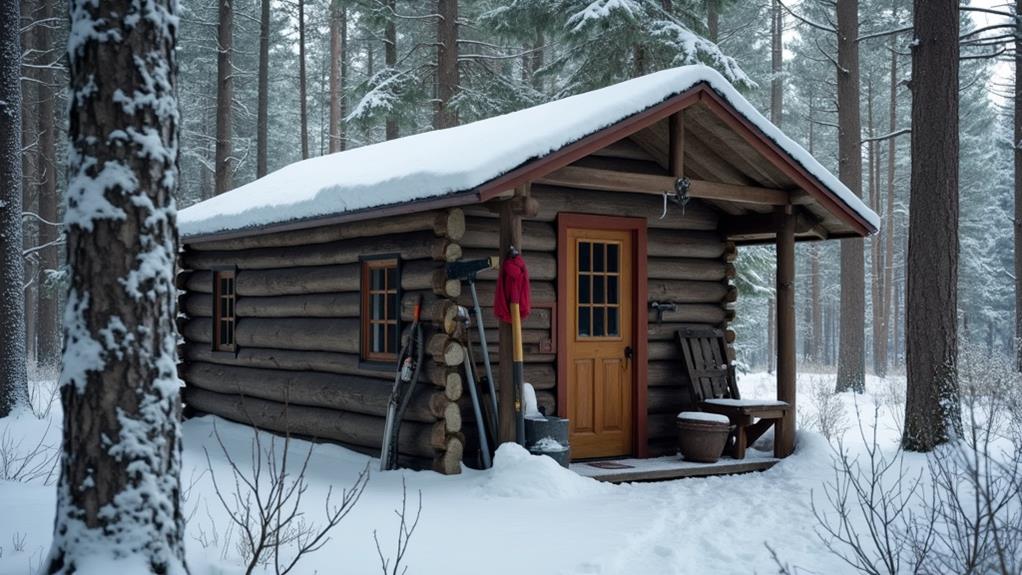
For optimal axe storage, maintain a stable indoor environment with a temperature around 68°F to avoid damage from temperature fluctuations and humidity. Hang the axe by its handle to prevent warping, and apply boiled linseed oil to protect against rust and moisture. Keep the axe away from wood stoves, and use a leather mask for the head to ensure it remains in excellent condition.
Optimal Storage Conditions
Proper storage of your axe is essential for maintaining its longevity and performance. The ideal conditions involve storing your axe indoors at a stable temperature of around 68°F. This stability helps mitigate the effects of humidity and temperature fluctuations on both the wood and metal components. A wood shed or garage often serves as an excellent storage spot, minimizing moisture exposure while providing a sheltered environment.
To further protect your axe, avoid placing the axe head on dirt or damp sand, as this can dull the sharp edge. Instead, store it in a dry place. Keep it away from wood stoves or other heat sources, as constant heat can warp or damage the handle over time.
For those who appreciate both function and aesthetics, consider decorative axe humidors or similar containers for display and protection. These can be inspired by tobacco shop humidors, offering an elegant yet practical storage solution.
Regular inspections are crucial. Look for signs of rust or damage and apply protective coatings, such as boiled linseed oil, to enhance your axe's longevity. This routine maintenance ensures your axe remains in peak condition, ready for use whenever needed.
Preventing Humidity Damage
Humidity can wreak havoc on your axe, leading to rust on the head and deterioration of the handle. To mitigate this, effective storage solutions are essential. One of the best methods to minimize exposure to humidity is by keeping your axes in a wood shed, which provides a controlled environment.
Applying a coating of boiled linseed oil (BLO) on both the handle and the head creates a robust moisture barrier. This practice helps prevent rust and keeps the wood from deteriorating. Additionally, storing the axe with the head down in dry sand can absorb moisture away from the metal.
Using dehumidifiers in your storage area can also be highly effective, as they maintain ideal conditions and reduce the risk of rust and mold. Regular inspections and oiling of your axe will help you catch any early signs of moisture damage.
Here's a quick reference table for these tips:
| Storage Solution | Benefit |
|---|---|
| Wood shed | Minimizes humidity exposure |
| Boiled Linseed Oil (BLO) | Creates moisture barrier |
| Head down in dry sand | Absorbs moisture from metal |
| Dehumidifiers | Maintains ideal conditions |
Conclusion
In extreme weather conditions, mastering axe skills is crucial for both safety and efficiency. Focus on fundamental techniques and safety measures, selecting the appropriate axe for winter tasks. Regularly maintain and inspect your axe to ensure it remains in optimal condition. Utilize supplementary tools and practice efficient fuel management to enhance your winter survival capabilities. By practicing regularly and storing your axe properly, you'll be well-prepared to handle any challenges that arise.