How to Handle a Dull Axe Blade in the Wild
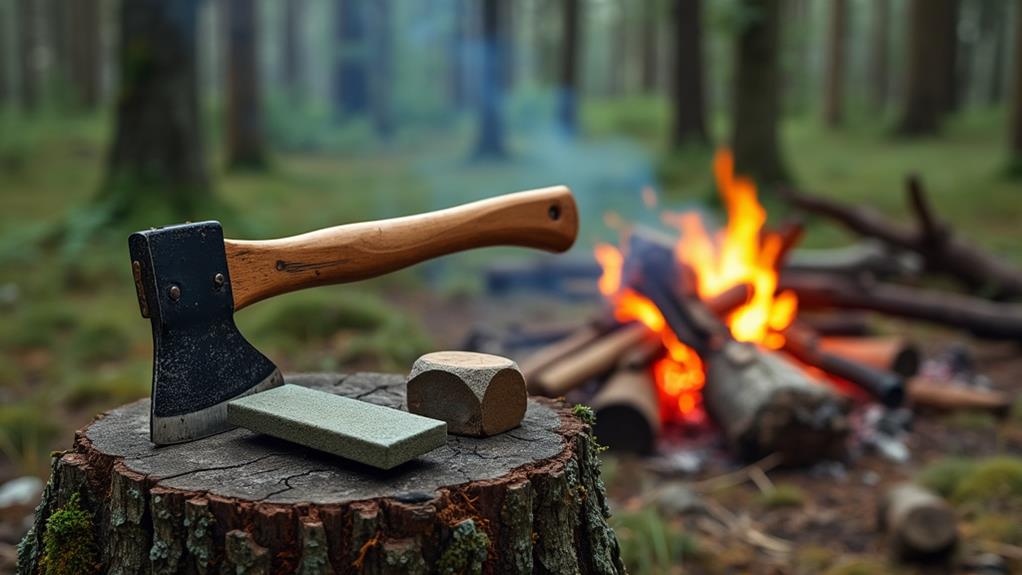
When you find yourself with a dull axe blade in the wild, it's crucial to know how to sharpen it effectively. First, inspect the blade for any nicks or significant damage. If you don't have a sharpening kit, flat rocks can be used as a makeshift solution.
Rub the blade in a circular motion at a 20 to 30-degree angle to restore some sharpness. To ensure you're doing it right and staying safe, let's explore some fundamental techniques and precautions.
Importance of Axe Maintenance
Proper axe maintenance is essential for ensuring cutting efficiency and minimizing effort during chopping tasks. Keeping your axe sharp not only makes your work easier but also prolongs the lifespan of the tool. Regular maintenance prevents rust and dullness, which can make an axe ineffective. A dull axe requires more force and control, increasing the risk of accidents and fatigue.
Sharpening your axe frequently, ideally after each use, is critical for optimal performance. This regular upkeep ensures that your axe remains in top condition, ready for any chopping task.
In addition to sharpening, honing the edge maintains its sharpness, providing cleaner cuts and improved efficiency. Performing regular inspections for nicks or damage allows you to catch issues early, preventing the need for extensive repairs later.
Tools Required for Sharpening
When sharpening a dull axe blade, having the right tools is essential for achieving a sharp and efficient edge. Here are the primary tools you'll need:
- Flat File: Specifically, a Mill Bastard file. This tool is perfect for the initial shaping and thinning of the blade's edge.
- Puck-Style Sharpening Stone: Preferably with dual grit. A Straight Grain Puck is ideal because it offers a better grip and indexing, making the axe sharpening process more efficient.
- Bowl of Water: Dipping the sharpening stones in water helps clean them and prevents clogging.
- Old Toothbrush: Useful for scrubbing the sharpening stones after use, extending their lifespan.
Summary of Required Tools:
| Tool | Purpose |
|---|---|
| Flat File | Initial shaping and thinning |
| Sharpening Stone | Fine sharpening and honing |
| Bowl of Water | Cleaning the sharpening stones |
| Old Toothbrush | Scrubbing the sharpening stones |
These tools will help ensure your axe blade is sharpened effectively and efficiently.
Safety Gear and Precautions
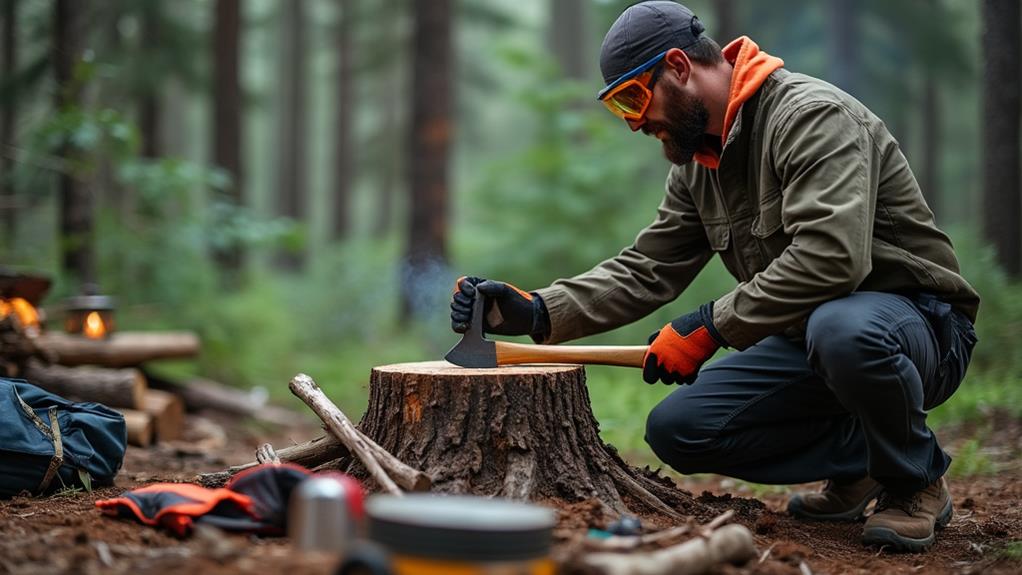
Before you begin sharpening a dull axe blade, prioritizing your safety is essential. Start by wearing leather gloves to protect your hands from potential cuts and abrasions. Even a dull blade can pose a risk, and gloves offer crucial protection.
Next, put on safety goggles to shield your eyes from debris and flying metal shavings that might occur during sharpening. Eye protection is critical, as unexpected shards can cause serious injuries. Ensure you maintain a secure grip on the axe to prevent slips. A firm hold provides better control over the sharpening motion, reducing accident risks.
Additionally, keep your work area well-lit. Good lighting allows you to see the cutting edge clearly and work accurately, minimizing errors that could lead to injury. Be mindful of your body positioning. Keep your hands and other body parts away from the cutting edge to avoid accidental nicks or deeper wounds.
Adhering to these safety measures will make the process of sharpening your axe safer and more efficient.
Cleaning the Axe Head
Start by wiping any moisture from the axe head using a cloth or paper towel to prevent rust formation. Once dry, inspect the axe head for dirt and debris. Use a wire brush to scrub the entire surface, ensuring all areas are clean. This step is essential to remove particles that could cause rust and wear.
If you find any surface rust, apply a light coat of oil or grease to the affected areas. Then, gently scrub with steel wool to restore the finish. This process helps remove rust and adds a protective layer against future corrosion.
For severe rust, soak the axe head in a vinegar solution for a few hours. The vinegar will dissolve the rust, making it easier to clean. After soaking, scrub the axe head again with a wire brush to ensure all rust is removed. Regular cleaning after each use is crucial. By maintaining a clean axe head, you extend its lifespan and ensure optimal performance.
Consistent maintenance is key to a reliable tool.
Filing the Edge
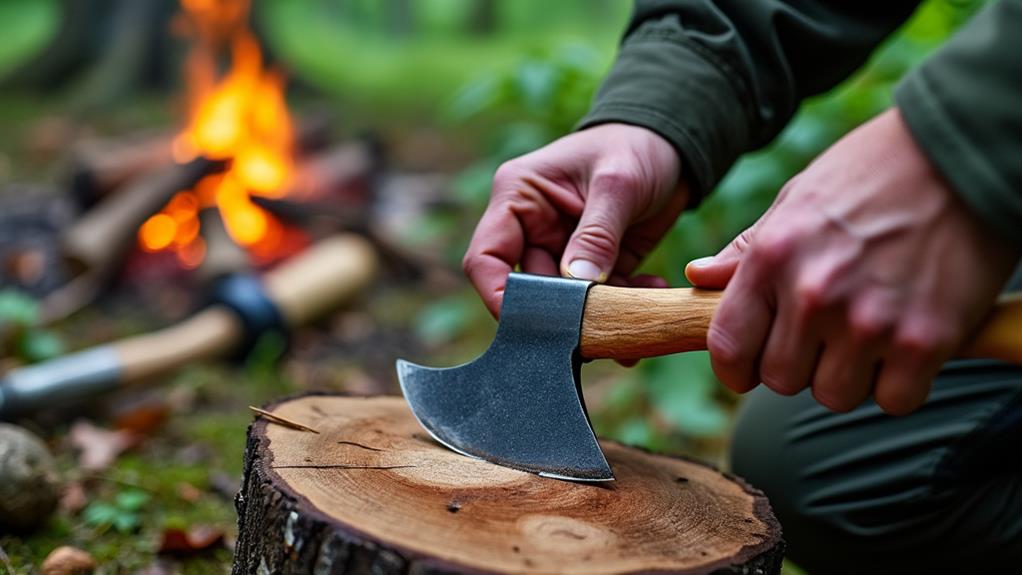
To sharpen the edge of your dull axe blade, set the file angle between 20 to 30 degrees to maintain a sharp edge. Keep the file steady and consistent to avoid uneven sharpening. Regularly check your progress to ensure the angle remains consistent throughout the process.
Initial Edge Setting
To set the initial edge of your dull axe blade effectively, start by filing at a consistent angle of 20 to 30 degrees, ideal for maintaining a sharp and durable edge. Use a Mill Bastard file, known for its reliability.
Begin by thinning out the cheek of the axe to ensure deeper cuts and that the entire bevel, not just the apex, is sharpened. Apply consistent pressure while filing and alternate sides to ensure both sides are equally sharpened, maintaining a balanced edge. Regularly check for a burr along the edge, indicating effective sharpening and readiness for finer techniques later.
Keep the file teeth clean, as a clogged file reduces efficiency. A clean file maintains cutting efficiency, leading to better results.
Edge Angle Consistency
Achieving edge angle consistency is essential for keeping your axe blade sharp and effective. When in the wild, maintain a consistent 20-30 degree angle while filing for optimal cutting performance. Start filing about half an inch back from the edge to ensure the entire bevel is sharpened, not just the apex.
Use consistent strokes and alternate sides to achieve an even edge. Uneven wear can reduce blade effectiveness, so maintaining balance is crucial. Always file in one direction to prevent premature dulling and preserve your file's integrity. Precision is key for a sharp axe, and this method ensures efficiency.
Regularly check for a burr along the edge as you work. A burr indicates effective refinement of the blade. Once a burr is felt, switch to sharpening stones for a keen edge. Proper honing significantly enhances your axe's performance.
Using Sharpening Stones
Sharpening a dull axe blade with sharpening stones begins by selecting the appropriate grit. Start with a coarse grit sharpening stone to reshape the blade's edge, using circular motions to evenly grind the metal while maintaining an angle of 20 to 30 degrees. Consistency in angle is crucial for achieving a uniform edge.
Transition to finer grit stones to polish and sharpen the blade further, as these stones help smooth out the nicks and burrs created by the coarse stone.
Keep the stone lubricated with water or honing oil during sharpening. Lubrication reduces friction and prevents the stone from clogging, enhancing the sharpening process. Move the blade back and forth across the stone, maintaining a consistent angle throughout. The formation of a burr along the blade's edge indicates readiness for the next step.
After using the sharpening stones, test the blade for sharpness. If a burr is present, the edge is adequately sharpened. For further refinement, use a leather strop. Stropping helps maintain sharpness between more extensive sharpening sessions, ensuring your axe remains ready for use.
Improvised Sharpening Techniques

When you don't have a sharpening stone, find flat-surfaced rocks near rivers or streams. Secure the axe handle between your knees for stability and rub the blade against the rock in a circular motion with consistent pressure. To check your progress, try shaving small wood pieces; if the blade isn't sharp enough, continue refining the edge.
Using Natural Resources
In the wild, a dull axe can be a significant hindrance, but you can effectively sharpen it using natural resources.
Start by searching for flat-surfaced rocks, such as smooth river stones or hard granite outcrops, which can serve as makeshift sharpening stones. Press the axe blade against the stone and use a circular motion to gradually refine the edge.
Alternatively, you can combine two rocks to create a flat surface by rubbing a rough rock against a flatter one until you achieve a suitable sharpening edge. Sandstone and quartzite, often found in riverbeds, have natural grit that provides an effective abrasive surface for honing the blade.
Maintain patience and controlled motion to ensure a sharp finish. For optimal results, take your time with each stroke. Consistent effort will yield a sharp blade over time.
Stability While Sharpening
Ensuring stability while sharpening your axe in the wild is crucial for both safety and effectiveness. To stabilize your axe, place the handle between your knees, providing a secure grip that allows for controlled movements. Use a flat-surfaced rock from your surroundings as an improvised sharpening stone, which will help maintain the blade's sharp edge.
Begin sharpening on a clean, dry surface to prevent slips and maintain focus on the correct angle. Apply consistent pressure as you move the blade in a circular motion across the rock, ensuring an even edge and a sharp finish. For additional stability, use a sturdy log or a flat piece of wood. Placing the axe on these surfaces can prevent unwanted movement and potential injury.
Effective Sharpening Motions
Sharpening your axe in the wild requires effective techniques to achieve a keen edge. Start by finding a flat-surfaced stone, often located near riverbanks or clearings. This stone will serve as your primary tool to sharpen your axe. Stabilize the axe handle between your knees to keep it steady.
Use a circular motion with the stone against the edge of the axe to ensure even grinding. It's essential to maintain the factory angle of the blade, typically between 20 to 30 degrees. Deviating from this angle can damage the edge and reduce the effectiveness of your sharpening efforts.
For better control, create a flat sharpening surface by rubbing two rocks together until one becomes smooth and suitable for sharpening. Regularly check the sharpness of the blade by scraping it against a piece of wood. If it produces shavings or a burr, you've used effective sharpening motions.
These methods for sharpening will ensure that your axe is ready for any task in the wild, keeping you prepared and efficient. Remember, consistency and precision in your sharpening motions are key to maintaining a sharp and functional axe blade.
Regular Maintenance Tips
To maintain your axe's performance and longevity, consistent care and attention are crucial. Regular maintenance keeps the cutting edge sharp and effective.
After each use, thoroughly clean your axe to prevent rust and dirt buildup, which can dull the blade and lead to corrosion. Use a sharpening tool, like a fine grit puck stone, to inspect and address any nicks or damage on the blade.
For quick touch-ups, a leather strop or fine stone is highly effective. These tools help maintain the blade's sharpness, reducing the need for more extensive sharpening sessions later.
After cleaning and sharpening, apply a light coat of oil or grease to the axe head to create a protective barrier against moisture, prolonging the blade's lifespan.
Proper storage is equally important. Store your axe in a dry place and ensure it's securely stored to avoid accidental damage or dulling.
Consistent upkeep not only improves the axe's efficiency but also extends its life, making it a reliable tool in the wild. By following these maintenance tips, you can ensure your axe remains a dependable companion on your outdoor adventures.
Benefits of a Sharp Axe
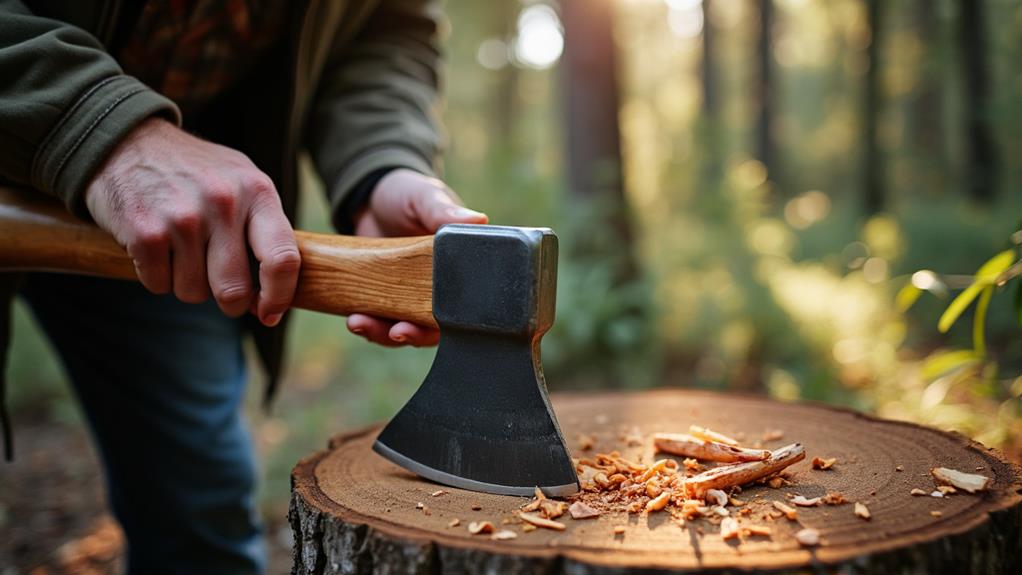
Regular maintenance keeps your axe in top condition, but understanding the benefits of a sharp axe elevates your tool care significantly. A sharp axe greatly enhances cutting efficiency, allowing you to chop wood or clear brush with much less effort. This increased efficiency means you can accomplish more without exhausting yourself, making outdoor tasks quicker and easier.
Safety is another crucial benefit. A sharp axe reduces the risk of slips and accidents by providing more controlled and precise cuts. Improved accuracy decreases the likelihood of mishaps that could result in injuries.
Maintaining a sharp edge also extends the lifespan of your axe. By minimizing wear and tear, you save money on replacements and repairs. Over time, this cost-saving measure ensures your reliable tool remains in service longer.
Moreover, a sharp axe produces cleaner cuts, essential for high-quality woodwork. Whether you're splitting logs for firewood or shaping wood for construction, cleaner cuts streamline the job, enhancing both simplicity and efficiency.
Lastly, frequent sharpening prevents frustration and inefficiency. Your axe will always be ready for action, ensuring that you're never caught off guard by a dull blade.
Conclusion
Maintaining a sharp axe blade in the wild is crucial for efficiency and safety. With a few simple tools and techniques, you can ensure your axe stays sharp. Start by assessing the blade's condition. Use rocks or stones at the correct angle to sharpen it, and keep the blade lubricated throughout the process. Prioritize safety by maintaining a proper grip and body position. Regular maintenance guarantees your axe is ready for any task, enhancing your outdoor experience.