How to Downsize Your Life for Tiny Home Living
Downsizing for tiny home living requires a thoughtful approach to your belongings. Begin by exploring methods like the KonMari Method and decluttering room by room to determine what you truly need. Evaluate each item by asking if it serves a purpose or brings joy, and make tough choices about what to keep, donate, or discard. Focus on quality over quantity, differentiate between necessities and wants, and eliminate duplicates. Embrace the freedom of a minimalist lifestyle, where everything has its place and purpose. Ready to embark on this transformative journey?
Use the KonMari Technique
How can you effectively downsize for tiny home living? One powerful approach is to use the KonMari Method. This decluttering process helps you systematically reduce your possessions, making tiny living more manageable. Start with one category at a time, such as books. Gather all your books, place them on the floor, and assess each one, keeping only those that spark joy. This technique helps build momentum and sets a clear direction for your downsizing journey.
Next, move on to other categories like clothing, kitchenware, and finally, items with sentimental value. The key is to follow a specific order, ensuring a thorough and organized declutter. When dealing with sentimental items, it's essential to be honest with yourself about what truly holds meaning and what is just taking up space.
These downsizing tips not only streamline your belongings but also make your tiny home feel more spacious and serene. Remember, tiny living requires intentional choices. By starting with one category and progressing through each systematically, you can effectively implement the KonMari Method and transform your downsizing process into a journey of joy and simplicity.
Declutter Room by Room
After addressing categories using the KonMari Method, you can further streamline your downsizing process by decluttering room by room. This focused approach makes the task of preparing for a Tiny Home less overwhelming. Begin with one room, such as the living room, and systematically sort through your items. Categorize them into keep, donate, sell, and discard. This method helps you efficiently manage your belongings without feeling buried under clutter.
Decluttering room by room also provides a sense of achievement as you complete each space. You'll see tangible progress, which can be incredibly motivating. For instance, once you've finished the living room, you'll feel a sense of accomplishment that will encourage you to tackle the next room, like the bedroom. This methodical approach maintains organization and allows you to track your progress effectively.
Breaking the process into smaller, manageable tasks ensures you don't get overwhelmed. Each room becomes a mini-project, making the overall downsizing process more manageable. By the time you've gone through each room, your Tiny Home will be a well-organized, clutter-free sanctuary. Remember, each item you decide to keep should either bring you joy or serve a practical purpose in your new, smaller space.
Stay Organized
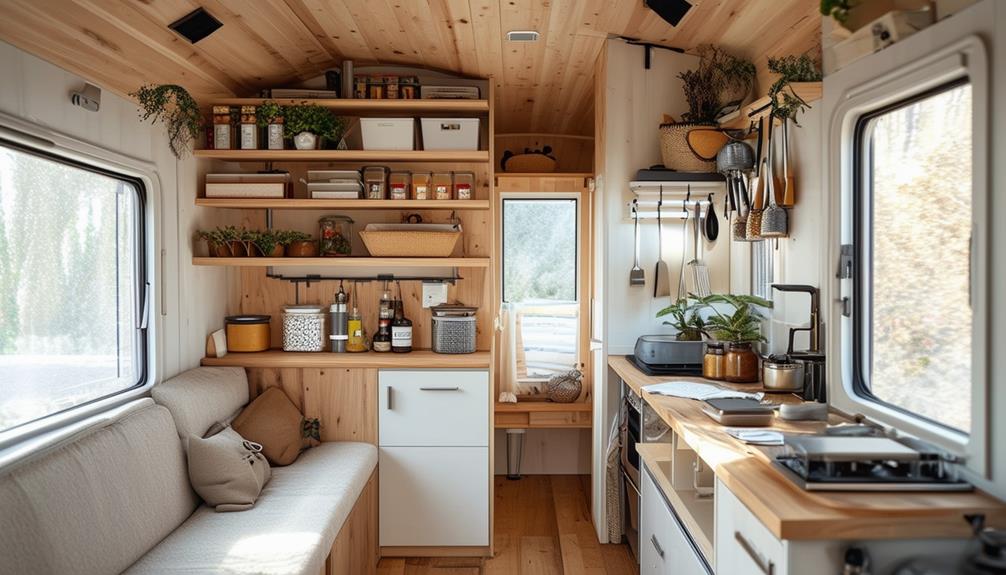
To stay organized while downsizing, categorize your possessions by evaluating their usefulness and sentimental value. Create distinct piles for items to keep, discard, or decide on later. Consider selling or donating items that don't fit your new tiny home lifestyle.
Categorize With Specific Questions
When downsizing for small home living, asking specific questions about each possession helps determine its true value and necessity. Start by categorizing items to streamline the decluttering process. This approach allows you to organize items effectively, assess their importance, and make informed decisions.
To stay organized, divide your belongings into three main categories: Keep, Remove, and Undecided. This method ensures you stay focused and efficient while preparing for small home living. Avoid the temptation to immediately discard items; instead, systematically evaluate each possession.
| Category | Questions to Ask | Action |
|---|---|---|
| Keep | Do I use this item regularly? Does it have a purpose in my small home? | Retain the item |
| Remove | Is this item redundant? Can someone else benefit from it? | Sell, donate, or discard |
| Undecided | Am I unsure about its necessity? Does it hold sentimental value? | Reassess later |
This structured approach guarantees semantic accuracy, completeness, consistency, conciseness, relevance, interoperability, and trustworthiness.
Assess Usefulness and Sentiment
Once you've sorted your items, it's time to evaluate their usefulness and emotional value to determine what truly deserves a place in your tiny home. This step will help you stay organized and ensure that every item you keep serves a practical purpose or holds significant sentimental value. Begin by asking yourself specific questions about each item: Does it make your life easier? Does it bring you joy? If an item doesn't meet either of these criteria, consider letting it go.
To streamline this process, focus on:
- Functional Purpose: Does the item serve a daily function or solve a problem in your tiny home?
- Emotional Reasons: Is the item deeply connected to a cherished memory or person?
- Sell or Donate Items: Can the item benefit someone else, and is it in good enough condition to sell or donate?
Avoid holding onto items solely for emotional reasons unless they truly bring you joy. By categorizing possessions and thoughtfully evaluating their usefulness and emotional value, you will create a more organized and functional living space in your tiny home.
Declutter: Keep, Remove, Decide
As you begin the decluttering process, start by sorting your possessions into three categories: keep, remove, and decide. This method helps you stay organized and focused on downsizing efficiently. To determine the appropriate category for each item, evaluate its usefulness and sentimental value. Ask yourself: Do I use this item regularly? Does it hold significant sentimental value? If the answer is no, it may be time to let it go.
The 'keep' category should include only essentials and items that genuinely enhance your minimalist lifestyle in a tiny home. For the 'remove' category, consider selling or donating items to reduce waste and extend their life. Websites, community groups, and donation centers can assist in rehoming these possessions. The 'decide' category is for items you're unsure about. Revisit this category later with a critical eye, aiming to minimize it as much as possible.
Minimize Duplicate Items
Start by eliminating redundant kitchen tools, reducing excess clothing, and paring down electronic gadgets. Keeping only one of each essential item not only saves space but also simplifies daily life. Focus on what's truly indispensable and let go of the rest to create a more organized tiny home.
Eliminate Redundant Kitchen Tools
Reducing kitchen clutter in your tiny home starts with eliminating redundant tools like extra spatulas or multiple measuring cups. Identifying and removing these excess items will streamline your kitchen and enhance efficiency. Begin by sorting through your kitchen drawers and cabinets. Ask yourself if you really need three can openers or five cutting boards. The goal is to create a functional space free of unnecessary duplicates.
Here are some tips for effective decluttering:
- Prioritize Versatile Tools: Choose kitchen tools that serve multiple functions. For example, a good chef's knife can replace several specialized knives.
- Limit to Essentials: Keep just one of each essential item. One spatula, one set of measuring cups, and one peeler should be enough.
- Evaluate Specialty Gadgets: Consider whether you truly need specialty tools like a garlic press or avocado slicer when a knife can accomplish the same tasks.
Reduce Multiple Clothing Pieces
Simplify your small home wardrobe by eliminating duplicate clothing pieces and retaining only what's essential. In a small house, every inch of space matters, and a clutter-free closet is crucial. Start by decluttering non-sentimental items to build momentum in your downsizing journey. This helps you practice making decisions based on functionality rather than excess.
Consider adopting a capsule wardrobe. Select versatile pieces that can be mixed and matched to create various outfits, reducing the need for multiples. For example, keep just one high-quality pair of jeans instead of several similar pairs. This not only saves space but also simplifies your daily dressing routine.
Engage in a minimalist fashion challenge to further refine your wardrobe. Wear only a limited number of items for a set period to identify what you truly need. This exercise can be enlightening and reveal which pieces are essential to your lifestyle.
Effective storage solutions are also key. Invest in organizers or multi-functional furniture to optimize your small home's limited space. By minimizing duplicate items, you'll find your small house living experience more manageable and enjoyable.
Pare Down Electronic Gadgets
Eliminate redundant electronic devices to free up valuable space in your tiny home. Adopting a minimalist approach is crucial, keeping only necessary items that serve multiple purposes. Start by evaluating the practicality and necessity of each electronic device you own.
To effectively pare down your electronic gadgets, consider these steps:
- Assess Functionality: Determine if a single device can replace multiple gadgets. For example, a smartphone can serve as a camera, GPS, and internet browser.
- Prioritize Quality: Opt for high-quality devices that are versatile and reliable rather than accumulating several lower-quality items.
- Eliminate Duplicates: Avoid keeping multiple items that serve the same function. If you have both a tablet and a laptop, decide which one better suits your daily needs.
Differentiate Needs and Wants
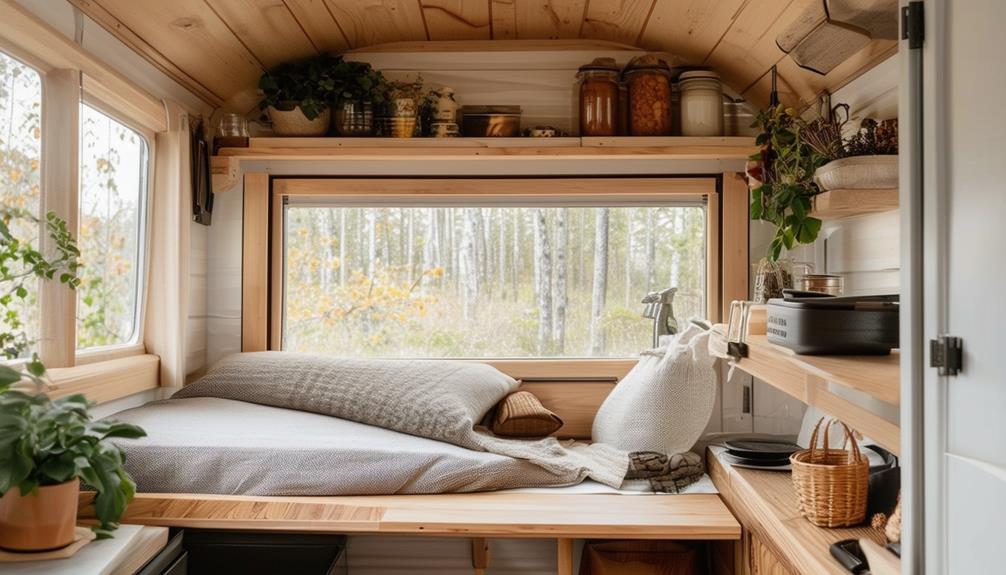
To successfully downsize for tiny home living, it's essential to differentiate between your fundamental needs and non-essential wants. Start by identifying your critical needs—items necessary for your daily life and well-being. These might include basic kitchen utensils, a comfortable bed, and suitable clothing. When downsizing, prioritize practicality and ask yourself if each item serves a meaningful purpose or merely takes up space.
Next, assess your non-essential wants. These are items you enjoy but can live without, such as extra decorative pieces, multiple dish sets, or seldom-used kitchen gadgets. Prioritize functionality and happiness over material abundance. A tiny home thrives on simplicity and efficiency, so aim to keep only items that contribute to a fulfilling and practical lifestyle.
Avoid accumulating items based solely on societal expectations. Just because something is popular doesn't mean it's necessary for you. Evaluate each possession's practical value and its contribution to your daily life. Focusing on what truly matters will make your tiny home experience more enjoyable and less cluttered.
Embrace the Simple Joys
Once you've differentiated your needs from your wants, it's time to welcome the simple joys that come with living in a tiny home. Downsizing to a tiny house isn't just about shedding excess possessions; it's about cultivating a life filled with intention and significance. By letting go of unnecessary items, you make room for what truly matters.
Start by categorizing your belongings and use the KonMari method to decide what to keep. This approach helps you focus on items that spark joy and have a purpose.
- Quality time with loved ones: Fewer distractions allow for more meaningful moments with family and friends.
- Freedom from clutter: Eliminating excess belongings creates mental space, enabling clearer thinking and a freer lifestyle.
- Mindful consumption: Embrace minimalism and make conscious choices about what you bring into your home, enhancing your overall quality of life.