How to Decorate Your Tiny Home: Style Tips and Tricks
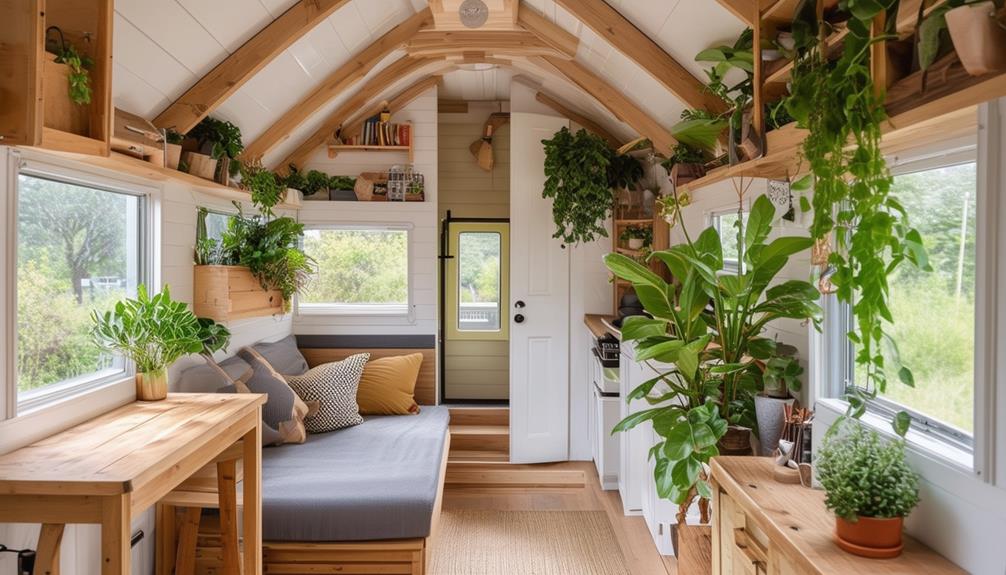
When decorating your small living space, think creatively to maximize limited space without sacrificing style. Start with a neutral color palette to create a sense of openness, making each room feel larger. Be strategic with patterns; minimalist designs can add visual interest without overwhelming the area. Want to define spaces or incorporate natural accents for added warmth? There are several practical tips to ensure your small home is both functional and inviting.
Start With a Neutral Palette
Begin by selecting a neutral palette of whites, greys, and beiges to make your small home feel more spacious and airy. These light tones are ideal for compact spaces as they create an illusion of roominess that darker colors often fail to provide. When decorating a tiny house, maximizing the sense of openness is crucial, and a neutral palette achieves this effectively.
Using a base of neutral colors establishes a flexible foundation, allowing you to easily incorporate various accent colors and styles without overwhelming your space. Decorating becomes more straightforward when working with whites, greys, and beiges, as they naturally complement diverse decor elements.
Moreover, a neutral palette enhances small spaces by reflecting more light, making your home feel breezy and welcoming. This cohesive look ensures your home doesn't feel confined or cluttered. By starting with a neutral base, you create a harmonious interior design that enriches the overall atmosphere of your tiny house.
Be Strategic With Patterns
When decorating your tiny home, strategically choose patterns to keep the space feeling open and inviting. Opt for minimalist designs like subtle stripes or small geometric shapes, and apply them to accent pieces such as throw pillows or rugs. Balancing these patterns with solid colors will help maintain a cohesive and uncluttered look.
Minimalist Pattern Choices
Strategic use of designs can transform your compact home into a stylish and cohesive space without overwhelming it. In a small area, decorating with understated patterns like stripes or geometric designs can add visual interest and a contemporary touch without making the space feel cluttered. Focus on integrating these patterns through throw pillows, rugs, or curtains to maintain a clean, cohesive appearance.
When decorating your compact home, it's crucial to be selective with your patterns. Opt for subtle designs that complement the overall color scheme and style of your decor. This will help create a harmonious environment that feels intentional rather than chaotic. By choosing patterns sparingly, you'll ensure that your small space remains open and inviting.
Avoid mixing too many designs in one area, as this can quickly overwhelm the eye and make your compact home feel cramped. Instead, stick to a few key pieces with subtle patterns that enhance your decor without clashing. Remember, the goal is to create a cohesive look that ties the room together. By strategically incorporating minimalist design choices, you can achieve a stylish, contemporary compact home that feels both spacious and coordinated.
Accent Patterns Wisely
To maximize your limited space, select patterns that enhance and complement the room's overall color scheme and decor theme. In a small area, it's essential to use patterns sparingly to avoid overwhelming the room. Opt for smaller-scale patterns to prevent visual clutter, making your home feel more open and inviting.
One effective way to incorporate patterns is through an accent wall. A well-chosen pattern on a single wall can add depth and interest without dominating the room. Pair this with solid-color walls to maintain balance. Throw pillows are another excellent way to introduce patterns. They offer versatility and can be easily swapped out to change the room's look.
Rugs and curtains are also great tools for adding patterns. A patterned rug can anchor your space, providing a focal point that ties the decor theme together. Similarly, patterned curtains can frame your windows beautifully, adding a touch of elegance.
Mix and match patterns with solid colors for a cohesive look. This strategy ensures that patterns enhance rather than overpower your small space, creating a harmonious and visually appealing environment.
Use Rugs and Runners
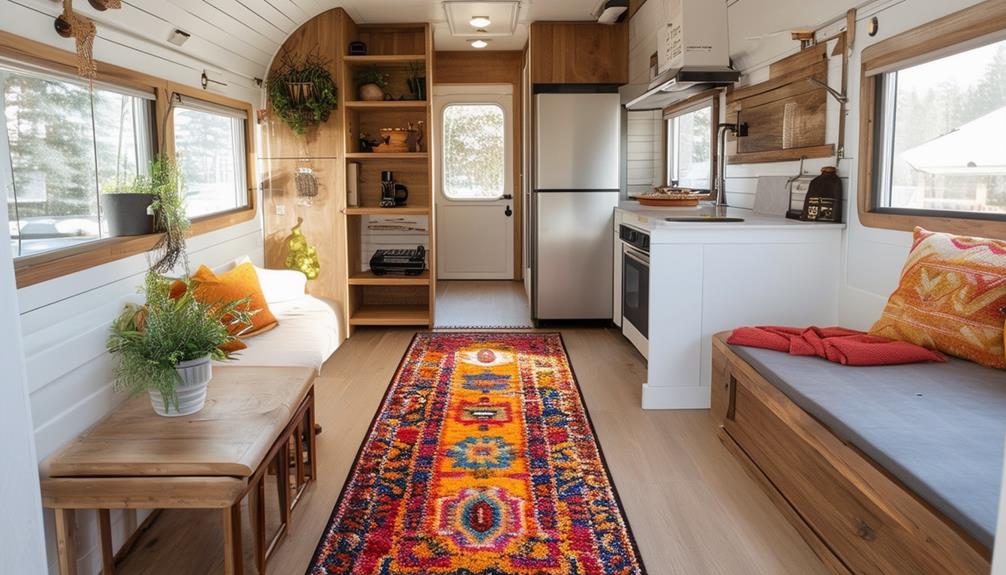
Using rugs and runners in your tiny home can define specific zones and add visual texture. Place them strategically to create clear areas for living, dining, or sleeping, enhancing both functionality and style. They also bring warmth and depth to your floors, making your small space feel cozy and inviting.
Define Specific Zones
In a tiny home, rugs and runners are essential for visually separating different living areas and enhancing personal style. Tiny house living often involves open floor plans that can feel disorganized without defined zones. By using rugs and runners, you can effectively create designated spaces within your compact living area.
Choose rugs and runners that add texture and color to your home while complementing your overall decor. For example, a plush rug under your coffee table can clearly mark the living room, while a sleek runner can guide the eye through a hallway or kitchen area. Various sizes and shapes of rugs help in visually separating living areas, making each part of your home feel distinct and purposeful.
Strategically placing rugs and runners improves the flow and organization of your tiny home. They serve as visual cues and contribute to the overall aesthetic, allowing you to express your personal style. By incorporating these elements, you create a more structured and visually appealing space that feels cohesive and tailored to your needs.
Add Visual Texture
Enhancing your tiny home with visual texture through rugs and runners can significantly elevate its look and feel. As part of the Tiny House Movement, optimizing every square inch of your compact living space is crucial. Rugs and runners are excellent decor choices that introduce warmth, coziness, and style to your interiors.
To add visual texture, opt for rugs with varied patterns and materials. Textured rugs, such as those made from wool or jute, create a welcoming ambiance in your tiny home. This design strategy not only improves aesthetics but also delineates specific zones within your small living area. For example, a runner in the hallway can guide the eye and create a sense of continuity.
Area rugs can anchor furniture, providing a cohesive look that unifies your design elements. However, selecting the appropriate rug size is essential. An oversized rug can dominate your space, while an undersized one may appear out of place. Measure your areas carefully and choose rugs that fit proportionately.
Incorporating rugs and runners into your tiny home is not just practical; it's an opportunity to express your unique style and personality within your compact living space.
Opt for Natural Accents
Transform your tiny home into a cozy retreat by incorporating natural accents that bring warmth and character to your space. Using reclaimed wood for shelves or furniture not only adds a rustic charm but also supports eco-friendly practices. Opt for natural materials like bamboo or cork to create a warm and textured living space. Organic cotton or linen fabrics for curtains and cushions enhance the natural aesthetic and provide a soft, inviting feel.
Stone elements, such as marble countertops or stone tiles, introduce a sense of earthiness and luxury. Adding indoor plants breathes life into your tiny home, creating a fresh and lively atmosphere. These eco-friendly choices make your home more sustainable and visually appealing.
Here's a quick reference table to help you incorporate these ideas:
| Element | Material | Benefit |
|---|---|---|
| Shelves/Furniture | Reclaimed wood | Eco-friendly, rustic charm |
| Flooring/Decor | Bamboo/Cork | Warmth, texture |
| Fabrics | Organic cotton | Soft, inviting feel |
| Countertops/Tiles | Stone/Marble | Earthy, luxurious |
| Decor | Indoor plants | Fresh, lively atmosphere |
Maximize Vertical Space
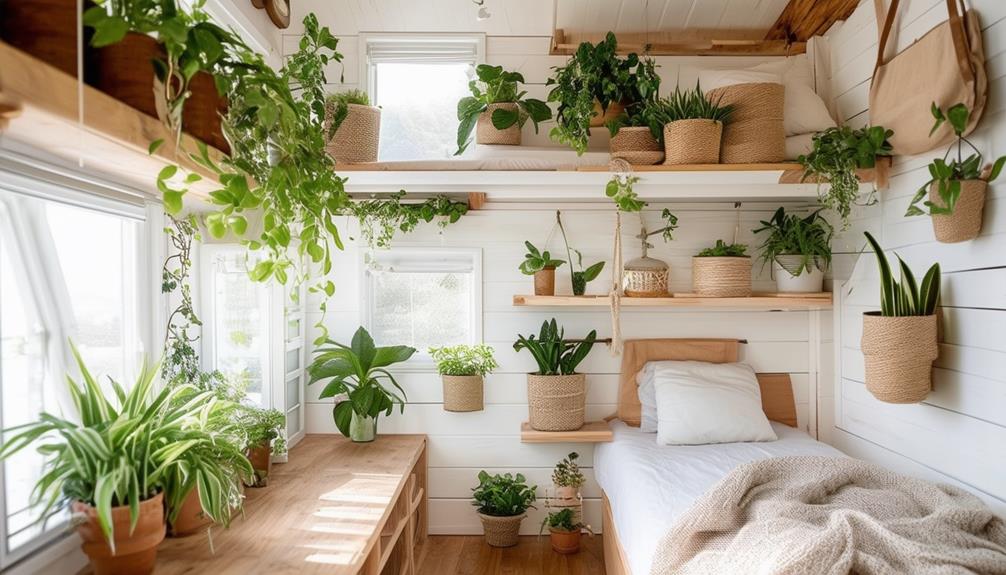
Enhance the functionality of your compact home by maximizing vertical space with floating shelves and wall-mounted storage units. These solutions save floor space and offer ample room for your belongings. Install tall bookshelves and cabinets to draw the eye upward, creating the illusion of a higher ceiling and making your small space feel more expansive.
Incorporate hanging planters and artwork at varying heights to add visual interest and make the most of your vertical walls. This not only beautifies your home but also frees up valuable surface space. Consider lofted beds or storage platforms to optimize sleeping areas while keeping the floor clear for other activities. These solutions provide additional storage options beneath them, ideal for a tiny home.
Use pegboards or hooks on your walls to hang kitchen utensils, bags, and accessories. This keeps essential items within reach and effectively utilizes vertical space. Pegboards can be customized to fit your needs, whether in the kitchen, bathroom, or workspace. By thoughtfully employing these strategies, you'll transform your tiny home into a functional and stylish haven, making every inch count.
Choose Multi-Purpose Furniture
When living in a tiny home, selecting multi-functional furniture is essential to ensure every item serves multiple purposes. This approach not only optimizes your space but also aids in decluttering and organizing. For example, storage beds and convertible sofas provide hidden storage solutions, making them perfect for tiny house living. These pieces ensure that every inch of your home is used efficiently.
Imagine the convenience of a coffee table with concealed compartments or an ottoman that also serves as a storage unit. These versatile furniture options can transform your living space into a well-organized, clutter-free sanctuary. By investing in pieces that serve multiple roles, you can create a more spacious and aesthetically pleasing environment.
Consider how versatile furniture can enhance your living experience:
| Furniture Type | Function 1 | Function 2 |
|---|---|---|
| Storage Beds | Sleeping | Storage |
| Convertible Sofas | Seating | Sleeping |
| Coffee Tables | Surface for items | Concealed storage solutions |
| Ottomans | Seating | Storage |
Embrace multi-functional furniture in your tiny home to maximize your space. It's a smart, stylish way to ensure that every piece you own serves a practical purpose while keeping your home organized and clutter-free.
Install Sliding Doors
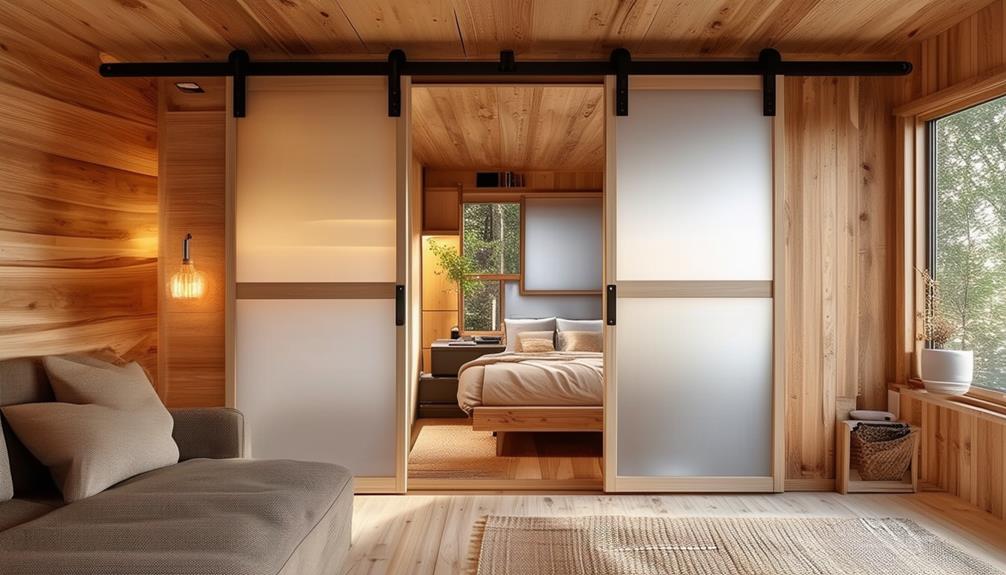
Opting for multi-functional furniture and installing sliding doors can significantly enhance the functionality and style of your compact home. Sliding doors are ideal for small spaces as they maximize space efficiency. Unlike traditional swinging doors that require clearance to open and close, sliding doors glide along the wall, allowing you to place furniture closer without obstruction. This not only saves valuable square footage but also contributes to a more practical design.
Sliding doors can also create efficient room separation in tight spaces without the need for permanent walls. Whether you need to divide the living area from the bedroom or create a private workspace, sliding doors offer flexibility and style. They're particularly well-suited for compact homes where every inch counts.
For those who appreciate farmhouse-inspired decor, sliding barn doors add a charming, rustic touch. Their visual appeal enhances the overall appearance and atmosphere of your home, making it cozy and welcoming. Installing sliding doors is a practical and stylish solution to address space constraints while enhancing the visual appeal of your home. By incorporating these doors, you not only optimize your layout but also elevate your interior design.
Utilize Outdoor Spaces
Expanding your living area by utilizing outdoor spaces like decks, patios, and balconies can make a small home feel much larger. Outdoor living areas offer a seamless extension of your home, especially when you incorporate French doors. These doors create a smooth transition between indoor and outdoor spaces, enhancing your connection to nature.
To transform your outdoor spaces into cozy retreats, start by adding comfortable furniture, rugs, and cushions. These elements not only provide comfort but also define the area, making it feel like an extension of your living room. Rugs can add warmth underfoot, while cushions offer softness and color.
Lighting plays a crucial role in making your outdoor space usable at all times. String lights, lanterns, or solar-powered options can create a magical atmosphere, perfect for entertaining guests or enjoying a peaceful evening.
Consider how you'll use these outdoor spaces. Is it for dining, relaxing, or both? A small bistro table can make dining outdoors a delightful experience, while lounge chairs or a hammock can turn your patio into a relaxation sanctuary. By thoughtfully utilizing and decorating your outdoor areas, you can significantly enhance the livability and enjoyment of your small home.
Get Creative With Lighting
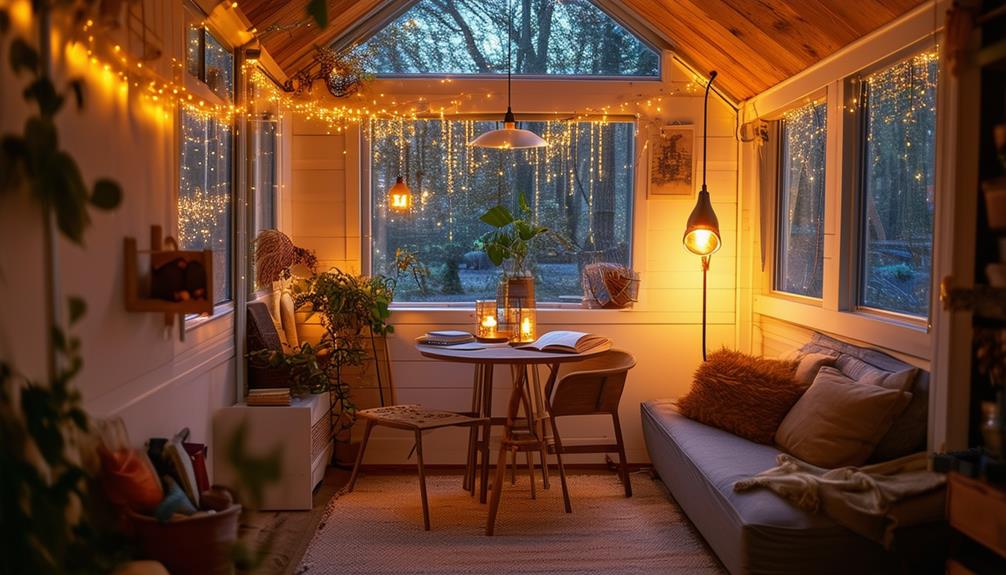
In a tiny home, creative lighting solutions can drastically transform your space, making it feel larger and more inviting. Start by incorporating unique fixtures like chandeliers or Edison bulbs to enrich the ambiance. These elements add a touch of elegance and a warm glow, perfect for cozying up your small living area. Don't underestimate the power of natural light; install skylights to flood your home with sunlight, creating a brighter and more spacious feel.
To add a stylish flair, consider Mid-Century Modern lamps. Their sleek design not only provides functional light but also serves as a standout piece in your decor. Recessed lighting is another smart option, especially for areas with limited natural light. These lights are subtle and blend seamlessly with the ceiling, providing ample illumination without occupying any visual space.
Mix and match these lighting sources to create layers of light that can be adjusted according to your needs. By strategically placing different types of lights, you can highlight specific areas, set the mood, and make your tiny home appear more extensive. Good lighting isn't just about functionality; it's a key element in creating a welcoming and well-designed space.