How to Create a Tiny Home Playroom for Kids
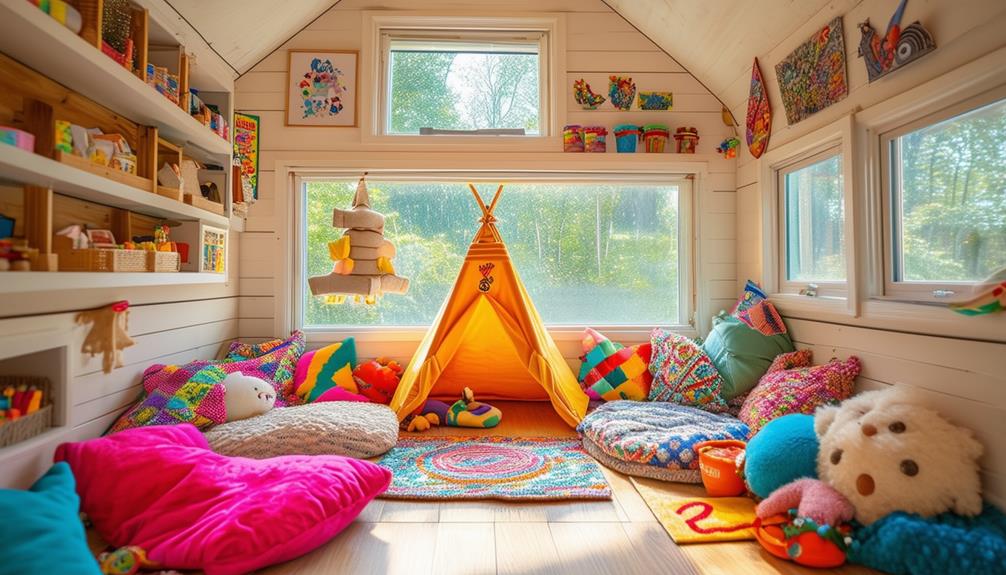
Creating a tiny home playroom for kids requires thoughtful planning to maximize space. Utilize vertical space with multi-purpose furniture like bunk beds that offer both sleeping and storage options. Add interactive features such as a climbing wall to keep children active. Ensure there's a cozy reading corner with vibrant colors for quiet activities. To keep everything organized and safe, use child-friendly storage solutions and safety measures like securing furniture to the walls. Let's explore practical strategies to make this compact area both functional and enjoyable for kids.
Design Concepts
Optimize your tiny home playroom by utilizing vertical space with bunk beds and smart storage solutions. Bunk beds save space and add a sense of adventure for kids. Incorporate drawers or shelves under the bunk beds to store toys, books, and other items.
Add a climbing wall on one side of the room with various holds to create diverse challenges, encouraging physical activity. Place floor cushions underneath for a soft landing, ensuring safety and comfort.
Create a cozy reading nook with floor cushions that can double as extra seating. Use bright colors and playful decor to make the area inviting. Personalize the space with your children's artwork and favorite characters.
Include interactive features like a chalkboard wall to spark creativity and a sensory play area with different textures and materials to engage their senses. By combining these design elements, you can transform a small space into a functional and enjoyable playroom.
Safety Measures
When designing a fun and engaging playroom, prioritizing safety is crucial to ensure that your children can play freely and securely. Begin by installing safety rails on bunk beds to significantly reduce the risk of falls and create a safe sleeping environment. Additionally, childproofing electrical outlets and organizing cords can minimize the risk of electrical hazards and accidents.
Securing heavy furniture to the walls is essential to prevent tip-over accidents. Utilize brackets or straps to anchor items like bookshelves and dressers, enhancing the overall safety of the playroom. Furthermore, selecting non-toxic materials for furniture and decor is vital for safeguarding your children from harmful chemicals, thereby promoting their health and well-being.
Regular maintenance and inspection of play equipment are also important. Make it a routine to check toys and furniture for wear and tear. Ensuring that all items are in good condition will help you maintain a safe and enjoyable play environment for your children.
Organizational Strategies
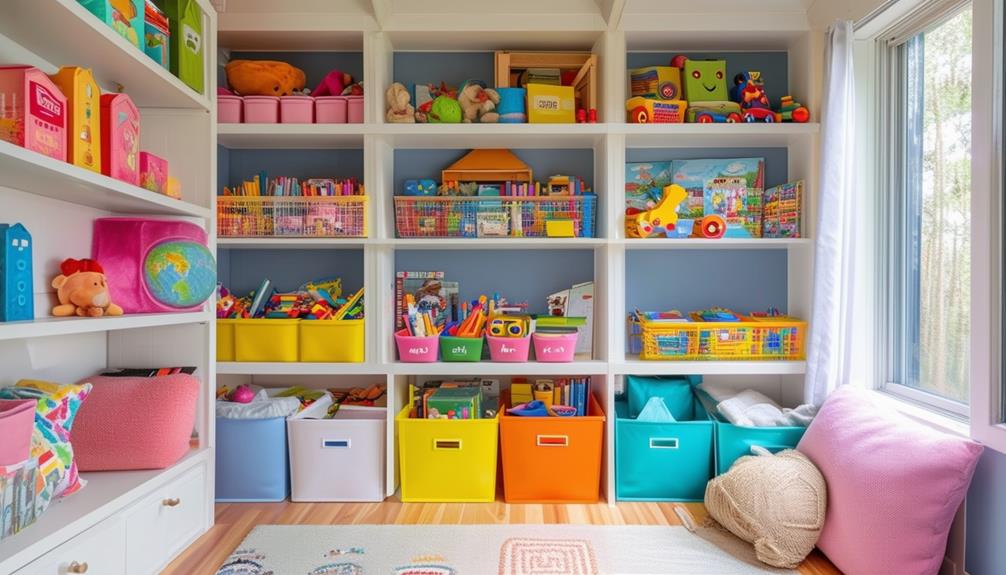
Creating a well-organized playroom can significantly enhance how your kids enjoy and use the space. Start by optimizing space with smart storage solutions. Use tall shelves to keep frequently used items within reach and store lesser-used items higher up. Implement a rotating toy system to manage clutter and maintain your kids' interest by periodically swapping out toys.
Color coding and a labeling system can simplify organization. Assign different colors to categories of toys, books, and art supplies. Clearly label storage bins so your kids know where everything belongs, which helps maintain order and teaches them organizational skills.
Regularly declutter by donating unused items to keep the space tidy. Establish designated zones for activities like reading, crafting, and imaginative play to enhance space optimization. This makes it easier for your kids to find what they need and encourages effective use of the space.
Interactive Features
Enhance your child's playroom with interactive features designed to spark creativity and foster learning. Start with an adaptable mural, such as a chalkboard wall, which provides a canvas for endless artistic expression and easy cleanup. Set up a small art station to encourage engaging activities, offering a dedicated area for drawing, crafting, and exploring artistic skills.
Incorporate sensory play elements to enrich tactile exploration and sensory development. Kinetic sand is an excellent choice, offering a fun, mess-free way to engage their senses. To balance active play, create a cozy reading nook filled with cushions and a variety of books, promoting quiet relaxation and a love for reading.
Integrate educational toys and games to support cognitive development, making learning an enjoyable experience. Include spaces for collaborative projects, where children can build and explore together. These shared activities will foster teamwork and communication skills, transforming the playroom into a hub of interactive discovery.
Personalization Touches
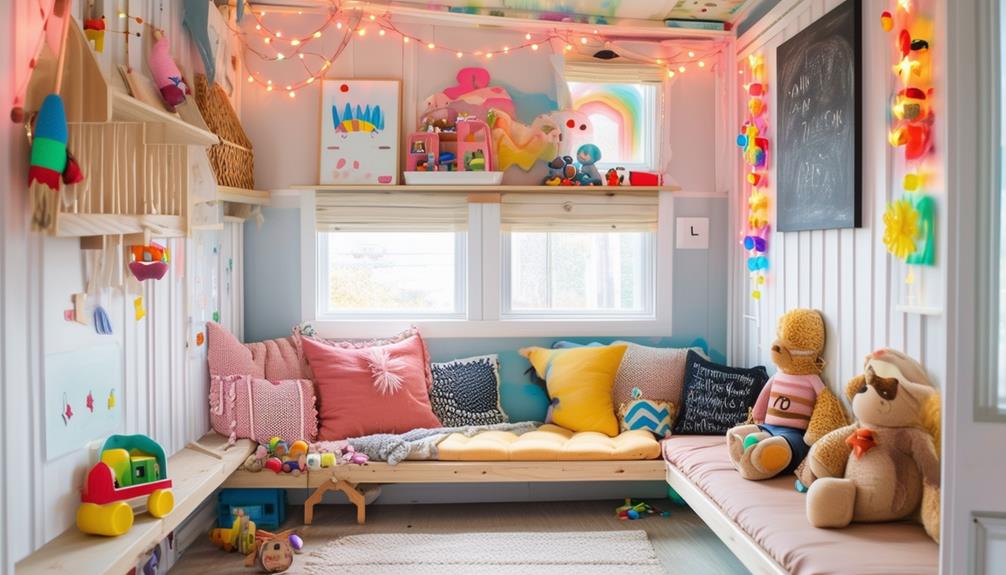
Adding personal touches to your child's playroom can make it uniquely theirs and foster a sense of ownership and pride. Start by displaying your child's artwork on the walls, boosting their confidence and creating a colorful, inspiring environment. Integrate decor featuring their favorite characters to make the room align with their interests.
Customize storage solutions to make organization both functional and enjoyable. Label storage bins with colors or names to help your child easily find and put away their toys, which keeps the playroom tidy and teaches organizational skills. Growth charts are a valuable addition to track your child's milestones. Personalized charts can be decorative and meaningful, making growth tracking a special event.
To create a warm and inviting atmosphere, include family photos and mementos. These personal touches can foster a sense of belonging and nostalgia.
- Display your child's artwork
- Use character-themed decor
- Customize storage bins
- Install personalized growth charts