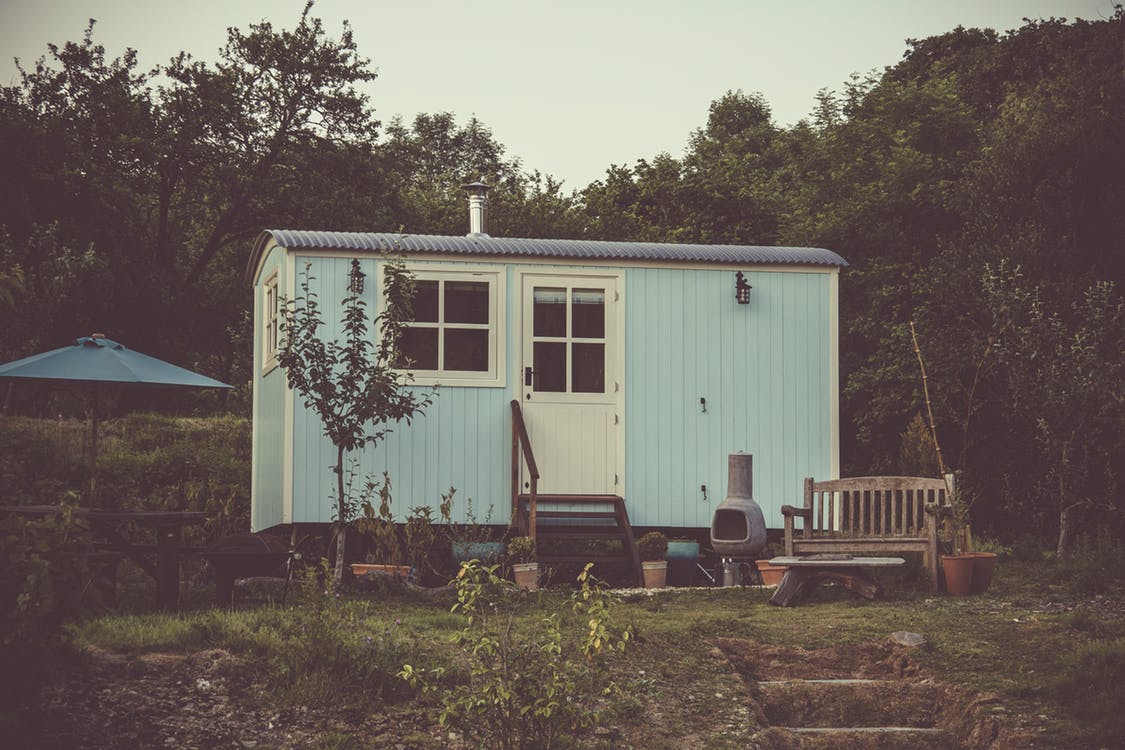
How to Create a Tiny Home Music Studio
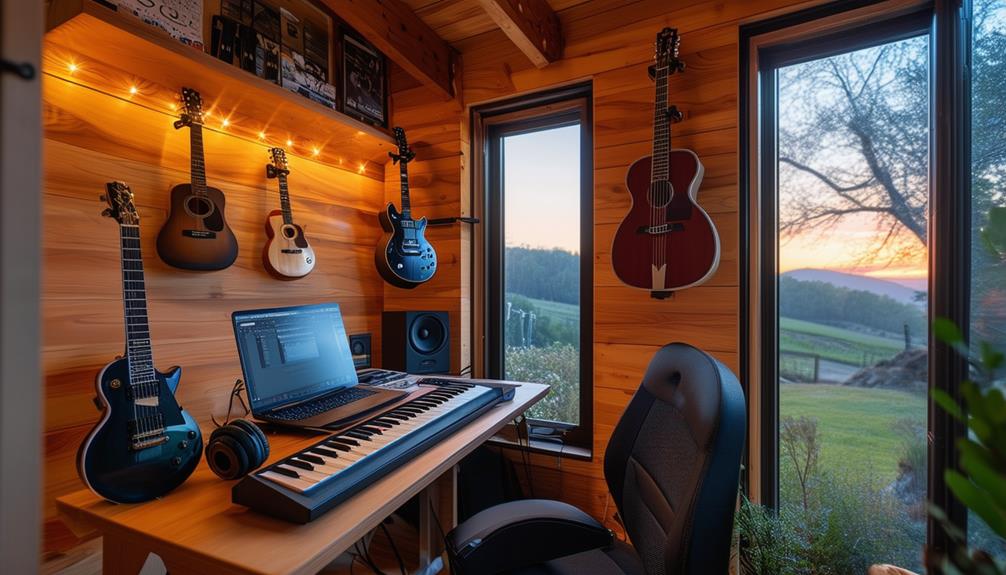
When setting up a small home music studio, start by selecting an appropriate area, even if it's just a corner of your apartment. Incorporate soundproofing techniques, such as sealing openings and positioning acoustic foam panels, to minimize external noise. Acoustic treatment with bass traps and diffusers is also essential for sound quality. To integrate all this into a confined space without creating a crowded feel, focus on effective room arrangement and ergonomic furniture. These strategies can have a significant impact on both functionality and comfort.
Selecting the Right Space
When choosing the right space for your tiny home music studio, consider the size and layout to ensure it accommodates your equipment and allows for comfortable movement. Evaluate different areas in your home, such as the living room or a spare bedroom, as these spaces often provide ample room for your instruments, computer, and recording gear.
To improve acoustics and reduce external noise, consider creating a 'room within a room.' This involves setting up an isolated area within a larger room, which can significantly enhance sound quality. Ensure the room's dimensions allow for easy movement without the risk of knocking over equipment.
It's also essential to identify initial reflection points—areas where sound waves first bounce off surfaces, impacting audio clarity. Position your speakers and acoustic panels to effectively manage these reflections, as this can greatly improve your recordings.
Soundproofing Essentials
Soundproofing your tiny home music studio is essential for maintaining sound quality and ensuring a peaceful coexistence with your neighbors. Effective soundproofing not only blocks external noises but also prevents your music from disturbing those around you. Achieve this through various DIY techniques and soundproofing materials.
Start by sealing all gaps and adding weather stripping around doors and windows to minimize sound leakage. Install mass-loaded vinyl on walls and floors to create a dense barrier against sound transmission. Strategically place acoustic foam panels to absorb sound and reduce echo.
For optimal isolation, consider building a 'room within a room.' This involves constructing an additional set of walls, floors, and ceilings inside your existing structure. Use double drywall with green glue for added mass and damping between layers. Finally, install soundproof doors to prevent sound from escaping through doorways.
Here's a quick checklist to get you started:
- Seal gaps and add weather stripping
- Use mass-loaded vinyl
- Install acoustic foam panels
- Build a room within a room
- Use double drywall with green glue
With these soundproofing essentials, your home studio will be a sanctuary of creativity and tranquility.
Acoustic Treatment Tips
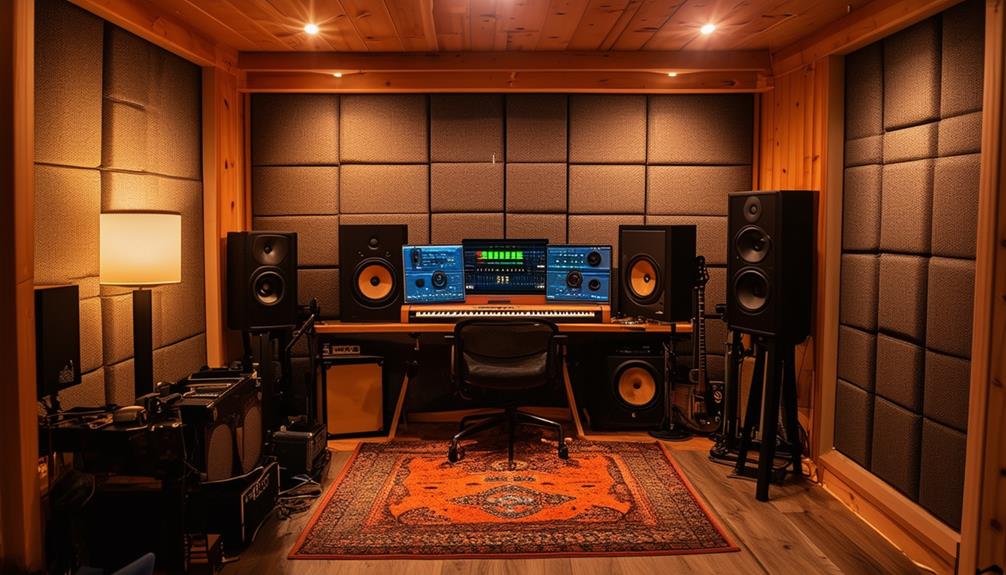
Now that you've soundproofed your studio, it's time to focus on acoustic treatment to fine-tune your recording environment. Use bass traps, absorption panels, and diffusers to control sound reflections and reverberations. Strategic placement of these acoustic treatments on walls, corners, and ceilings will greatly reduce unwanted echoes and enhance sound quality.
To help you visualize the placement and function of these treatments, here's a quick guide:
| Treatment Type | Purpose |
|---|---|
| Bass Traps | Control low-frequency sound reflections |
| Absorption Panels | Reduce mid to high-frequency echoes |
| Diffusers | Scatter sound waves for a balanced mix |
In a small space, even thick rugs, curtains, and furniture can help dampen sound and minimize ambient noise. Experiment with your room layout and furniture placement to create the best sound environment possible. Remember, every home studio is unique, so customize your acoustic treatment based on your studio's specific dimensions and layout.
Optimal Room Layout
To optimize your tiny home music studio, position your desk and computer close to the center to reduce sound reflections. Place your studio monitors at ear level, forming an equilateral triangle with your listening spot for balanced audio. Arrange furniture to enhance creativity and workflow while maintaining ergonomic efficiency.
Speaker Placement Tips
Positioning your speakers correctly is crucial for achieving optimal audio quality in your home music studio. Follow these guidelines to ensure balanced and accurate sound:
- Maintain Speakers at Ear Level: Positioning your speakers at ear level ensures you receive a balanced sound.
- Create an Evenly Spaced Triangle: Arrange your speakers and listening position in an equilateral triangle. This setup enhances stereo imaging for a more accurate listening experience.
- Keep Speakers Away from Walls: Positioning your speakers away from walls helps prevent unwanted reflections and bass build-up, which can compromise sound quality.
- Angle Speakers Inward: Direct your speakers inward towards your listening position. This enhances stereo imaging and ensures more precise mixes.
- Avoid Corners: Placing speakers in corners can lead to low-frequency accumulation, resulting in a muddy sound. Experiment with different placements to find the best position for your room.
Experiment with these tips to find the most suitable setup for your space. Your ears will appreciate the effort!
Efficient Space Utilization
Maximizing space in your small home music studio requires strategic placement of recording equipment, furniture, and acoustic treatments. Efficient space utilization is crucial to avoid clutter and ensure comfortable working conditions. Start by planning the best room layout. Place your desk against a wall to access all your equipment easily, and position your speakers at ear level to enhance sound clarity and improve acoustics.
Utilize wall space effectively by mounting shelves for storage and installing acoustic panels to manage sound reflection. This approach keeps the floor area open, enhancing your studio's functionality. Opt for a compact, ergonomic chair that can be tucked away when not in use to maintain a streamlined workspace.
Consider the placement of your instruments and other gear. Store them in accessible yet unobtrusive locations, such as wall-mounted racks or under-desk shelves. An organized studio not only optimizes space but also improves workflow. By focusing on efficient space utilization and an ideal room layout, you will create a more productive and enjoyable music-making environment.
Ergonomic Workstation Setup
Creating an ergonomic workstation setup in your small home music studio starts with positioning your desk and monitor speakers thoughtfully. Place your workstation against a wall to maximize space. Ensure your monitor speakers are at ear height and form an equilateral triangle with your listening position for optimal sound quality. This setup will enhance both your audio experience and workflow.
For further customization, use adjustable monitor arms and keyboard trays. These allow you to fine-tune the height and angle of your equipment, reducing strain and promoting better posture.
Designate specific areas for recording, mixing, and storing equipment. This organization streamlines your tasks and keeps everything within easy reach. Effective cable management is essential for a neat and efficient workspace. Use cable raceways and Velcro straps to minimize clutter and prevent tangled cords.
In summary:
- Optimize space by situating your desk against a wall.
- Position monitor speakers at ear level for better sound.
- Use adjustable monitor arms and keyboard trays.
- Designate areas for recording, mixing, and storage.
- Implement cable management solutions to reduce clutter.
Lighting and Ambiance
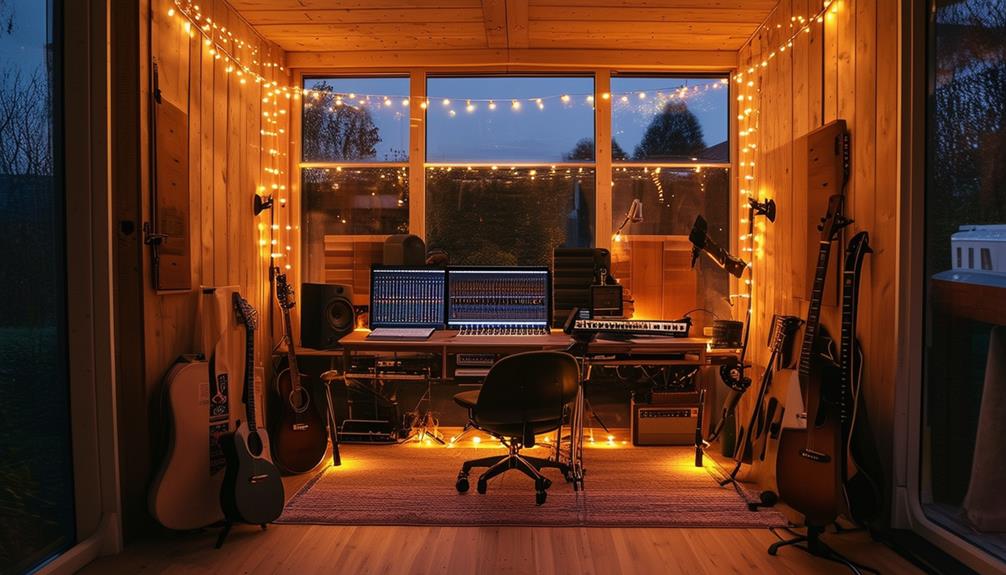
A well-thought-out lighting scheme can transform your small home music studio into an inspiring and productive space. Ambient lighting sets the mood, making your studio a comfortable and inviting place, crucial for maintaining creativity and productivity during long recording sessions.
Dimmable lights are essential in a small home music studio. They allow you to adjust the brightness for different tasks, whether mixing tracks, recording vocals, or brainstorming ideas. Switch from bright, focused light for detailed work to soft, warm light for a relaxed atmosphere.
LED lights are ideal for compact spaces—they're energy-efficient and offer customizable options. LED strips can highlight specific areas or create a backlit effect. Don't underestimate natural light; if your studio has windows or skylights, use them to make the space feel more open and welcoming.
Essential Recording Gear
To establish a functional tiny home music studio, you'll need essential recording gear, including a computer, audio interface, microphone, headphones, and studio monitors. This equipment forms the backbone of your studio, enabling you to convert creative ideas into professional recordings. Your computer serves as the central hub for all recording activities. An audio interface with preamps is crucial for capturing high-quality audio, ensuring clean and clear recordings.
Here's a list of essential gear that will bring your tiny home studio to life:
- Computer: The core of your setup, running your DAW and storing your projects.
- Audio Interface: Connects instruments and microphones to your computer, vital for high-quality recordings.
- Microphone: A good condenser microphone is ideal for capturing vocals and instruments with clarity.
- Headphones: Closed-back headphones help you monitor recordings without interference.
- Studio Monitors: Provide accurate audio playback, essential for mixing and mastering.
Investing in quality gear is crucial for creating a functional studio. With the right setup, you can achieve professional-level recordings even in a small space. Consider using affiliate links to explore recommended products that fit your needs.
Managing Cables and Clutter
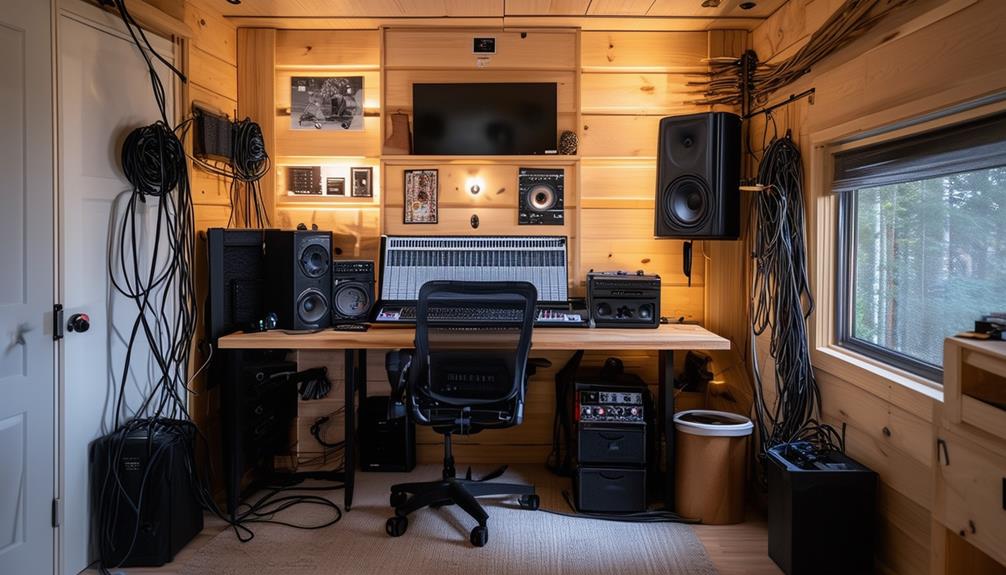
To keep your tiny home music studio organized, use cable management solutions like Velcro ties and cable wraps to prevent tangling. Conceal wires with cable trays or raceways to maintain a clean workspace, and label cables for easy identification. Regularly inspect and remove unused cables to optimize space and ensure your setup remains streamlined.
Efficient Cable Management Solutions
Organized cable management is crucial for maintaining a functional and professional-looking tiny home music studio. Here are some effective solutions to keep your cables neat and manageable:
- Use Cable Ties, Velcro Straps, or Cable Sleeves: These tools help you group and secure cables, preventing them from becoming a tangled mess that can disrupt your workflow.
- Label Cables with Colored Tape or Tags: Clearly labeling each cable makes it easier to identify and troubleshoot issues without having to trace them back to their source.
- Utilize Cable Clips or Adhesive Cable Holders: Keeping cables off the floor not only enhances the aesthetics of your space but also prevents tripping hazards.
- Invest in Cable Management Trays or Boxes: These conceal excess cables, maintaining a clutter-free and visually appealing workspace.
- Implement a Cable Routing Plan: Strategically route your cables to minimize tangling, ensuring a smooth and efficient workflow.
Decluttering Strategies for Studios
Efficient decluttering strategies are essential for maintaining a productive and inviting workspace in a tiny home music studio. Start by implementing cable management systems like cable ties, clips, and sleeves to keep your cables organized and prevent tangling. This not only keeps your studio tidy but also saves you time when setting up or adjusting your equipment.
Use wall-mounted hooks, shelves, and racks to store your gear, reducing clutter on your floor and work surfaces. Label your cables and equipment for easy identification, minimizing the time spent searching for specific items.
Storage containers, drawers, and bins are ideal for small items like adapters, cables, and accessories. Keeping these items in designated spots helps maintain a tidy workspace. Regularly declutter and reorganize your studio to optimize workflow and create a productive environment for creativity. Staying on top of clutter makes it easier to stay inspired and focused on your projects. Experiment with different strategies to find what works best for you.
Optimizing Workspace Organization
Effectively managing cables and clutter can transform your small home music studio into an organized and efficient creative space. By implementing smart cable organization techniques, you can maintain a workspace that enhances your creativity.
Start with practical tips such as using Velcro straps or cable sleeves to bundle your cables neatly. This prevents tangling and keeps your workspace looking professional. Wall-mounted hooks or cable clips can help store cables off the floor, optimizing your limited space.
Consider investing in cable management trays or boxes to hide excess cables under your desk, maintaining a clean, clutter-free workspace. A robust labeling system using tags or color-coding is crucial for streamlining connections, making it easier to identify and manage your setup. Regularly declutter and assess your cable needs to avoid unnecessary accumulation.
By following these steps, you can achieve a more peaceful and productive workspace:
- Velcro straps: Keep cables bundled and tidy.
- Wall-mounted hooks: Optimize floor space.
- Cable management trays: Hide excess cables.
- Labeling system: Easily identify cables.
- Regular decluttering: Maintain a minimalist workspace.
DIY Studio Furniture
Creating your own DIY studio furniture allows you to customize each piece to fit your tiny home music studio's specific needs and style. By using materials like wood, metal, or PVC pipes, you can build sturdy, functional furniture that perfectly accommodates your space and equipment. Crafting your own pieces enables you to implement clever furniture hacks that pre-made options may not offer.
Consider space-saving solutions like wall-mounted shelves for your instruments and gear, or a foldable desk for your mixing console. These options can significantly reduce clutter and create a more efficient workspace. Online resources are abundant with step-by-step instructions and plans, making it easier than ever to start your DIY projects.
Building your own furniture not only saves money but also enhances the aesthetic appeal of your studio. You can choose finishes and designs that match your personal style, creating a cohesive and inspiring environment. Ultimately, DIY studio furniture gives you the flexibility to design a workspace that's perfectly tailored to your creative needs, making your tiny home music studio both functional and visually appealing.
Budget-Friendly Upgrades
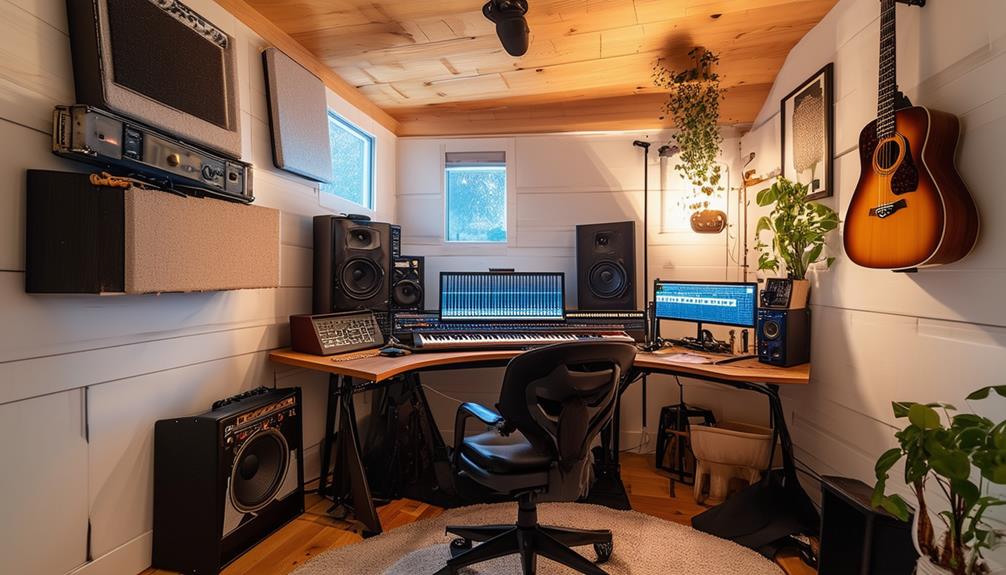
Upgrading your small home music studio on a budget doesn't mean sacrificing quality or creativity. You can enrich your space with eco-friendly decor and sustainable materials without breaking the bank. Here are some budget-friendly upgrades to explore:
- LED Lighting: Switching to LED lighting saves money in the long run and reduces energy consumption. It's a cost-effective way to illuminate your studio while being kind to the planet.
- Cork Flooring: Cork flooring offers excellent sound treatment benefits and is an eco-friendly option. It's affordable, sustainable, and improves the acoustics of your studio.
- Ultratouch Insulation: Enhance soundproofing with Ultratouch insulation made from recycled cotton. This sustainable material is effective and budget-friendly.
- Second-Hand Materials: Sourcing second-hand materials allows you to find high-quality items at a fraction of the cost, making your studio upgrades economical and environmentally friendly.
- Repurposing Leftovers: Minimize waste by repurposing leftovers from other projects. This approach reduces your carbon footprint and adds a unique, personalized touch to your studio.
These upgrades will help you create a functional, inspiring, and sustainable music studio without compromising your creative vision.
Maintaining Your Studio
Maintaining your tiny home music studio is crucial for preserving its functionality and efficiency. Keep your cables organized to prevent tangling, and regularly clean your equipment to ensure optimal audio quality. Use storage solutions effectively to maximize your limited space and keep everything easily accessible.
Organized Cable Management
Proper cable management in your small home music studio reduces clutter and prevents trip hazards, ensuring a more efficient and safe workspace. Cable organization is essential for maintaining a tidy environment, and it starts with a well-thought-out cable layout. Utilize cable fasteners, holders, and organizers to keep everything orderly. Implementing a cable routing plan along walls or under desks can streamline your setup, making it easier to manage and more visually appealing.
Labeling techniques are another crucial part of the process. By using tags or colored tape, you can quickly identify and trace cables, saving time and reducing frustration when making adjustments or troubleshooting issues. Regularly checking and maintaining your cables will also prevent signal interference and ensure peak performance.
Here are some tips to get you started:
- Relieve clutter by using cable fasteners and holders.
- Easily locate the right cable with effective labeling techniques.
- Enhance aesthetics with a neat cable layout.
- Minimize trip hazards by routing cables along walls or under desks.
- Ensure efficiency with a safe and organized setup.
Regular Equipment Cleaning
Keeping your small home music studio tidy and free of dust is crucial for the optimal performance and longevity of your equipment. Regular maintenance, including thorough cleaning and preventive upkeep, ensures your gear functions smoothly and remains in top condition.
First, focus on dust removal. Use compressed air or a soft brush to clean hard-to-reach areas of your microphones, keyboards, and interfaces. Dust can accumulate quickly, impacting the performance of your equipment, so regular cleaning is essential.
Next, wipe down all surfaces with a mild cleaning solution. This prevents the buildup of dirt and grime, which can interfere with your studio's aesthetics and functionality. For cables and connectors, use a gentle cleaning solution to ensure proper connections and signal flow.
To keep everything organized and clutter-free, establish a consistent cleaning schedule. This habit not only maintains equipment performance but also contributes to a more enjoyable and efficient workspace.
Efficient Space Utilization
Optimize your small home music studio's efficiency by utilizing vertical space with wall-mounted shelves and storage units. This keeps the floor clear for equipment and movement, making your studio feel less cramped. Space-saving furniture, like a desk that doubles as a keyboard stand, is a smart choice to maximize every inch of your room.
Cable organization is crucial. Use zip ties and cable clips to keep cords tidy and prevent them from becoming a tangled mess. Consider a rotating setup or foldable stands to switch seamlessly between recording and mixing configurations without needing extra space.
Invest in compact gear, such as all-in-one audio interfaces and controllers, to save space without sacrificing functionality. These devices offer robust features in a small package, providing the tools you need without overwhelming your limited area.
Here are some tips to inspire your creativity:
- Vertical storage: Create an inspiring wall of gear and soundproofing panels.
- Space-saving furniture: Enjoy the freedom of movement and efficiency.
- Cable organization: Maintain a clutter-free, focused environment.
- Rotating setup: Switch roles quickly and stay in the creative flow.
- Foldable stands: Adapt and rearrange your studio on the fly.