How to Create a Tiny Home for Wellness and Health
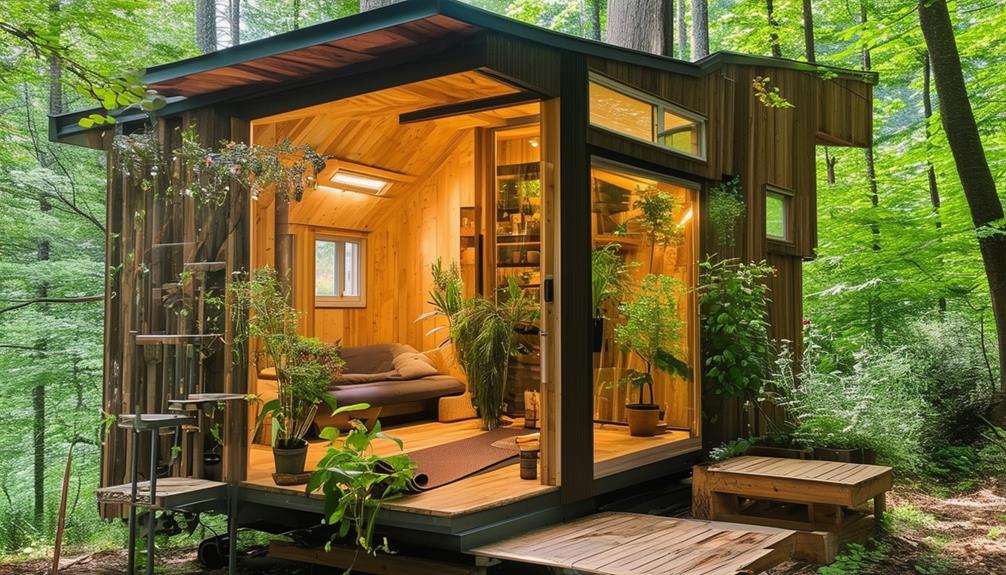
To create a small home that promotes wellness and health, start by carefully selecting non-toxic materials and collaborating with builders who prioritize health. Incorporate advanced ventilation systems to ensure high air quality. Additionally, maximize natural light and minimize EMF exposure by avoiding wireless technology. These elements will establish a space that supports both mental and physical well-being. So, what are the key features that make a small home truly health-oriented?
Tiny House Customization
Lucy's journey to creating a health-focused tiny house began with meticulous customization. Collaborating closely with builders who understood her unique health requirements, she ensured every aspect of her compact home was tailored precisely to her needs.
The customization process started with the selection of non-toxic materials, promoting an environmentally friendly construction that minimized harmful chemical emissions and supported a healthier living environment. To enhance well-being, advanced ventilation systems were installed to maintain high air quality, ensuring fresh, pollutant-free air.
Addressing Lucy's sensitivity to electromagnetic fields, the builders incorporated non-wireless technology and specialized electrical wiring, significantly reducing her exposure to EMFs and creating a safer living space.
Additionally, the house design included features to optimize natural light and promote relaxation. Health-conscious lighting choices, such as amber and red bulbs, were used to mimic natural sunlight, a topic that will be explored further in subsequent sections. Ultimately, every decision in constructing Lucy's tiny house reflected a personalized, health-centered design, making her home a sanctuary and a model of wellness-focused living.
Health-Oriented Lighting
Transforming your small home with health-focused lighting can significantly enhance your well-being and quality of life. By replacing standard bulbs with amber and red bulbs, you can better mimic natural sunlight, which is essential for regulating your circadian rhythms. This adjustment promotes better sleep and relaxation, vital for maintaining mental health.
In compact living spaces, a thoughtfully designed lighting setup can create a soothing atmosphere that supports daily routines. Adjustable lighting options allow you to modify brightness throughout the day to suit various activities. For instance, brighter, natural-like lighting during the day can boost alertness and productivity, while softer, amber lighting in the evening can help prepare your body for rest.
Prioritizing health-focused lighting solutions in your small home can positively influence your overall quality of life. By enriching your living environment with such lighting, you contribute to improved mental and physical well-being. The right lighting not only supports better sleep but also fosters a calming atmosphere, enhancing your daily experiences. Adopt these lighting strategies in your small home to optimize your living space for a healthier, more balanced life.
Electromagnetic Sensitivity
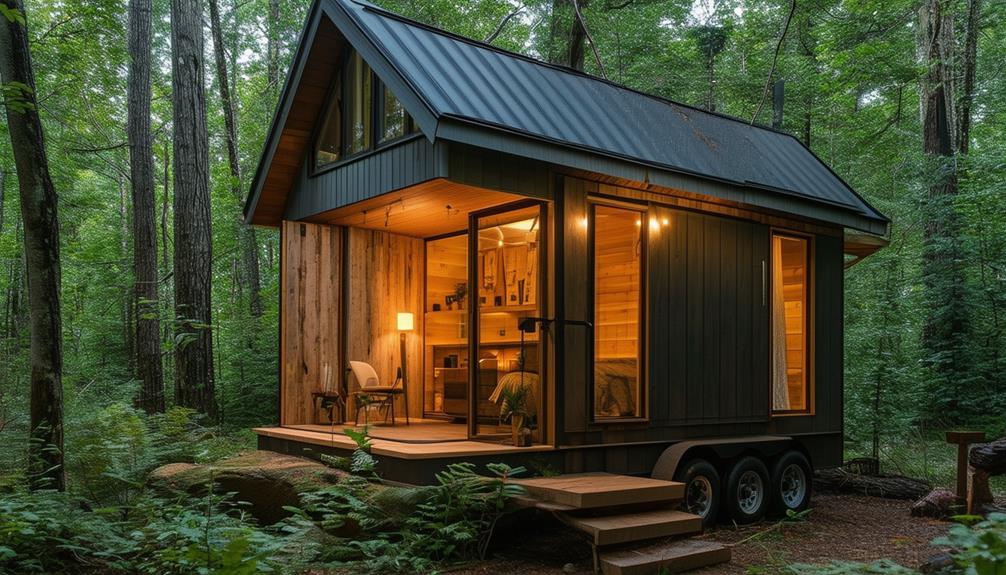
When addressing electromagnetic sensitivity in your tiny home, focus on EMF-reducing design strategies and the use of non-wireless technology. Implementing special wiring and creating EMF-free zones can significantly lower your exposure to potentially harmful electromagnetic fields. These measures can enhance your overall health and well-being in a compact living space.
EMF-Reducing Design Strategies
Incorporating EMF-reducing design strategies in your tiny home can significantly enhance your well-being, especially if you're sensitive to electromagnetic fields. One effective approach is to use non-wireless technology and specialized electrical wiring to minimize EMF exposure. When planning your tiny home, consider shielding sleeping areas from electronic devices to create a restful and healthful sleep environment.
Grounding techniques are another crucial aspect of reducing EMF effects. These methods help disperse unwanted electromagnetic fields, fostering a more balanced living space. Additionally, designing specific EMF-free zones where you can retreat without electronic interference is essential for those with heightened sensitivity. These zones can serve as sanctuaries for your overall well-being.
Prioritizing EMF-reducing measures in your tiny home construction ensures a sanctuary that supports your physical, mental, and emotional health. By adopting these strategies, you proactively create a healthier, more harmonious living environment.
Non-Wireless Technology Benefits
Opting for non-wireless technology in your tiny home can significantly benefit individuals with electromagnetic sensitivity by reducing EMF exposure. Utilizing specialized electrical wiring techniques can minimize EMF exposure and create low-EMF zones within the tiny house, thereby enhancing health and well-being.
Shielding sleeping areas from electronic devices is another effective approach. Keeping these areas free from EMF sources fosters better rest and recovery, contributing to a healthier living environment. Grounding techniques, such as using grounded outlets and grounding mats, further mitigate the effects of EMF exposure in your home.
Incorporating non-wireless technology benefits not only those with electromagnetic sensitivity but also supports the overall well-being of anyone living in the tiny home. Prioritizing these methods creates a sanctuary that promotes healthier living. For instance, opting for wired internet connections instead of Wi-Fi ensures your tiny home remains a safe and nurturing space.
Ultimately, embracing non-wireless technology in your tiny home design fosters a healthier, more balanced lifestyle by significantly reducing the potential health risks associated with electromagnetic fields.
Natural Living Approach
Adopting a natural living approach in a tiny home emphasizes sustainable practices that foster a closer connection to nature. Integrating eco-friendly features such as solar energy systems, composting toilets, and rainwater tanks enhances self-sufficiency while minimizing environmental impact.
Key Features and Their Benefits:
| Feature | Benefit |
|---|---|
| Solar Energy System | Reduces environmental impact |
| Composting Toilets | Promotes eco-friendly living |
| Rainwater Tanks | Enhances self-sufficiency |
| Non-toxic Materials | Ensures ideal air quality |
Using non-toxic materials is crucial for maintaining optimal air quality, contributing to overall well-being. Coupling these with effective ventilation solutions can significantly enhance the indoor environment, transforming your tiny home into a health sanctuary.
Sustainable Solutions:
- Solar Energy System: Harness renewable energy to lessen dependence on the grid.
- Composting Toilets: Manage waste efficiently and promote eco-friendly living.
- Rainwater Tanks: Capture and utilize rainwater to boost self-sufficiency.
These elements work together to create a home that prioritizes both your health and the planet's well-being.
Mindfulness and Intentionality

Infusing mindfulness and intentionality into your tiny home living enriches your daily experience and fosters a deeper connection to your surroundings. By embracing the Tiny House Lifestyle, you can create a space that prioritizes eco-friendliness and enhances your overall wellness. Every design decision should be intentional, ensuring your tiny home supports both mental and physical health.
To truly benefit from this lifestyle, consider these practices:
- Incorporate mindfulness practices: Designate a quiet corner for meditation or yoga to cultivate peace and focus.
- Foster a connection with nature: Use large windows or create an outdoor living area to bring the calming effects of nature into your daily routine.
- Practice gratitude for the environment: Choose sustainable materials and energy-efficient appliances to honor and protect the earth.
- Embrace health-conscious design: Opt for non-toxic paints, natural fibers, and plants to create a healthy living space.
Mental Health Benefits
How can residing in a small abode transform your mental health? Simplifying your surroundings by decluttering can significantly reduce stress and anxiety, offering substantial mental health benefits. When you keep only essential items, you create a sense of order and clarity that brings peace of mind. Each item has its place, making your living space more manageable and less chaotic.
A small home also fosters a stronger connection with nature. Large windows and increased outdoor interactions can enhance your mental well-being. Being closer to nature has been shown to reduce stress and anxiety, providing a natural boost to your overall mood.
Living in a small home encourages you to focus on personal growth and relationships. With limited space, you prioritize meaningful connections over material possessions. This emphasis on relationships can lead to increased happiness and fulfillment, further contributing to your mental wellness.
Moreover, the compact, organized space of a small home promotes a sense of order, which is essential for mental clarity. By living in an environment where everything has a purpose, you can experience reduced stress and anxiety, allowing you to lead a more balanced and peaceful life.
Physical Health Benefits
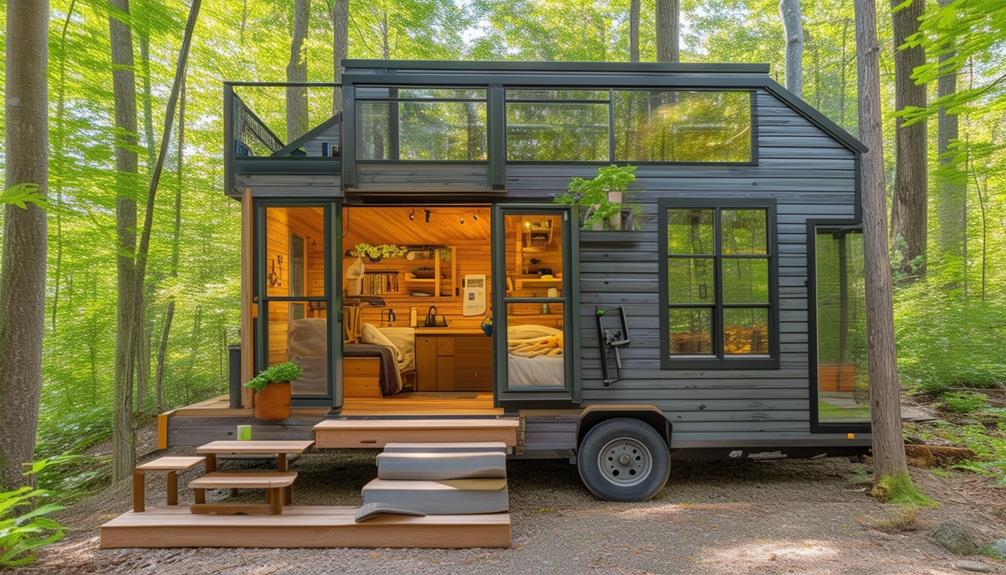
Shifting focus from mental to physical health, living in a tiny home can significantly enhance your overall wellness through eco-conscious designs and sustainable living practices. By incorporating thoughtful design choices and lifestyle changes, you can create an environment that promotes physical health.
Tiny homes often feature eco-conscious designs that encourage an active lifestyle. The limited space can motivate the use of space-saving exercise equipment and versatile furniture that doubles as workout stations.
- Sustainable living practices, such as growing natural gardens, can lead to healthier eating habits and increased physical activity as you tend to your plants.
- Using eco-friendly materials in construction and interior design improves indoor air quality, reducing exposure to toxins and promoting overall physical well-being.
- Engaging in activities like yoga and Pilates inside your tiny home can provide a full-body workout, enhancing flexibility, strength, and mental clarity.
- Versatile furniture not only saves space but also allows you to create a flexible environment for various physical activities.
Strategies for Cultivating Wellness
To nurture wellness in your compact home, start by maximizing natural light and incorporating indoor plants to create a vibrant and healthy environment. Customizing your tiny house is key; use health-oriented lighting to enhance your mood and energy levels. Embrace a natural living approach by choosing non-toxic materials and reducing electromagnetic sensitivity through simple design choices, such as minimizing electronic clutter.
Focus on mindfulness and intentionality in every aspect of your small space living. Efficient storage solutions reduce clutter, making your home feel larger and more organized. Prioritize owning fewer, high-quality items to simplify your life and promote mental clarity. Sustainable design not only benefits the environment but also fosters a sense of fulfillment, aligning with your values as a wellness enthusiast.
Building a sense of community within the tiny house lifestyle can greatly improve your mental health. Engage in community-building activities with neighbors who share your interests in sustainability and personal growth. Valuing meaningful relationships and being part of a supportive network leads to improved emotional health and overall well-being. By focusing on these strategies, you'll create a tiny home that supports your wellness journey.