How to Create a Tiny Home for Music Lovers
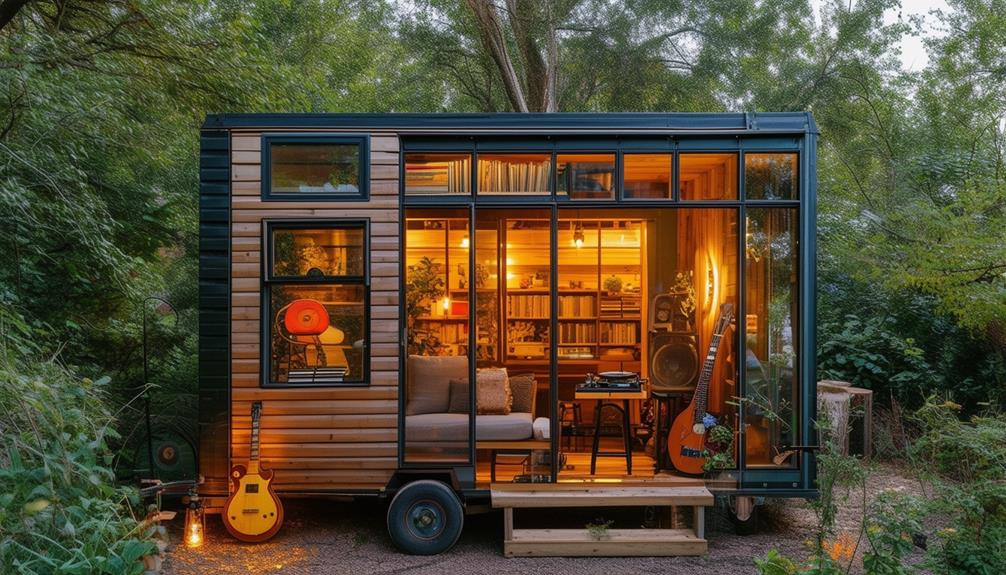
When designing a tiny home for music lovers, the first step is to evaluate the space to meet studio requirements, ensuring a balance between compactness and functionality. Identify areas that can naturally support a studio setup, such as a loft or a cozy corner for added separation. Prioritize sound insulation and allocate a budget for essential recording equipment. How do you create a layout that combines practicality with a rustic aesthetic while maintaining versatility? By focusing on these elements, you can craft a living space that truly inspires creativity.
Choosing the Right Space
When selecting the ideal space for your small home music studio, focus on size, layout, and natural light to foster an inspiring environment. First, evaluate the overall dimensions of your home and identify an area that can comfortably meet your studio requirements. A space that is too small may stifle creativity, so aim for a balance between compactness and functionality.
Next, consider the layout. Look for areas that naturally lend themselves to a studio setup. A loft or a designated corner can be ideal, providing necessary separation from the rest of your home, which makes it easier to concentrate on your music without interruptions.
Natural light is crucial for creating an uplifting and invigorating atmosphere. Choose a location with ample sunlight during the day, as it can significantly enhance your mood and productivity. Additionally, ensure the space has good acoustic properties. Wooden surfaces and soft furnishings can help in optimizing sound quality.
Designing the Layout
Designing the layout of your small home music studio involves careful planning to optimize both functionality and comfort. Start by incorporating a dedicated music studio area with proper sound insulation and strategic equipment placement. This setup should help you focus on your music without distractions, maximizing your limited space.
Consider using loft spaces for cozy music sessions or even as recording studios. Utilize natural light and privacy features to create an inviting atmosphere. Your layout should also include a functional kitchen that can double as a dining and band practice space. Choose durable and aesthetically pleasing materials to keep your small home looking great while withstanding the demands of daily use.
Storage solutions are vital in a small home. Ensure you have dedicated spaces for musical instruments and equipment, making them easily accessible and organized. Embrace the Wabi-sabi philosophy by creating a versatile living space that celebrates simplicity and imperfections, making your home both practical and uniquely yours.
Here's a simple table to help you plan your layout:
| Area | Function | Key Features |
|---|---|---|
| Music Studio | Recording and practice | Sound insulation, equipment setup |
| Loft Space | Cozy sessions/recording | Natural light, privacy |
| Kitchen | Dining and band practice | Durable, aesthetic materials |
Budgeting for Essentials
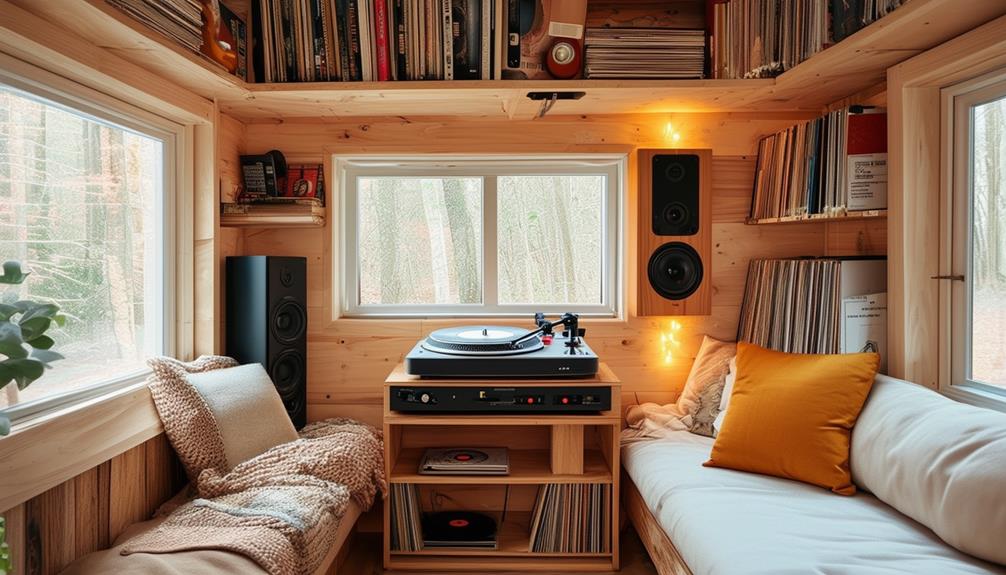
After planning your layout, it's crucial to allocate your budget wisely to ensure your tiny home music studio has all the necessary elements. Begin by prioritizing key recording equipment. High-quality microphones, headphones, and audio interfaces are essential for achieving the best recording results, so allocate a significant portion of your budget to these critical items.
Next, set aside funds for acoustic treatment. Soundproofing materials like foam panels and bass traps are vital for enhancing sound quality and reducing echo. Proper acoustic treatment will make a noticeable difference in your recordings, so ensure you invest adequately in this area.
Investing in a comfortable and ergonomic workspace is also essential. A sturdy desk and an adjustable chair will support long recording and mixing sessions without causing discomfort. Ergonomics play a crucial role in maintaining productivity and preventing strain, so budget accordingly.
Setting Up the Studio
Creating a rustic and eco-friendly studio in your tiny home can enhance both aesthetics and functionality by utilizing repurposed wood and unique materials. Start by selecting a dedicated space for your home music studio, whether it's a corner of your living area or, if feasible, a small separate room. Repurposed wood not only adds charm and character but also supports sustainability.
To make the most of your space, consider the following steps:
- Loft Area: Incorporate a loft area to add extra living space or create a cozy music studio with natural lighting. This design helps separate your personal and creative areas efficiently.
- Essential Recording Gear: Equip your studio with essential recording gear, including microphones, interfaces, and monitors. Investing in high-quality equipment ensures professional sound quality.
- Multifunctional Space: Design a multifunctional area that integrates a small kitchen or dining space, suitable for band practices, dining, and creative sessions.
Thoughtfully arranging your home music studio will optimize your workflow and creativity. By blending practicality with a rustic aesthetic, you'll create an inspiring and efficient environment for your musical endeavors.
Soundproofing and Acoustics
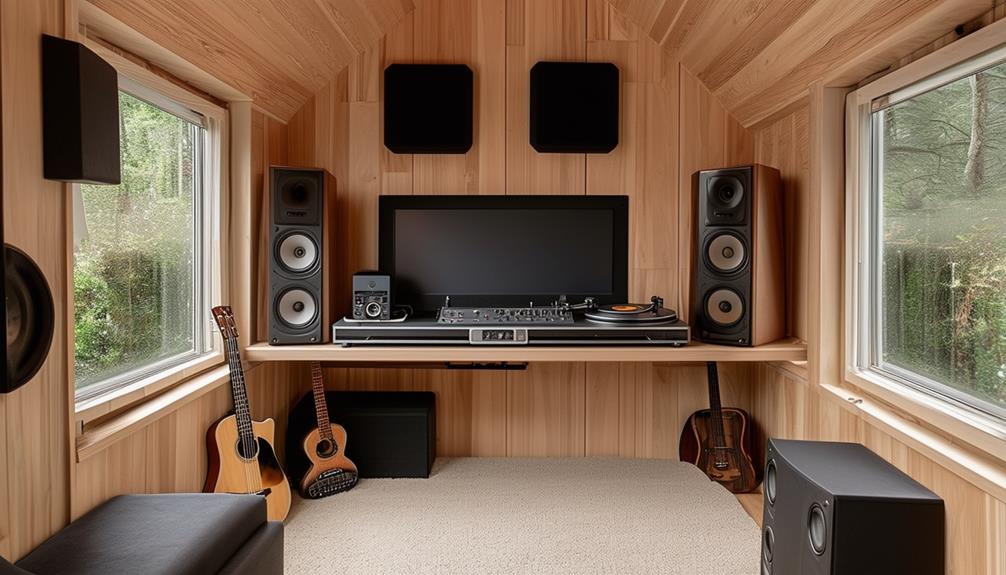
When addressing soundproofing and acoustics, several effective techniques are available. Utilize materials such as acoustic foam panels and mass-loaded vinyl to minimize noise leakage. For DIY solutions, consider bookshelves filled with books. Optimizing your tiny home's sound environment is crucial for creating an ideal space for music enthusiasts.
Effective Soundproofing Techniques
How can you create a serene and acoustically optimized tiny home for your music needs? Start by implementing effective soundproofing techniques to minimize noise leakage and improve sound quality. Here's how you can do it:
- Install Acoustic Panels: Place these panels strategically on your walls and ceiling to absorb sound and reduce echoes. They help maintain a quiet environment and ensure your music sounds crisp and clear.
- Use Soundproof Curtains: Hang these heavy, dense curtains over windows and doors to block outside noise and prevent sound from escaping. They contribute to a controlled acoustic environment.
- Seal Gaps and Cracks: Apply weatherstripping and sealant around doors, windows, and electrical outlets to prevent sound leakage. This maintains your tiny home's acoustic integrity.
For additional sound insulation, consider using double or triple-pane windows and adding carpeting to floors. Strategically place furniture, rugs, and heavy curtains to absorb sound and reduce echoes. Also, seal electrical outlets, ductwork, and vents to prevent sound leakage. With these soundproofing techniques, your tiny home will become the perfect retreat for any music lover.
Ideal Acoustic Materials
To achieve optimal sound quality in your tiny home music studio, select acoustic materials that effectively manage soundproofing and acoustics. Start with soundproofing materials like mass-loaded vinyl and acoustic foam panels to reduce external noise and enhance recording clarity. Adding weatherstripping around doors and windows can further minimize unwanted sounds.
Incorporate acoustic panels, bass traps, and diffusers to manage reverberation, reflections, and standing waves. Acoustic panels absorb mid to high frequencies, ensuring a balanced sound environment. Bass traps focus on lower frequencies, preventing boomy or muddy sounds. Diffusers scatter sound waves to avoid harsh reflections and create a more natural soundscape.
Consider using sound-absorbing materials such as cork flooring, fabric wall coverings, and soundproof curtains to minimize echo and improve recording quality.
| Material | Purpose |
|---|---|
| Mass-loaded vinyl | Reduces external noise |
| Acoustic panels | Absorbs mid to high frequencies |
| Bass traps | Controls low-frequency standing waves |
| Diffusers | Scatters sound waves for natural acoustics |
Additionally, using double-paned windows, heavy curtains, and soundproof doors can create a more isolated and acoustically optimized space. Experiment with furniture placement to improve sound diffusion.
DIY Room Treatments
Enhance your small home music studio's acoustics with straightforward DIY room treatments. Begin by soundproofing with heavy drapes, rugs, and acoustic panels to diminish external noise and reverberations, creating a more controlled environment.
To manage low-frequency sound waves, install bass traps and diffusers. These tools ensure a balanced acoustic environment. You can make your own using materials like mineral wool and foam. Experiment with different placements to find the optimal setup for your space.
Here's a quick list of DIY methods to improve your studio's acoustics:
- Hanging Blankets: Drape blankets on walls to absorb sound reflections and reduce reverberations.
- Foam Panels: Place foam panels on walls and ceilings to scatter and absorb sound.
- Furniture Placement: Rearrange furniture to disrupt sound waves and minimize echo.
Incorporate specialized acoustic materials like fabric-covered panels for an added touch. Experimenting with your room layout, wall coverings, and furniture placement will help you optimize the sound quality and create an ideal environment for your music.
Multifunctional Living Areas
Embracing the concept of multifunctional living areas, this tiny home seamlessly integrates music-inspired spaces, including a recording studio loft and a kitchen area perfect for band practice. The loft spaces are ingeniously designed for diverse music-related activities. One loft serves as a fully-equipped recording studio, while another features a composting toilet and soaking tub, providing a serene space for relaxation and creativity.
The kitchen area doubles as a band practice zone, making it easy to switch from cooking to jamming. Maple wood flooring offers an ideal surface for foot drumming, and slate backsplashes complement the double bay cast iron sink, adding both aesthetic appeal and practical function.
Here's how the multifunctional spaces are utilized:
| Area | Function |
|---|---|
| Recording Studio Loft | Dedicated space for recording music |
| Kitchen | Doubles as a practice area for band sessions |
| Relaxation Loft | Features composting toilet and soaking tub |
Named "Snails Away," this mobile music recording studio adheres to RV codes with electric and water connections at the back. The roof, framed with wooden strips, provides extra insulation. Designed by Carpenter Owl and Daniel Weddle, this tiny home offers an intimate setting for musicians to create and play music. It is the perfect blend of functionality and inspiration in a compact space.