How to Avoid Common Mistakes When Using an Axe
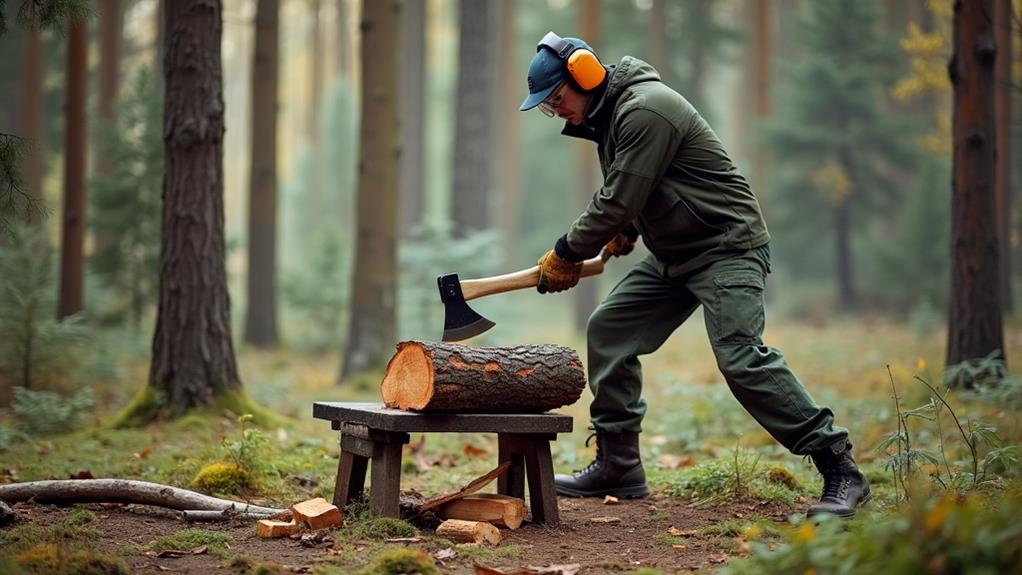
When using an axe, it's crucial to avoid common mistakes that can result in accidents or inefficient chopping.
Begin by selecting the appropriate axe for the task; using the wrong type can cause undue strain and increase the risk of injury. Inspect the axe for any signs of damage, ensuring the blade is sharp and the handle is secure; a dull blade or loose handle can be dangerous.
Equally important is wearing the proper safety gear and maintaining a clear workspace. A proper grip and controlled swing are essential, but mastering axe use involves more than just technique.
Choosing the Right Axe
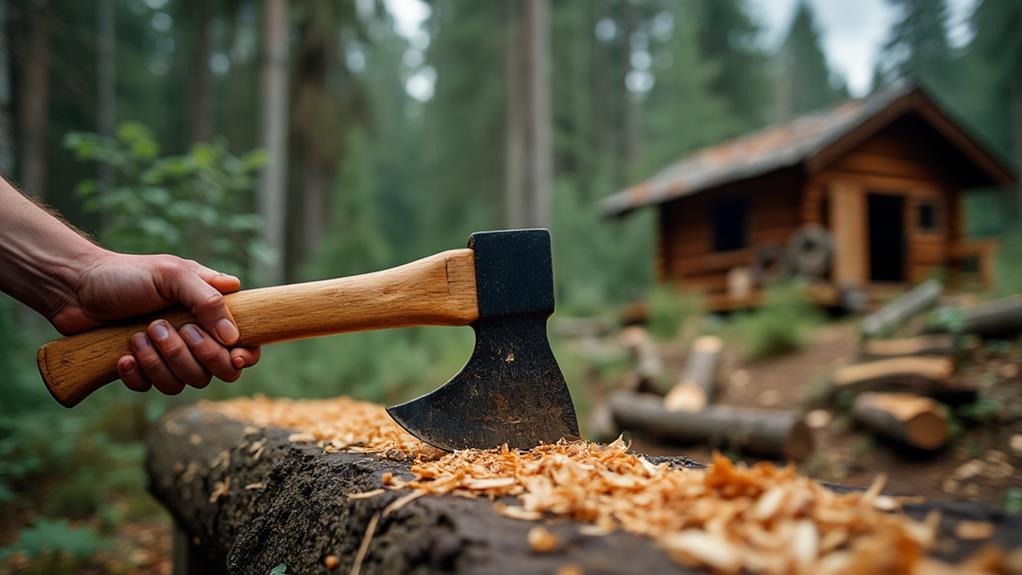
Choosing the right axe requires understanding the specific types available to avoid mistakes. Whether you're cutting down trees, splitting wood, or going on a camping trip, selecting the appropriate axe is crucial. Modern axes come in various forms, each tailored for specific tasks. For instance, a felling axe is ideal for cutting down trees, while a splitting axe is designed to split wood efficiently. If you're into camping or need something for lighter tasks, a hatchet is your best bet.
When selecting an axe, pay close attention to the handle and head. Ensure the axe offers a comfortable grip without causing strain. Wooden handles are generally preferred over plastic ones for their durability and performance. An American felling axe is highly recommended for its versatility in both limbing and bucking, making it a reliable choice for general use.
Quality craftsmanship is vital. A well-crafted axe improves performance and user experience, reducing the likelihood of accidents.
Consider popular options like the Gränsfors Splitting Maul for splitting or the Husqvarna Multi-Purpose Axe for a budget-friendly, versatile tool. Prioritize safety and your specific needs to avoid common mistakes.
Inspecting and Maintaining Your Axe
Begin with regular inspections for damage, such as cracks in the handle or a loose head, as these can make the axe hazardous to use. Check the blade sharpness before each session; a dull blade requires more force and increases the risk of injury. A sharp blade makes your work easier and safer.
After use, clean your axe to remove debris and moisture, preventing rust and maintaining its condition. Store it in a dry place and use a protective sheath to safeguard the blade and prevent accidental cuts.
Periodically oil the handle to keep it from drying out and cracking, significantly extending the axe's lifespan. Adhering to these maintenance steps ensures your axe remains in optimal condition and ready for safe use. Regular upkeep not only prolongs the tool's life but also enhances your safety.
Essential Safety Precautions
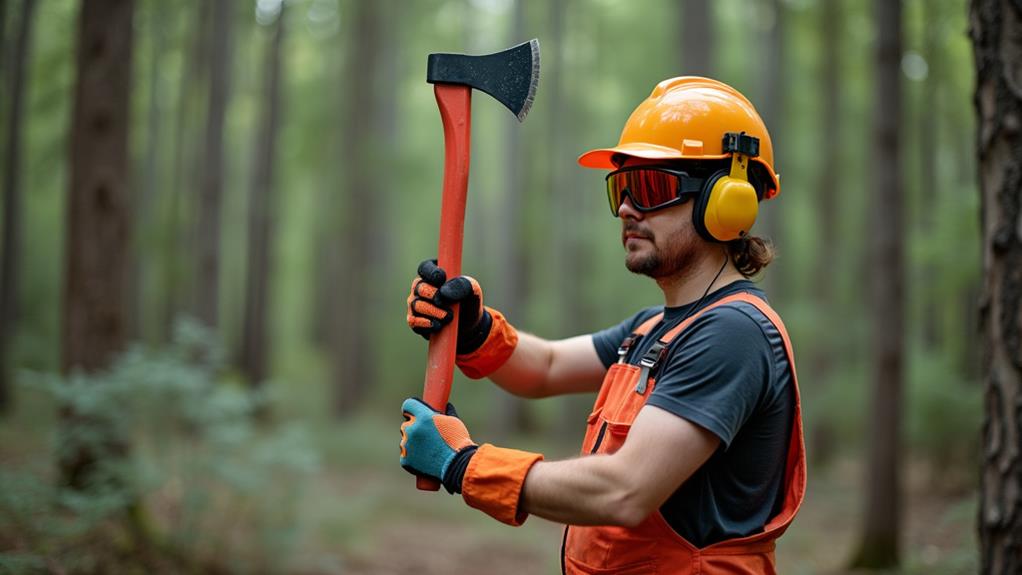
Prioritizing safety is crucial when using an axe, as adhering to fundamental precautions can prevent serious injuries. Always wear protective gear, including gloves and eye protection, to safeguard against flying debris and accidental swings.
Ensure your workspace is clear of obstacles and keep bystanders at a safe distance to minimize distractions and potential accidents. Before chopping, thoroughly inspect the axe for any damage, such as loose heads or cracks in the handle. A damaged axe can fail during use, leading to severe injuries.
Hold the axe correctly by maintaining a firm grip with both hands—your upper hand near the axe head for control and your lower hand at the end of the handle for power.
Visualize your swing arc and practice stopping the axe in one of the three safe places: inside the workpiece, in the ground, or suspended in the air. This minimizes the risk of unintended contact and enhances control.
Mastering Grip and Swing
Mastering the grip and swing of an axe is crucial for both safety and efficiency. Start by maintaining a firm, two-handed grip. Place your upper hand near the axe head for better control and your lower hand at the handle's end for maximum power. This positioning is essential for effective axe work and minimizes the risk of injury.
Stand with your feet shoulder-width apart and slightly bend your knees to improve stability and balance. This stance allows for a more controlled swing. Raise the axe above your shoulder and bring it down in a straight motion, aiming for a guillotine-like cut rather than a sweeping arc. This technique ensures the cutting edge hits your target with precision and force.
Engage your legs and hips in the swing to utilize your body weight, building velocity in the axe head before impact. This makes your chopping more efficient.
Practice slow-motion swings to develop muscle memory, helping you gauge distance better and reducing the risk of misjudgment during actual chopping. By mastering your grip and swing, you'll make your axe work safer and more productive.
Staying Focused and Controlled
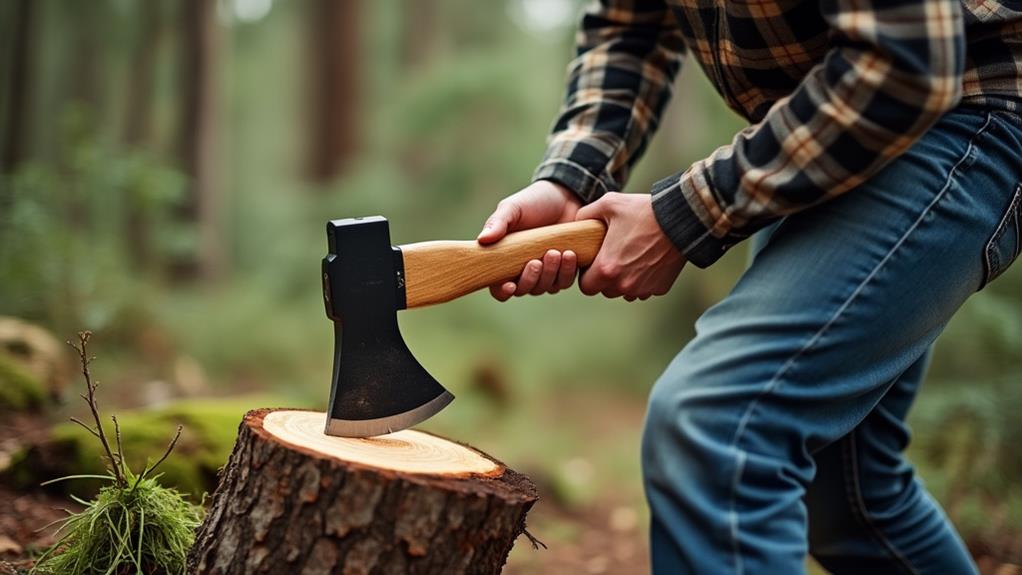
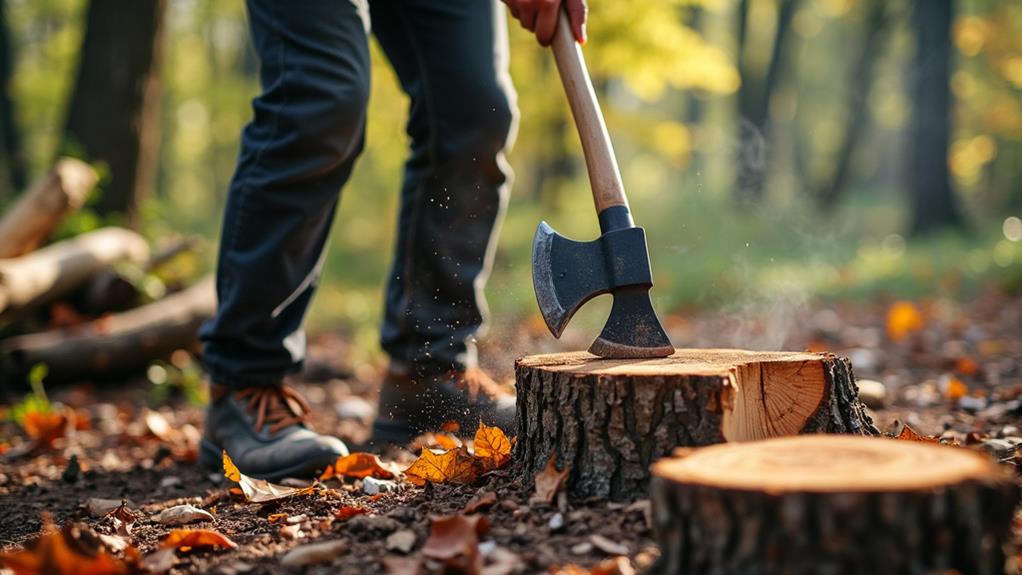
Staying focused and controlled is essential when using an axe to split firewood. Distractions can lead to misjudgments in distance and swing arc, significantly increasing the risk of accidents. To maintain focus, practice slow-motion swings to gauge the correct distance and better control the axe's movement. This not only helps avoid overexertion but also ensures each swing is precise.
Your stance is crucial for control and balance. Stand with your feet shoulder-width apart and your knees slightly bent. This posture provides the stability needed to split firewood efficiently and prevents losing your footing when the axe makes contact with the wood.
Grip pressure is another important factor. Maintain a light grip to reduce hand fatigue and sustain control post-impact. Avoid swinging too hard; instead, focus on proper angles and use your body weight to drive the axe through the wood. This method is more efficient and helps maintain control throughout the swing.
Conclusion
Using an axe safely begins with choosing the right tool and maintaining it properly. Always wear appropriate protective gear and thoroughly inspect your workspace. Ensure you have a proper grip on the axe, practice your swings methodically, and maintain a stance with your feet shoulder-width apart. Focus on controlling each movement. By adhering to these guidelines, you'll minimize risks and use your axe effectively and safely. Happy chopping!