How Safe Are Tiny Homes?
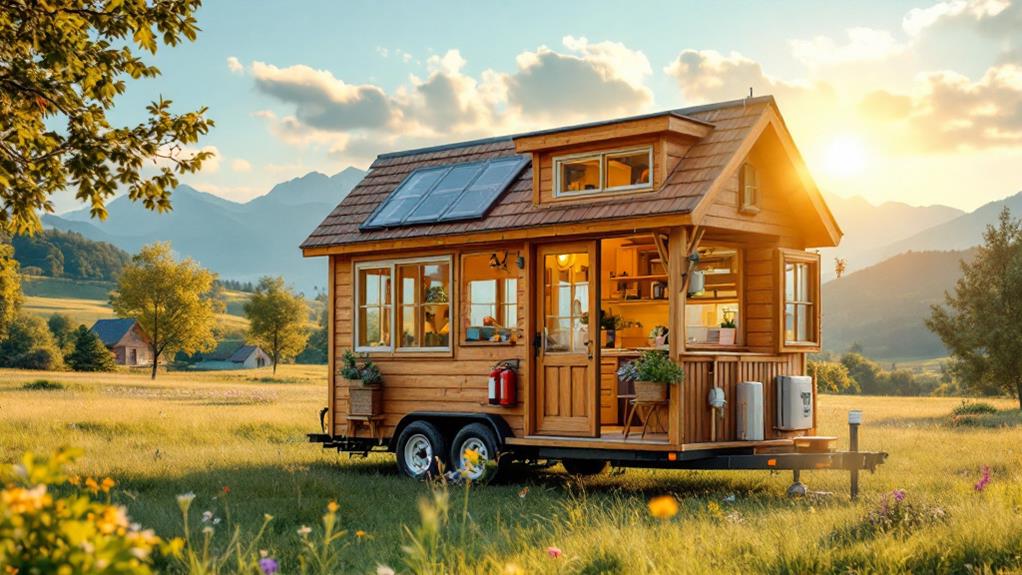
Tiny homes can be as safe as traditional houses when properly built and maintained. You'll need to guarantee compliance with building codes, fire safety regulations, and structural integrity standards. Key safety features include smoke detectors, fire extinguishers, proper ventilation, and secure foundations. Don't overlook the importance of loft and stair safety, weather resistance, and security measures. Environmental safety and sustainability should also be considered. While tiny homes present unique challenges due to their compact size, addressing these safety concerns can create a secure living environment. Exploring each aspect in detail will help you understand the full scope of tiny home safety.
Safety Regulations for Tiny Homes
When it comes to tiny homes, safety regulations are paramount. As a tiny homeowner, you must adhere to specific building codes and safety features to safeguard your compact living space and maintain its habitability. These safety regulations cover various aspects, including fire safety, weather safety, and structural integrity.
Fire safety in tiny homes is essential. You'll need to install carbon monoxide and smoke detectors, keep fire extinguishers and baking soda handy, and use combustion-free heating systems. Proper ventilation is vital to prevent moisture buildup and mold growth. Your tiny home must also have at least one emergency exit point besides the main entry.
Weather safety features are equally important. You should secure windows, use heavy-duty spray foam insulation, and guarantee proper drainage and roof design. A sturdy foundation and anchoring system are necessary to withstand strong winds.
Building codes for tiny homes specify minimum ceiling heights, with common spaces requiring at least 6 feet, 8 inches. Bathrooms must be separated from other rooms and have a minimum ceiling height of 6 feet, 4 inches. Additionally, you'll need to comply with regulations for interior finish flame spread and proper ventilation for fuel-burning appliances.
Fire Hazards and Prevention
Fire hazards pose a significant threat to tiny home dwellers. The compact nature of these homes, combined with combustible materials and open flames, can create a dangerous environment if proper precautions aren't taken. To safeguard your safety, you must prioritize fire prevention measures.
Start by installing smoke detectors and keeping a fire extinguisher readily accessible. Proper ventilation is critical, especially if you're using a wood stove or other heating appliances. Opt for fire-resistant construction materials whenever possible to slow the spread of flames in case of an emergency.
Don't overlook the importance of electrical systems. Have a professional inspect your wiring and ensure it's up to code to prevent electrical fires, which are a leading cause of home fires. If your tiny home has a loft or sleeping area, make sure you have adequate escape routes and safety railings.
If you're part of a tiny home community, work with your neighbors to develop a coordinated fire prevention plan. Ensure emergency responders can easily access your property. By taking these precautions, you'll dramatically reduce the risk of fire and create a safer living environment in your tiny home.
Structural Integrity Concerns

Beyond fire safety, structural integrity is a critical concern for tiny home dwellers. You need to be aware that poorly constructed tiny homes can pose significant risks, especially during extreme weather conditions. If your tiny home is built with subpar materials or faulty designs, it may be vulnerable to structural failure when faced with high winds or heavy snowfall.
The safety of your tiny home largely depends on its foundation and framing. Inadequate structural support can compromise stability, potentially leading to collapse. Pay close attention to bracing, ground attachment, and the materials used in construction. Lightweight components may seem appealing for mobility, but they can increase the risk of tipping or structural damage.
If you have a loft space in your tiny home, be cautious about weight distribution. Overloading upper areas can strain the structure and potentially cause collapse. For those with homes on wheels, you face additional challenges. Ensure your tiny home is properly secured and leveled to maintain structural integrity during transport and while stationary. By addressing these concerns, you'll greatly improve the safety and durability of your tiny home.
Environmental Safety Considerations
While structural integrity guarantees your tiny home's physical safety, environmental considerations play a key role in its overall safety and sustainability. When designing your safe tiny home, you'll want to focus on eco-friendly materials and sustainable features that reduce your carbon footprint. By carefully selecting your home's site and orientation, you can maximize natural ventilation and lighting, making your small space more energy-efficient.
To safeguard your tiny home is environmentally safe and secure, consider these key factors:
- Use eco-friendly building materials
- Implement sustainable features like solar panels and rainwater harvesting
- Optimize placement for natural lighting and ventilation
- Minimize site disruption during construction
Security Measures for Tiny Houses
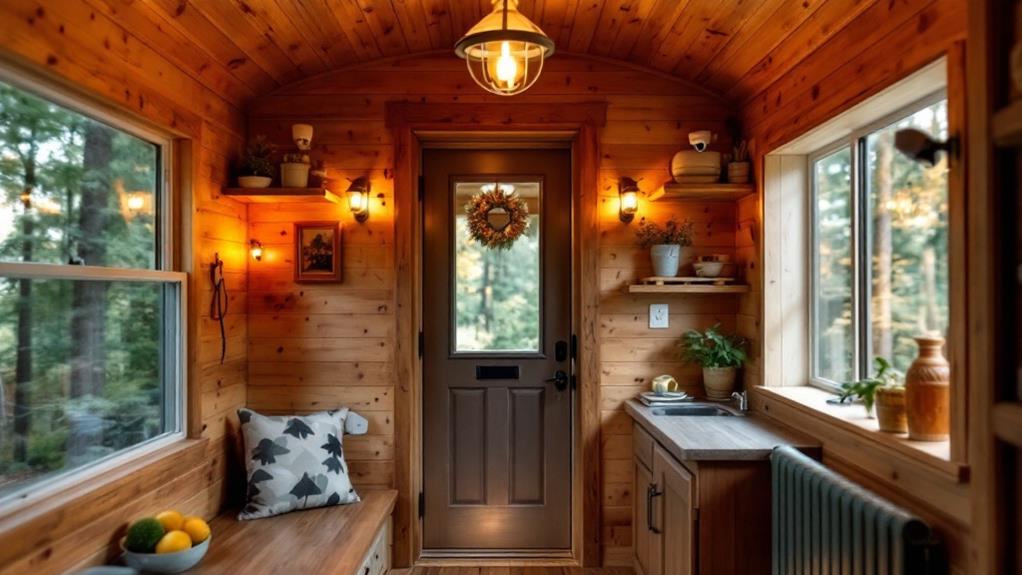
Security measures are paramount when it comes to protecting your tiny home and its contents. When designing your tiny house security plan, focus on installing high-quality locks and keyless entry systems on all exterior access points. These are easily programmable and provide enhanced protection for your small space.
Implement motion detectors strategically placed around your tiny home to trigger alarms and deter potential intruders. Elevating your home on blocks or wheels not only protects against moisture damage but also makes break-in attempts more difficult.
Consider installing a sturdy fence around your property for added privacy and security. Incorporate features like a trellis with climbing plants or a security gate to enhance protection. Don't forget to invest in a reliable alarm system and a small home safe to secure your prized possessions.
Bathroom and Kitchen Safety
Many tiny home owners overlook the importance of bathroom and kitchen safety, but these areas require special attention due to their unique challenges. In tiny home bathrooms, you'll need to contemplate the minimum ceiling height of 6 feet, 4 inches and proper ventilation to prevent moisture buildup and mold. Non-slip flooring is essential to avoid accidents, and you'll need adequate lighting and electrical outlets for safety.
When it comes to kitchen safety in tiny homes, electrical heating is often the best option to reduce fire hazards. However, you'll still need to keep a fire extinguisher and baking soda on hand for emergencies. Proper ventilation is indispensable to maintain good air quality and prevent moisture-related issues.
- Guarantee proper ventilation in both areas to prevent mold growth
- Use non-slip flooring in the bathroom to reduce fall risks
- Choose electrical heating options over combustible fuels in the kitchen
- Keep fire safety equipment readily accessible in the kitchen area
Loft and Stair Safety
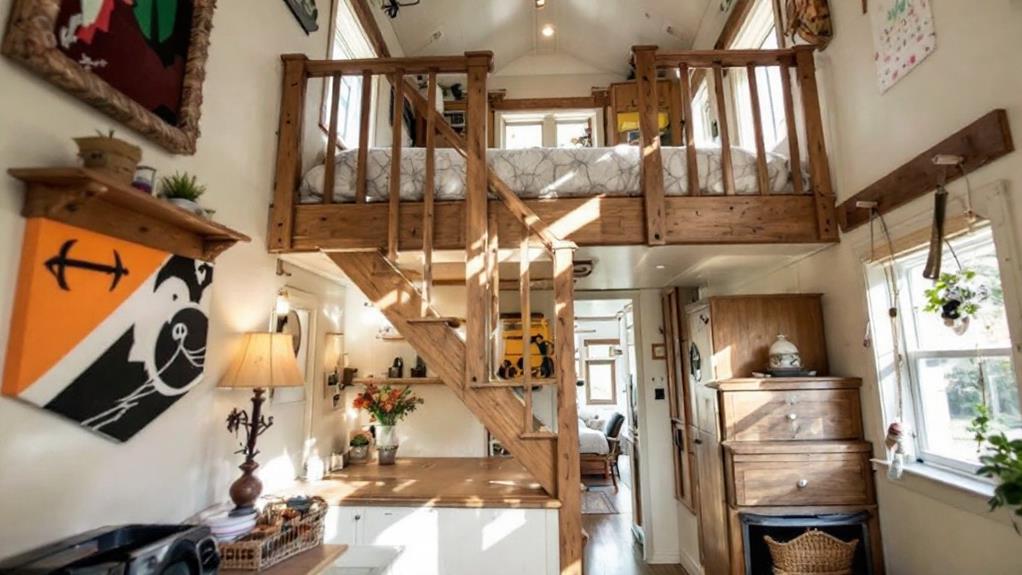
Lofts and stairs in tiny homes present unique safety challenges that demand careful consideration. While lofts offer additional living space in a small footprint, they can pose significant fall risks without proper safety measures. If you're living in a tiny house or considering it as a great option compared to traditional homes, you must prioritize loft and stair safety.
Many tiny homes, including Park Model designs, feature loft sleeping areas accessed by alternating tread stairs or ladders. These space-saving solutions often lack handrails, increasing the risk of accidents. To safeguard your well-being, it's essential to install proper railings and provide adequate egress options from loft areas. Building codes for tiny houses require minimum exit facilities for unobstructed travel from lofts, so make sure your design complies with these standards.
When planning your tiny home's layout, pay special attention to stair and ladder construction. Opt for designs that incorporate handrails and meet RV code standards for safe access and egress. By prioritizing these safety features, you can enjoy the benefits of loft living in your small space without compromising on personal safety.
Weather Resistance and Protection
While interior safety features are important, a tiny home's ability to withstand Mother Nature's forces is equally vital. If you're considering tiny homes as a living option, you'll need to make sure they're built to endure severe weather conditions. Proper insulation, waterproofing, and ventilation are essential to protect your home from moisture damage and mold. You should also consider elevating your tiny home on a sturdy foundation or using anchoring systems to enhance its resistance to flooding and prevent structural damage during extreme weather events.
To make your tiny home safe and weather-resistant, focus on these key areas:
- Use impact-resistant materials like shatter-proof windows and reinforced walls
- Ensure proper insulation and waterproofing throughout the structure
- Install a robust ventilation system to prevent moisture buildup
- Regularly inspect and maintain the exterior and structural components
Frequently Asked Questions
What Are the Risks of a Tiny Home?
When considering a tiny home, you'll face several risks. You might encounter structural integrity issues due to unconventional construction methods. Ventilation concerns can arise from limited space, potentially leading to poor air quality. Fire hazards are amplified in confined areas, especially with propane appliances. Electrical safety may be compromised by DIY wiring. Plumbing vulnerabilities can cause water damage or leaks. Waste management issues may occur if proper systems aren't in place. It's fundamental to address these risks before committing to tiny home living.
How Safe Are Tiny Houses in Storms?
Your tiny house's safety during storms depends on its storm preparedness. You'll need to guarantee structural integrity and wind resistance through proper anchoring and reinforced materials. Focus on water damage prevention with weatherproofing and durable roofing. Develop emergency evacuation plans and consider power outage resilience with backup systems. While tiny houses can be vulnerable, you can significantly enhance their storm safety through careful planning and upgrades. Remember, location and site selection also play essential roles in your home's ability to withstand severe weather.
What Are Three Negative Features of a Tiny House?
When considering a tiny house, you'll face several drawbacks. First, you'll struggle with limited storage space, forcing you to downsize extensively. Second, you'll encounter high maintenance requirements, as every inch of space needs regular upkeep. Third, you might face potential resale challenges due to the niche market. Additionally, you may deal with questionable construction quality, lack of privacy in such close quarters, and difficulty accommodating guests. These factors can make tiny house living a challenging experience for some.
Are Tiny Houses Safe From Burglars?
While tiny houses offer a unique living experience, they can be vulnerable to burglars. You'll face challenges like lack of privacy and limited storage space, making it harder to hide prized possessions. The difficulty in securing entry points increases the risk of theft due to accessibility. Additionally, potential fire hazards and vulnerability to natural disasters may compromise your safety. However, you can enhance security by implementing sturdy locks, alarm systems, and motion detectors to deter intruders and protect your compact home.