Eco-Friendly Building Materials for Building an Off-Grid Home
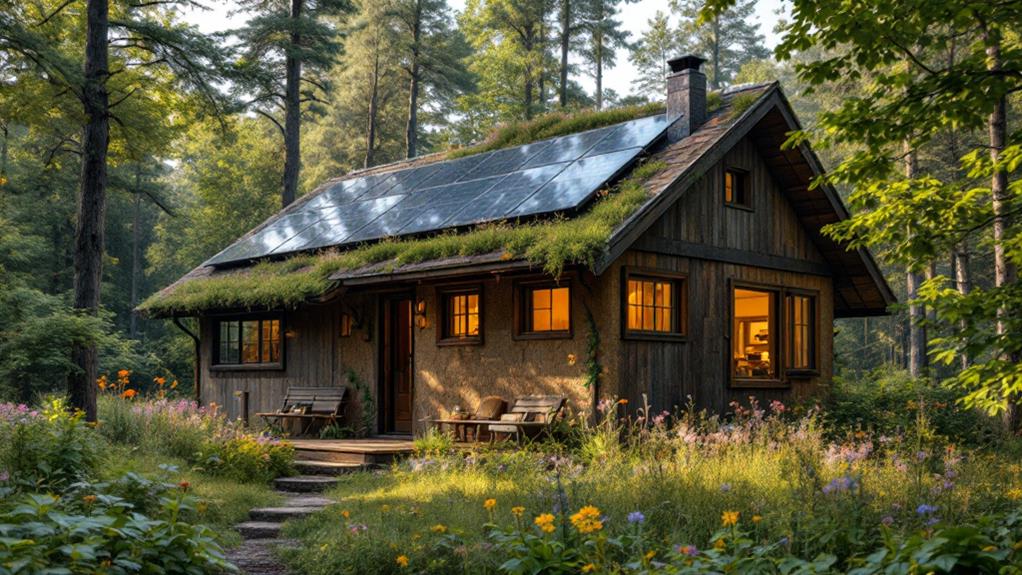
When building an off-grid home, you've got a variety of eco-friendly materials to choose from. Consider rammed earth or straw bale for walls, offering excellent insulation and durability. Bamboo provides a sustainable alternative to traditional timber for structural elements. For insulation, wool or cork offer superior thermal properties while being naturally fire-resistant. Solar tiles can seamlessly blend with your roof while generating clean energy. Structural Insulated Panels (SIPs) provide energy-efficient construction, while reclaimed wood adds character and reduces waste. Hempcrete offers innovative insulation and air quality benefits. These options not only minimize your environmental impact but also create a comfortable, self-sufficient living space. Exploring each material's unique advantages will help you make the best choices for your off-grid home.
Rammed Earth Construction
Dating back thousands of years, rammed earth construction has stood the test of time as a durable and sustainable building technique. If you're considering an off-grid home, rammed earth offers an excellent eco-friendly option that combines strength with beauty. The process involves compacting layers of earth into molds, creating walls that resemble sedimentary rock in appearance.
Rammed earth walls provide numerous benefits for your off-grid home. They're highly resistant to fire and weather, offering superior thermal and acoustic insulation. You'll appreciate the natural temperature regulation, as the walls absorb heat during the day and release it at night, helping to maintain a comfortable interior climate.
As a sustainable building material, rammed earth aligns perfectly with off-grid living principles. It employs renewable resources and minimizes environmental impact. You'll find that rammed earth construction has experienced a revival in luxury home building, demonstrating its versatility and appeal.
Straw Bale Insulation
Three persuasive reasons make straw bale insulation an excellent choice for your off-grid home: sustainability, energy efficiency, and versatility. Straw bales are a sustainable building material, utilizing agricultural waste that's biodegradable and carbon-sequestering. You'll be reducing your environmental impact while creating a comfortable living space.
When it comes to energy efficiency, straw bale insulation outperforms many traditional materials. With R-values ranging from R-30 to R-45, you'll maintain a consistent indoor temperature year-round, minimizing your heating and cooling needs. This translates to significant energy savings and reduced reliance on external power sources, perfect for off-grid living.
Straw bale construction offers versatility in both function and aesthetics. You can customize the exterior finish to match your design preferences, from rustic plaster to modern wood siding. Beyond its visual appeal, straw bale walls provide excellent resistance to fire, pests, and extreme weather conditions, ensuring your home's durability and longevity.
Bamboo: Versatile and Sustainable
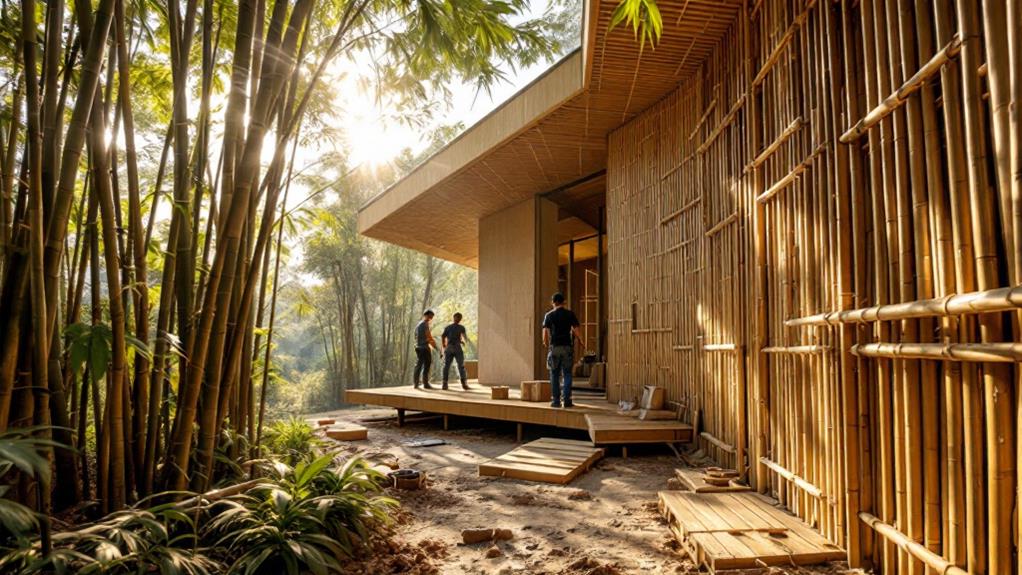
While straw bale insulation offers excellent thermal properties, bamboo presents another eco-friendly option for your off-grid home's construction. This versatile grass is a highly renewable resource that can be harvested every 3-5 years, making it an ideal choice for sustainable building materials. You'll find that bamboo's impressive strength surpasses both steel and concrete, providing durability and versatility in your construction projects.
When building with bamboo, you'll appreciate its lightweight nature, which simplifies transportation and installation. This characteristic, combined with its strength, makes it an excellent choice for various structural elements in your off-grid home. By opting for bamboo, you're not only creating a sturdy dwelling but also contributing to forest preservation by reducing the demand for traditional timber.
Bamboo's unique appearance adds a natural, aesthetic appeal to your eco-friendly home. Its distinctive look can create a visually striking environment that sets your off-grid dwelling apart. As you investigate sustainable building materials, consider bamboo for its renewability, strength, and versatility – it's an excellent choice for constructing an environmentally conscious home that's both durable and visually appealing.
Wool for Natural Insulation
When it comes to insulating your off-grid home, you'll want to ponder wool as a natural and effective option. This sustainable material offers numerous advantages over synthetic alternatives, making it an ideal choice for eco-friendly building.
Wool insulation boasts impressive thermal properties, providing 10% better insulation than fiberglass. It's a natural insulation that can absorb and release moisture without compromising its effectiveness, contributing to improved indoor air quality. You'll appreciate wool's ability to:
- Resist flames naturally
- Dampen sound effectively
- Biodegrade at the end of its lifecycle
- Maintain a safe installation process
- Pull harmful chemicals from indoor air
By choosing wool insulation, you're not only creating a comfortable living space but also promoting sustainability. The manufacturing process is environmentally friendly, aligning perfectly with off-grid living principles. You'll benefit from wool's unique ability to regulate humidity, keeping your home dry and reducing the risk of mold growth.
As you plan your off-grid home, consider wool insulation as a key component in your eco-friendly building strategy. It's a smart investment that'll pay off in energy efficiency, improved air quality, and overall comfort for years to come.
Solar Tiles for Energy Generation
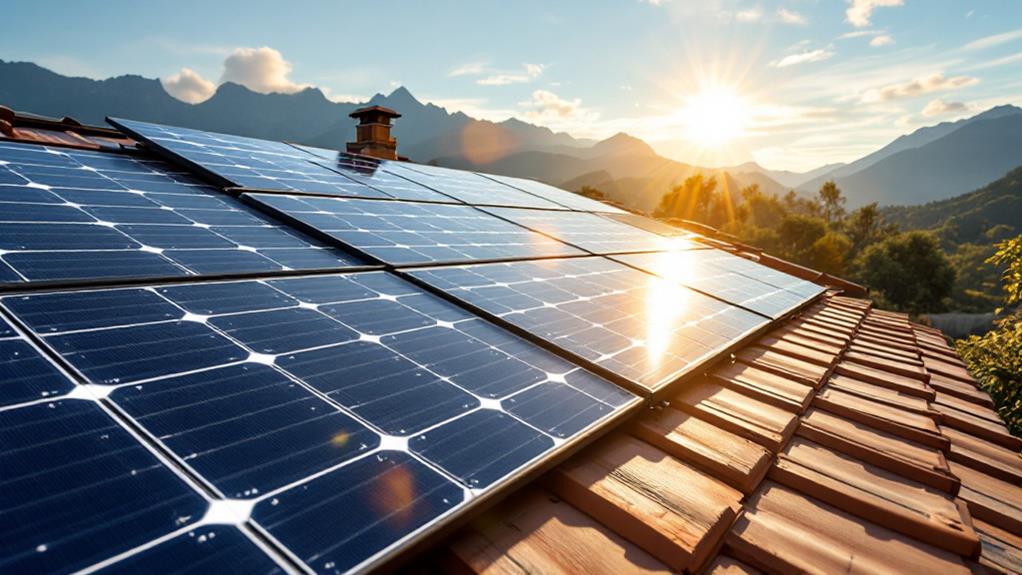
As you investigate energy generation options for your off-grid home, solar tiles emerge as an innovative solution that combines functionality with aesthetics. Tesla Solar Tiles, in particular, offer a seamless blend with traditional roof tiles while providing substantial energy savings. You can expect to decrease your electricity bill by 40-60%, making them an attractive alternative to conventional solar panels.
Solar tiles aren't just about looks; they're also practical. They're easier to install than traditional solar panels and offer weatherproof protection for your roof. Plus, you might even profit from excess energy generated. By tapping into renewable energy, you'll reduce your carbon footprint and decrease your reliance on the grid.
When considering costs, don't forget to factor in federal, state, and local incentives that can considerably lower your installation expenses. The Tesla Solar Tile system represents a state-of-the-art approach to solar energy, balancing visual appeal with cost savings and environmental sustainability. By choosing this eco-friendly option, you're investing in energy efficiency and contributing to a greener future. It's a smart choice for your off-grid home that aligns with both your aesthetic preferences and your commitment to renewable energy.
Structural Insulated Panels (SIPs)
For your off-grid home's construction, Structural Insulated Panels (SIPs) offer an excellent eco-friendly solution. These sustainable construction materials provide superior insulation and airtightness, reducing energy loss by up to 40%. You'll benefit from enhanced energy efficiency and better control over indoor air quality, as SIPs don't contain harmful chemicals or VOCs.
When choosing SIPs for your off-grid home, you're opting for a more sustainable approach to building. Here's why:
- They use fewer raw materials and energy in production
- Prefab construction minimizes waste and resource use
- Airtight design improves energy efficiency
- Better regulation of incoming air enhances indoor air quality
- Reduced construction waste compared to traditional methods
Reclaimed Wood and Materials
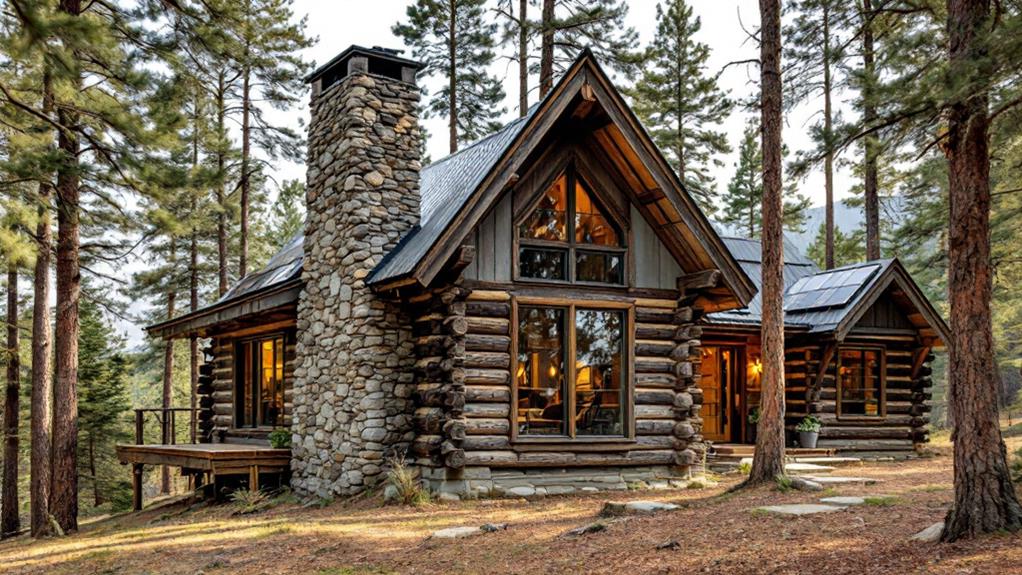
Sustainability meets character in the use of reclaimed wood and materials for your off-grid home. By incorporating these recycled materials, you'll not only reduce waste but also add unique charm to your living space. Reclaimed wood, sourced from old buildings and barns, preserves embodied energy and considerably lowers your carbon footprint compared to new lumber. It's an excellent choice for flooring, walls, and furniture, offering both environmental benefits and aesthetic appeal.
Don't limit yourself to wood alone. Repurpose bricks, steel, and concrete from demolition sites to promote a circular economy and minimize the need for raw material extraction. Salvaged windows, doors, and hardware can be refurbished and integrated into your new construction, further enhancing sustainability. These reclaimed materials often come with a rich history and patina that new products simply can't match.
Hempcrete: An Innovative Alternative
Innovation in eco-friendly construction has led to the emergence of hempcrete as a pioneering alternative for off-grid homes. This sustainable alternative to traditional building materials combines the woody core of industrial hemp with a lime-based binder, creating a natural material that's both eco-friendly and efficient. When you choose hempcrete for your off-grid home, you're opting for a solution that can considerably reduce the environmental impact of construction.
Hempcrete offers numerous benefits that make it an appealing option for eco-conscious builders:
- Strong insulating properties with an R-value of 1.16 per inch
- Lower carbon footprint compared to conventional materials
- Breathable walls that regulate indoor humidity and improve air quality
- Fire-resistant and pest-resistant qualities
- Durable and long-lasting, with a lifespan of hundreds of years
Cork: Renewable and Versatile
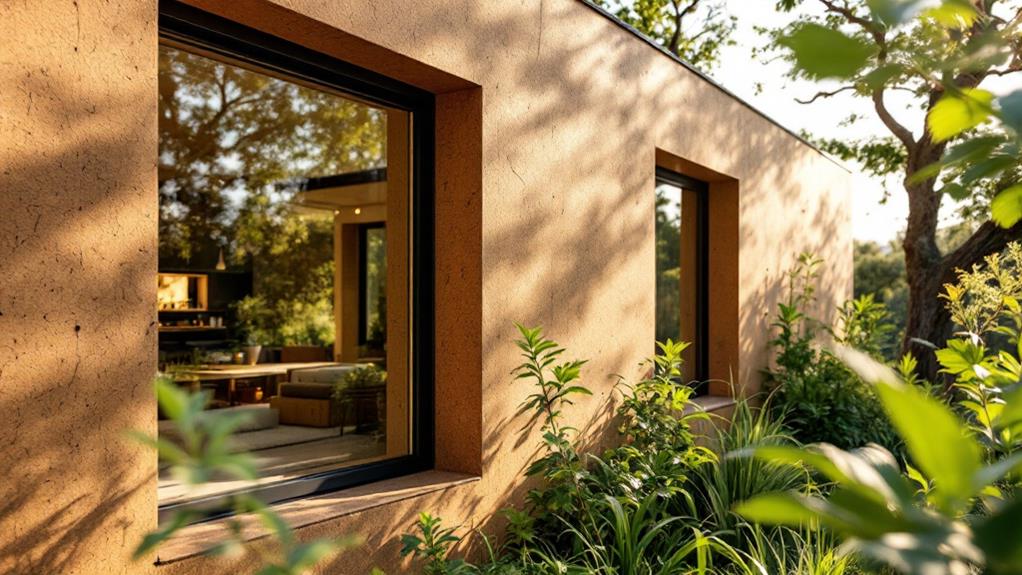
While hempcrete offers impressive benefits, another eco-friendly material is gaining traction in off-grid home construction: cork. This renewable and sustainable resource is harvested from the bark of cork oak trees without causing harm, making it an excellent choice for environmentally conscious builders.
Cork's versatility shines in its exceptional thermal and acoustic insulation properties. You'll find that it helps regulate indoor temperatures and reduces noise transmission, creating a comfortable living space while minimizing energy consumption. As a natural resource, cork is hypoallergenic and antimicrobial, ensuring a healthier indoor environment for you and your family.
When building your off-grid home, you'll appreciate cork's durability, water resistance, and fire-retardant qualities. These characteristics contribute to its long lifespan as a building material, reducing the need for frequent replacements or repairs. The environmentally friendly production process of cork involves minimal waste and supports the preservation of cork oak forests, further enhancing its eco-credentials. By choosing cork for your off-grid home, you're not only investing in a high-performance material but also supporting sustainable practices in the construction industry.
Frequently Asked Questions
What Is the Most Eco-Friendly Material to Build a House?
When considering the most eco-friendly material to build a house, you'll find there's no single perfect choice. Instead, focus on combining sustainable timber options, natural insulation choices, and minimizing construction waste. You can use rammed earth for thermal mass, straw bales for insulation, and bamboo for structural elements. Don't forget to investigate wool insulation and solar tiles for energy efficiency. By mixing these materials, you'll create a home that's both environmentally friendly and uniquely suited to your needs.
How Do I Build a Cheap Eco-Friendly House?
To build a cheap eco-friendly house, you'll want to focus on sustainable construction techniques, energy efficient design strategies, and affordable green materials. Consider using straw bale or earthbag construction for walls, as they're inexpensive and provide excellent insulation. Incorporate passive solar design to reduce energy needs. Use reclaimed timber for framing and flooring. Don't forget to prioritize proper insulation and airtight construction. These methods will help you create an affordable, environmentally conscious home that's comfortable and energy-efficient.
How Much Does It Cost to Build an Eco-Friendly House?
You'll find that building an eco-friendly house costs between $150 and $400 per square foot. This range accounts for various energy efficiency features and renewable energy sources you might incorporate. Your location, chosen materials, and specific technologies will influence the final price. While you'll face higher upfront costs, you'll benefit from long-term savings on utility bills. Remember, incentives and tax credits can help offset initial expenses, making your eco-friendly home more affordable in the long run.
What Is Eco-Friendly Building Material?
Eco-friendly building materials are products you'll use in construction that prioritize sustainable resource consumption and minimize environmental impact. They're often assessed through environmental impact assessments to guarantee they meet circular economy principles. You'll find these materials are typically renewable, recycled, or have low carbon footprints. They're designed to reduce waste, conserve resources, and promote energy efficiency. By choosing eco-friendly materials, you're contributing to a more sustainable future in the construction industry.