Cooling an Off-Grid Home Without Air Conditioning
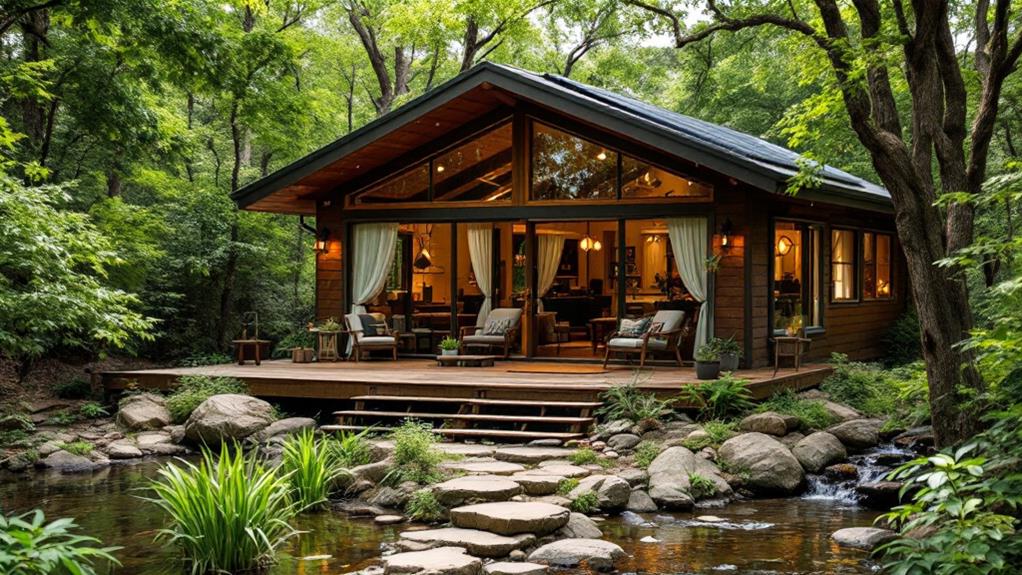
You can effectively cool your off-grid home without air conditioning by combining several strategies. Start with passive cooling techniques like strategic tree planting and optimizing window placement. Manage your windows carefully, closing them during the day and opening them at night. Use fans efficiently to circulate air and create cooling breshifts. Make heat-reducing modifications to your home, such as adding insulation and using reflective materials. Consider alternative cooling methods like evaporative coolers or geothermal systems for specific climates. By implementing these approaches, you'll create a comfortable living space while staying off the grid. Uncover more ways to beat the heat and maximize your home's cooling potential.
Passive Cooling Strategies
Several passive cooling strategies can markedly reduce the need for air conditioning in an off-grid home. To keep your house cool without relying on AC, start by utilizing the earth's thermal mass. Incorporate underground spaces or berms to naturally regulate temperature swings. This works by employing the consistently cool ground temperature to moderate indoor air.
Next, strategically plant deciduous trees and shrubs on the south and west sides of your home. These provide seasonal shading and evaporative cooling, helping to keep hot air at bay during summer months. Optimize your window placement, eaves, and awnings to prevent direct sun exposure while allowing for cross-ventilation. This natural airflow can considerably cool your living spaces.
Employ passive solar design principles to further reduce your reliance on AC. Maximize insulation and minimize south-facing windows to passively heat and cool your home. Create shaded outdoor areas with structures like pergolas or covered patios to provide a cool retreat during hot weather. These areas can serve as an extension of your living space, allowing you to enjoy the outdoors without overheating.
Window Management Techniques
Managing your windows effectively is crucial for cooling an off-grid home without air conditioning. You'll want to close windows during daylight hours to trap cool air inside, then fully open them after sunset. This strategy works well with window fans to move air and create a natural cooling effect without running the A.C.
Focus on east- and north-facing windows to prevent heat gain from direct sunlight. Use curtains, blinds, or roller shades on east- and west-facing windows to block solar radiation and reduce cooling needs. North-facing windows generally require less shading, as they receive minimal direct sunlight during the day.
While central air or a window A.C. unit might seem tempting, fans are great alternatives for off-grid homes. Combine proper window management with strategic fan placement to greatly improve passive cooling. Remember, it's not just about letting outside air in, but also about controlling when and how you do it. By following these window management techniques, you can create a comfortable living environment without relying on energy-intensive cooling systems, making your off-grid home more efficient and sustainable.
Efficient Fan Utilization
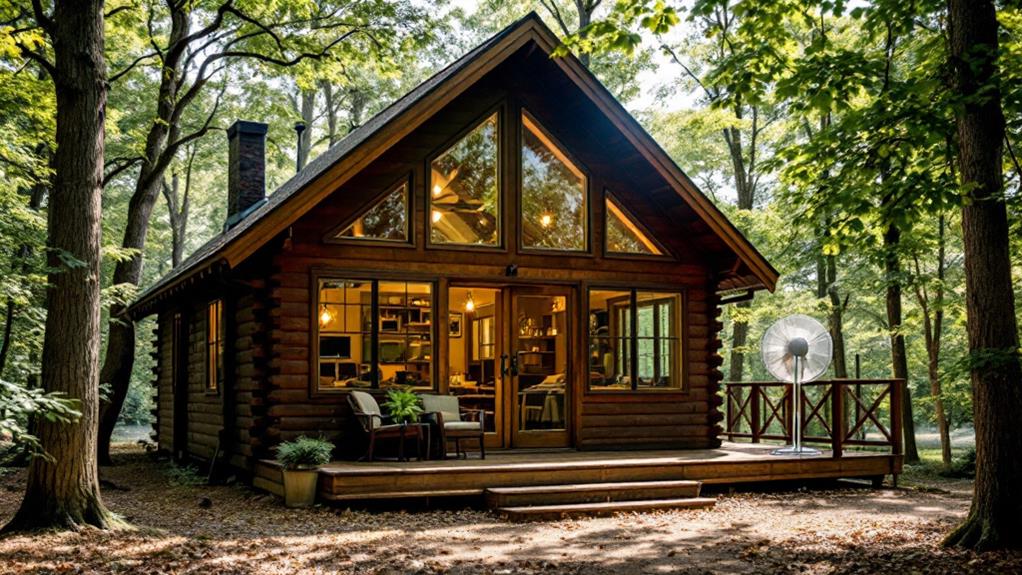
Fans are your best friends when cooling an off-grid home without air conditioning. Box fans and window fans offer effective cooling while consuming minimal power, making them ideal for your Off-Grid Cabin. To maximize their efficiency, strategically place these fans to draw in cool air from outside and expel hot air from inside. This simple technique can greatly improve your indoor comfort without relying on an energy-hungry air conditioner.
For a more thorough approach, consider installing a whole house fan. This powerful system can pull in cool night air and expel hot daytime air, creating a natural cooling effect throughout your home. If you're in a dry climate, a portable evaporative cooler, or swamp cooler, can provide effective cooling while using less energy than traditional AC.
To keep cool sustainably, opt for low-power fans with solar-powered setups. These eco-friendly solutions allow you to circulate air efficiently without draining your off-grid power resources. By combining these fan strategies with proper window management, you'll create a comfortable living environment while minimizing energy consumption in your off-grid home.
Heat-Reducing Home Modifications
Five key home modifications can markedly reduce heat in your off-grid home without relying on air conditioning. Start by insulating walls, attic, and crawl spaces to minimize heat transfer. This vital step creates a thermal barrier, keeping your home cooler during hot days. Next, focus on your windows. Install reflective window coatings or shades to block solar heat gain effectively. You can further enhance this by planting shade trees or installing awnings on south and west-facing windows, providing natural shade and cooling.
Don't overlook your roof's role in heat absorption. Opt for light-colored, highly reflective roofing materials to minimize heat gain. This simple change can substantially reduce your home's overall temperature. Finally, strategically place windows and vents to promote natural cross-ventilation, allowing cooler air to circulate throughout your living spaces.
Consider these additional tips to enhance your home's cooling efficiency:
- Use thermal mass materials like concrete or stone to absorb heat during the day and release it at night
- Install green roofs or living walls to provide natural insulation
- Employ light-colored exterior paints to reflect sunlight and reduce heat absorption
Alternative Cooling Methods
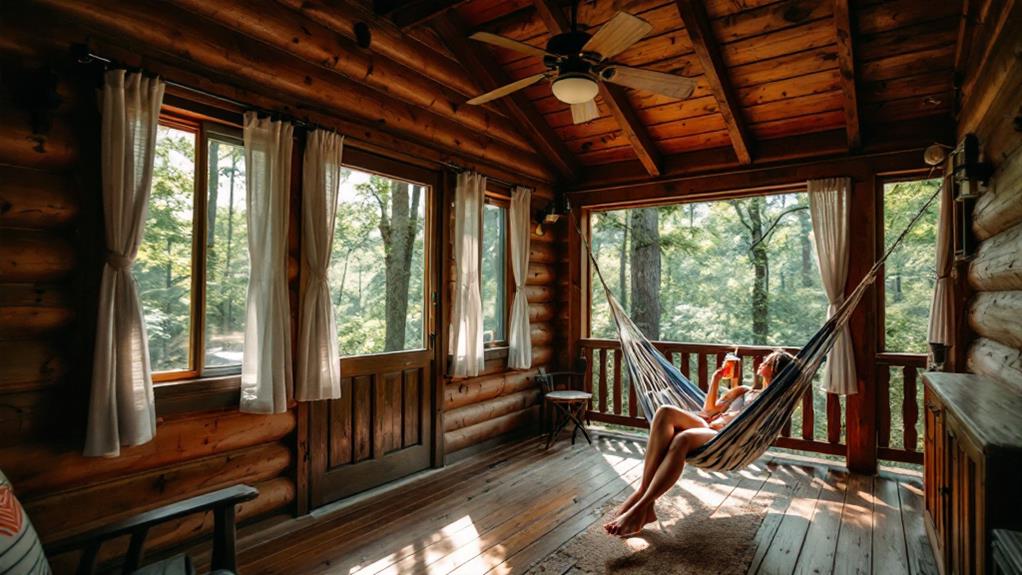
Several alternative cooling methods can effectively keep your off-grid home comfortable without traditional air conditioning. One viable option is an evaporative cooling system, also known as a swamp cooler. These systems work well in dry climates, using water evaporation to cool warm air. However, they're not ideal for humid areas due to potential mold issues.
For a more sustainable approach, consider geothermal cooling. This method taps into the earth's consistent underground temperature to naturally cool air. While it's highly efficient, it requires extensive installation, making it a complex and costly initial investment.
You can also investigate passive cooling techniques like strategic window placement, shading, and natural ventilation to reduce hot air buildup without running AC. Battery-powered fans or solar AC systems offer off-grid cooling solutions, though their capacity may be limited compared to conventional units.
For those seeking innovative options, absorption coolers and thermal battery systems use heat to drive the cooling process. These alternatives to compressor-based air conditioning can be particularly useful in off-grid settings. The short answer to cooling without AC is to combine multiple methods customized to your specific climate and energy resources.
Frequently Asked Questions
How Do You Cool an Off-Grid House?
To cool your off-grid house, you'll want to focus on passive solar design and natural cooling methods. Start by upgrading insulation and installing reflective roofing. Use shading strategies and create cross ventilation with strategically placed windows and ceiling fans. Incorporate thermal mass to absorb heat during the day and release it at night. Don't forget attic vents to expel hot air. For additional cooling, consider evaporative cooling systems. These techniques will help maintain a comfortable temperature without relying on traditional air conditioning.
How to Cool off a House Without AC?
You can cool your house without AC using passive solar design techniques. Start with strategic window placement and natural ventilation to maximize airflow. Employ thermal mass and upgrade insulation to regulate indoor temperatures. Install shading devices and implement landscaping strategies to block sunlight. Consider evaporative cooling methods for dry climates. Don't forget radiant barriers in your attic to reflect heat. These combined approaches will help you maintain a comfortable home environment without relying on traditional air conditioning.
How to Deal With Extreme Heat Without Air Conditioning?
To deal with extreme heat without air conditioning, you'll want to employ passive cooling techniques and ventilation strategies. Optimize your home's thermal mass design and use evaporative cooling systems where appropriate. Install shading mechanisms and improve insulation to block heat. Maximize natural cross ventilation by strategically opening windows. Consider applying reflective roofing materials and optimize window orientation to minimize heat gain. These methods will help you stay cool and comfortable, even during scorching temperatures.
How to Keep a House Cool in 100 Degree Weather?
To keep your house cool in 100-degree weather, you'll need a multi-pronged approach. Employ passive solar design with thermal mass insulation to regulate temperature. Maximize natural ventilation and install whole house fans. Use shading devices and reflective roofing to deflect heat. Consider evaporative cooling or water-based cooling systems for added relief. Underground cooling tubes can provide natural air conditioning. Remember, it's all about preventing heat gain and removing excess warmth efficiently.