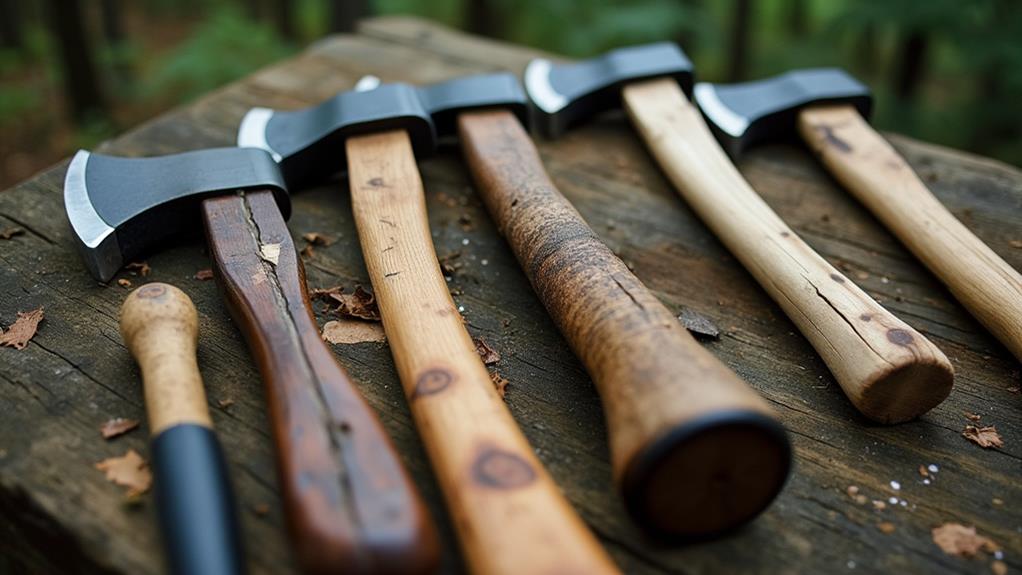
Choosing the Right Grind for Your Axe Blade
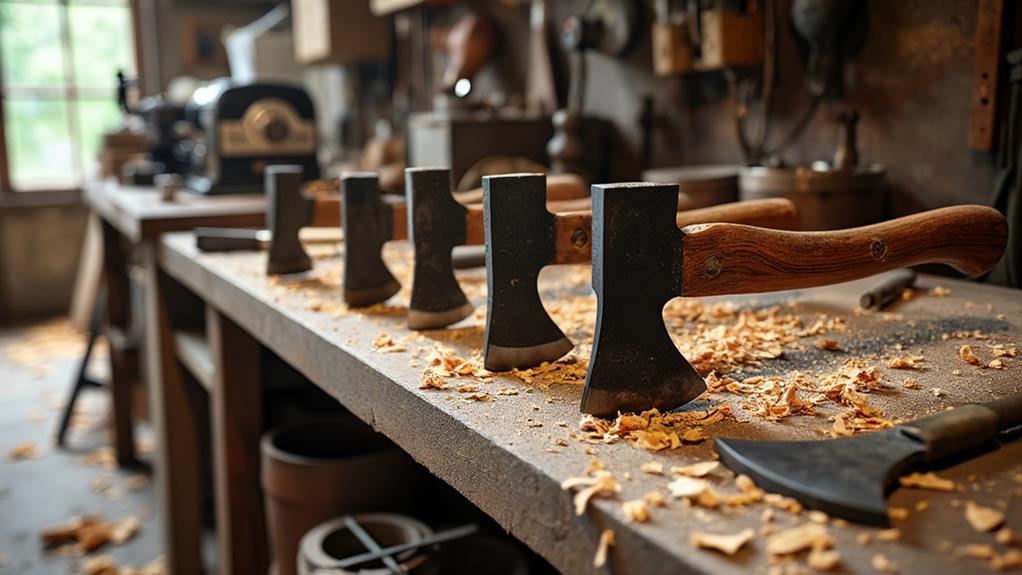
Selecting the appropriate grind for your axe blade is crucial for optimal performance and durability. The type of grind you need depends on the tasks at hand and the wood you'll be working with. For heavy-duty chopping, a convex grind is often ideal due to its strength and durability. Conversely, a flat grind provides better precision, making it suitable for lighter, more detailed work.
Understanding these distinctions ensures your axe remains sharp and effective for every use. So, how can you determine the perfect grind for your needs?
Let's delve into the details to make sure your axe performs at its best for every cut.
Understanding Axe Geometry
Understanding axe geometry is crucial for optimizing your axe's cutting efficiency. The angle of the grind, the sharp edge, and the center-line of the axe head significantly affect its performance with various types of wood. High center-line axes, characterized by a hollow between the eye and cheek, require a specific grinding approach to ensure optimal functionality.
Convex grinds are favored for their durability and resistance to chipping, making them suitable for heavy-duty work. Conversely, flat grinds are less effective for demanding tasks. A wedge axe serves as a practical example, demonstrating that a well-sharpened, properly maintained axe can excel in cutting tasks.
Each axe head shape demands a tailored grinding technique based on its intended use. Attention to the unique features of your axe is essential for achieving and maintaining a sharp edge. Mastering the details of axe geometry will enhance your tool's performance and efficiency in woodcutting tasks.
Types of Axe Grinds
Choosing the right grind for your axe can significantly impact its performance and durability. Axes come with various grind types, including convex, chisel, and banana, each designed for specific cutting tasks and performance characteristics.
Convex grinds are renowned for their durability and effective chopping capabilities. The rounded shape of this grind prevents chipping and enhances the cutting edge's performance, making it ideal for heavy-duty tasks.
In contrast, flat grinds, often used in racing axes, provide a sharp edge but are more susceptible to damage under heavy use, making them less suitable for tough jobs.
Chisel and banana grinds are particularly effective for cutting softer woods like aspen and poplar. The single bevel of the chisel grind and the curved profile of the banana grind allow for efficient cutting, minimizing the effort required to slice through these wood species. Understanding the grind angle is also crucial. Different wood types necessitate specific angles for optimal axe performance.
Choosing the Right Grind
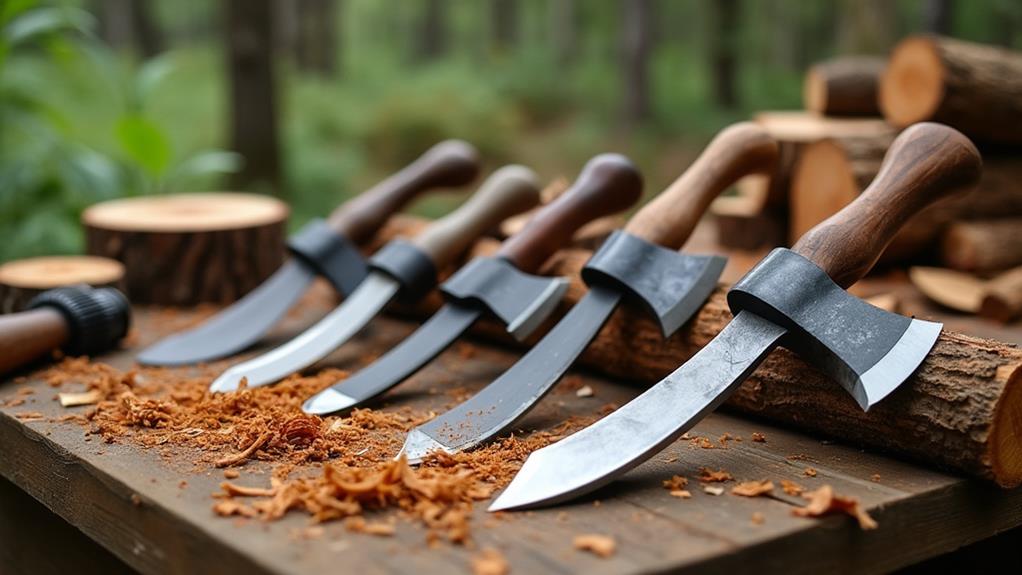
Selecting the appropriate grind for your axe is crucial for optimizing its performance and durability. The grind angle significantly affects cutting efficiency, with steeper angles providing superior cutting power for tougher woods. A convex grind is generally favored for its enhanced durability and cutting efficiency, helping to prevent chipping during use.
To determine the best grind for your axe, consider the type of wood you'll be working with. For instance, softer woods might benefit from a banana grind, while harder woods require a more robust bevel. Achieving a well-defined cutting edge through proper grinding techniques is essential for effective carving and chopping tasks. Regular maintenance, such as honing and stropping, is also vital for preserving the grind's integrity and extending your axe's lifespan.
Here's a quick overview of grind types and their recommended uses:
| Grind Type | Recommended Use |
|---|---|
| Convex Grind | General use, durability |
| Banana Grind | Softer woods |
| Robust Bevel | Harder woods |
Convex Vs. Flat Grinds
Understanding different grinds helps you match your axe to the tasks at hand. When comparing convex grinds and flat grinds, it's essential to consider the demands of your work. Convex grinds are exceptional for heavy-duty tasks. They enhance durability and cutting performance by preventing chipping, making them perfect for splitting wood. The rounded profile distributes weight efficiently, increasing the effectiveness of each strike.
Here's why you might choose a convex grind:
- Durability: Convex grinds resist chipping, extending the life of your axe.
- Efficiency: The curved edge improves weight distribution, making cuts more effective.
- Versatility: Ideal for general chopping and splitting, especially in tougher woods.
- Heavy-Duty Use: Perfect for demanding tasks like wood splitting where edge retention is essential.
On the other hand, flat grinds offer precision but lack robustness. They're better suited for slicing but can suffer edge damage under heavy chopping. Racing axes may employ flat or near-flat grinds for speed, but this comes with the risk of quicker edge wear. Ultimately, the choice between convex and flat grinds depends on your intended use. For general chopping and splitting, convex grinds are the superior choice due to their durability and performance.
Grinding Techniques
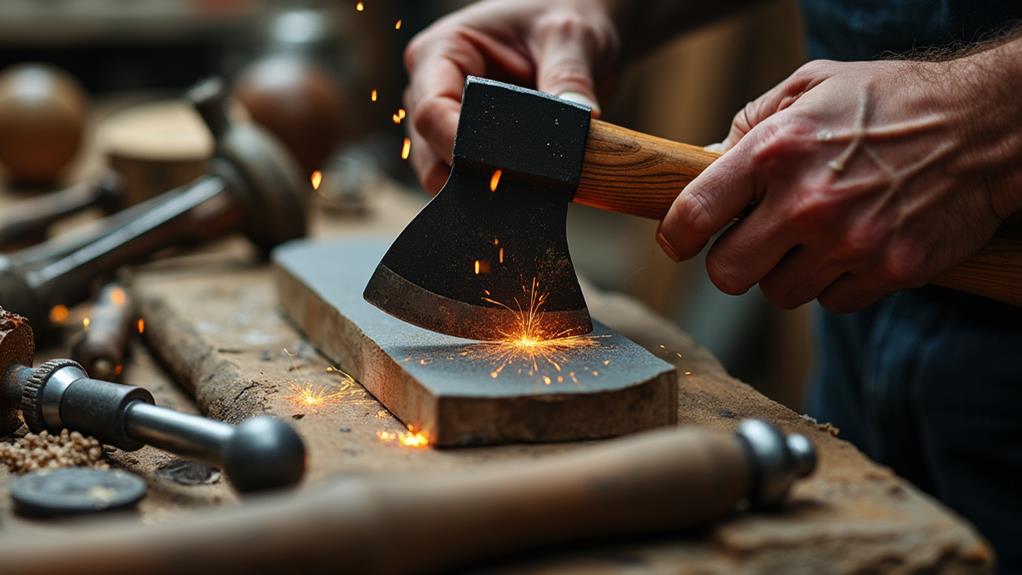
Grinding techniques are essential for maintaining your axe's performance and longevity. Different designs require specific methods. Convex grinds are ideal for durability and chopping tasks, while flat grinds can lead to edge weakness and should be approached with caution. Maintaining the original bevel angle during reshaping is crucial for efficient cutting and safety.
Using an electric grinding wheel can expedite reshaping, but remember to regularly cool the steel in water to prevent overheating, which can cause the blade to lose its temper and affect performance. When honing, ensure the entire bevel face contacts the grindstone to maintain a straight bevel. Grinding against the rotation helps minimize burrs and keeps the axe sharp.
After honing, stropping the blade against leather enhances its sharpness. Always move each stroke away from the cutting edge to protect the blade's integrity.
Tools for Axe Sharpening
Sharpening your axe effectively depends on using the right tools at each stage to achieve optimal sharpness while maintaining the blade's integrity. Here's what you'll need:
- Belt Sander: Begin with a coarse grit (around 120) to shape the bevel. Progress to finer grits like 600 and 1200 for a polished edge. This tool ensures a consistent and precise grind.
- Wet Bench Grinder: Perfect for minor damage repair, this tool helps maintain sharpness without compromising the blade's structure. Ensure the entire bevel face contacts the grindstone for an even edge.
- Water Stones: Essential for honing after initial grinding, water stones refine the edge and prepare it for final stropping. Using progressively finer grits will incrementally enhance sharpness.
- Leather Strop with Compound: The final step involves stropping on a leather wheel with compound to polish the edge. This removes any remaining burrs, resulting in a razor-sharp finish.
Maintaining Axe Sharpness
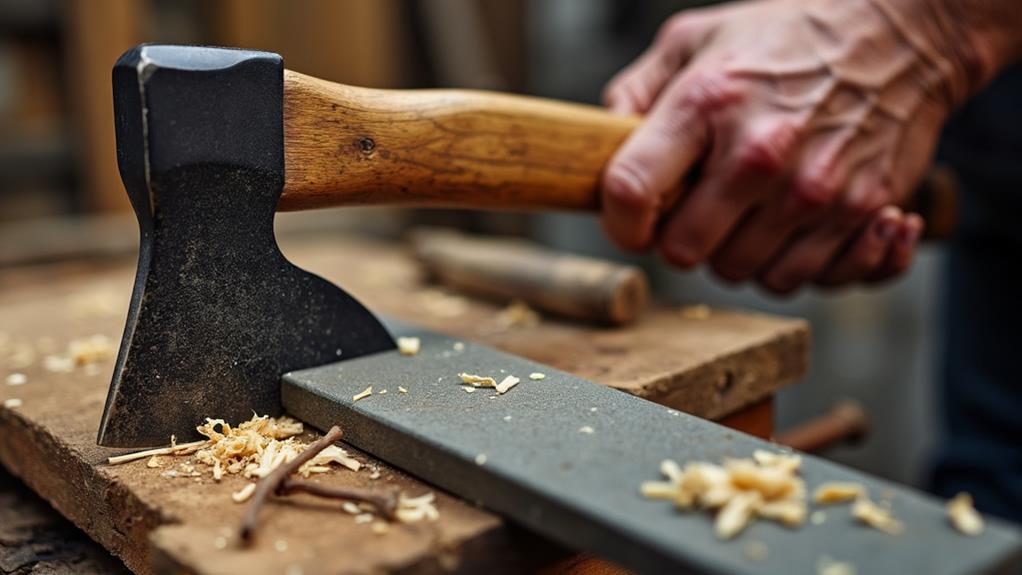
Once you've equipped yourself with the proper tools for sharpening your axe, it's crucial to focus on maintaining that sharp edge for optimal performance and safety. Regular inspection is essential; check your axe frequently for dullness and nicks. Monitoring the sharpness ensures effective cutting and minimizes the risk of accidents.
Begin sharpening with a coarse grit, such as 120 grit, to reshape the bevel if necessary. Progress through finer grits, like 600 and 1200, to hone the edge. Ensure the entire bevel face contacts the grindstone when sharpening straight bevel axes. This method helps preserve the original edge shape and prevents uneven wear.
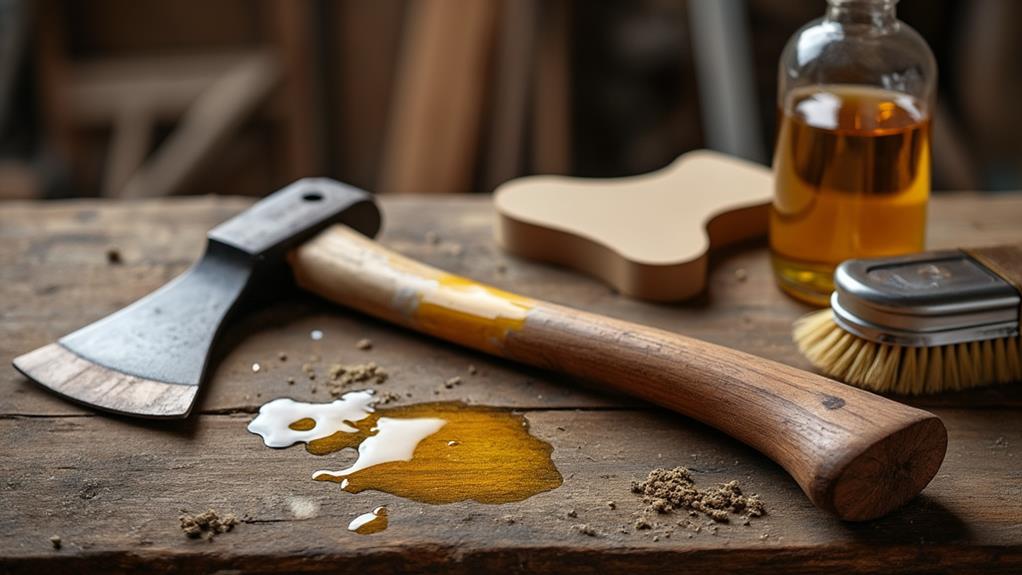
After sharpening, use a leather wheel for stropping. This step enhances sharpness by removing burrs and feather edges, resulting in a cleaner, more precise cut. To prevent rust, which can degrade sharpness and shorten the tool's lifespan, keep your axe dry and periodically apply oil to the edge.
Common Grinding Mistakes
When grinding your axe, it's crucial to avoid a one-size-fits-all approach, as each axe design necessitates specific techniques for optimal performance. Consider the intended use of your axe; employing an unsuitable grind can result in poor performance and potential damage. The correct grind enhances efficiency and safety.
Overly Uniform Grinding
One of the most common mistakes in axe maintenance is overly uniform grinding, which can severely impact the tool's effectiveness. Different axes require specific bevel angles tailored to their intended use and the type of wood being cut.
When you apply the same grinding technique to all axes, you ignore their unique geometry and functionality. For instance, high center-line axes benefit from fan shape grinding, which isn't achieved with a uniform approach.
Here are four key points to remember:
- Recognize Different Bevel Angles: Each axe design calls for a specific bevel angle to maintain a good edge. Applying a universal grind can lead to ineffective sharpening.
- Avoid Flat Grinds for All Tasks: The misconception that flat grinds are suitable for all chopping tasks weakens the edge. Some axes perform better with convex or cambered grinds for improved durability and performance.
- Consider Axe Geometry: High center-line axes require a fan shape grind to optimize their cutting efficiency. A uniform grind overlooks this significant detail.
- Tailor to Intended Use: Always adapt your grinding technique based on the axe's intended use and the type of wood you're cutting. This guarantees you achieve a well-cutting axe and don't waste energy on percussive force.
Understanding these nuances is essential for effective axe maintenance.
Neglecting Axe Purpose
Many axe enthusiasts make the mistake of neglecting the specific purpose for which their axe was designed, leading to ineffective sharpening techniques. You might think a uniform grinding method works for all axes, but this approach ignores each axe's intended use and unique design. Whether you're chopping, carving, or splitting, each task requires a specific grind angle and edge profile for peak performance.
Failing to consider the type of wood you're working with can also lead to poor results. Different woods demand different grind characteristics. For example, hardwoods benefit from a steeper grind angle, while softer woods might need a shallower angle for better cutting efficiency.
A common mistake is grinding your axe to a flat bevel. This can weaken the edge, making it prone to damage. Instead, a convex or cambered grind is often preferred for durability and effective cutting. It's vital to maintain the original shape of the axe head during grinding to preserve its cutting capabilities and ensure safety.
Neglecting to adapt your grinding technique based on the axe's function can result in poor performance and increased frustration. Always consider the axe's intended purpose and maintain its original profile for the best results.
Safety Tips for Grinding

For safe axe blade grinding, always wear protective gear such as safety goggles and gloves. Ensure a controlled grinding environment by securely clamping the axe to prevent slips. Regularly inspect the grinding surface for wear to maintain even grinding and avoid potential hazards.
Proper Protective Gear
Grinding an axe blade can be a rewarding task, but prioritizing safety by wearing the right protective gear is crucial. Protect yourself from potential hazards like flying debris, loud noises, and harmful dust.
Here are four essential items you should always use:
- Safety Goggles or Face Shield: Always wear safety goggles or a face shield to protect your eyes from flying debris and sparks generated during grinding. This protective gear prevents harmful particles from causing eye injuries.
- Heavy-Duty Gloves: Use heavy-duty, cut-resistant gloves to safeguard your hands. Handling an axe and grinding tools can expose you to sharp edges and accidental slips, making these gloves essential for your safety.
- Hearing Protection: Grinding can produce loud noise levels that may damage your hearing over time. Protect your ears by wearing earplugs or earmuffs to guard against prolonged exposure to high decibel levels.
- Dust Mask or Respirator: Always wear a dust mask or respirator to prevent inhaling fine metal particles and dust, which can harm your respiratory system. This protective gear ensures you don't breathe in any dangerous substances during the grinding process.
Controlled Grinding Environment
Creating a controlled grinding environment is crucial for both safety and the quality of your work. Ensure your workspace is well-ventilated to avoid inhaling harmful dust and particles. Always wear personal protective equipment (PPE) such as safety glasses, gloves, and a dust mask to safeguard against flying debris and respiratory hazards.
Maintaining control during grinding is essential. Keep a steady hand to prevent slips that could cause injury or uneven edges on your axe blade. Regularly monitor the temperature of the axe head; overheating can compromise the steel's temper and weaken the blade. Keep a container of water nearby to cool the axe head as needed.
Here's a quick reference table to emphasize these points:
| Safety Measure | Purpose |
|---|---|
| Well-Ventilated Workspace | Prevents inhalation of harmful dust and particles |
| Personal Protective Equipment | Protects against flying debris and respiratory hazards |
| Water Container | Prevents overheating and maintains blade integrity |
Regular Edge Inspections
Regular edge inspections are crucial for maintaining your axe's performance and safety. Consistent checks help prevent accidents and ensure your axe remains efficient. Here's a comprehensive guide for conducting regular edge inspections:
- Inspect for Damage: Examine the axe edge for nicks, chips, and dullness. A sharp edge is essential for effective use and safety, reducing the risk of glancing blows that can cause injuries.
- Sharpen and Shape: Use a file or sharpening stone to maintain the original edge shape and repair minor damage. Ensure the entire bevel face contacts the grinding surface for uniform sharpening, keeping the edge sharp and functional.
- Check Alignment: Verify the blade's alignment regularly to ensure it's straight and balanced. Misalignment can lead to unpredictable cutting behavior, increasing the risk of accidents. A straight blade guarantees consistent performance.
- Hone the Edge: After grinding, use finer whetstones to hone the edge, removing burrs and feather edges. This step enhances sharpness and cutting efficiency, making your axe safer and more effective.
- Storage and Maintenance: Keep your axe dry and store it in a protective sheath to prevent rust, ensuring long-term safety and performance.
Expert Advice and Resources
Selecting the appropriate grind for your axe blade may seem daunting, but expert guidance and reliable resources can simplify the task. The grind you choose significantly influences your axe's cutting efficiency. For instance, convex grinds are preferred for their durability and chopping performance. Experts suggest using steeper angles for axes meant for harder woods to enhance cutting power, while shallower angles are better suited for softer woods.
Familiarizing yourself with various axe profiles, such as flat, chisel, and banana grinds, is crucial. Banana grinds, for example, excel in cutting softer woods like aspen and poplar. Regular maintenance, including sharpening, is vital. Start with a coarser grit, around 120 grit, to maintain your grind's effectiveness.
When seeking expert advice, consult reputable resources like woodworking forums, instructional videos, and articles from credible publications. Websites and books authored by experienced woodsmen and toolmakers provide invaluable insights into axe maintenance and performance.
Conclusion
Understanding how to choose the right grind for your axe blade is crucial for optimal performance. Match the grind to the specific wood type and task for best results. Regular maintenance and proper grinding techniques will keep your axe sharp and effective. Avoid common mistakes and always prioritize safety. Armed with this knowledge, you're well-prepared to enhance your axe's functionality, ensuring it remains a reliable tool for years to come. Happy chopping, and stay safe!