Axe Techniques for Clearing Trails and Paths
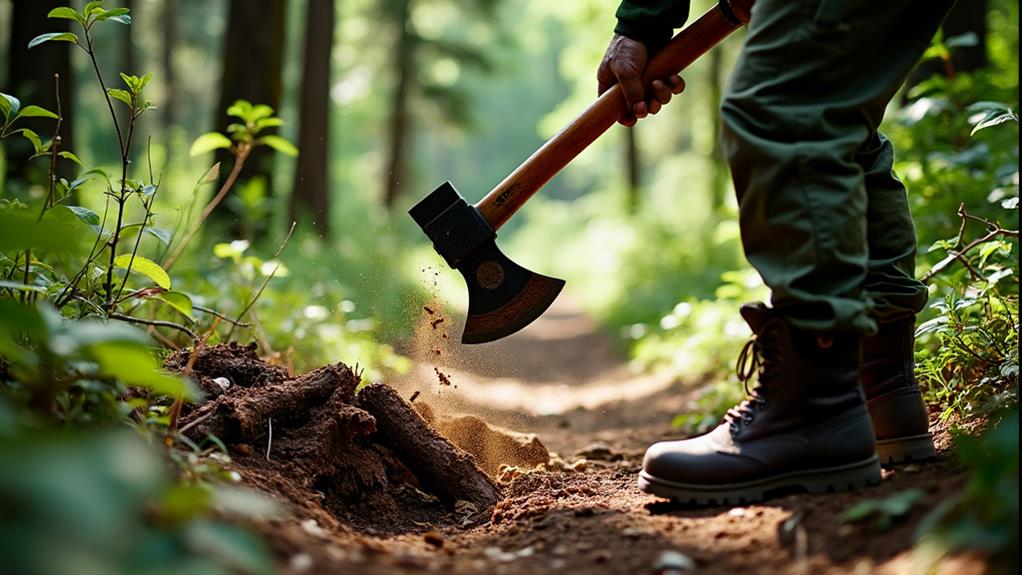
Effective trail maintenance requires mastering proper axe techniques. Choosing the right axe, such as a Hudson Bay pattern, ensures you are adequately prepared for the task. A two-handed grip enables deeper cuts, and the three-cut method minimizes bark damage when trimming limbs. Proper body alignment and stance are essential for efficient force application. These foundational skills are crucial for ensuring safe, accessible trails. Ready to enhance your trail-clearing expertise? Let's continue.
Importance of Trail Maintenance
Trail maintenance is essential for ensuring that paths are safe and accessible for all users. Regularly clearing and brushing trails not only maintains accessibility but also actively prevents erosion and promotes environmental sustainability.
This maintenance is crucial in preventing tread creeping, which can lead to severe erosion and environmental degradation if neglected. Consistent trail maintenance supports local economies through outdoor recreation and fosters an inclusive space that encourages community support for trail systems.
The frequency of maintenance depends on vegetation type and local climate, often requiring seasonal assessments, particularly in the spring when significant clearing is necessary. Effective trail clearing ensures usability for diverse groups, including hikers and bikers, enhancing the overall outdoor experience.
It's about more than just keeping paths clear; it's about sustaining trail systems for future generations. Your efforts in trail maintenance directly contribute to the health and accessibility of these outdoor environments, making them safer and more enjoyable for everyone.
This community-oriented approach ensures that our trails remain a valuable and sustainable resource.
Selecting the Right Axe
When selecting an axe for trail clearing, consider models like the Snow & Neally Hudson Bay 3/4 bit. These offer a good balance of weight and chopping power. Aim for axes weighing between 1.5 to 2.5 lbs with handles around 24-28 inches for versatile use. For clearing larger trees, ensure your axe can efficiently handle trees with diameters of 9 to 15 inches.
Weight and Balance
Choosing the right axe can significantly enhance your trail clearing efforts. When picking an axe, focus on both weight and balance. The Hudson Bay pattern axe is a popular choice for effective trail maintenance. Weighing between 1.5 to 2.5 lbs, it offers an excellent balance between chopping power and maneuverability. Its 24-28 inch handle provides superior control, making it easier to clear paths efficiently.
A lighter axe is beneficial for long-distance hiking, as it reduces fatigue and allows for extended work periods without sacrificing cutting capacity. Axes are typically effective for clearing trees with diameters of 9 to 15 inches, especially dead or dry trees where deep cuts are essential for efficient clearing.
Blade shape is also crucial for performance. A well-balanced axe designed for deep cuts helps maintain control and precision. High-quality axes, recommended by experienced users, ensure durability and ease of maintenance.
Selecting an axe tailored to your specific trail work needs can greatly improve your trail clearing experience.
Cutting Efficiency
Maximizing cutting efficiency requires selecting an appropriate axe tailored to trail clearing tasks. Models such as the Snow & Neally Hudson Bay 3/4 bit and the Council Tool model 175HB28 offer a balance of weight and chopping ability.
A Hudson Bay pattern axe, typically weighing between 1.5 to 2.5 lbs and featuring a handle length of 24-28 inches, provides excellent portability and effective chopping power. This type of axe is ideal for clearing trees with diameters of 9 to 15 inches, particularly dead and dry Aspens.
To enhance cutting efficiency, follow these guidelines:
- Choose the right axe: Opt for a Hudson Bay pattern axe for a balanced combination of weight and power, facilitating easier and prolonged use.
- Use two-handed techniques: Employing both hands on the axe will significantly improve effectiveness, enabling deeper cuts with each swing.
- Combine with other tools: Pair axes with saws to efficiently manage both small and larger vegetation, optimizing the trail clearing process.
- Maintain your axe: Regularly sharpen and maintain your axe to ensure maximum cutting efficiency and reduce user fatigue during extended clearing tasks.
Proper Ax Handling
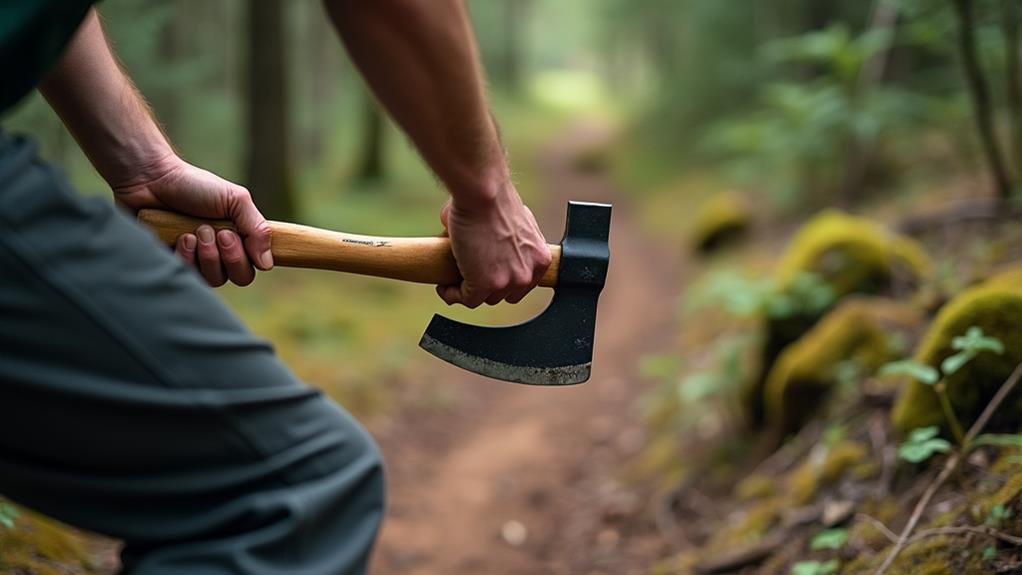
Effective and safe ax handling involves mastering a few fundamental techniques. Always follow safety procedures, such as transporting axes in sheaths or boxes to prevent accidental injuries. Carry the ax securely with the edge facing down and avoid carrying it on your shoulders; instead, hold it at the balance point for safer transport.
For tasks requiring precision, like notching logs, use a two-handed choked grip to improve control. When cutting brush, switch to a one-handed grip at the balance point for better maneuverability.
Always ensure stable footing and evenly distribute your weight to optimize force application and minimize the risk of slips or falls. Adapt your grip techniques to the specific task at hand. For example, use a one-handed grip halfway down the handle for splitting wood.
Mastering these methods won't only enhance your efficiency but also significantly reduce the risk of injury. Remember, proper ax handling is about ensuring safety and completing the job effectively.
Basic Chopping Techniques
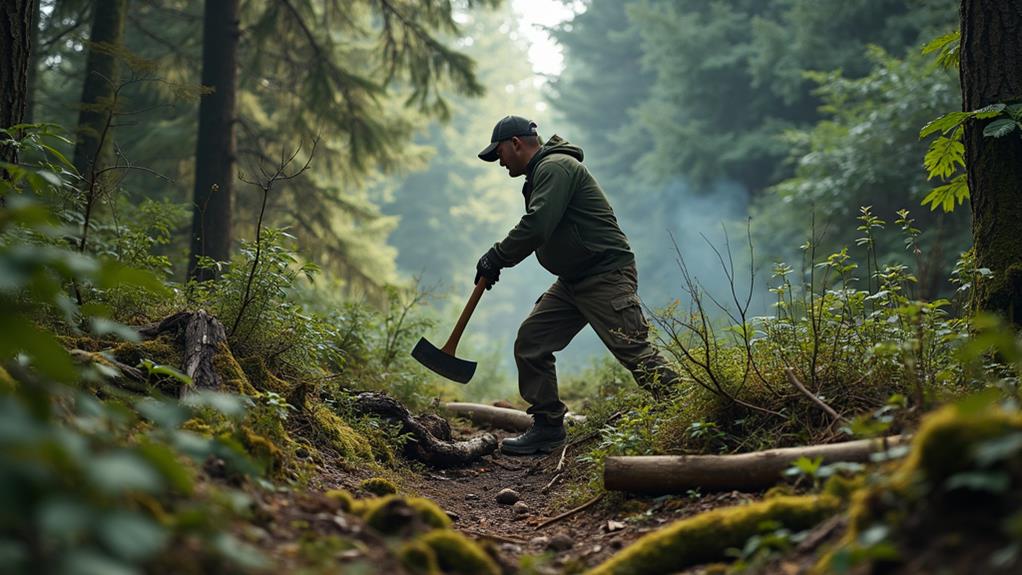
Mastering basic chopping techniques is essential for anyone aiming to clear trails efficiently and safely. Start by holding your ax with a relaxed grip, placing one hand above the swell to enhance control. Use a sliding grip technique for both the upstroke and downstroke to maximize the force and efficiency of your cuts.
Ensure your body is aligned with the target. Maintain a proper stance with weight evenly distributed to achieve optimal force application and stability. Keeping one corner of the ax blade free is crucial for effective chip removal, making the chopping process smoother.
When trimming limbs, employ the three-cut method to prevent tearing the bark and to protect the tree's health. This involves making an initial cut on the underside of the limb, followed by a second cut further out on the top side, and finally removing the limb with a third cut closer to the trunk.
Key points:
- Relaxed grip with one hand above the swell.
- Sliding grip technique for upstroke and downstroke.
- Proper stance and body alignment.
- Three-cut method for trimming limbs.
Safety Precautions
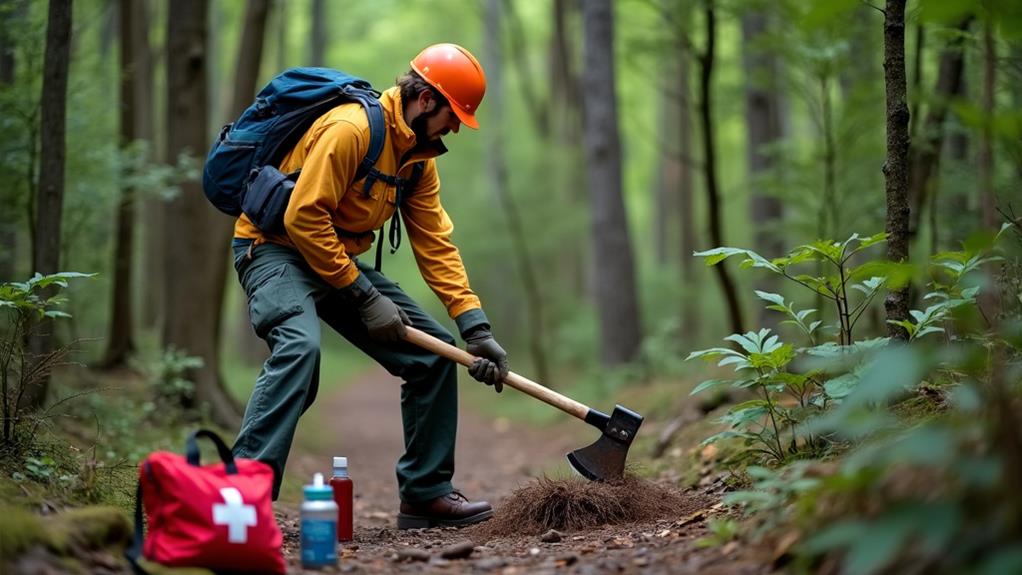
Safety is paramount when working with an ax, and taking proper precautions will help you avoid injuries. Always wear sturdy leather boots, at least 8 inches high, and safety glasses to protect against potential injuries.
Before you start, conduct a job hazard analysis to identify and mitigate potential safety concerns. This step is crucial to ensure you're aware of your environment and any hazards like "widow makers," which are dead branches that could fall unexpectedly.
Verify that your ax is sharp. A sharp ax requires less force, reducing the risk of losing control. Dull tools are more dangerous and increase the likelihood of accidents. When chopping, maintain stable footing and distribute your weight evenly to keep your balance. This helps prevent slips or falls, which can be particularly dangerous when handling an ax.
Plan an escape path, especially when felling trees. You need a clear route to retreat safely if things don't go as planned.
Cutting Saplings and Brush
When cutting saplings, always cut from the inside to manage tension release and avoid injury. Use a light touch on strained fibers to prevent unexpected springing.
For brush, the three-cut method helps minimize bark tearing, and tools like machetes or kukris can make the work more efficient. Always watch for hazards like "widow makers" to stay safe.
Proper Cutting Techniques
Efficient and safe trail clearing requires proper cutting techniques. When using an axe for trail maintenance, focus on managing tension release, maintaining proper body alignment, and adopting a suitable stance to prevent injury. Adhere to these guidelines for effective clearing:
- Cutting Saplings: Approach from the inside to control tension release, preventing the sapling from snapping back and causing injury.
- Trimming Limbs: Use the three-cut method to minimize bark tearing. Start with an initial cut on the underside of the limb, followed by a second cut from the top to meet the first, and finish with a final cut close to the trunk for a clean removal.
- Light Brushing: Utilize a machete or brush hook for lighter tasks. Execute angled strokes to clear dense vegetation efficiently without wasting energy.
- Larger Brush: For larger brush, a weed cutter or axe is effective. Ensure one corner of the blade is free for efficient chip removal, maintaining cutting efficiency and reducing the risk of the blade getting stuck.
Essential Safety Measures
Adhering to essential safety measures is crucial for effective trail clearing, especially when cutting saplings and brush. First, always inspect your surroundings for hazards like "widow makers"—branches that could fall unexpectedly. Ensure you have stable footing and distribute your weight evenly to enhance both safety and effectiveness.
Approach saplings from the inside to control tension release, avoiding injury from a springing sapling. Maintain a relaxed grip and proper body alignment to optimize force application, ensuring an efficient and safer cutting experience.
For trimming limbs, use the three-cut method: start with an undercut, then make a top cut further out, and finish with a final cut near the trunk. This technique minimizes bark tearing and promotes tree health.
Tree Felling Methods
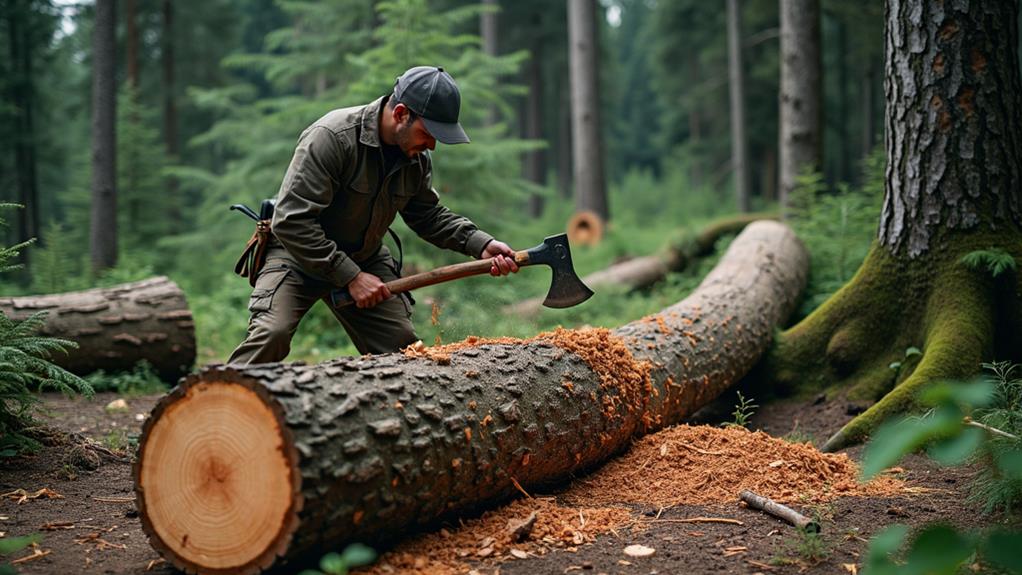
Felling a tree requires meticulous planning and execution to ensure both safety and efficiency. Adhering to well-established tree felling methods and maintaining a safe workspace are paramount.
First, clear the surrounding area of branches and brush to create a safe workspace. This reduces tripping hazards and provides a clear escape route.
Next, assess the tree's natural lean and plan the felling direction accordingly. This helps predict where the tree will fall. Ensure you have an escape path at a 45° angle from the anticipated fall direction.
Begin with a front notch cut, which should be 1/3 to 1/2 of the tree's diameter. This notch guides the fall direction. Follow this with a back cut that's at least 2 inches higher than the front notch to control the fall and minimize unexpected movement.
Consider environmental factors such as wind direction, which can significantly influence the tree's fall and increase safety risks. Specialized training is essential for mastering these techniques, as improper methods can lead to accidents and injuries.
To summarize, follow these key steps:
- Clear the area to create a safe workspace.
- Assess the tree's natural lean and plan the felling direction.
- Make a front notch and a higher back cut.
- Account for environmental factors.
Maintaining Your Axe
After felling trees, proper maintenance of your axe ensures it remains a reliable tool. Start by regularly sharpening your axe using a mill bastard file and a sharpening stone. This is crucial for maintaining cutting efficiency and ensuring safety during use. A sharp blade reduces effort and minimizes the risk of accidents.
Inspect the axe head and handle for signs of damage or wear. An intact connection between the head and handle is essential for safe operation. Address any cracks or looseness immediately to prevent accidents.
Clean your axe after each use to remove sap and debris, which helps prevent rust and keeps the tool in peak condition. A clean axe performs better and lasts longer. Store your axe in a sheath or protective covering when not in use. This precaution prevents accidental injuries and maintains the blade's sharpness.
Conclusion
Mastering axe techniques for clearing trails and paths ensures that these routes remain accessible and safe for all users. Choose an appropriate axe, such as a Hudson Bay pattern, and focus on proper handling and cutting methods. Complement your axe work with saws to handle varying vegetation sizes efficiently. Always prioritize safety and maintain your tools for optimal performance. With these skills, you'll be well-equipped to keep trails clear and enjoyable for everyone.