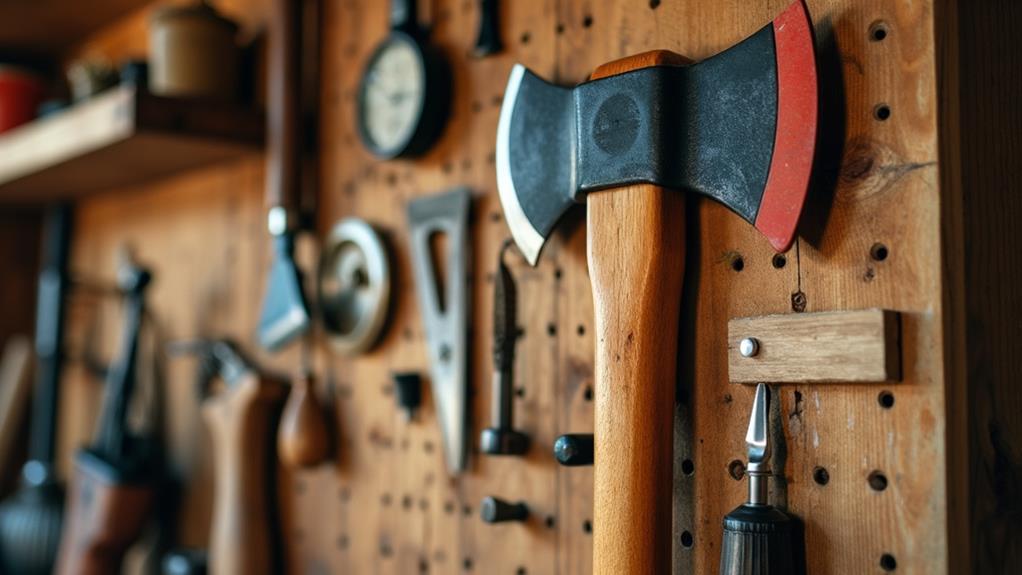
Axe Maintenance: How to Keep Your Blade Sharp
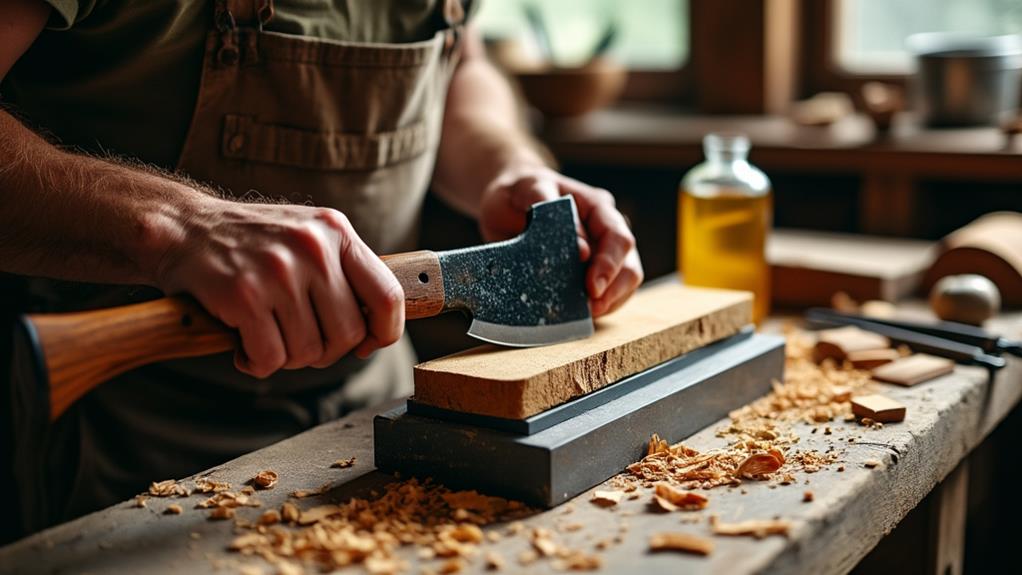
Maintaining a sharp axe is crucial for both safety and efficiency. To achieve this, it's essential to understand the proper techniques and tools. Selecting the correct sharpening angle and using appropriate sharpening stones are key steps. Additionally, regular cleaning and oiling are necessary to prevent rust. How can you ensure your axe remains in optimal condition? Let's explore the essential practices that will keep your blade ready for any task.
Importance of Axe Maintenance
Regular maintenance of your axe is crucial not just for prolonging its lifespan but also for making your chopping tasks quicker and more efficient. A well-maintained, sharp axe reduces physical effort and minimizes the risk of slips and accidents that can occur with a dull blade.
Proper maintenance involves more than just sharpening the blade. Regular sharpening prevents unnecessary damage and maintains the tool's integrity, enhancing its cutting performance and extending its usability.
Additionally, consistent care practices such as oiling and cleaning prevent rust and corrosion, keeping both the blade and handle in optimal condition. This ongoing maintenance makes your axe more cost-effective over time.
Instead of frequently purchasing replacements, a well-maintained axe can serve you reliably for years and even be passed down through generations. Therefore, the importance of proper axe maintenance can't be overstated; it offers multiple benefits, including improved safety, efficiency, and cost savings.
Types of Chopping Tools
When selecting the appropriate tool for wood processing, it's essential to consider axes, mauls, and hatchets. Axes are ideal for chopping and felling trees; mauls are designed specifically for splitting wood; and hatchets are versatile for various camping tasks. Understanding the distinct functions and design features of each tool ensures you make the best choice for your specific needs.
Axes for Felling Trees
To efficiently cut down trees, you'll want to use a felling axe, a specialized tool designed for this purpose. This type of axe features a wider, heavier blade optimized for cutting across the grain, making it easier to penetrate thick bark and wood fibers. The head is often tapered, allowing for more efficient cuts and reducing the force needed compared to a standard axe.
Maintaining a sharp blade is essential for a felling axe, as it greatly improves cutting efficiency and reduces user fatigue. Proper maintenance ensures your axe remains in top condition, ready for any challenge.
Here are four key points to keep in mind:
- Blade Sharpness: Regularly sharpen your axe to maintain a sharp edge, which enhances cutting performance and safety.
- Handle Length: A longer handle provides greater leverage and swing power, enabling more forceful strikes.
- Head Design: The tapered head of a felling axe reduces the effort required to cut through wood fibers.
- Task Suitability: Use your felling axe specifically for cutting down trees and limbing, not for splitting wood.
Mauls for Splitting Wood
When it comes to splitting wood, mauls are the preferred tool. Unlike axes, which are designed to cut across the grain, mauls are specifically optimized for splitting wood along the grain, making them more efficient than a sledgehammer and wedge combination. The wedge-shaped sides of a maul increase its weight, allowing for deeper penetration into the wood with each swing, thus enhancing its splitting effectiveness.
Mauls generally have a heavier head compared to axes, typically ranging from 6 to 10 pounds. This additional weight provides the necessary force to split tougher logs. The maul's thicker and wider blade design ensures it doesn't get stuck easily, making it a reliable tool for your wood-splitting needs.
When splitting wood, targeting existing splits can significantly improve efficiency and prevent the tool from getting stuck.
It's crucial to keep your maul in good condition. While axes are primarily sharpened for cutting tasks, maintaining the edge of your maul is equally important for optimal performance. Regular maintenance ensures the maul head remains effective, allowing you to tackle any wood-splitting task with ease.
Hatchets for Camping Tasks
Packing for a camping trip? Make sure to include a hatchet in your gear. Hatchets are smaller and lighter than traditional axes, making them perfect for one-handed use. They excel at a variety of camping tasks, from carving and making kindling to lightweight chopping. However, to get the most out of your hatchet, proper maintenance is essential.
Here's why hatchets are indispensable for your next adventure:
- Precision Tasks: Hatchets, unlike axes, require a sharper edge for precision tasks. This ensures clean cuts and effective performance, whether you're carving or chopping.
- Durability and Comfort: Many hatchets come with a durable steel blade and a comfortable handle, often made of wood or fiberglass. This enhances control and reduces fatigue during extended use.
- Portability: Their compact size allows hatchets to fit easily into your camping gear without taking up much space, making them versatile tools for outdoor enthusiasts.
- Multi-Purpose: Beyond chopping, hatchets can also be used to hammer tent stakes and perform light splitting, adding to their utility.
To prolong your hatchet's lifespan, use a chopping block to protect the blade and sharpen it regularly. Applying wood oil to the handle will maintain its durability, ensuring your hatchet is ready for any task.
Essential Sharpening Tools

To keep your axe in optimal condition, a few essential sharpening tools are indispensable.
- Start with a flat file, ideally a Mill Bastard file, for primary edge restoration. This tool is crucial for reshaping and removing nicks and is readily available at hardware stores.
- Next, a puck-style sharpening stone with dual grits is vital for finer sharpening. Use the coarse side first, then switch to the fine side to maintain a consistent edge.
- Safety is paramount; always wear work gloves to protect your hands while sharpening.
- A bowl of water is important for keeping your sharpening stones clean and preventing clogging. Dip the stone in water frequently during use.
- Afterward, an old toothbrush is effective for scrubbing the stone, extending its lifespan and maintaining its effectiveness.
Additionally, steel wool can be used to clean off any stubborn debris on your tools, ensuring they remain in top condition.
Sharpening Techniques
Properly sharpening your axe ensures it performs efficiently and safely. Follow these steps to achieve a razor-sharp edge:
- Maintain the Correct Sharpening Angle: Keep a consistent angle of 20-25 degrees against the sharpening stone. This ensures an even and effective edge. To maintain the original bevel angle, use the sharpie trick by marking the edge to visualize your progress.
- Start with a Coarse Flat Mill File: Begin with a coarse flat mill file to remove any nicks and create a rough edge. Use long, even strokes along the blade, applying consistent pressure.
- Progress to a Finer Grit Diamond Stone: After the rough sharpening, switch to a finer grit diamond stone to hone and polish the edge. Maintain even pressure to keep the sharpening profile consistent.
- Check for a Burr: Regularly check for a burr along the edge during sharpening. A burr indicates correct sharpening. When you feel a burr, move to finer grits.
Use small circular motions with a puck-style stone to further refine the edge.
Log Splitting Safety

Prioritizing safety when splitting logs is essential to prevent injuries and ensure efficiency. Always use a stable, wide chopping block to provide a secure base, minimizing the risk of your axe slipping. Stand at a safe distance when striking to stay out of the direct line of the axe swing, reducing the risk of accidental injury. Aim for existing splits or avoid knots in the wood when striking, as these areas can cause the axe to get stuck and create hazardous situations.
Use a pickaroon to grip and move logs, reducing strain on your back and minimizing mishaps. Keep your axe sharp, but also wear protective gloves and eye protection. These safeguards protect you from flying debris and accidental cuts. Work gloves offer an extra layer of safety, ensuring a firm grip and shielding your hands from potential harm.
Long-term Tool Care
Maintaining your axe's condition not only enhances safety during log splitting but also ensures optimal performance for years. Long-term care is essential for keeping your axe sharp and efficient. Here's how to achieve lasting maintenance:
- Regular Inspection: Frequently check your axe for dings, nicks, or rust. Promptly addressing these issues prevents the blade from dulling or becoming damaged, ensuring it remains in peak condition.
- Apply Linseed Oil: Annually or biannually, apply a light coat of boiled linseed oil to both the axe head and handle. This shields the tool from moisture and corrosion, extending its lifespan.
- Clean the Blade: After each use, thoroughly clean the blade to remove sap and dirt. Use steel wool for a deeper clean and ensure the blade is dry before storage to prevent rust and maintain sharpness.
- Proper Storage: Store your axe in a dry place, avoiding extreme temperature fluctuations. This safeguards both the blade and wooden handle, preserving the tool's integrity.
Regular maintenance checks every few months can significantly prolong your axe's lifespan, keeping it ready for use whenever needed.
Safe Usage Techniques

To ensure your safety while using an axe, follow proper techniques throughout the process. Always maintain a firm grip on the axe, ensuring your hands are dry and free from oil or moisture to prevent slips. Use both hands to swing the axe, as this provides better control and force.
Stand with your feet shoulder-width apart in a stable stance to manage the axe's weight and direction, reducing the risk of accidents. Aim for a 45-degree angle when chopping to efficiently cut through wood fibers, which enhances cutting efficiency and minimizes blade damage.
Use a proper chopping block to prevent the axe from hitting hard surfaces that could dull or damage the blade. Avoid chopping near rocks or metal, as these can severely dull the edge. Regularly inspect your axe before use to ensure the head is securely attached and free from cracks or damage. This simple check can prevent unexpected accidents and promote safer handling.
Benefits of Regular Sharpening
A well-maintained axe is indispensable for any woodworker, and regular sharpening is crucial for keeping it in optimal condition.
By maintaining a sharp axe, you can experience several key benefits that enhance your woodworking experience:
- Enhanced Efficiency: A sharp axe allows for clean cuts with minimal effort, significantly improving efficiency in wood chopping tasks. This means you can complete projects faster and with greater accuracy.
- Increased Safety: Regular sharpening reduces the risk of accidents. A sharp blade requires less force to cut, reducing the likelihood of slips or misses and making your work environment safer.
- Reduced Frustration: A dull blade can severely hinder your progress and increase fatigue. Regular sharpening ensures your axe performs at its best, making tasks more enjoyable and less frustrating.
- Extended Lifespan: Routine maintenance through sharpening prolongs the lifespan of your axe. By keeping the blade in prime condition, you save on replacement costs and ensure the tool remains reliable over time.
Incorporating regular sharpening into your maintenance routine not only keeps your axe ready for immediate use but also enhances its efficiency and safety, making it a more effective tool for all your woodworking needs.
Conclusion
Keep your axe blade sharp and ready for action by following these maintenance tips. Regular sharpening, cleaning, and oiling are essential for optimal performance and longevity. Use the correct tools and techniques to ensure safety and efficiency. Incorporate these practices into your routine to reduce physical effort, enhance safety, and extend your axe's lifespan. Maintain your chopping tools in top condition and enjoy the benefits of a well-maintained axe!