Adjusting to Tiny Home Living With Kids or Pets
Adjusting to tiny home living with kids or pets requires creative space-saving solutions and smart organization. Invest in multifunctional furniture like convertible sofas and storage ottomans to maximize your limited space. Create designated zones for privacy and separation, using room dividers or curtains. Implement space-saving techniques like under-bed storage and wall-mounted shelves. For pets, incorporate designated areas for beds and supplies. Encourage kids to participate in tidying up and regularly purge unused items. Explore outdoor spaces and nearby public facilities to extend your living area. With careful planning and adaptability, you'll find numerous ways to make your tiny home comfortable for the whole family.
Space-Saving Solutions for Families
Five key space-saving solutions can alter tiny home living for families. First, invest in multifunctional furniture like convertible sofas and storage ottomans to maximize your small space. These versatile pieces serve multiple purposes, giving you plenty of room for both relaxation and storage.
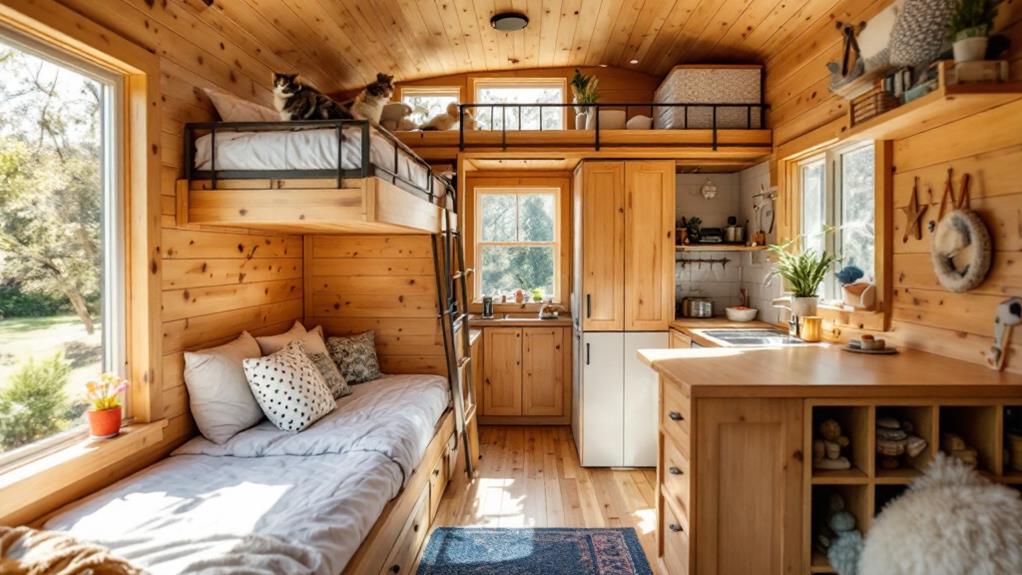
Next, welcome vertical storage solutions. Install wall-mounted shelves, bunk beds, or a sleeping loft to make the most of your home's height. This approach creates extra floor space for your family's activities and pets' needs, like a dog bed or cat box.
Create designated zones within your tiny home to maintain a sense of privacy and separation. This strategy helps everyone feel comfortable living in a smaller environment.
Implement space-saving organization techniques to minimize clutter. Use under-bed storage, roll-out pantries, and hanging organizers to keep your small spaces tidy and functional.
Lastly, incorporate flexible seating arrangements and modular furniture. These pieces can be easily rearranged to accommodate various family configurations, ensuring your tiny home adapts to your changing needs. With these solutions, you'll find there's ample room for everyone, even in a compact living space.
Pet-Friendly Tiny Home Design
Creating a pet-friendly tiny home requires thoughtful design and clever solutions. When planning your tiny house, consider incorporating features like catwalk storage cabinets and designated spaces for pet beds and litter boxes. These additions will help you accommodate your furry friends while maximizing your living space.
Ensure your pets have easy access to their areas by installing small entry holes, but don't forget to include ways to contain them when needed. Optimize storage solutions for pet supplies and equipment to keep your small space organized. As you design your tiny home, take into account your pet's specific needs, such as mobility and potential messy behaviors.
To make the adjustment smoother, gradually introduce your pets to the new living space and adjust their routines accordingly. Balance the priorities of tiny living and pet ownership by managing space constraints and coordinating pet-related responsibilities. This approach will help you create a harmonious environment that supports stronger bonds between you and your pets.
Managing Clutter With Kids
As your family grows, managing clutter in a tiny home becomes increasingly challenging. Living tiny with kids requires creative solutions to keep your space organized and functional. Start by designating specific storage zones for your children's toys, clothes, and artwork. This will help contain the chaos and make it easier for everyone to find what they need.
Utilize multi-purpose and space-saving furniture, like ottomans with built-in storage, to maximize your small living area. Remember, when you live in a tiny house, every inch counts. Regularly purge and donate unused or outgrown items to prevent clutter from accumulating in your limited space.
To maintain order in your tiny home, encourage your kids to participate in tidying up through fun, age-appropriate cleaning activities. Here are four strategies to manage clutter effectively:
- Implement a "one in, one out" rule for toys and clothes
- Use vertical storage solutions like wall-mounted shelves
- Create a daily 10-minute family clean-up routine
- Rotate toys and books to keep things fresh and organized
Creating Zones for Harmony
Harmony in a tiny home with kids and pets hinges on smart space division. In tiny house living, you'll need to designate distinct zones to accommodate everyone's needs. Create a play area for kids to run around and a cozy pet nook for your furry friends. This zoning approach makes it much easier to manage the smaller space and keep their dog or other pets content.
Utilize room dividers, curtains, or sliding doors to create semi-private spaces. These flexible solutions provide a sense of personal space, which is essential when you live in a small area and spend much time together. Incorporate versatile, multifunctional furniture that serves both children's activities and pet comfort. This dual-purpose approach maximizes your limited square footage.
Strategize storage solutions to keep toys and pet supplies organized and accessible. This prevents clutter from disrupting your household flow, making tiny home living with kids and pets much easier than it was years ago. Finally, establish clear boundaries and rules to manage interactions between kids and pets, encouraging a harmonious coexistence within your compact living space.
Outdoor Living Strategies
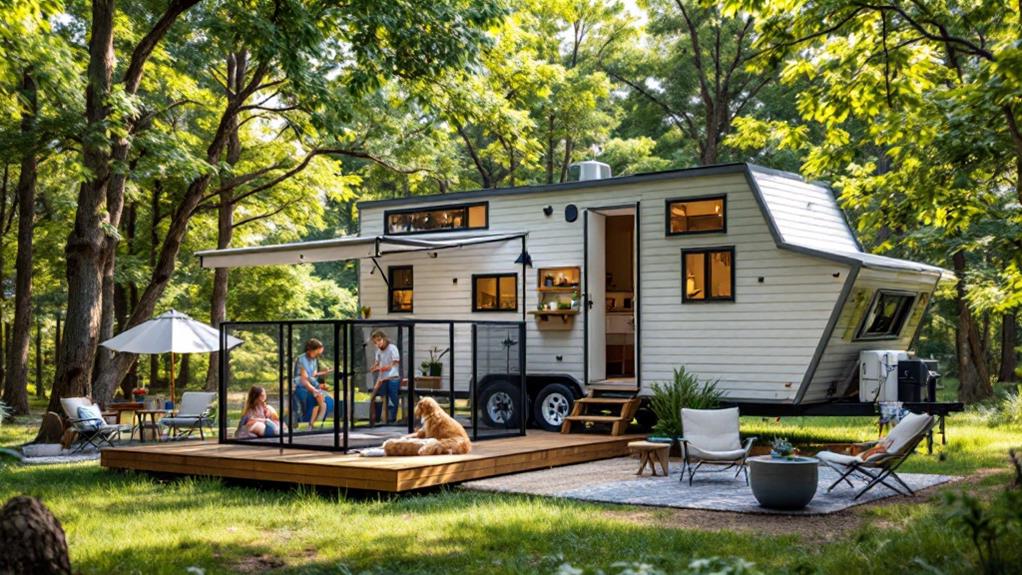
The great outdoors becomes an essential extension of your tiny home when living with kids and pets. Maximize your outdoor space to create a harmonious living environment for all family members. For dogs, consider installing a retractable leash system, allowing them to investigate while you maintain control. Cats can enjoy a safe outdoor experience in a custom-built "catio" or enclosed play area.
Don't forget about your children's needs. Incorporate a small vegetable garden or raised planter beds to engage them in hands-on learning about nature and sustainability. A covered porch or deck area expands your living space and provides a comfortable retreat for the entire family.
To make the most of your tiny house outdoor space, consider these strategies:
- Dedicate a portion for a pet play area or run
- Create a "catio" for your feline friends
- Install a retractable dog leash system for canine examination
- Design a covered porch or deck for family relaxation
Adaptable Furniture for Flexibility
Moving from outdoor strategies to interior solutions, adaptable furniture becomes a crucial factor in tiny home living with kids and pets. You'll find that investing in multi-functional pieces can dramatically transform your limited space to accommodate various needs throughout the day.
Start with the basics: sofa beds and transforming tables. These versatile pieces allow you to quickly switch between living and sleeping areas, essential when space is at a premium. Loft beds with built-in storage and desks maximize vertical space, giving your children a dedicated area for rest and study while freeing up significant floor space below.
Don't overlook the power of hidden storage. Ottomans with concealed compartments help keep toys and pet supplies organized and out of sight. Wheeled furniture offers the flexibility to rearrange your space easily, adapting to different activities or accommodating guests.
For maximum flexibility, consider collapsible furniture. Nesting coffee tables and folding dining chairs can be tucked away when not in use, opening up your living area. By carefully selecting adaptable furniture, you'll create a dynamic living environment that grows with your family's changing needs while maintaining comfort for both kids and pets.
Balancing Privacy and Togetherness
Living in close quarters, you'll rapidly uncover that balancing privacy and togetherness is essential for maintaining harmony in a tiny home with kids and pets. In a space where every square foot counts, finding moments of solitude can be challenging. To create a harmonious environment in your tiny house, consider these strategies:
- Design semi-private zones using curtains, screens, or lofts to divide your living room or create a cozy nook for alone time.
- Establish routines that allow family members to enjoy personal activities, such as reading in the loft at night or taking the dog for a walk.
- Communicate openly about individual needs and respect each other's boundaries to maintain a peaceful atmosphere.
- Leverage outdoor spaces or nearby public facilities to extend your living area and provide additional options for privacy.
Maximizing Storage in Tight Spaces
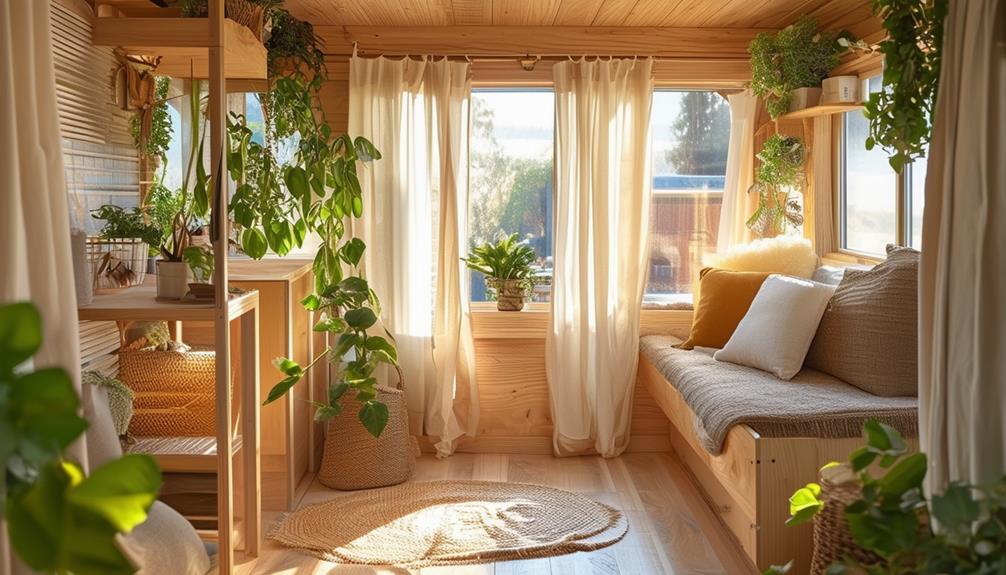
Faced with limited square footage, maximizing storage in a tiny home becomes essential when living with kids and pets. To make the most of your vertical space, install floating shelves, wall-mounted storage, and overhead cabinets. These solutions keep items off the floor while maintaining an open feel in your home.
Invest in multi-purpose furniture to double your storage capacity. Ottomans and coffee tables with hidden storage compartments offer convenient places to stash toys, pet supplies, or extra linens. Implement roll-out drawers, sliding organizers, and retractable shelves in your kitchen and bathroom to access items efficiently in tight spaces.
To keep your tiny home organized, label and categorize storage containers. This simple step helps you and your family quickly find necessary items without creating a mess. Don't overlook unused nooks and crannies, such as under-stair spaces and behind-door areas. These often-neglected spots can be perfect for storing seldom-used possessions or seasonal items.
Frequently Asked Questions
How to Live in a Tiny House With Kids?
Living in a tiny house with kids requires creativity and adaptability. You'll need smart storage solutions and multi-functional furniture to maximize space. Adopt a minimalist mindset and develop decluttering habits to keep your home organized. Establish daily routines and meal planning to maintain order. Create personal space for each family member while encouraging shared family activities. Don't forget to consider pet accommodations if you have furry friends. With careful planning and flexibility, you can make tiny living work for your family.
What Are the Biggest Drawbacks of Living in a Tiny House?
Living in a tiny house can present significant challenges. You'll face a lack of storage space, making it difficult to keep your belongings organized. Limited personal space and reduced privacy can strain relationships. You'll encounter accessibility challenges and waste management issues. Increased clutter becomes unavoidable, and temperature control problems may arise. You might struggle with inadequate cooking facilities, limiting your culinary options. Surprisingly, you may face higher utility costs due to specialized equipment and inefficient use of resources.
What Are the Legal Obstacles of Living in a Tiny Home?
You'll face several legal obstacles when living in a tiny home. Zoning regulations and parking requirements can limit where you're allowed to place your home. You'll need to traverse a complex permit process and guarantee you meet safety codes. Property taxes and insurance coverage may be tricky to sort out. Community acceptance can be a challenge, and you might struggle with water/sewage access. If you're planning a home-based business, additional regulations may apply. These hurdles require careful research and planning.
How Do I Adjust to a Tiny Home Living?
To adjust to tiny home living, you'll need to adopt a minimalist mindset. Start by decluttering and investing in multi-purpose furniture and space-saving appliances. Implement smart storage solutions and home organization tips to maximize every inch. Leverage outdoor living spaces to extend your living area. Get involved in your community for additional resources. Implement meal planning strategies to optimize kitchen space. Remember, it's about quality over quantity, so focus on what truly matters in your new compact lifestyle.